
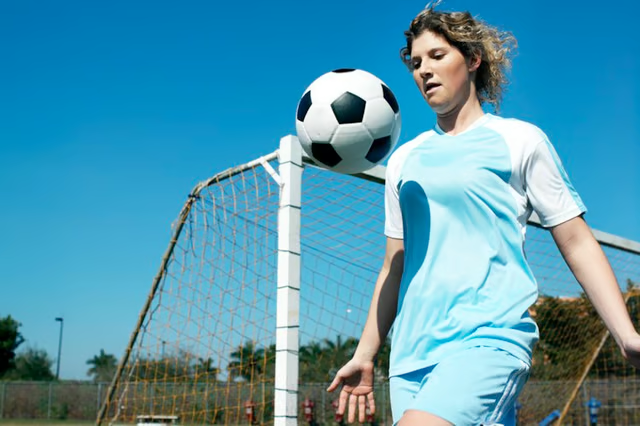
While improving your kicking performance in soccer is generally considered to be a case of hours of practice, it is also important to know which muscles are working when you kick a ball, and what they are doing. Knowing which muscles are used can help you tweak your technique, and focus on training specific muscle groups and movements, in order to improve the accuracy and power of your kicking.
Quadriceps
The quadriceps are the muscles on the front of your leg which originate at the hips and run down to just below your knees. Their main job is to extend the knee and flex the hip. Both of these actions occur as you kick a soccer ball. When you begin the kick, your knee is flexed and your hips are extended, but as you follow through, your quadriceps extend the knee and flex the hip to allow the ball to be kicked.
Hamstrings
The hamstring group works in the opposite way to your quadriceps. Located on the back of your upper leg, the quadriceps are comprised of three different muscles which extend the hip and flex the knee. These actions happen as you bring your leg back to begin striking the soccer ball. The hamstrings also work as you kick the ball, as they help decelerate the speed of your leg during the final part of the kick, which prevents your muscles from over stretching and getting injured.
Glutes
Your glutes are your butt muscles. They rotate and extend the hip when kicking a ball, but it's also important to have strong glutes to help prevent injuries. Kicking a ball can place stress through the lower back and hips, and strength coach Bret Contreras believes that having strong glute muscles which are activated properly can help prevent injuries and improve all round sports performance.
Core Muscles
Your core muscles are the muscles around your lower back and stomach area. While people often associate the core muscles with spinal flexion -- the action performed when doing a sit up, they are also responsible for many other actions. When kicking a soccer ball, your upper body needs to stay tight and rigid, and so your transverse abdominus and erector spinae muscles come into play. You also need to lean slightly to the opposite side of your kicking leg in order to generate maximum power, meaning that your oblique muscles along the side of your stomach need to work hard to prevent you from losing balance.