
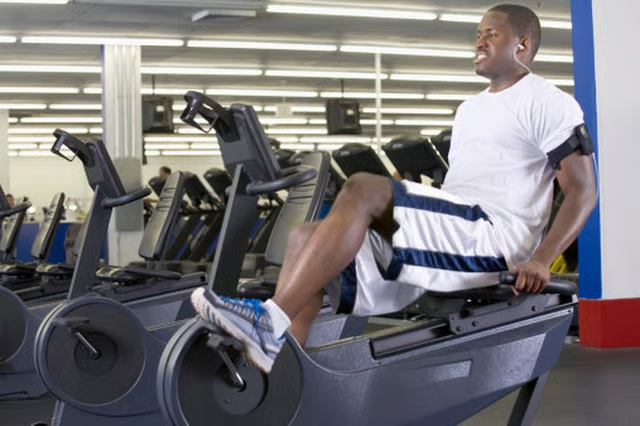
A recumbent bike is a cardiovascular machine that works your legs. Whenever you are moving your legs in a cycling motion, you're using your hips. Any activity that uses your hips in a repetitive motion has the potential for causing an injury or irritation.
Anatomy
On the outside of your leg, from your hip to your knee, you have a group of connective tissue called the iliotibial band. The ITB acts as a shock absorber when you move your legs. It also helps to stabilize you when you move sideways. Your hip joint consists of a depression in the pelvis that cups the top of your leg bone. The ITB and the hip joint can become aggravated through cycling exercise.
Recumbent bikes
Because there are so many recumbent bike models, you can choose one that fits you well. Unless the machine is adjustable, you will not fit comfortably in the same machine that your foot-taller friend prefers. To avoid hip injury from improper fit, test out the bike before you use it for regular workouts.
Alignment
A recumbent bike should have adequate support in the seat so your spine is supported, and you are not tipping your hips forward or backward. An excessive forward tilt causes your back to arch, which places added stress on your hips during a ride. The seat should be at enough of a distance from the pedals that when your leg is completely extended, you have a slight bend in your knee. You should not have to shift your hips to complete a pedal revolution. The pedals should comfortably fit your feet and your feet should not slide around during the ride, which will also affect your hips.
Overuse
The most common reason for hip discomfort from recumbent cycling is repetitive use. If you ride your bike every day and continue to increase the duration of your ride, you run the risk of joint injury. Every time you bend and straighten your leg, the ITB is involved. If you are new to cycling, increase the resistance of your ride, or increase the distance, your ITB could become irritated causing pain in your hip.
Genetics
If you are still having hip discomfort from a recumbent bike and you have positioned yourself correctly, are taking days of rest or alternate exercise, or have lightened the resistance, it could be a structural abnormality that is causing the pain. Another explanation could be a muscular imbalance between the fronts and backs of your legs. Seek the guidance of your physician and always use caution with your workouts.