
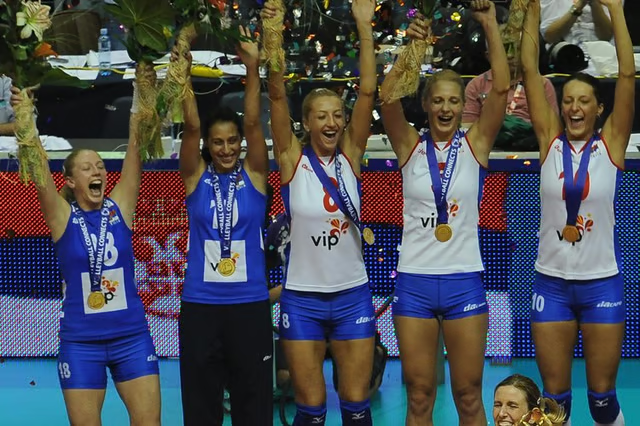
Volleyball tournaments provide teams the chance to see plenty of action against a variety of opponents and often in a short span of time. Many high school, college and club teams play one-day tournaments during the winter holidays, for example. Additionally, tournaments are used to decide league, regional and national championships. Smaller volleyball tournaments are typically single-elimination events, while many larger tournaments are double-elimination competitions in which a team continues to play until it loses two matches.
Eight Teams, Single Elimination
Hold a blind draw for the eight positions, or seed the teams from No. 1 through No. 8. To hold a blind draw, the tournament director can pick team names out of a hat, or team captains can pick numbers out of a box. Alternatively, seed the teams based on league standings or overall records.
Have the No. 1 team play the No. 8 team in the first round, then have team No. 2 play No. 7, team No. 3 play No. 6 and team No. 4 play No. 5.
Schedule the second round to begin with the winner of the 1 vs. 8 match facing the winner of the 4 vs. 5 match and then have the other two winners play in the second match.
Have the two semifinal winners meet in the final.
Eight Teams, Double Elimination
Hold a blind draw for the eight positions, or seed the teams from No. 1 through No. 8. To hold a blind draw, the tournament director can pick team names out of a hat, or team captains can pick numbers out of a box. Alternatively, seed the teams based on league standings or overall records.
Have the No. 1 team play the No. 8 team in the first round and then have team No. 2 play No. 7, team No. 3 play No. 6 and team No. 4 play No. 5.
Divide the teams into upper and lower brackets, with the first-round winners playing in the upper bracket.
Schedule the second round upper bracket to begin with the winner of the 1 vs. 8 match facing the winner of the 4 vs. 5 match, then have the other two winners play in the second match.
Set up a lower bracket in which the loser of the No. 1 vs. No. 8 match plays the loser of the No. 4 vs. 5 match, and have the other two first-round losers meet in the next match.
Have the two second-round winners from the upper bracket play. The victor will be the upper-bracket winner.
Schedule the winner of the first lower-bracket match to play the loser of the second upper-bracket second-round match, and have the winner of the second lower-bracket match play the winner of the first upper-bracket second-round match.
Have the winners of the second-round lower-bracket matches play.
Set up a match between the final lower-bracket winner and the final upper-bracket loser. The victor will be the lower-bracket winner.
Have the two bracket winners meet.
Schedule a provisional second match between the two bracket winners. If the lower-bracket winner defeats the upper-bracket winner, then each team will have one loss, and they must play a final match to determine the tournament champion.
Tips
Follow the eight-team patterns for tournaments with a greater number of teams. For example, a 16-team tournament bracket is essentially one eight-team bracket on top of the other. The winners of the two eight-team brackets meet in the championship game.
Set up play-in matches for tournaments with an unusual number of teams. In a 10-team tournament, for example, six teams draw byes while four participate in play-in matches. Plug the play-in winners into the standard eight-team bracket.