
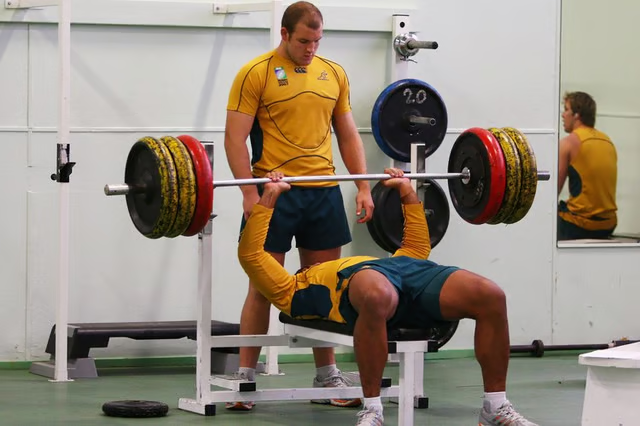
The shoulder press and bench press are both classified as upper-body pushing exercises. Shoulder presses are traditionally performed standing up, holding a barbell at shoulder height and pressing it directly overhead until your arms are straight. They work your shoulders, triceps and traps. Bench presses also work your shoulders and triceps, as well as your chest. Bench presses are performed by lying on a bench, lowering the bar until it touches your chest, then pushing up forcefully. You can gauge your progress in the gym by comparing your shoulder press and bench press ratios.
Exercise Considerations
You should be able to lift more weight on the bench press than you can on the shoulder press. Not only does the bench press work more muscles than shoulder presses, but you're in a far more stable position lying down than you are when standing. While there are many types of shoulder press, including dumbbell, barbell and machine presses, a good indicator of balanced upper-body strength is being able to perform a behind-the-neck shoulder press with around 66 percent of the weight you'd use for a close grip bench press, according to strength coach Charles Poliquin, creator of the Poliquin International Certification Program.
Strength Standards
When beginning a strength-training routine, you may find there's a large gap between the amount you can shoulder press and the amount you can bench press, depending on your genetics and limb length. As you progress however, your ratios should fall into line. Trainer Stuart McRobert writes in "Brawn" that a good standard for an advanced male lifter is a 200-pound standing shoulder press and a 300-pound bench press, giving a shoulder to bench press ratio of two-thirds.
Considerations
While the shoulder press to bench press ratio is a good method of evaluating how balanced your upper-body strength is, it shouldn't be regarded too highly. The balance between your chest and back strength is just as important, as a strong chest and weak upper back can lead to poor posture and injuries. Likewise, there are many variations of shoulder presses, that will all give a different ratio. Furthermore, strength in each lift depends on your goals. Powerlifters need a big bench press but aren't too concerned about shoulder presses, while Olympic weightlifters need to be strong overhead, but don't compete in the bench press.
Improving Your Ratio
To find your ratio, perform a one-repetition-max test on each exercise. Start with bench presses and warm up using light weights, gradually increasing the weight each set. When the reps start to get tough, just add a small amount of weight every set until you reach your maximum weight while still using good form. Rest for two to three days, then do the same for standing barbell shoulder presses. Once you've established your ratio, you can plan your training routine. If your shoulders are comparatively weak, perform two shoulder workouts each week, focusing on overhead pressing exercises. If it's your bench press that's lagging, add an extra chest day and perform exercises such as dips, pushups and flat dumbbell presses as ancillary movements.