


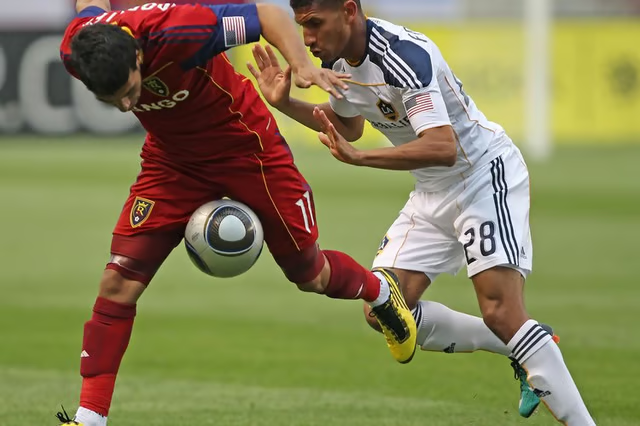
Soccer is not -- as many people believe -- a non-contact sport. A certain amount of contact, including pushing, is allowed in the beautiful game. The difference between legal and illegal pushing is largely based on the referee's discretion. Players should understand what kind of pushing is and is not allowed, so that they can play physically without breaking the rules.
Definition
Pushing in soccer is any contact where a player pushes into his opponent, whether it is with his hands, arms or body. Not all pushing is prohibited. Incidental pushing, minor bumps and fair charges are permitted. The Laws of the Game -- the rules governing soccer -- state that it is only a foul if a player pushes another player in a manner that the referee believes is "careless, reckless or using excessive force."
Penalty
When a referee believes that a push is reckless, careless or uses excessive force, he can penalize the player who committed the foul. In this case a direct free kick is awarded to the opposing team at the spot where the push took place. The kicker can score from a direct kick without the ball touching another player -- as opposed to an indirect kick which must first touch another player. If a player is penalized for pushing inside his own team's penalty area, then the opposing team is given a penalty kick.
Fair Charge
A player can push another player when trying to get the ball by making contact with the opponent without using his arms. Typically, a player will charge his opponent, hitting him shoulder-to-shoulder. Even if a player pushes his opponent over in a fair charge, it is not a penalty. However, if the player charges with excessive force, in the eyes of the referee, it can be considered a foul.
Play Advantage
A referee may not call a penalty for a pushing foul, if he believes that the fouled team will gain an advantage. For example, if a player is pushed down but his team maintains control of the ball on a rush, the referee may allow the play to continue. If the expected advantage does not play out, the referee can whistle the play down and award the fouled team a direct free kick.