
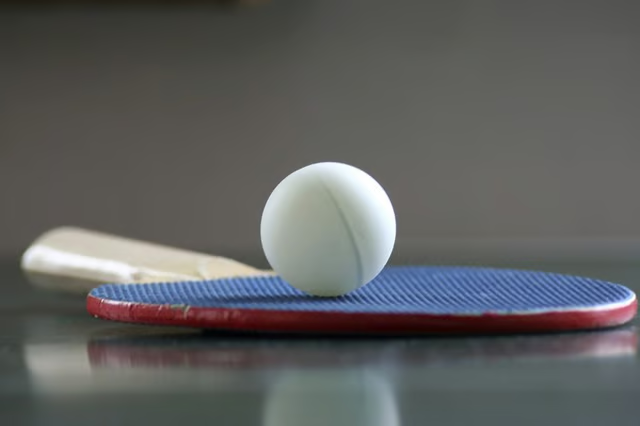

The earliest tabletop version of ping pong or table tennis dates back to the late 1800s, according to the International Table Tennis Federation museum. Since that time the ball has gone through several changes including the type of material used to make it. In 2014 the ITTF approved a new plastic ball, which is used for all sanctioned international events.
Change Over Time
The bounce characteristics of the first balls -- rubber covered with cloth and cork wrapped in webbing -- were poor. The rubber ball was too bouncy and the cork ball had the opposite problem. Because of this, a celluloid plastic ball was introduced around the year 1900, which provided the right amount of bounce. Celluloid, which is a composition of nitrocellulose and camphor, is a synthetic plastic material similar to what's used to make film for photography.
Moving Forward
For more than a century celluloid was the standard material used to make ping pong balls. But because celluloid production is on the decline and it's a highly flammable material with shipping and storing restrictions, the ITTF has approved a new non-celluloid ball made of poly-plastic material. Except for being a little harder, bouncing slightly higher and having a rougher surface, it has many of the same characteristics as the celluloid ball. While sanctioned, worldwide events are now using this new ball, celluloid balls are still available for local tournaments and recreational use. Future manufacturing, however, depends on the availability of celluloid and market demand.