
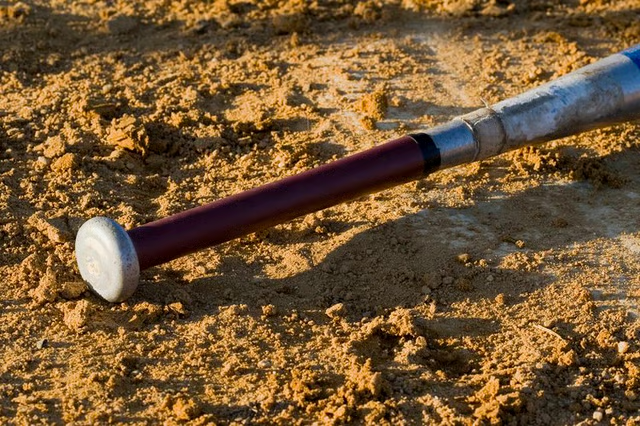


Not all baseball bats are made the same. Professional leagues use wooden baseball bats, but at all levels of amateur play, including college play, players use metal bats. Many new rules and regulations in college baseball dictate the materials permitted in college baseball bats.
Alloy Bats
As of the 2011 college baseball season, the National Collegiate Athletic Association permits only aluminum alloy bats during games. The bats and barrel must be made from a single piece of alloy. According to Dick's Sporting Goods, all alloy bats are a combination of zirconium, copper, magnesium and aluminum. These alloys can be mixed in different ways to give the bats different weights and tweak their durability.
Alloy Types
There are four popular mixtures of alloys used in alloy bats. According to Dick's, 7046 is the standard alloy type used in most baseball and softball bats. Dick's notes that 7050 models are the next step up from 7046 models and use more zirconium, magnesium and copper to make the bats stronger and more durable. The 7055 models have more zirconium for added durability. The highest and best-performing alloy bats are C555 models, which include small amounts of scandium for increased bat strength.
Composite Bats
Composite bats were the popular choice and most widely used bat until 2009. After the 2009 season, the NCAA banned the use of composite bats due to unsafe batted-ball exit speeds. Players learned to roll composite bats, which made them hit balls harder and farther due to an increased trampoline effect inside the barrels. According to Dick's, graphite and titanium were popular composite choices, which made bats lighter and stronger and increased player's bat speed.
BBCOR Regulations
The Bat-Ball Coefficient of Restitution, or BBCOR, is a new method the NCAA uses to judge the force of bats on a baseballs. Prior bat regulations simply measured the exit speed or speed of the batted ball. According to a University of Missouri study, alloy and wooden bats lose more energy on contact compared with composite bats, which retain more energy and have dangerously high BBCOR ratings. This new test led to the banning of composite bats and the 2010 rule that all college bats had to be made of alloy materials.
2022 Testing
The NCAA Baseball Rules require all non-wood bats used during competition be reviewed by baseball bat testing conducted prior to each regular season series or single date of competition.
1. Visual Inspection of the Bat
Attachments are not permitted on the end cap or knob of the baseball bat.
- Bat model appears on the approved bat list
- Bat does not have a predominantly white barrel.
- Bat does not have flat spots.
- Bat does not have audible rattle.
- Bat does not have cracked or loose end caps.
2. Ring Test
Place the bat end cap on the ground and place the bat ring over the knob letting it fall. If does not fall cleanly to the ground, the bat is surrendered for the duration of the game or series.
3. Barrel Compression Test Procedure
The compression should meet the tolerance engraved on the cylinder. Each bat is tested up to three times. If the bat passes twice, no third test is necessary. Two failing tests and the bat is surrendered for the duration of the game or series.