
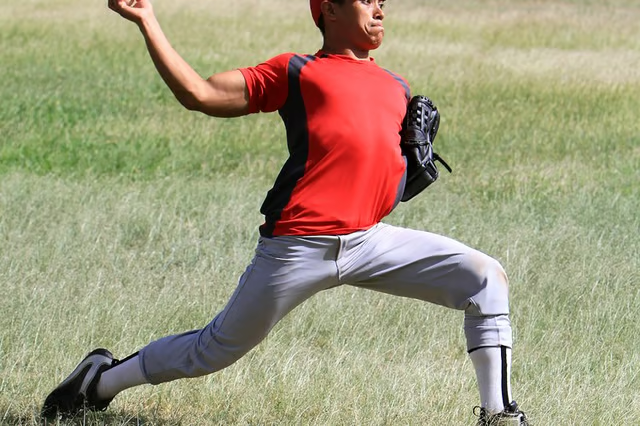


Former Detroit Tigers pitcher Elden Auker told the "New York Times" in 2006 that pitchers get sore arms because they "don't throw enough." Doctors seeing an influx of overuse injuries might disagree that the cure to a sore throwing arm is throwing more. However, Auker makes a point with which most doctors agree: Increased muscle conditioning and proper throwing form helps alleviate pain in biceps, triceps and other areas of the arms after strenuous throwing.
See your doctor if you have been experiencing sore biceps and triceps for more than a week. You may have a serious strain or tear in the muscles, which would require more rest than a minor strain.
Ice the arm for 20 minutes immediately after you're finished throwing in a game or in practice. Use an elastic bandage to hold ice bags on both the biceps and the triceps for the entire time.
Stretch the arm gently after icing it. Ice reduces swelling by inhibiting the blood flow when the muscles are hot from playing. Gently mobilizing the muscles returns moderate blood to the area to nourish them.
Rest the arm for a couple of days between throwing sessions to give the muscles time to heal. If the strain is serious, your doctor may prescribe physical therapy. Otherwise, gentle activity that includes stretching and lightly tossing a ball keeps blood flowing and the arm limber without increasing the pain or damage.
Take over-the-counter anti-inflammatory medications to keep swelling down and reduce pain. Follow the doctor's prescription or the instructions on the bottle.
Stretch well before playing by loosening the biceps and triceps. Stretch the biceps by sitting on the floor with your knees bent; lean back on your palms, positioned behind you. Lean back on the arms, feeling tension in the biceps.
Stretch the triceps by reaching your arm toward the ceiling then dropping your hand to your middle back, keeping your elbow over your head. Push the elbow back with your free arm, feeling the tension in the triceps.
Improve your conditioning. Strong legs, abdominal muscles and pectorals play a significant role in effective throwing. Improving the strength of your major muscle groups means your arm muscles don't need to compensate for other weaknesses.
Work on better throwing form with a team coach. Improper form might be placing unnecessary stress on your biceps and triceps. Videotaping might help isolate form issues that you can fix at much lower throwing speeds.
Warnings
See your doctor if your symptoms don't improve. He may order more diagnostic tests and change your treatment plan.