
An important part of understanding the physiology of the human body is learning the difference between the four major joint types. Additionally, there are two lesser-known joint types that are important to know for a complete understanding of human joints.
Ball-and-socket

Karl Rosencrants/iStock/Getty Images
A ball-and-socket joint consists of one bone with a rounded end and and another cupped bone that it fits into, allowing a full range of motion. The shoulder and hip are both ball-and-socket joints.
Hinge

Karl Rosencrants/iStock/Getty Images
Just like a door hinge, hinge joints in the human body facilitate a simple angular moment, allowing extension but not rotation. Elbows, knees, and ankles are examples of hinge joints.
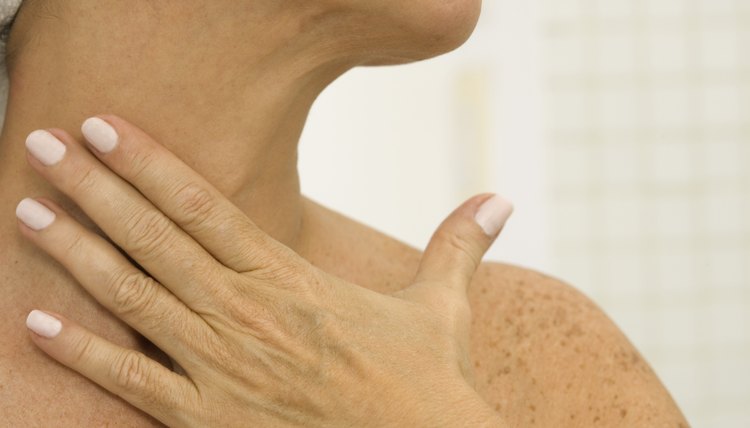
Pivot
Karl Rosencrants/iStock/Getty Images
In a pivot joint, the rounded end of a single bone fits into the ring of a tendon, allowing rotation. This occurs, for instance, at the base of the neck.
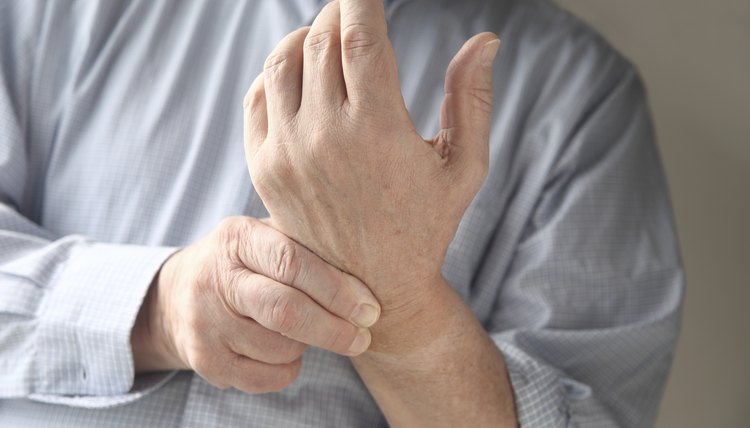
Gliding
Karl Rosencrants/iStock/Getty Images
A gliding joint is characterized by bones that slide or twist against each other but cannot move in a circular direction. Examples include the wrists, ankles, and vertebrae.
Other

Karl Rosencrants/iStock/Getty Images
There are two lesser-known types of joints in addition to the four major ones: condyloid joints and saddle joints. Condyloid joints, such as the joints in between the fingers, allow angular movement but not rotation. The saddle joint is a complex interaction between two complementary bones and only occurs at the base of the thumb.