
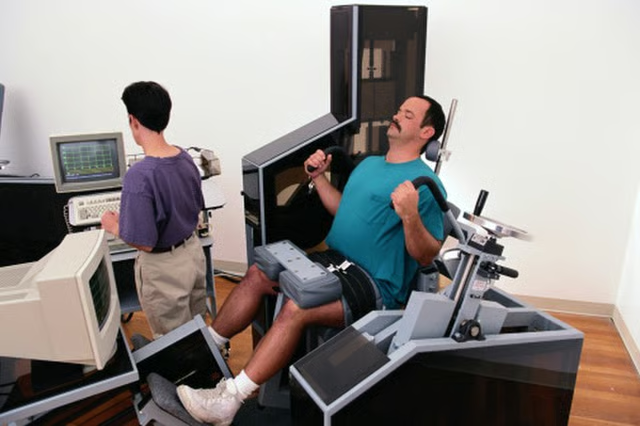


Normal back extension and hyperextension movements use muscles in your back to lift your torso. During back extension, you lift your torso from a bentover position until you stand perfectly straight. When you hyperextend your back, you move your torso past the straight position so that you lean backward. Back extension exercises build strength but may also pose risks for spinal health.
Muscles
The main muscles involved in back extension exercises are the erector spinae group of the lower back. Erector spinae muscles include the iliocostalis, longissimus and spinalis muscles. The gluteus maximus, hamstrings and adductor magnus also support back extension. The gluteus maximus is the large muscle of the butt, while the hamstrings are located on the back of the thigh. The adductor magnus lies in the inner thigh.
Unsafe Exercises
Avoid repetitive hyperextension exercises that strain your spine. One contraindicated exercise called the swan involves laying on the belly while simultaneously lifting your arms and legs. The swan causes back hyperextension and stresses low back vertebrae. Donkey kicks, exercises in which you kneel on all fours and kick your legs back, cause hyperextension and low back strain. Yoga back bends such as cobra pose and full wheel also strain the back over time.
Hyperextension Modifications
Strengthen your back safely by extending your torso to a neutral position. Modify the swan exercise by laying over a pillow or rolled up towel. Lift your arms and legs until you achieve neutral back extension. Safely alter donkey pose by tucking one knee to your nose, then lift the leg out straight instead of up and back.
Yoga Back Extensions
Practice yoga back bends safely by lengthening the spine first, then gently hyperextending the back. Always move into and out of back bends slowly. Stop immediately if you feel discomfort. Follow each back bend with a gentle forward fold such as child's pose. Yoga back extension exercises include chair pose, warrior one and two, boat pose, garland pose and lunges. These poses only function as back extensions when done with proper alignment.