
- Why Does the NBA Shot Clock Reset to 14 Seconds? Explained
- NBA shot clock rules: 14 vs. 24 seconds
- Step one: did possession change teams?
- Step two: did the miss touch the rim, or was it a live free throw?
- Why an offensive rebound is not always 14 seconds
- NBA offensive rebound shot clock reset: quick comparison
- The late-period exception
- What to check next
Why Does the NBA Shot Clock Reset to 14 Seconds? Explained
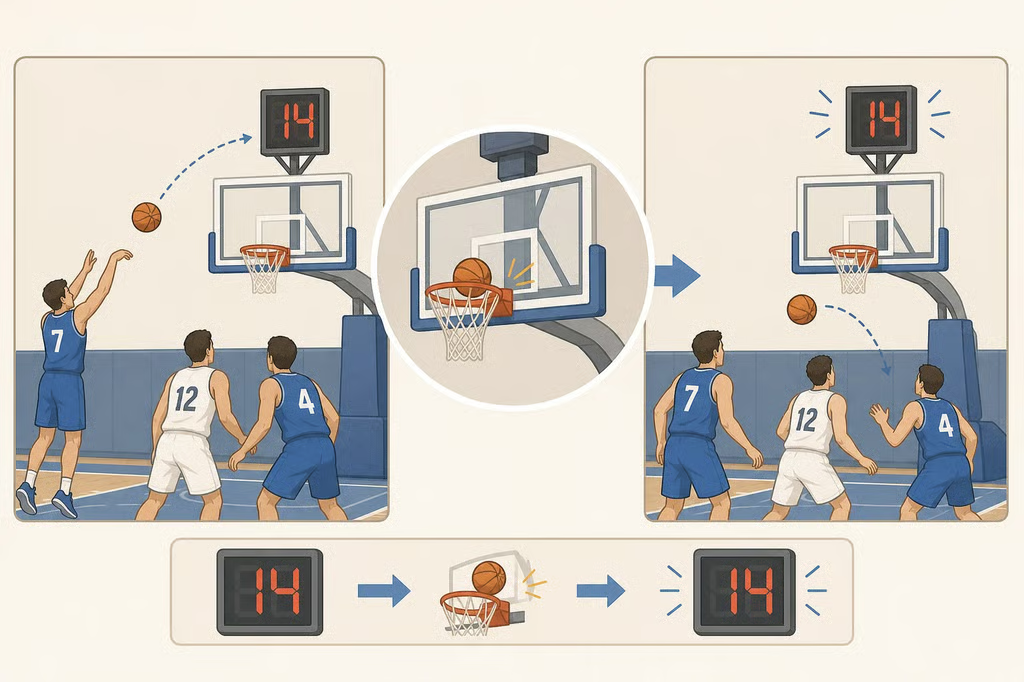
Why does the NBA shot clock reset to 14 seconds instead of jumping back to the full 24? It comes down to two questions: did the ball change teams, and did the missed shot touch the rim. Answer those two correctly, and the rest of the rule falls into place.
The shot clock is the device that counts down how much time a team has left to attempt a field goal once it has possession, according to the NBA's official rules. A new possession starts that clock at 24 seconds by default, but Rule 7 of the NBA's playing rules carves out specific situations where it resets to 14 instead, or doesn't reset at all.
This guide is based on the NBA's 2025-26 official playing rules, the most recent edition available for verification. The league can revise rule text from season to season, so if the current 2026-27 rulebook changes any of this, the official document linked throughout is the place to confirm it. This article addresses NBA rules only and shouldn't be applied to other levels of basketball without checking that level's own rulebook.
NBA shot clock rules: 14 vs. 24 seconds
The baseline is simple: the shot clock starts at 24 seconds unless Rule 7 says otherwise. The exceptions below are what change that default for the rebound and post-miss situations covered here.
Rule 7 lists three triggers that reset the clock to 14 seconds instead of 24:
- The offense is first to gain possession after a missed free throw that stays live, or a missed field goal that contacts the basket ring, per Rule 7, Section IV(d)(1).
- A loose-ball foul is called on the defense right after one of those misses, and the offense inbounds the ball in the frontcourt, per Rule 7, Section IV(d)(2).
- The offense keeps the ball after it goes out of bounds immediately following one of those misses, per Rule 7, Section IV(d)(3).
One wrinkle worth flagging: if that second scenario's defensive foul sends the offense to a backcourt inbound rather than a frontcourt one, a different provision applies, Rule 7, Section IV(c)(2), not the 14-second reset above.
The cited rule states the reset without explaining the choice of 14 seconds. This guide describes what the rule produces, not the league's reasoning behind that figure.
Two related details matter for reading the clock correctly: it switches to tenths of a second once it reaches 4.9 seconds, per NBA rules, and if it reads 0, a shot-clock violation has occurred even if the horn hasn't sounded, according to the rulebook.
Step one: did possession change teams?
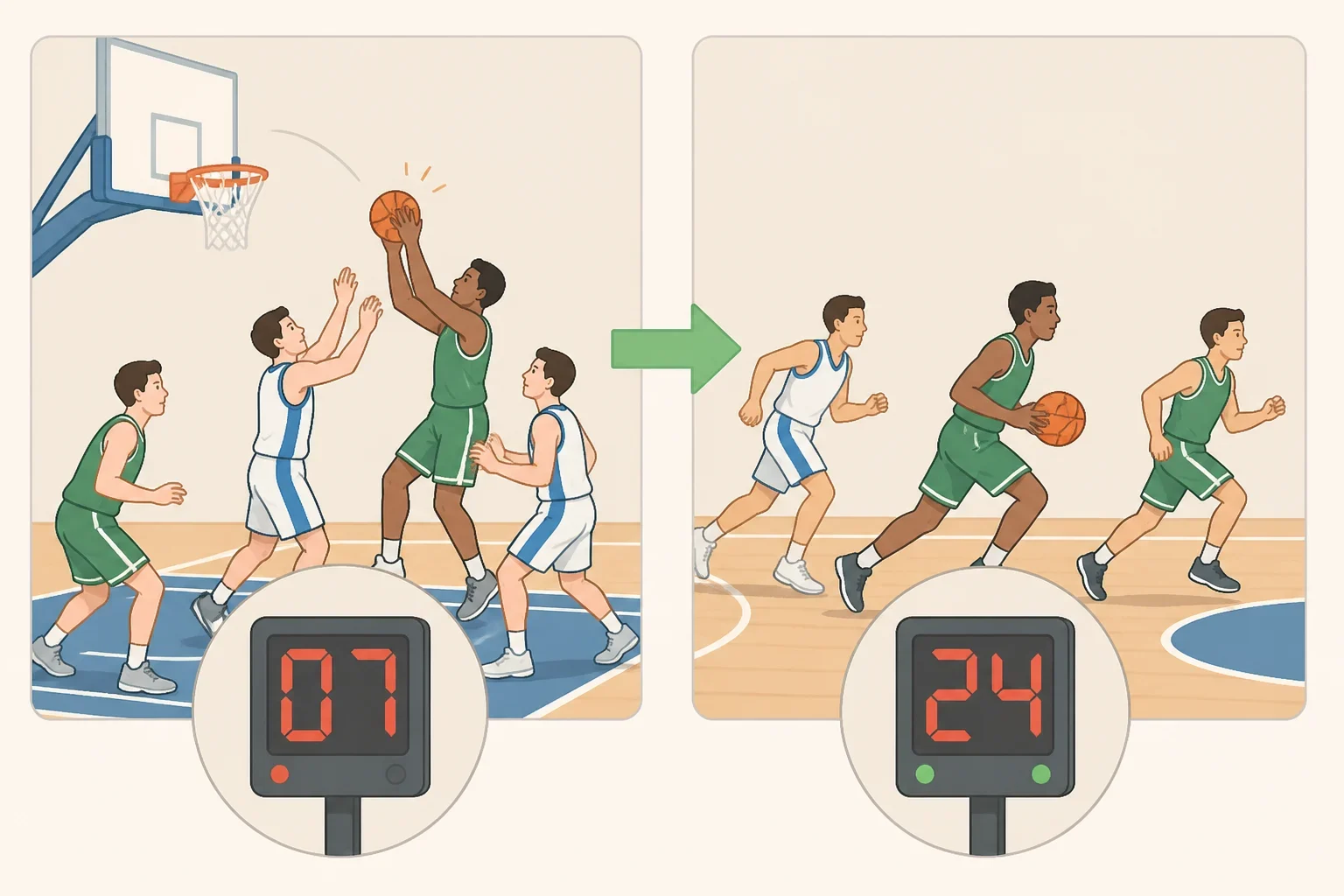
Rim contact doesn't matter yet. The first checkpoint is whether the ball changed teams at all, since none of the 14-second triggers apply once the defense has clearly taken over.
For example, a defensive player grabs a rebound with 6 seconds left on the shot clock. That's a genuine change of possession, so the clock resets to the full 24 for the defense's new trip down the floor, no matter how little time was left beforehand.
Step two: did the miss touch the rim, or was it a live free throw?
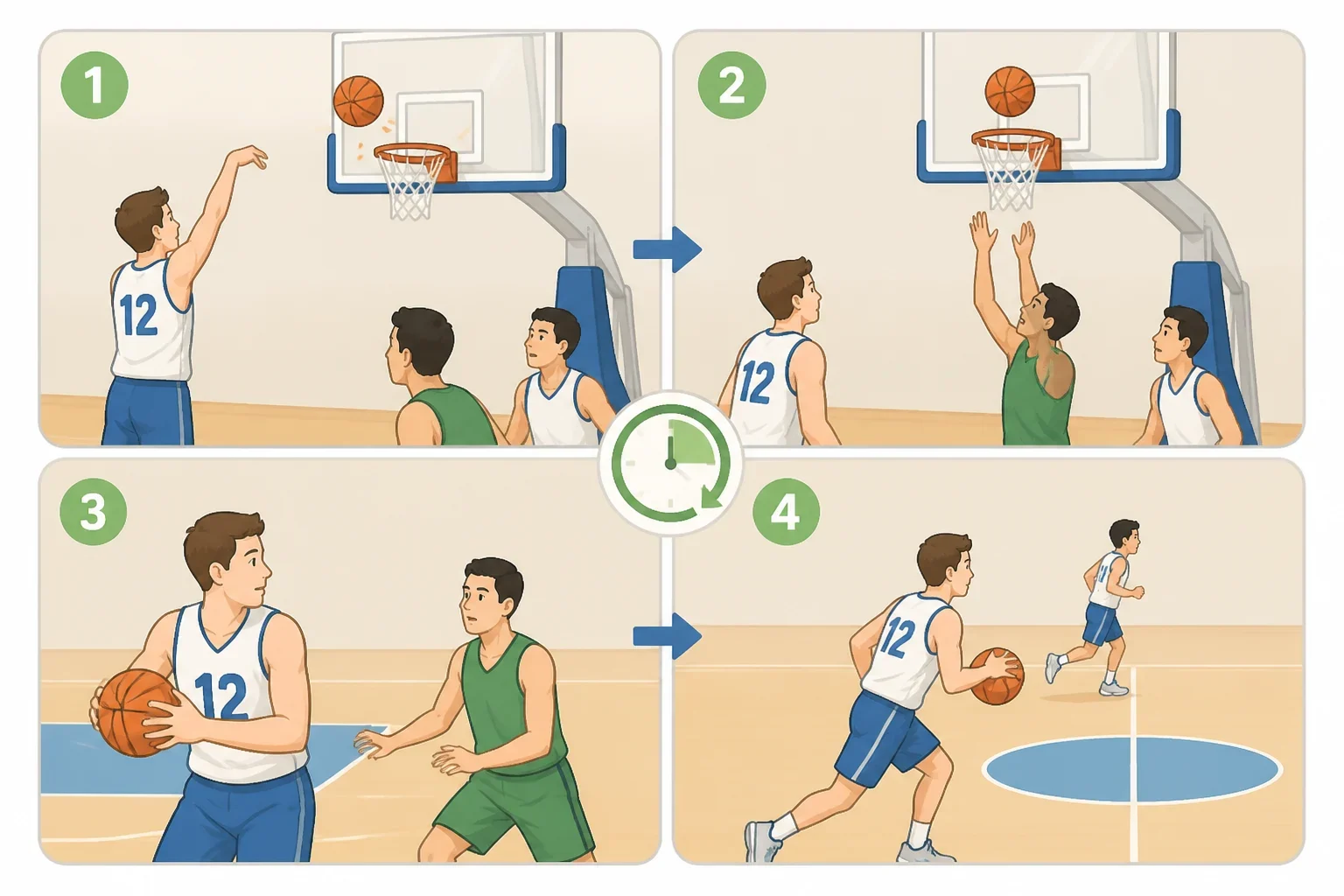
If the same team kept the ball, the next question is whether the missed attempt met the rulebook's condition: the offense has to be first to gain possession after a field-goal attempt that contacts the basket ring, or after a missed free throw that stays in play, per Rule 7, Section IV(d)(1). When that's true, the clock resets to 14.
That's the core of the NBA offensive rebound shot clock reset rule: the outcome depends on what happened to the shot before the offense recovered it, not simply on which team grabbed the ball. The loose-ball foul and out-of-bounds triggers only apply under the same conditions: the foul or out-of-bounds play has to happen immediately after a rim-touching miss or a live missed free throw, and for the foul scenario specifically, the offense has to inbound in the frontcourt, per Rule 7, Section IV(d).
A free throw that misses but stays live and gets recovered by the shooting team draws the same 14-second reset.
Why an offensive rebound is not always 14 seconds
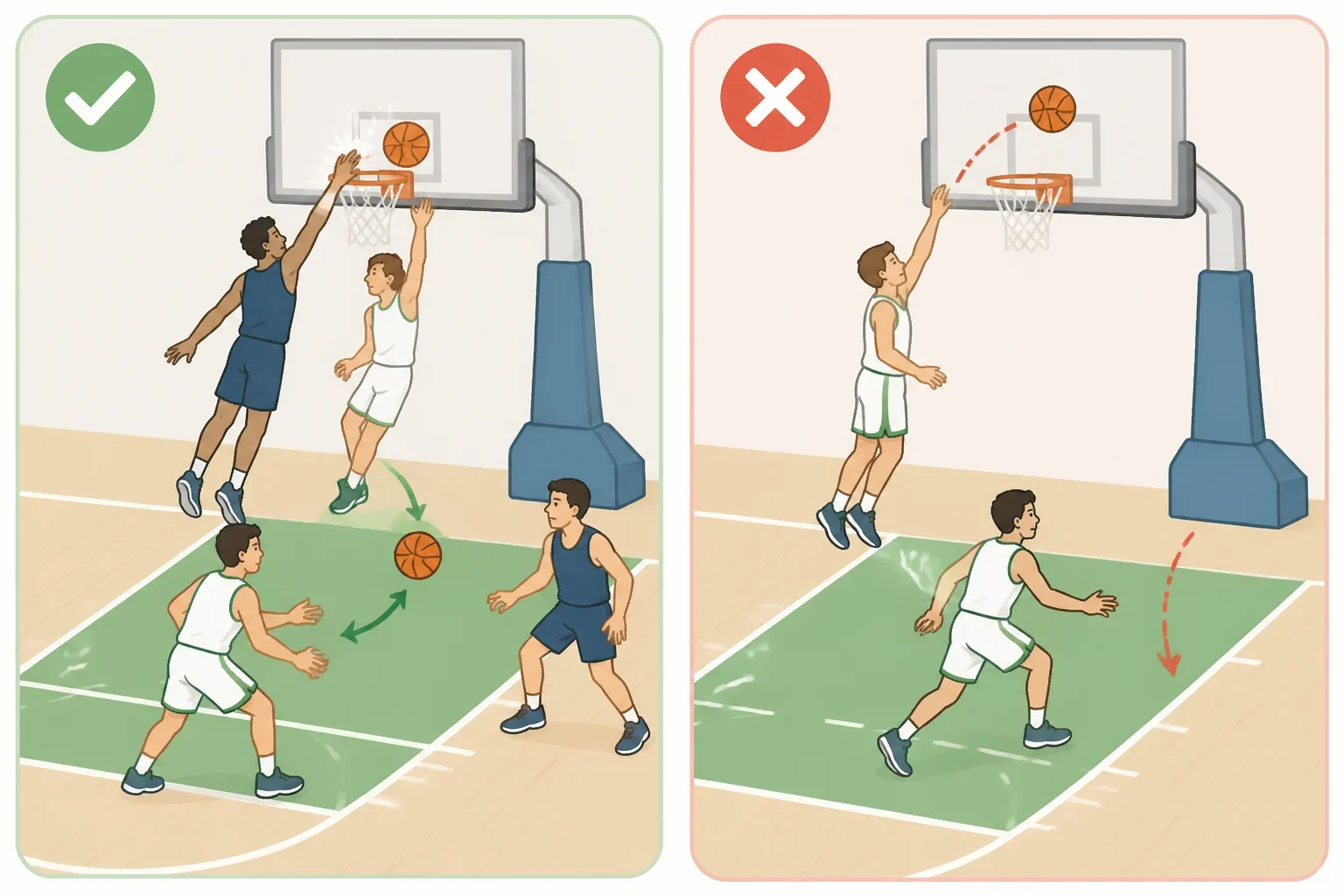
An offensive rebound doesn't automatically mean the clock drops to 14. All three triggers depend on the miss contacting the rim or being a live free throw, per Rule 7, Section IV(d)(1). A shot that never touches the rim doesn't meet that condition, even if the offense ends up with the ball again.
Rim-touching miss: a jumper clangs off the rim, and a teammate grabs the rebound. The shot contacted the basket ring, so the condition is met and the clock resets to 14, even if the team had plenty of time left before the shot went up.
Blocked before the rim: a jumper gets swatted cleanly before it ever reaches the rim, and the shooting team recovers the loose ball with 10 seconds showing. The shot never touched the rim, so the listed trigger wasn't met. Based on what Rule 7 lists and doesn't list as a 14-second trigger, the clock appears to keep counting down from 10 rather than reset. That specific "no-reset" outcome isn't spelled out as its own standalone clause in the text supplied here, so the full Rule 7 language is worth checking directly for complete certainty.
NBA offensive rebound shot clock reset: quick comparison
What happens Shot clock result Rule Defense gains possession (any change of possession) Resets to 24 seconds Default rule Offense is first to recover a missed FG that touched the rim, or a live missed free throw Resets to 14 seconds Rule 7, Section IV(d)(1) Defensive loose-ball foul right after that kind of miss, offense inbounds frontcourt Resets to 14 seconds Rule 7, Section IV(d)(2) Offense retains the ball after it goes out of bounds right after that kind of miss Resets to 14 seconds Rule 7, Section IV(d)(3) Offense recovers its own air ball or a shot blocked before reaching the rim No listed 14-second trigger applies; confirm the exact treatment in the full Rule 7 text Rule 7, Section IV(d) Loose-ball foul sends offense to a backcourt inbound instead of frontcourt Different provision applies Rule 7, Section IV(c)(2)
The late-period exception
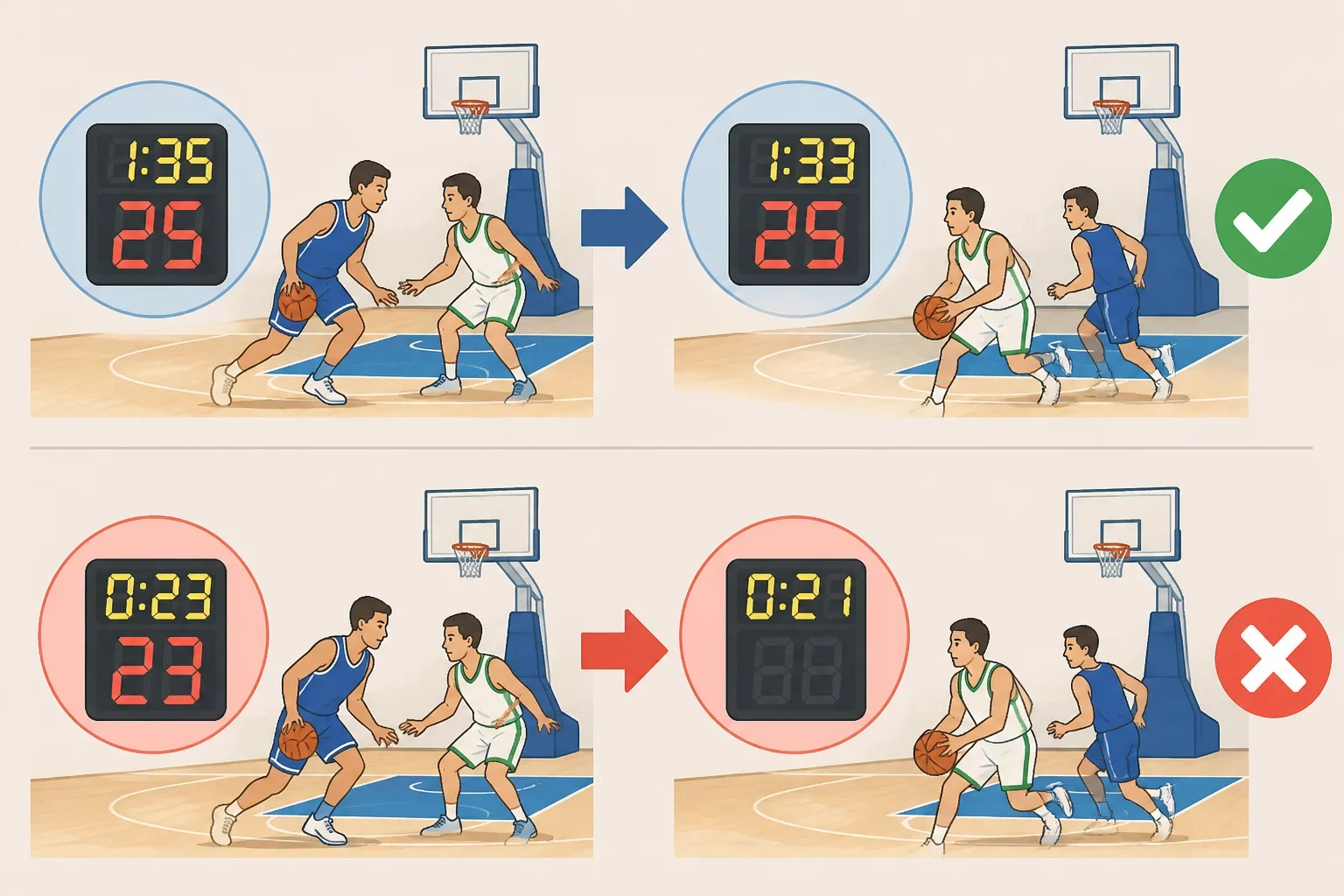
Timing changes again near the end of a period. If 24 seconds or fewer remain to play in the period, the shot clock does not function after a change of possession; the game clock becomes the operative limit instead.
The shot clock can still be reactivated during that stretch, but only to 14 seconds, and only under the same Section IV(d) conditions: the offense is first to recover a missed free throw that stayed live or a missed field goal that touched the rim; a loose-ball foul is called on the defense immediately after that kind of miss and the offense inbounds in the frontcourt; or the offense retains the ball after it goes out of bounds immediately following that kind of miss, per Rule 7, Section IV(d).
With 15 seconds left in a quarter, say the defense grabs a clean rebound. The shot clock isn't activated at all. The team plays against the game clock instead, unless one of those three qualifying situations happens afterward.
What to check next
The fastest way to read a post-miss scramble is to ask one question first: did possession actually change teams? That filters out most defensive rebounds before rim contact needs to enter the picture at all. From there, the rim-contact condition decides whether what's left is a 14-second reset or no reset, and the late-period rule swaps in the game clock once 24 seconds or fewer remain.
This breakdown reflects the NBA's 2025-26 official playing rules, the most recent edition verified for this guide. Readers who need the exact current wording, or who hit an edge case not covered here, should check the full text of Rule 7 in the NBA's official rulebook directly.