
- 3x3 basketball rules explained: scoring, clock and game length
- How long is a 3x3 basketball game, and how does scoring work?
- What happens after a basket: FIBA's check-ball and shot clock rules
- How local tournaments set their own 3x3 basketball possession rules
- Comparing 3x3 basketball scoring rules, game length, and overtime across three rulesets
- What to check before you play
3x3 basketball rules explained: scoring, clock and game length
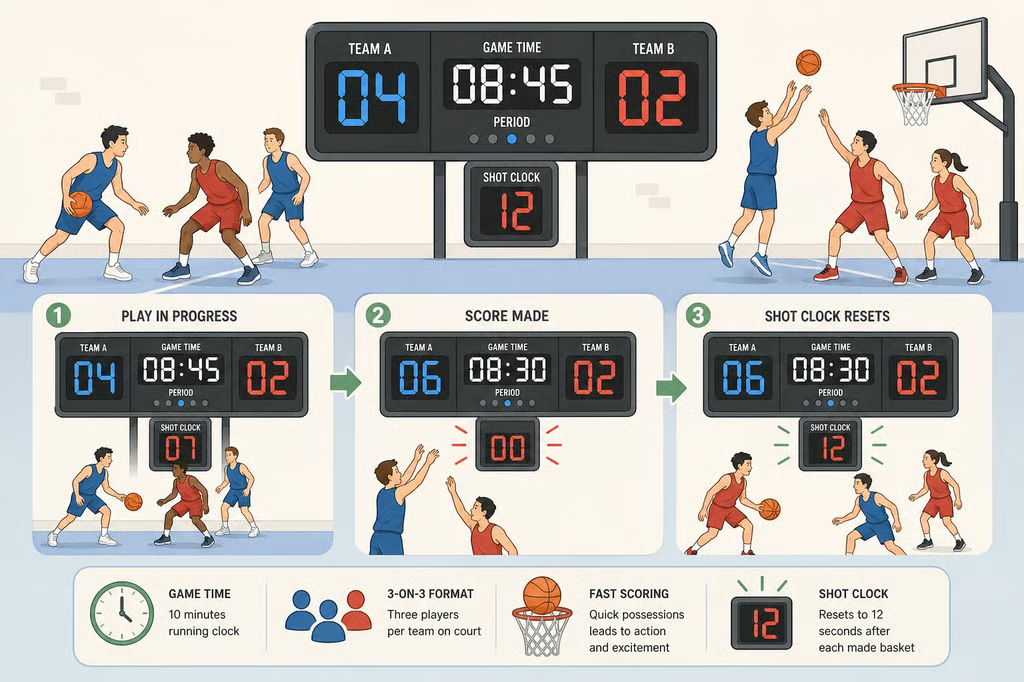
FIBA's 3x3 basketball rules build the format around speed: a single 10-minute period, no quarters, no halftime, and a 12-second shot clock that keeps the ball moving. FIBA calls this setup "simple, fast and entertaining" in an explainer published last year. That page introduces the rules for a general audience rather than reading like the official rulebook text, and two mechanics come across as only partly explained: how a 21-point win interacts with a separate "two-point clear" requirement, and exactly which team checks the ball back in after a made basket. This guide flags both wherever they come up.
The FIBA format isn't the only version running in the U.S. ThePBC and Hoops for Hope each publish their own rule sheets, with different scoring scales, game lengths, and overtime formats for their individual events. ThePBC's page went up three years ago; Hoops for Hope's rules page dates back four years. Confirm with either organizer that the posted rules still apply before relying on them for an upcoming game.
How long is a 3x3 basketball game, and how does scoring work?
Under FIBA's 3-on-3 basketball scoring rules, a basket from inside the arc counts one point, and a made basket from beyond the arc counts two, the reverse of standard basketball's value spread (FIBA). A free throw is worth one point after a foul, and the shooter must complete the attempt within five seconds (FIBA).
FIBA's explainer states that the first team to reach 21 points wins if that happens before the 10-minute clock expires. If the score is tied when time runs out, the game moves to overtime, which ends the moment either team scores two points (FIBA).
The same explainer separately states that teams must be "two or more points clear" to win, without saying how that applies to a 21-point finish reached before time expires, in a hypothetical score like 21-20 (FIBA). The two statements are never reconciled in the source text. That gap may just reflect an incomplete public summary rather than an actual conflict in FIBA's rules, but confirming which condition controls a close finish takes the official rulebook or tournament officials on-site.
What happens after a basket: FIBA's check-ball and shot clock rules
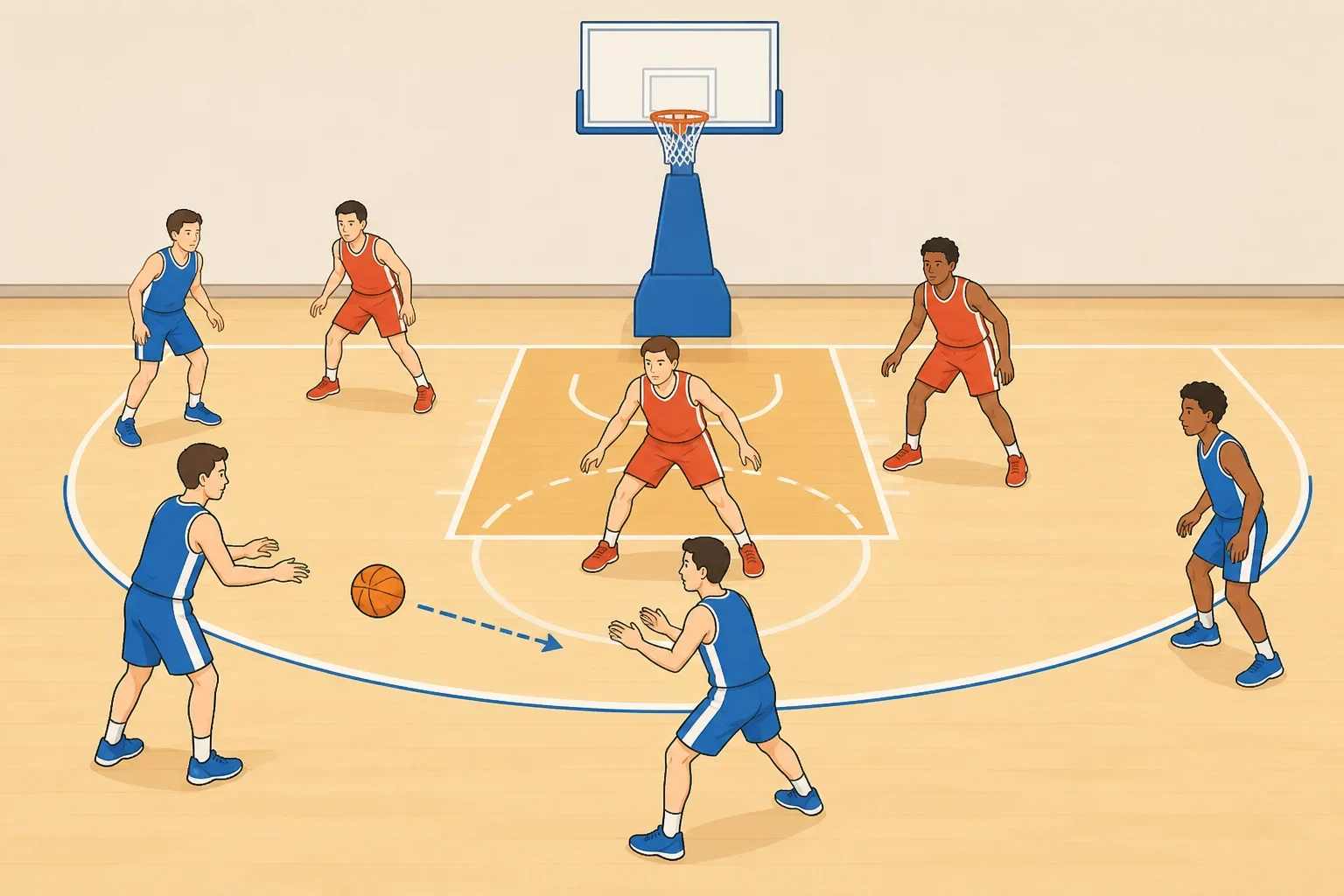
FIBA describes the ball as always either "alive" or "dead." It goes dead when a referee stops play, the shot clock runs down, or a free throw is successfully made (FIBA).
Play restarts with a check-ball: a defender positioned inside the arc passes or bounces the ball to an offensive player standing outside it. FIBA's explainer lists this as the restart after a made basket, after a shot clock expires without a score, and after the ball goes out of bounds (FIBA).
One detail reads differently than expected. FIBA's public materials state that the "offensive team" at a check-ball is whichever side just scored, or whichever side just finished defending a full 12-second possession without allowing a basket (FIBA). That's how FIBA's public explainer describes it. Without the full rulebook, it's hard to confirm the wording holds at every level of play.
On the shot clock, FIBA says the ball becomes dead once the clock runs down, except when a shot has already been released. In that case, the buzzer alone doesn't kill the possession, so the attempt stays live long enough for a rebound (FIBA).
How local tournaments set their own 3x3 basketball possession rules
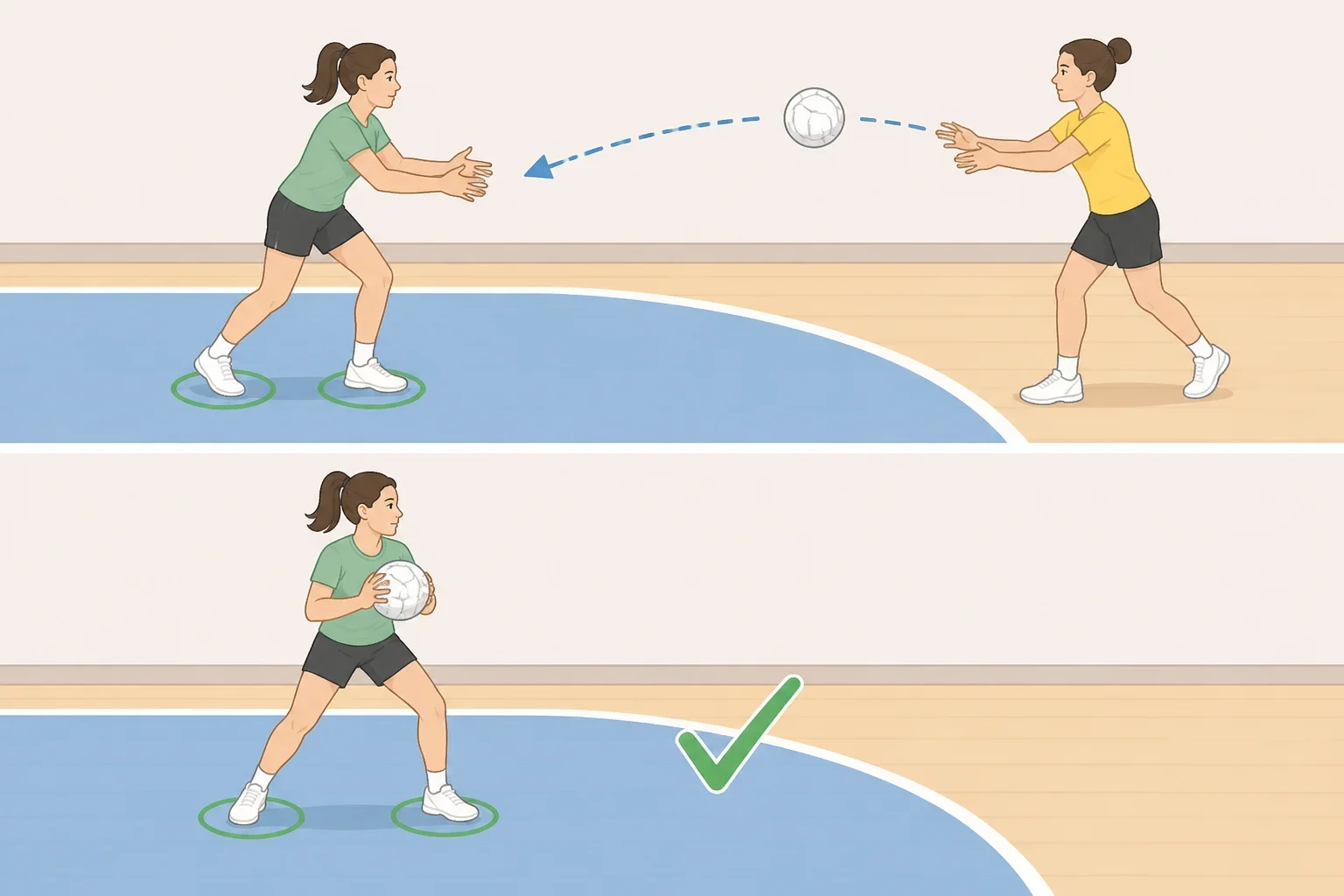
Hoops for Hope, an Oregon tournament whose posted rules date back four years, spells out possession mechanics in more procedural detail than FIBA's public explainer does. Under its rules, the ball must be "checked" by an opposing player before it's live, and the on-ball defender has to stay behind the arc until that check is completed and possessed (Hoops for Hope).
Its "Taking It Back" rule requires both feet and the ball to clear behind the arc after any change of possession, whether that change came from a make, a miss, or a steal. Shoot too soon, and the basket doesn't count; the ball turns over instead (Hoops for Hope). For example: if Team A misses and Team B grabs the rebound, no Team B player can shoot until the ball and both feet clear back beyond the arc, or Team A gets the ball back.
The same rule sheet spells out foul penalties. Non-shooting fouls draw one free throw, and a made basket with a shooting foul adds one free throw on top of the points. Possession normally changes after the final free throw, except on intentional or flagrant fouls, which award two free throws while letting the fouled team keep the ball at the backcourt line (Hoops for Hope).
Opening possession and jump balls run on a coin toss. Any jump-ball situation goes to the team that lost that toss, alternating from there (Hoops for Hope).
ThePBC's rule sheet, posted three years ago, documents a different set of variables: a two-point/three-point scoring scale, a 15-minute running clock or first-to-21 finish, and its own overtime and timeout structure (ThePBC). That page doesn't spell out possession or clearing procedure with the same detail as Hoops for Hope, so it's used here mainly for scoring and clock comparisons.
Comparing 3x3 basketball scoring rules, game length, and overtime across three rulesets
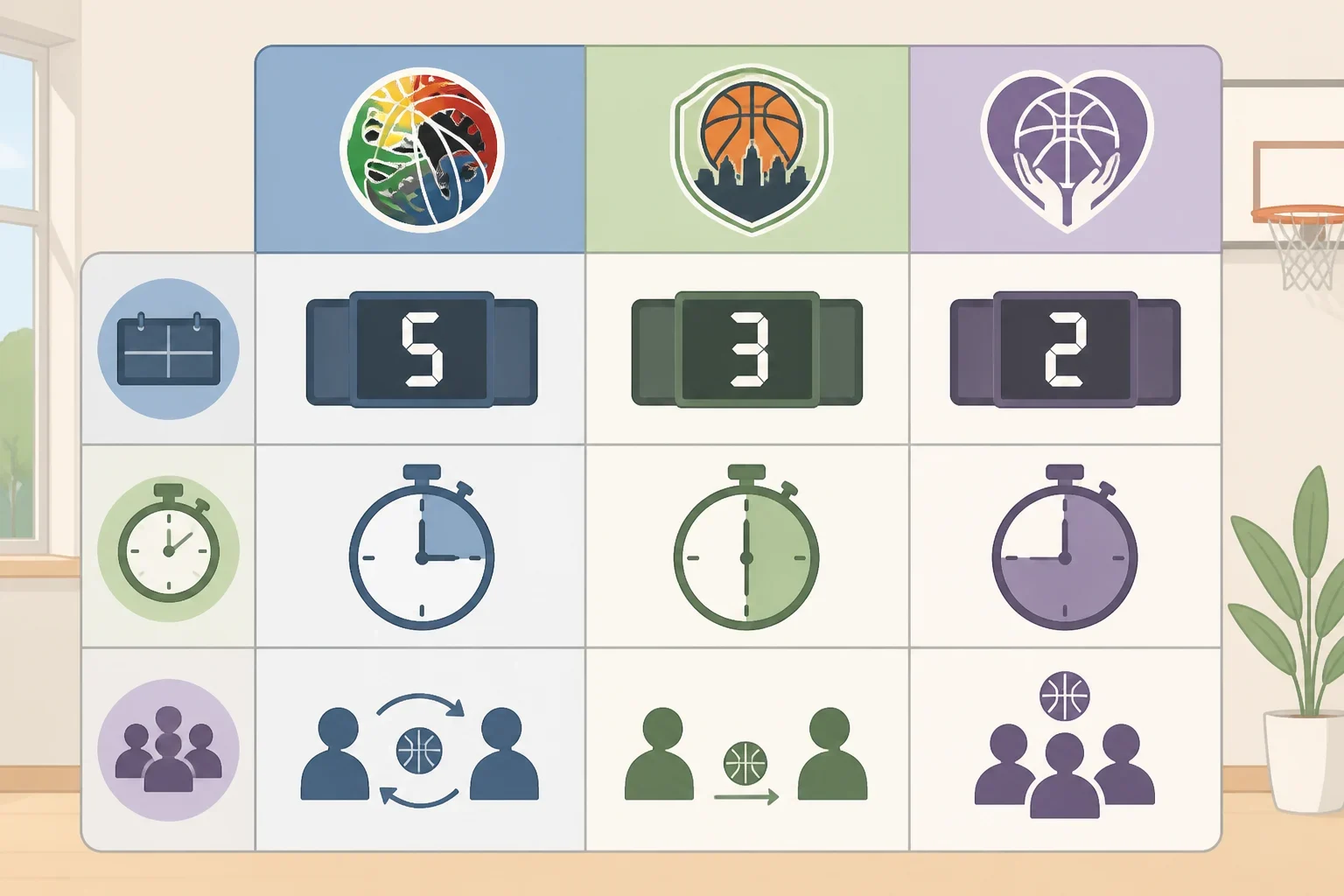
Category FIBA (public explainer) ThePBC (rule sheet, 2023) Hoops for Hope (rule sheet, 2022) Point values 1 point inside arc, 2 beyond (FIBA) 2 points inside arc, 3 beyond (ThePBC) The cited rule sheet does not specify a comparable scoring scale Game length / win target 10 minutes, or first-to-21 with a two-point margin per FIBA's explainer (FIBA) 15-minute running clock or first-to-21 (ThePBC) 25 points or 20-minute running clock (Hoops for Hope) Overtime First team to score 2 points wins (FIBA) Timed 3-minute first OT, then first-to-4 second OT, no timeouts allowed in the second OT (ThePBC) Target set 2 points above the tied score (8-8 plays to 10) (Hoops for Hope) Timeouts Not detailed beyond timeouts between periods and substitutions (FIBA) Two 30-second timeouts per game, clock keeps running, none allowed in the final 3 minutes (ThePBC) One 30-second timeout in regulation, clock stops; separate timeout for overtime, unused ones don't carry over (Hoops for Hope)
These are two organizers' individually published rule sheets, not a second universal standard sitting alongside FIBA's. They show that local 3x3 tournaments set their own numbers, with scoring scales, clock lengths, and overtime formats that differ meaningfully from each other.
What to check before you play
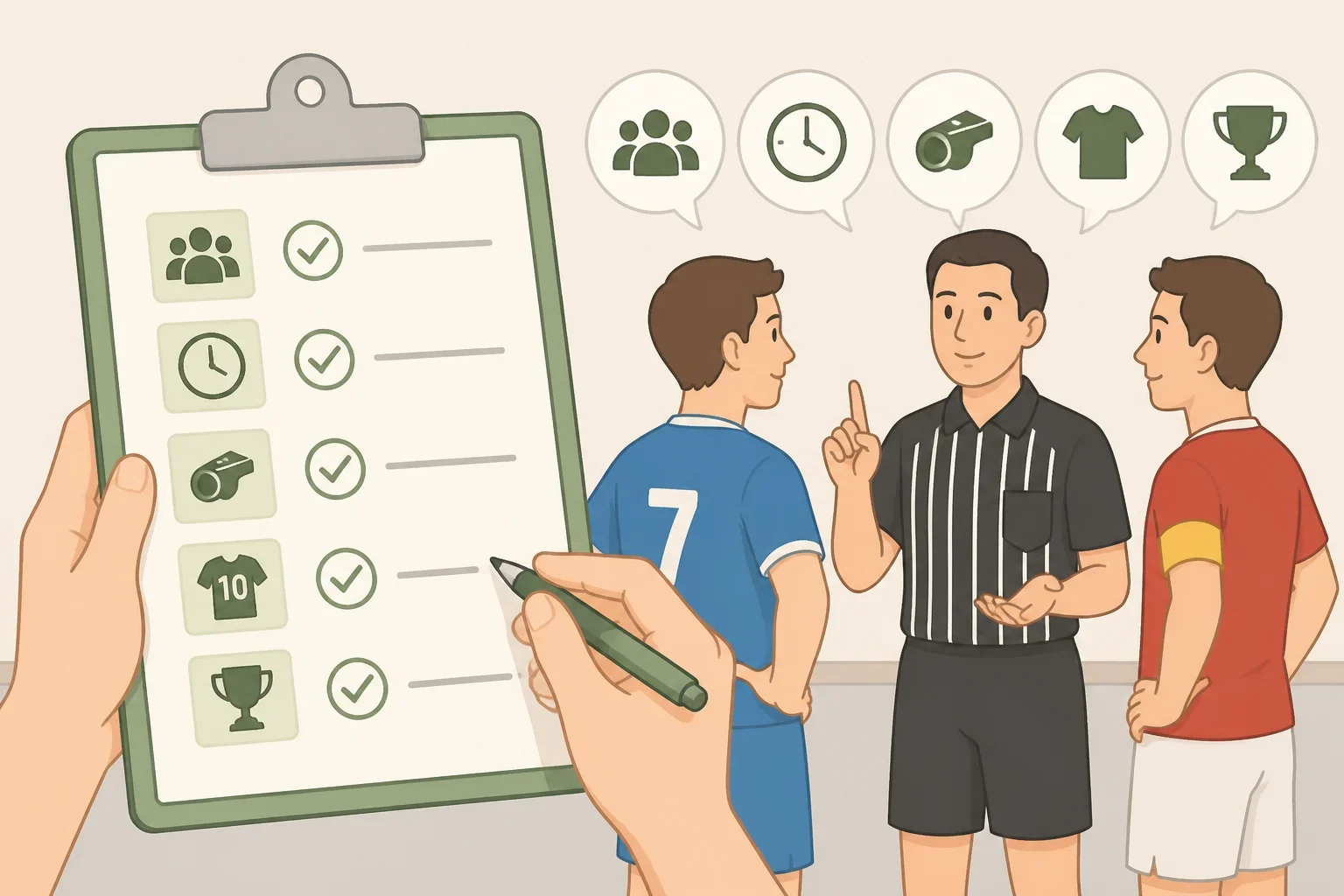
For FIBA-sanctioned play, two questions stay open: how a 21-point finish interacts with the "two-point clear" language, and who exactly checks the ball in after a make. Both are worth confirming with tournament officials before a close game reaches its final possession.
For any independent tournament, whether it's a school event, a charity fundraiser, or a rec league, get the organizer's posted or printed rule sheet before tipoff. Check:
- point values for baskets inside and outside the arc
- the win target and clock length
- what happens after a made basket or free throw
- whether the ball must clear behind the arc after any change of possession
- how timeouts affect the clock
Hoops for Hope's own policy states that its event organizers decide any point the written rules don't address (Hoops for Hope). For an independent event without a policy spelled out that clearly, ask the check-in table or tournament staff for the current rule sheet before the game starts. That's where the rules governing that specific game will actually be posted.