
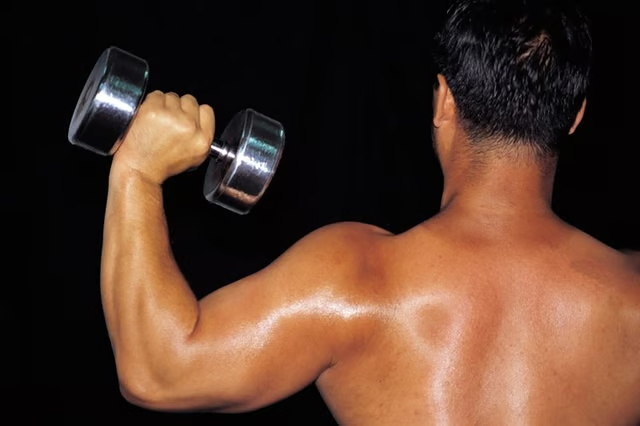
Isometric exercises are a component of practices such as yoga and martial arts. These exercises target specific muscle groups and cause them to contract without affecting muscle length. In other words, the muscle remains stable under tension. The isometric shoulder press engages the anterior deltoids, medial deltoids, upper trapezius, and triceps. This exercise also has many other benefits, especially if you are trying to build strength or overcome a shoulder injury.
Perform
Isometric shoulder presses are performed using a barbell or a pair of dumbbells. The weights are positioned over your head with your elbows bent at a 90-degree angle. You may sit or stand during this exercise, maintaining good posture and controlling the weight without using any momentum. Since you aren't performing movement with the dumbbells, you will count seconds as repetitions. For example, a one-second hold is equivalent to one repetition.
Strength Benefits
Isometric movements create more strength especially if you have been stuck using a certain weight on a particular exercise. By holding one dumbbell upward during an isometric shoulder press, your core muscles have to efficiently stabilize your back to create optimal posture. According to Jimmy Peña, an exercise physiologist, "Power comes from force, and isometrics produce more force than positive contractions. Isometric exercises also activate more motor units than isotonic exercises." Motor units are the units of motor activity created by a motor nerve cell and many muscle fibers.
Rehabilitation Benefits
Isometric movements such as the shoulder press can be performed even if you are injured. This is specifically true if you have a rotator cuff injury. A fitness professional can guide you in proper performance of an isometric shoulder press. If you are an individual who suffers from arthritis or any other kind of joint pain, isometric exercises are a good option since you are not lengthening or shortening a muscle for full range of motion. Always consult a physician for guidance.
Safety Concerns
Handle a weight that you can utilize properly without any swinging. Since isometric pressing exercises recruit your core muscles, don't excessively lean or hike your hips because this could cause strain to the lower back. Isometric movements aren't approved for those who have high blood pressure or suffer from heart problems; the intensity of muscle tension during these exercises can dramatically increase blood pressure.