
- IOC mental health screening for elite athletes: what the new guidance actually requires
- What IOC mental health screening for elite athletes actually recommends
- Screening, monitoring, and diagnosis aren't the same step
- Why a positive screen isn't a diagnosis
- What administrators, coaches, and athletes should ask before a program rolls out
IOC mental health screening for elite athletes: what the new guidance actually requires
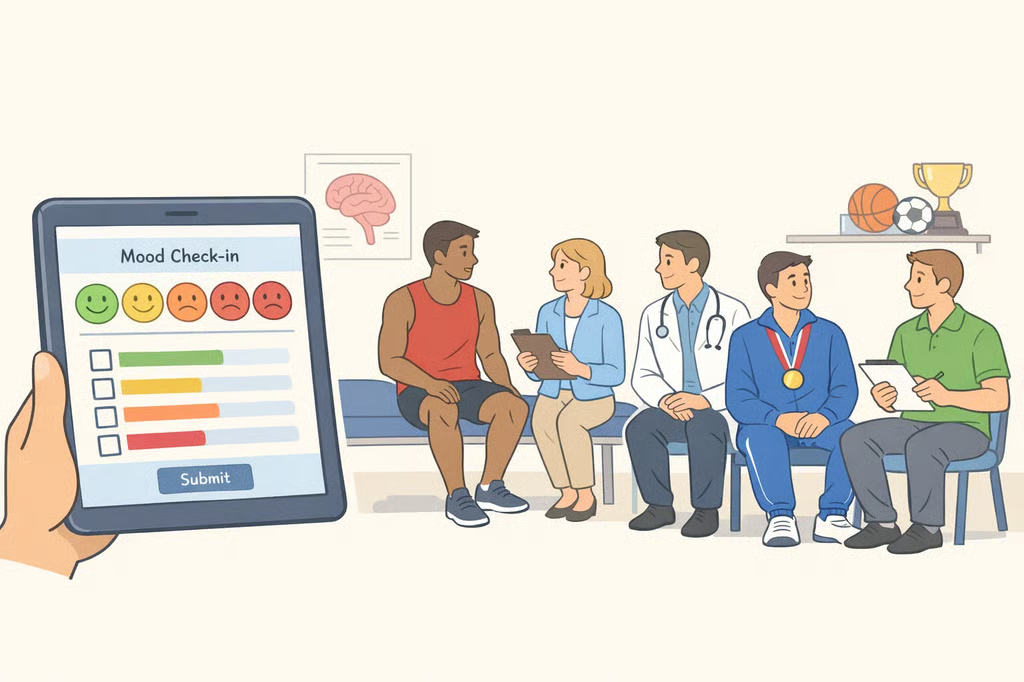
The IOC wants routine mental health screening for elite athletes built into everyday athlete care, not treated as a one-time intake form. A new consensus statement, published last week in the British Journal of Sports Medicine, calls on national federations and international sport bodies to implement evidence-based screening and monitoring "where appropriate," language that reads as a strong recommendation rather than an enforceable rule (Olympics.com). IOC mental health screening for elite athletes is now the stated global standard for elite sport; whether it becomes a working system depends on what individual federations build next.
That distinction matters for anyone inside an elite program right now. Nothing in the statement's coverage specifies deadlines, sanctions, or minimum compliance standards for federations that decide not to build the system it describes (Olympics.com).
The guidance is written for elite athletes, national federations, international sport bodies, and the coaches and clinicians working inside those systems. It updates a statement the IOC first published in 2019, this time built on a review by 31 experts with lived, clinical, and scientific expertise who examined 27 priority areas tied to athlete mental health and wellbeing (Olympics.com).
What IOC mental health screening for elite athletes actually recommends
The statement describes mental ill health among elite athletes as common, something that can be triggered by sport, show up during competition, and affect performance. It frames athlete wellbeing as sitting on a continuum rather than a simple presence-or-absence of disorder (BMJ Group).
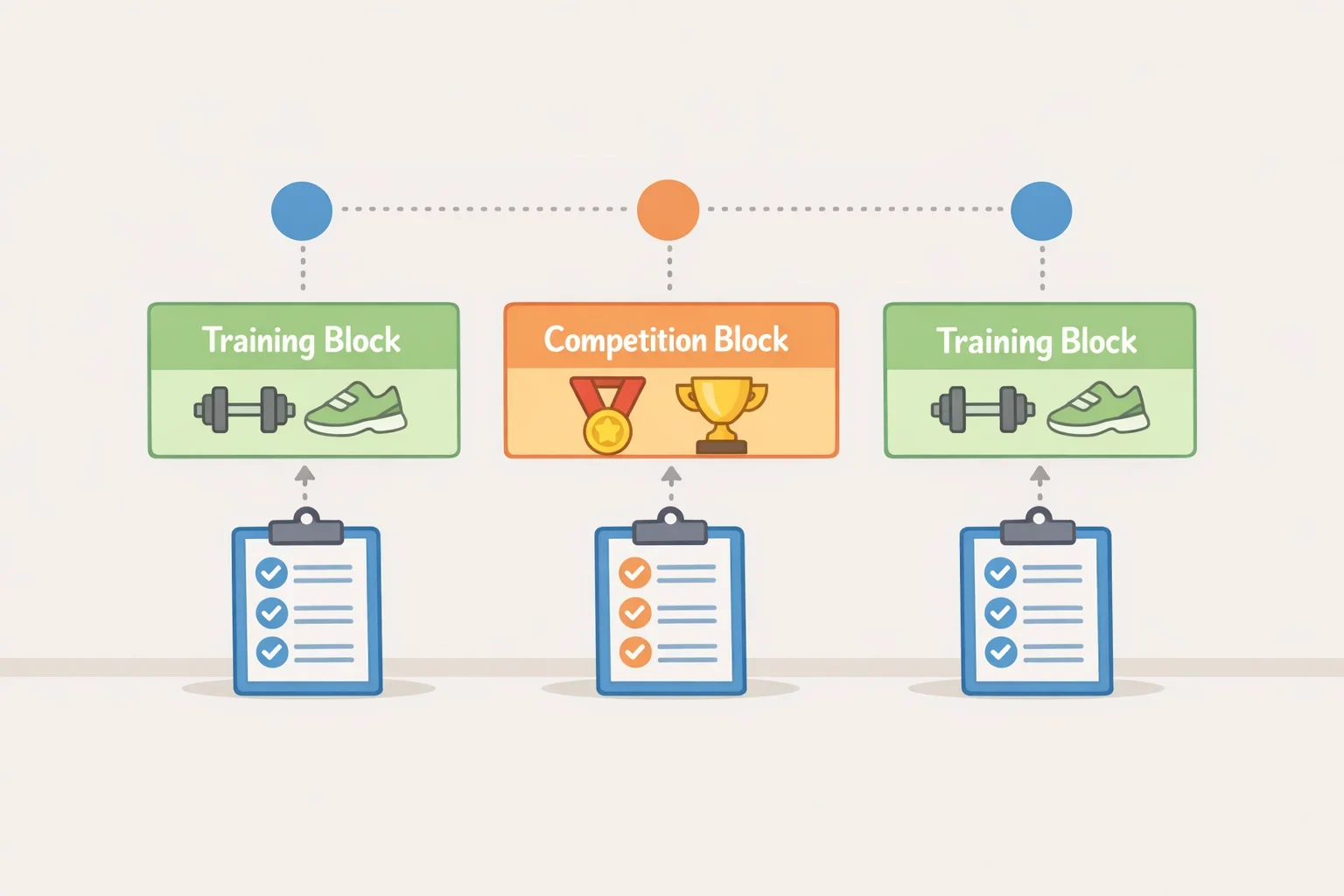
That framing has a practical point behind it. Athletes can face real mental health considerations from transient stress, competition setbacks, or intense training blocks, even when nothing rises to a diagnosable condition, according to the statement (BMJ Group).
Two recommendations sit at the core of the document: sports organizations should embed mental health as a shared responsibility across the entire elite sport ecosystem, and they should implement evidence-based screening and monitoring where appropriate (Olympics.com). Screening and monitoring are meant to happen at predefined time points and after significant events, addressing the full range of stressors athletes face in training and competition, not as a single form filled out at intake (BMJ Group).
This is framed as a culture question as much as a paperwork one. Screening should sit inside an organizational culture that supports good mental health and wellbeing for elite athletes broadly, not a program aimed only at athletes already flagged as struggling (BMJ Group). As the statement's authors put it, responsibility for preventing, recognizing, and managing mental health symptoms "extends across the entire elite sport ecosystem," covering training environments and leadership behavior rather than resting on individual athlete resilience (Olympics.com).
For a coach or federation administrator, that's the takeaway worth sitting with: the recommendation isn't "hand athletes a questionnaire." It's "build a system around them," and the statement leaves the shape of that system to each organization.
Screening, monitoring, and diagnosis aren't the same step
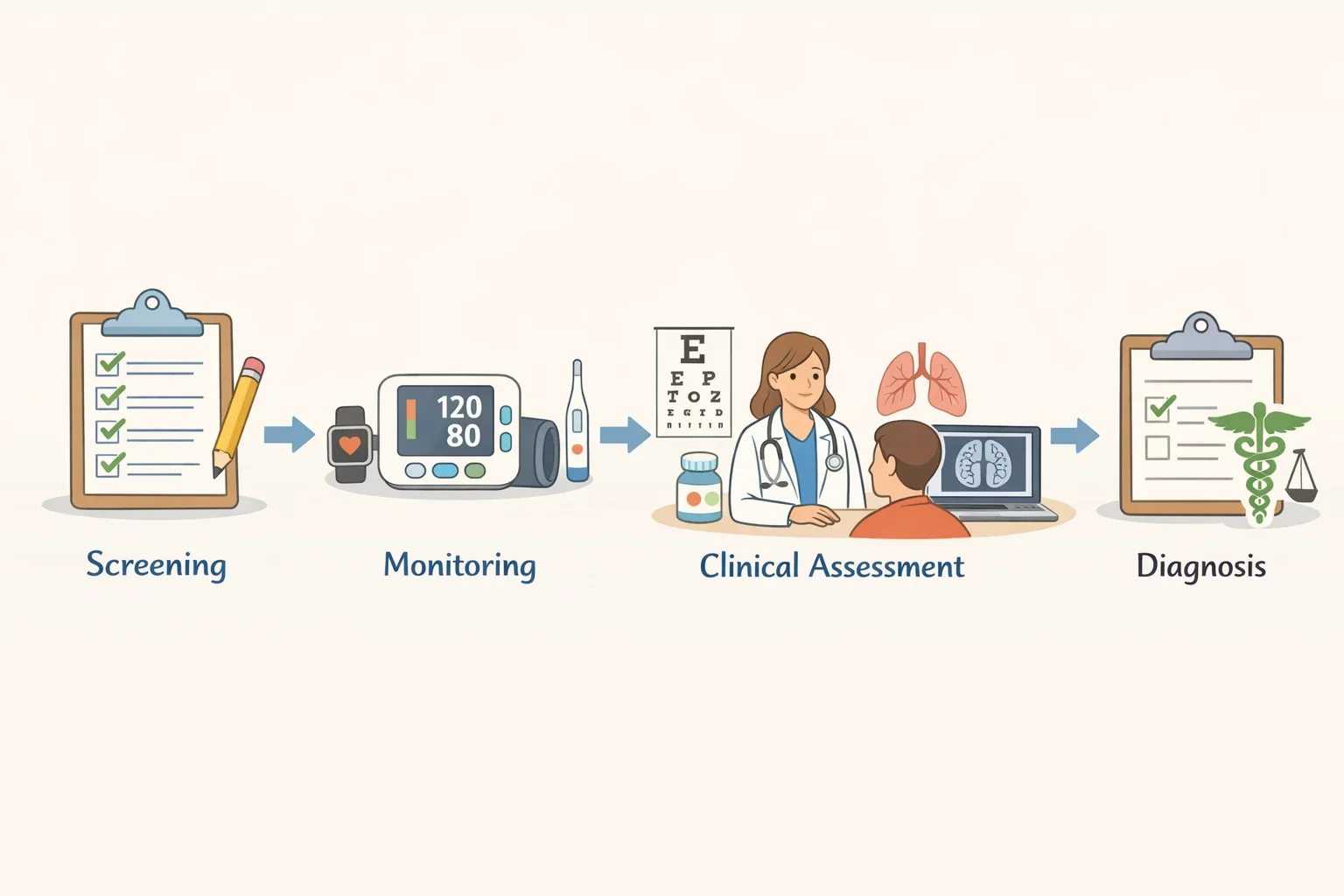
The terms in this statement get used loosely, and keeping them separate helps before looking at what screening actually produces in practice.
- Screening uses a brief questionnaire to flag possible concerns. It doesn't confirm anything on its own.
- Monitoring repeats that screening at planned points, or after events like injury or a major competition, to track change over time.
- Clinical assessment is a conversation with a qualified professional, such as a psychologist or physician, who reviews the screening result against the athlete's full picture.
- Diagnosis and treatment decisions only follow from that clinical assessment. A questionnaire score doesn't make either call by itself.
That distinction matters for the numbers below, because a large share of positive screens never turn into a diagnosis once a clinician looks closer.
Why a positive screen isn't a diagnosis

The 2026 statement doesn't name a required screening instrument in the sources describing it. One existing example of a stepped model is the Sport Mental Health Assessment Tool 1, or SMHAT-1, which the IOC first described in a 2020 consensus statement as a 12-questionnaire self-assessment designed to flag athletes at risk (Frontiers in Psychology).
It works in steps. Athletes start with a triage form, the Athlete Psychological Strain Questionnaire, and those who score above a cutoff of 17 move to a second stage of six additional questionnaires covering depression, anxiety, eating disorders, sleep, and substance use. A third step covers clinical assessment, management, and referral to a specialist if needed (Frontiers in Psychology).
That triage step is built to catch almost everyone who might have a problem, which means it also flags plenty of athletes who turn out not to need specialist care. The tool shows good sensitivity for depression, anxiety, and sleep disturbance, but low specificity across the conditions it screens for (Frontiers in Psychology).
A study published two years ago showed how wide that gap can get in practice. Researchers applied SMHAT-1 to 1,121 Polish Olympic-sport athletes, 545 women and 576 men, screened in person during a routine biannual medical checkup two to eight months before the 2024 Paris Games, then interviewed immediately afterward by a qualified psychologist (PsychArchives).
Overall, 72.4% of athletes scored above the initial distress threshold and 51% screened positive on SMHAT-1. After the follow-up interview, only 9.5% were assessed as having persistent concerns that warranted referral to a specialist (PsychArchives). Another 24.2% showed occasional, demand-related symptoms and were offered psychoeducation or a recommendation to see a sport psychologist, short of a specialist referral (PsychArchives).
That gap exists because the interview changes the picture, not because the screening tool got it wrong. It's one national, pre-Games cohort with an in-person clinical follow-up built directly into the process, and it isn't clear the same referral rate would hold for athletes outside Polish Olympic sport, or for programs that don't pair screening with an immediate interview.
What administrators, coaches, and athletes should ask before a program rolls out

The statement recommends the system. It doesn't specify who inside a federation reviews a positive screen, who conducts the follow-up conversation, or how that process stays separate from decisions about team selection. Those operational details are left to each organization to work out.
For administrators and federation staff, that means confirming who owns the screening program before it launches: who conducts the qualified follow-up conversation, where a positive screen goes for referral, and whether the clinician reviewing results reports through a channel separate from coaching or selection staff.
For coaches and support staff, the practical boundary is recognizing changes in an athlete and referring them to a qualified professional, not interpreting screening results directly. Under this kind of system, a coach's job is noticing something's off and knowing who to call, not reading a questionnaire score.
For athletes asked to complete a screening, reasonable questions before answering honestly include who sees the results, whether the reviewing clinician has any role in selection decisions, and what happens after a positive screen, whether that's psychoeducation, a referral to a sport psychologist, or specialist care, following the tiered outcomes seen in the Polish cohort above.
Screening only functions as a system if each of those pieces holds together. A questionnaire without a qualified person on the other end, or without a follow-up conversation that keeps clinical judgment separate from selection pressure, isn't the model the IOC describes. It's one incomplete piece of it.
Athletes or staff inside an elite program can raise these questions directly with their organization before a screening rollout, rather than after one goes wrong. Anyone experiencing persistent low mood, anxiety, disordered eating patterns, or sleep disruption that isn't improving should seek evaluation from a sports medicine physician or licensed sport psychologist, and contact a crisis service right away if there's an immediate safety concern rather than waiting on a scheduled screening.