
- Scottish FA Withdraws Support for Gianni Infantino Ahead of Vote
- What triggered the crisis: FIFA's abandoned private investment plan
- Scottish FA aligns with UEFA position on Gianni Infantino
- The eligibility challenge that could remove Infantino from the ballot
- Why the Scottish FA withdrawal does not settle Gianni Infantino's FIFA re-election
- What happens next
Scottish FA Withdraws Support for Gianni Infantino Ahead of Vote
The Scottish Football Association has withdrawn its support for Gianni Infantino, with chief executive Ian Maxwell confirming Monday that the governing body "will not be voting" for the FIFA president in the 2027 election. Maxwell said the move puts Scotland in line with UEFA's position, according to BBC Sport.
Scotland has withdrawn its earlier letter of support and stated how it intends to vote. It has not put forward a rival candidate, and none has emerged: no one has announced an intention to stand against Infantino as of Monday, with the deadline for candidates to declare falling on 18 November, BBC Sport reports. Scotland joins England, Wales and the Republic of Ireland, which had already pulled letters backing Infantino's re-election bid, according to RTÉ.
What triggered the crisis: FIFA's abandoned private investment plan
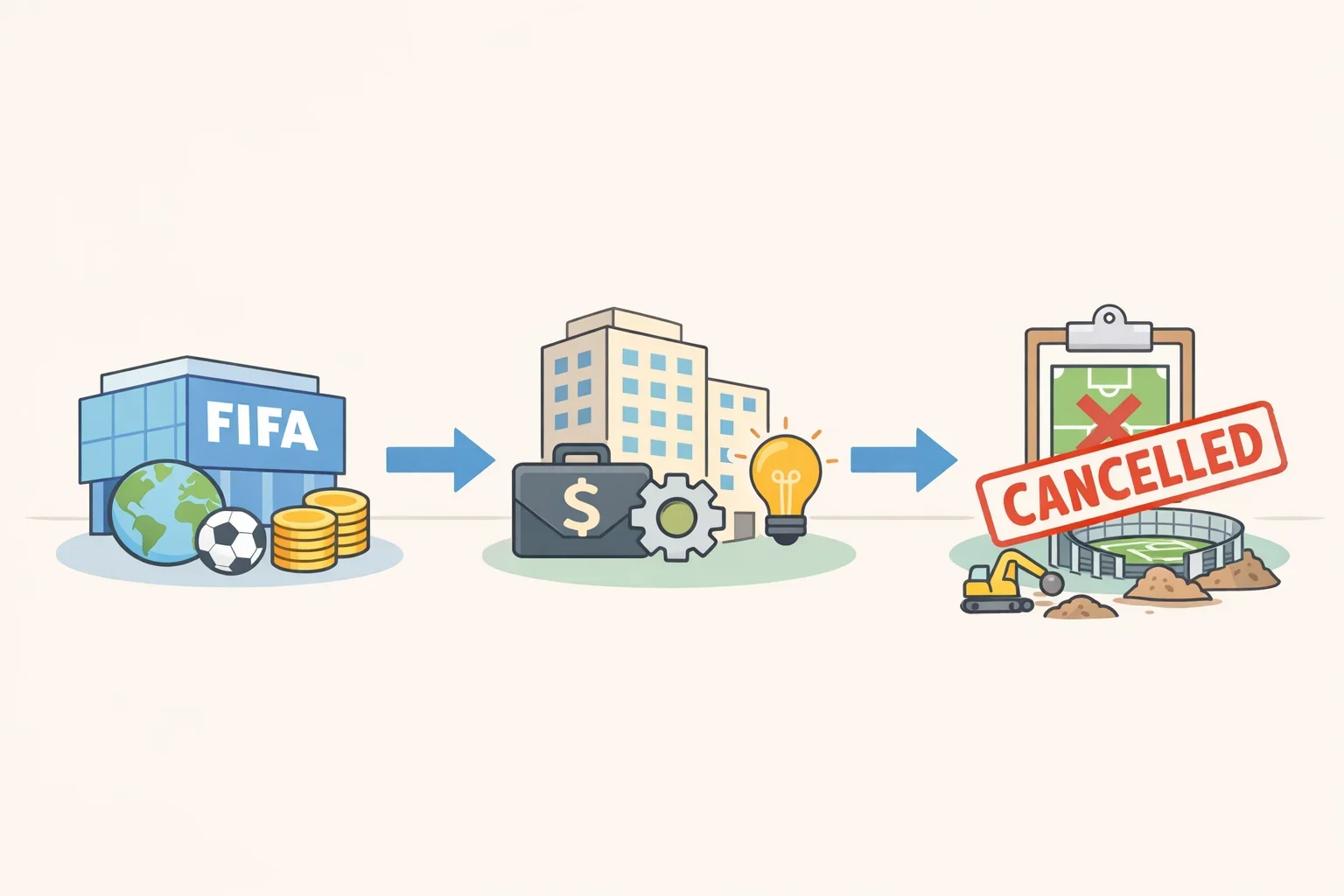
The dispute traces back to a proposed company called FIFA Forward Enterprise, which would have managed commercial and ticketing rights across FIFA competitions, including the World Cup. FIFA planned to sell 21% of that company to a private investment firm before scrapping the plan under backlash led by UEFA, which had threatened to boycott FIFA competitions altogether, BBC Sport reported.
Kevin Lamour, FIFA's chief operating officer, said in the aftermath that staff had been "deceived" about the scheme, adding an internal voice to the criticism, per The National.
Last week, UEFA, Concacaf and the Asian Football Confederation jointly accused FIFA and Infantino of breaking trust "through deception" in an open letter representing the leadership of their confederations, which together count 136 member associations, BBC Sport reported. That figure describes institutional backing behind the letter, not a confirmed vote count.
The same three confederations criticized FIFA's plan to review the episode internally, arguing that proper governance required a fully independent third party to examine it instead. FIFA has committed only to presenting a report at the next FIFA Council meeting, expected in October, per BBC Sport.
Scottish FA aligns with UEFA position on Gianni Infantino
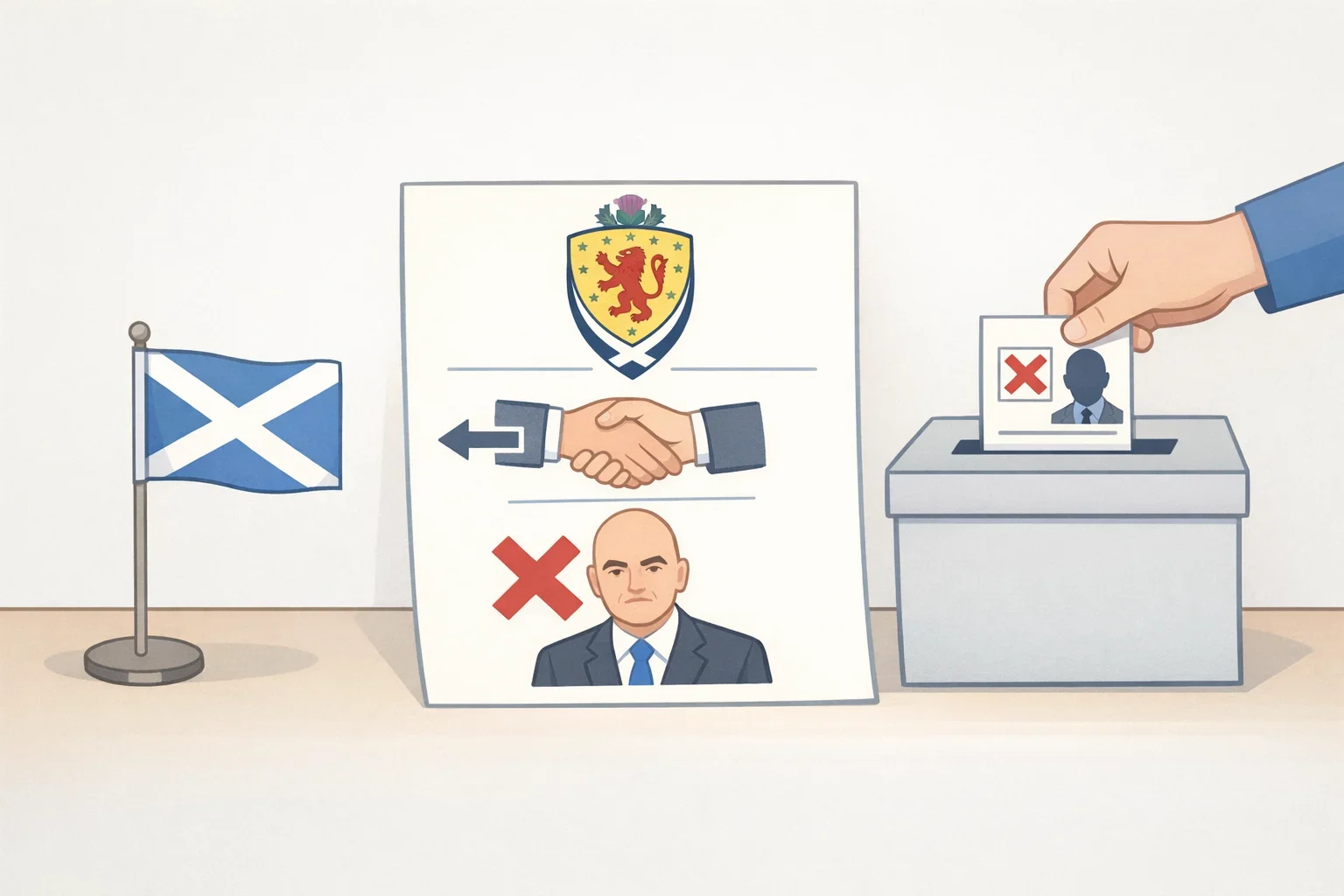
Maxwell said the SFA's position has held steady since UEFA's 55 member associations met on the issue. "We have aligned ourselves with the UEFA position and 55 nations are stronger than one voice," he said, according to Herald Scotland.
Maxwell pointed to what he called a "lack of transparency" around the abandoned investment plan and a broader "fall-down in governance" at FIFA. He also rejected any suggestion that the SFA had delayed speaking out because its president, Mike Mulraney, chairs FIFA's finance committee, RTÉ and BBC Sport reported.
The declaration itself is narrow. It amounts to a withdrawn letter and a stated voting intention, with no nominated alternative to Infantino attached, and it carries no formal weight until FIFA Congress actually votes.
The eligibility challenge that could remove Infantino from the ballot
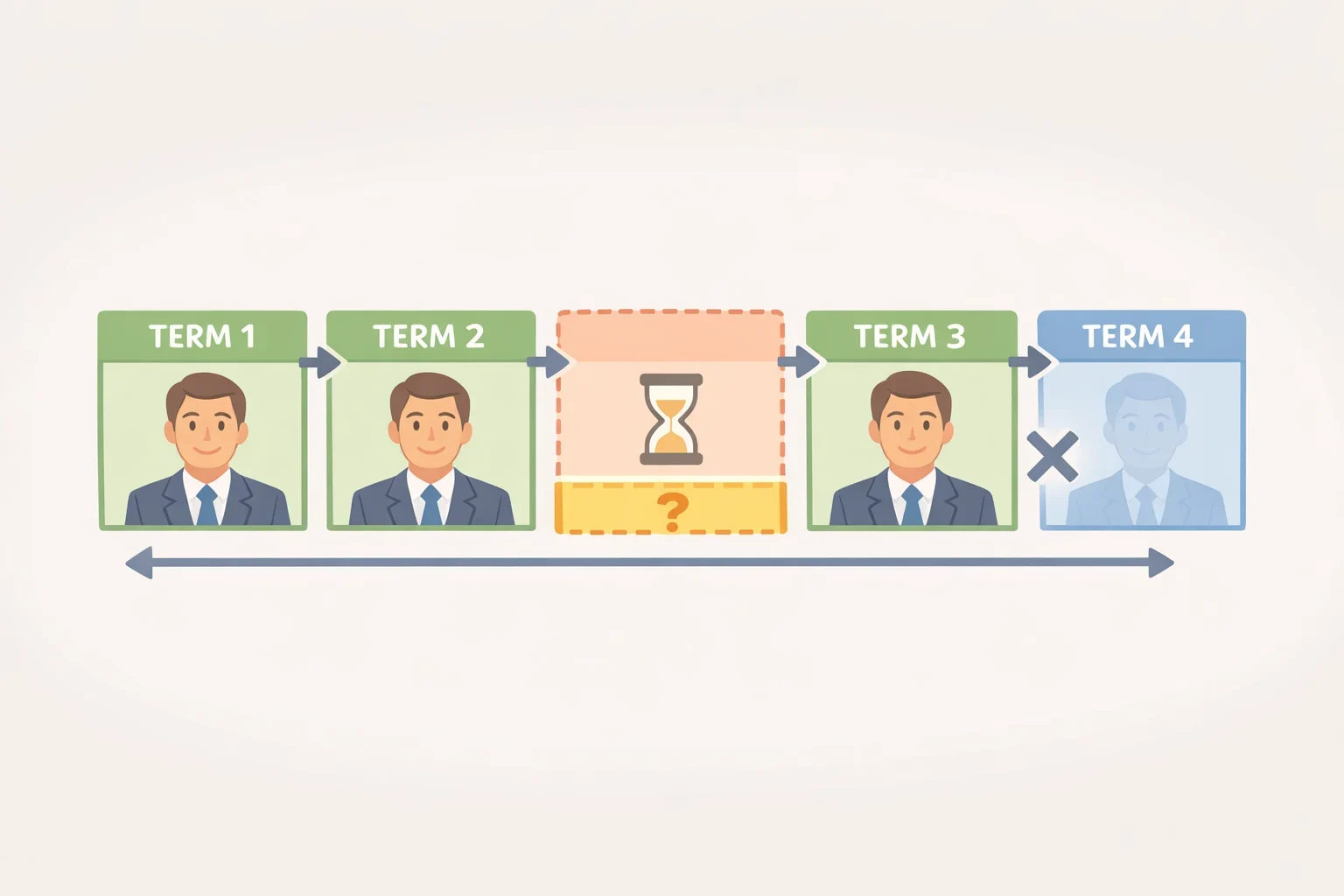
FIFA's statutes cap a president at three four-year terms, or 12 years, under Article 33.2. A fourth win in 2027 would stretch Infantino's tenure to 15 years by 2031, BBC Sport reported.
That cap comes with a contested exception. FIFA's governing council agreed with its governance, audit and compliance committee in 2022 that Infantino's partial 2016-2019 term, served after he succeeded Sepp Blatter, would not count toward the limit.
BBC Sport reports Infantino successfully argued to the committee that the stint should be discounted because it did not run a full four years, clearing him to stand again in 2027. FairSquare, an accountability group, says the legal reasoning behind that exemption has never been published, per RTÉ.
FairSquare has now written to FIFA's review committee, a subcommittee of the GACC with authority to rule on candidate eligibility, arguing the 2022 exemption was made "without a clear legal basis, in a non-transparent manner." Miguel Maduro, the former chair of FIFA's governance committee, backs the challenge. He told the Press Association that "2027 would be his election for a fourth term of office, and it seems to me that the wording of the provision runs clearly against that," according to RTÉ.
No timeline has been reported for a review committee decision, and FIFA had been approached for comment on FairSquare's letter without a detailed response cited in current reporting, per RTÉ.
The eligibility fight is not the only pressure point. RTÉ reports it has been suggested that the confederations' original letter was partly meant to give Infantino a chance to resign with dignity. Professor Kevin Tomlinson told The National that "somebody within FIFA may manage to persuade him to stand down before the vote," per The National. A review committee ruling, a resignation, and a contested election at Congress are all possibilities current reporting supports, and none of them is confirmed.
Why the Scottish FA withdrawal does not settle Gianni Infantino's FIFA re-election
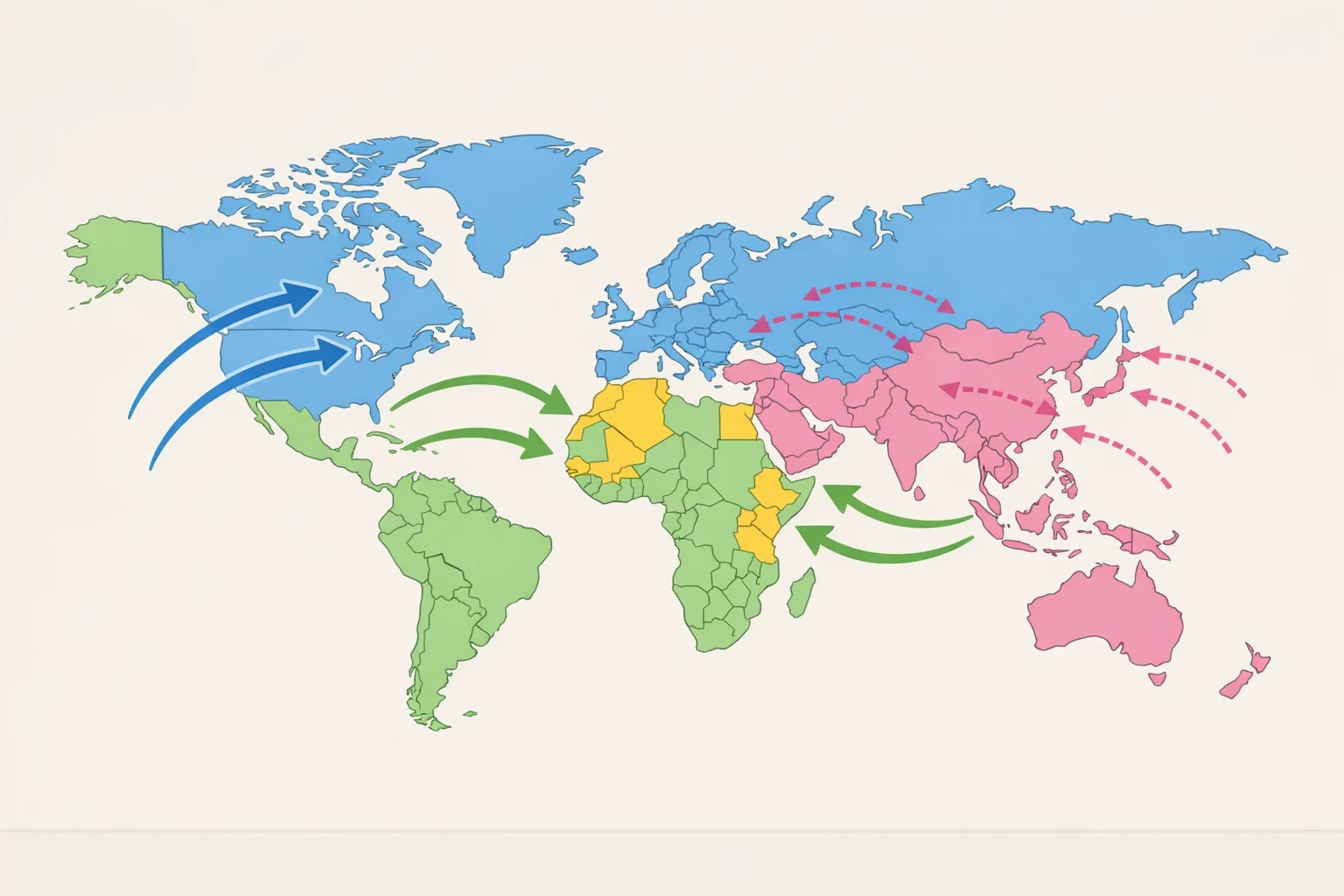
FIFA's presidential election is decided by a vote of all 211 member associations, BBC Sport reported. UEFA has coordinated a political stance across its members, but the defections detailed below show individual associations still act on their own.
The National reported that if a credible challenger enters the race, Infantino would need 106 of those 211 associations to back him to remain FIFA president through 2031, per The National. No challenger had emerged as of Monday, with candidates required to announce an intention to stand by 18 November.
The FIFA Council reflects a similar divide at a smaller scale. Its 37 members, including Infantino, secretary general Mattias Grafström, and confederation representatives (nine from UEFA, seven from AFC, six from CAF, five from Concacaf, five from CONMEBOL, three from Oceania), appear split much like the wider confederations, with Africa, South America and Oceania having backed Infantino and UEFA-aligned members opposing him, BBC Sport reported. It raises a real question about whether Infantino could govern effectively even if he wins a straightforward vote of the 211 associations, the same reporting noted.
Confederation unity has already cracked in both directions:
- Mexico, Grenada and St Kitts and Nevis back Infantino despite Concacaf's stated opposition to him.
- Eight AFC members, including the UAE and Qatar, have also broken ranks to support him.
- New Zealand split from Oceania to oppose Infantino, even as the confederation's own statement praised FIFA's progress over the past decade.
- The USA and Canada have backed Concacaf's collective statement without explicitly declaring opposition to Infantino themselves, a distinction that shows public support can lag behind actual voting intent.
That's according to BBC Sport's reporting. Those defections are declared public positions rather than verified ballots, but they show confederation letters do not guarantee aligned votes once Congress actually meets.
Professor Kevin Tomlinson, offering historical context to The National over the weekend, said smaller associations have often depended on FIFA funding and have shifted their public stance at the last minute, pointing to Sepp Blatter's 1998 win over Lennart Johansson as precedent. He framed that as a pattern worth watching rather than a forecast for 2027, per The National.
What happens next
FIFA's Council is due to receive a report on the abandoned investment plan at its next meeting, expected in October, BBC Sport reported.
Any challenger wishing to face Infantino must announce that intention by 18 November. No one had done so as of Monday, per BBC Sport.
FIFA's review committee has set no public timeline for ruling on FairSquare's eligibility challenge, according to RTÉ. Whether Infantino appears on next year's ballot at all may hinge on that decision as much as on any vote count, and Scotland's declaration, like those from England, Wales and Ireland before it, signals political pressure rather than a settled outcome.