


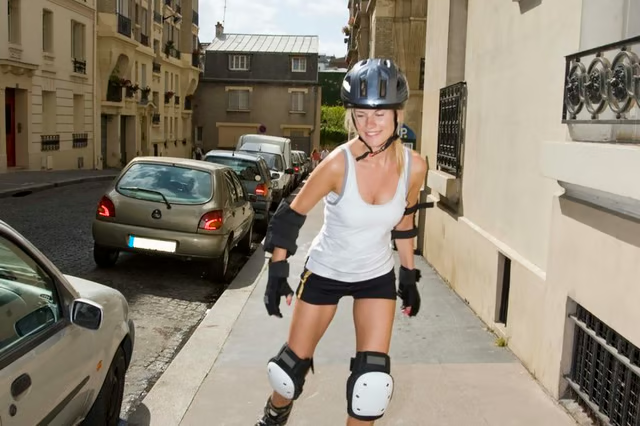
Many fitness enthusiasts opt for rollerblading due to the lack of stress placed on the joints. What they often fail to realize, however, is that the muscles of the lower body must support the weight of the entire body, which places undue strain on the leg muscles, including the soleus and gastrocnemius of the calves. Soreness in these muscles is preventable with proper stretching and warm-up exercises. Also, as your legs become more conditioned to rollerblading, the likelihood of experiencing pain decreases.
Warming Up
Prevent involuntary contractions of the calf muscles by sending more blood to the area before you put on your skates. Light jumping jacks or running in place for three to 10 minutes will raise the internal temperature of the calf muscles and make them more elastic and less prone to strains. Maintain muscle flexibility by following your warm-up with stretching. Stand with your palms pressed against a wall. Keep both feet on the ground and bend one knee. Extend the other leg behind you but keep your entire foot level with the ground. Push against the wall and hold for 10 seconds to half a minute. Do this for both legs for two or three repetitions on each side.
Posture
Maintaining adequate posture can prevent your calves from tensing up and becoming sore as well. When rollerblading, position your hips to fall back in line with your heels. This will force you to bend at the knees, putting you into almost a semi-crouching position. Bent knees prompt the hips to support your body weight and take pressure off your lower body, including the calf muscles, for less strain. Remember to tuck your tailbone in and try not to tense up.
Caveat
Overuse of the calf muscles may not only manifest as pain behind the upper half of the back of the lower leg. The Achilles tendons connect the calf muscles to the bones in your heels. If you notice that an ankle becomes weak and difficult to rotate and the area behind your heel becomes painful and/or swollen, hang up your roller blades and see a physician immediately. You may have developed Achilles tendonitis from too much strain on the calf muscles.
Pilates Strengthening
One of the best ways to prevent damage to the calf muscles and the Achilles tendon is to perform Pilates exercises because they strengthen other muscles in the body that support the calf muscles. For instance, the core muscles or the abdominal muscles provide balance and stability while the leg muscles are executing skating motions. Pilates exercises strengthen the core muscles. In addition, Pilates conditions the other leg muscles used repeatedly during skating including the quadriceps, hamstrings, hip abductors, gluteus maximus and medius, and external rotators.