
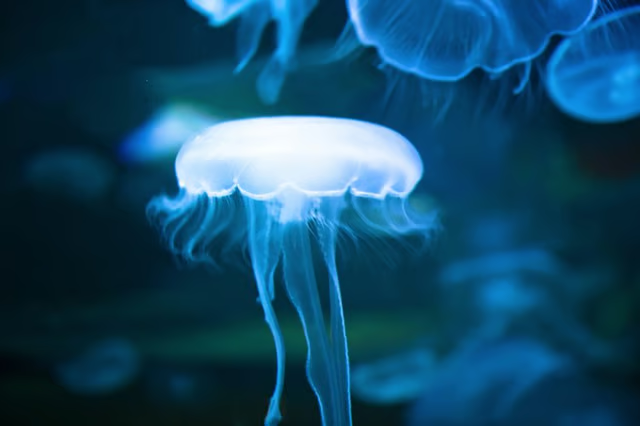


The jellyfish float, also known as the survival float, is a critical part of water safety. This float is sometimes taught in the first stage of swimming lessons, as part of water orientation skills -- and sometimes in the later stages, as part of fundamental aquatic skills. Learning to float in numerous positions helps in understanding the lifting effects of water.
The Technique
This float is aptly named for its proper execution, as it looks like a jellyfish bobbing in the water. The technique is quite straightforward. Standing in waist-deep water, the swimmer takes a deep breath, puts his face in the water, arms hanging down, and allows the water to support the body. The swimmer lifts his feet off the bottom, and his body bobs to the surface in a ball-like form. Some swim instructors teach the swimmers to grab their ankles when learning the technique.
Water Orientation
While mastering the jellyfish float helps to overcome fear or unfamiliarity with the water, other drills set the stage for learning the technique. These drills include face splashing, playing games in the water, using floatation devices and bobbing in the water. Another important tool for a swimmer to learn before attempting the jellyfish float is holding your breath under water.
Foundation for Aquamotor Skills
The ability to maintain the float sets the foundation for developing aquamotor skills. The key to developing effective swimming strokes is an appreciation for how the body floats in the water. The jellyfish float helps a swimmer understand how gentle shifts of the body can distribute his weight differently. For example; the freestyle stroke requires a swimmer to push down on his chest, thereby centering the body's flotation.
Other Floats
Other floating techniques are often taught in conjunction with the jellyfish. For example; the turtle or mushroom float has the swimmer reaching down, wrapping the arms around the knees and holding them and bobbing to the surface. For the prone float, the swimmer starts with the turtle or mushroom float, then extends the arms and legs until floating prone in the water. This body position forms the basis for learning swimming strokes.