
- Billie Jean King Cup format explained: how each 2026 tie works
- How many matches are in a Billie Jean King Cup tie?
- Understanding the scoring inside each match
- Billie Jean King Cup singles and doubles format: two paths to a win
- When doubles has decided the tie before
- Where a tie fits in the 2026 Finals bracket
- Billie Jean King Cup rules: what varies by round
- What to remember next
Billie Jean King Cup format explained: how each 2026 tie works
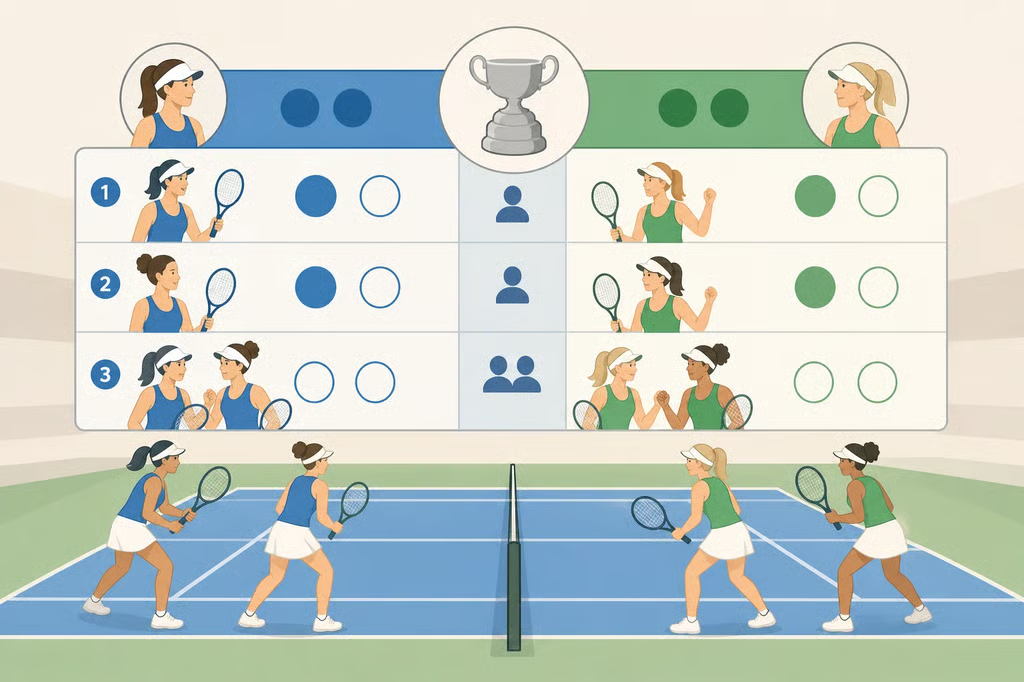
The 2026 Billie Jean King Cup Finals begin Tuesday, September 22, and run through September 27, at the Shenzhen Bay Sports Centre Arena in Shenzhen, China, according to the Billie Jean King Cup official site. Eight national teams will work through the tournament's knockout bracket there, and every tie, from the quarterfinals through the final, follows the same Billie Jean King Cup format: two singles matches, one doubles match, and a result that's locked in the moment a nation banks its second win.
That two-win threshold is the number worth tracking, not the count of matches played. A nation can clinch a tie 2-0 in singles before doubles is even needed, or the singles can split and send the tie to a deciding doubles match, according to the official site.
This piece breaks down the order of play, what the scoring inside each match actually means, and how a real 2025 qualifying tie shows just how far a doubles match can swing an outcome.
How many matches are in a Billie Jean King Cup tie?

Three, at most, under the 2026 Finals format. Two singles matches come first, followed by one doubles match, all contested on a single day, per the official site.
The tie itself is decided once one nation reaches two match wins. A nation doesn't need to sweep all three matches to advance; it just needs two, and if the singles split one win apiece, doubles becomes the decider by default.
Here's what's confirmed and what isn't. Confirmed by the official format description: two singles matches, then doubles, with the first nation to two wins taking the tie. Not confirmed by that same summary: whether doubles still gets played once a nation has already clinched the tie 2-0 in singles. That gap matters for scheduling trivia, not for the result. The tie is over the moment either nation reaches two wins, whatever happens afterward on court.
Understanding the scoring inside each match
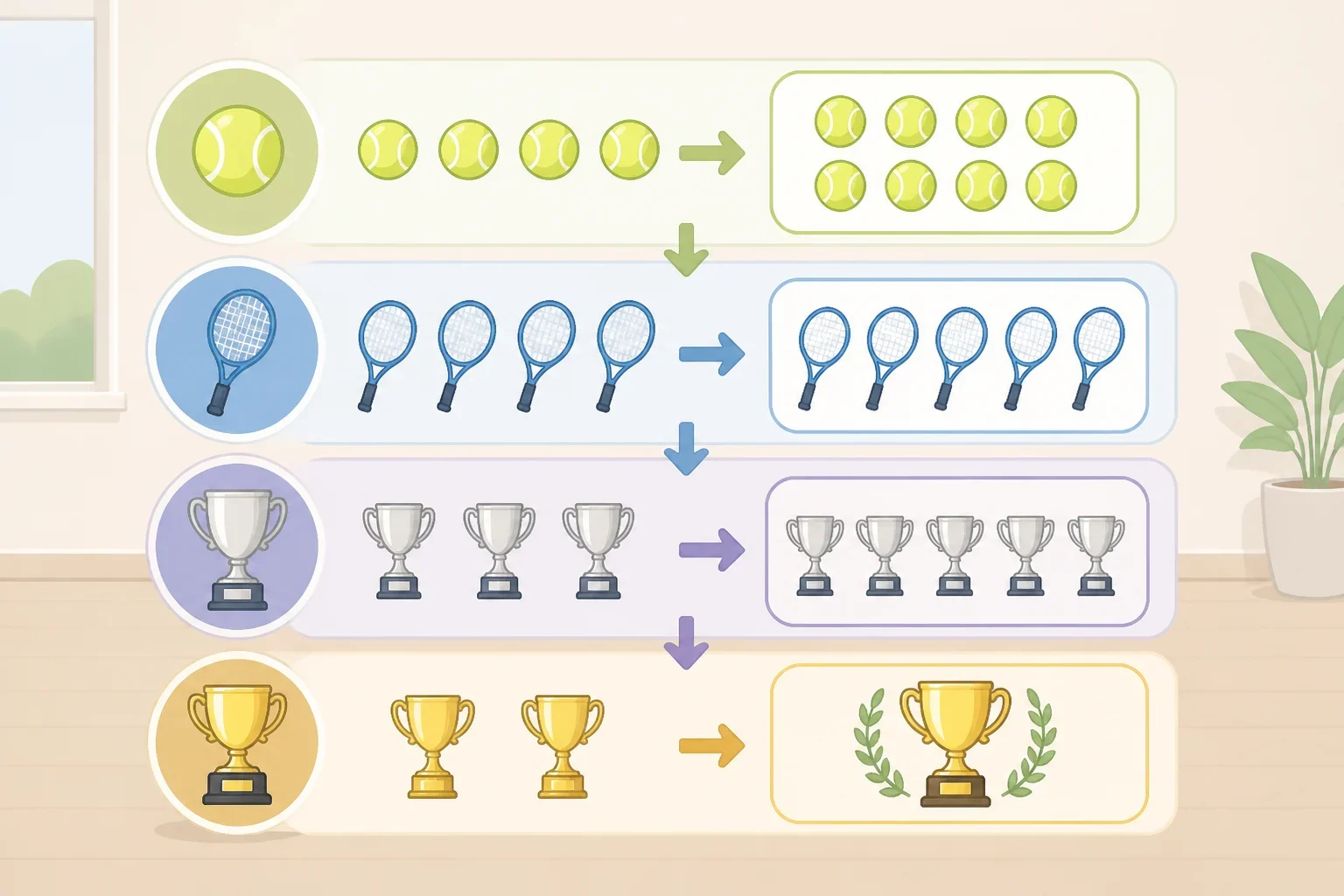
Tracking the win count only works if the terms nest correctly. A tie is made of matches. A match is made of sets. A set is made of games. A game is made of points. Win enough points to take a game, enough games to take a set, and enough sets to take the match.
Every match in the 2026 Finals, singles or doubles, is played as best-of-three tiebreak sets with regular ad scoring, according to the official site. Best-of-three means a player or doubles team needs two of the three possible sets to win the match. If one side takes the first two sets outright, the third set isn't played at all.
Regular ad scoring governs what happens once a single game reaches deuce. Rather than settling the game on the very next point, play continues until one side wins two points in a row from that deuce score. That's a different setup from no-ad scoring, where a single deciding point ends the game the instant it hits deuce, and it's worth knowing since some other tennis team formats use no-ad rules while the Billie Jean King Cup Finals do not.
Billie Jean King Cup singles and doubles format: two paths to a win
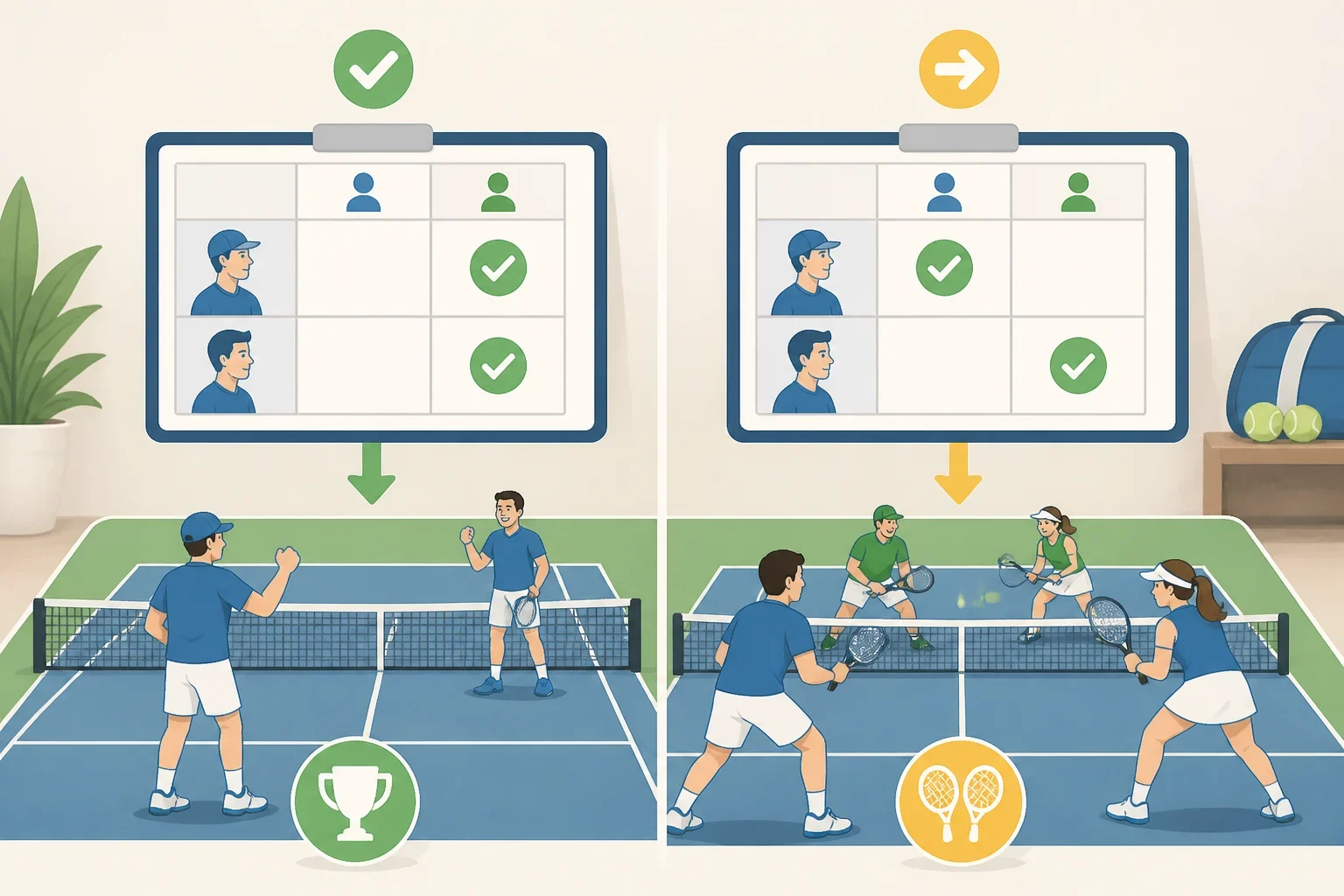
Order matters for anyone following a tie live. Singles 1 is played first, singles 2 follows, and doubles comes third, per the official site. From there, a tie plays out one of two ways.
- A singles sweep. One nation wins both singles matches. That nation has already reached two match wins before doubles begins, and the tie result is fixed right there.
- A singles split. Each nation wins one singles match, putting the score at 1-1. Doubles becomes the deciding match, and whichever nation wins it takes the tie.
A simple scorecard shows the split scenario: singles 1 goes to Nation A (1-0), singles 2 goes to Nation B (1-1), and doubles decides the tie outright. In the sweep scenario, Nation A wins both singles matches and has clinched at 2-0 before doubles starts, regardless of whether that match still gets played out.
When doubles has decided the tie before
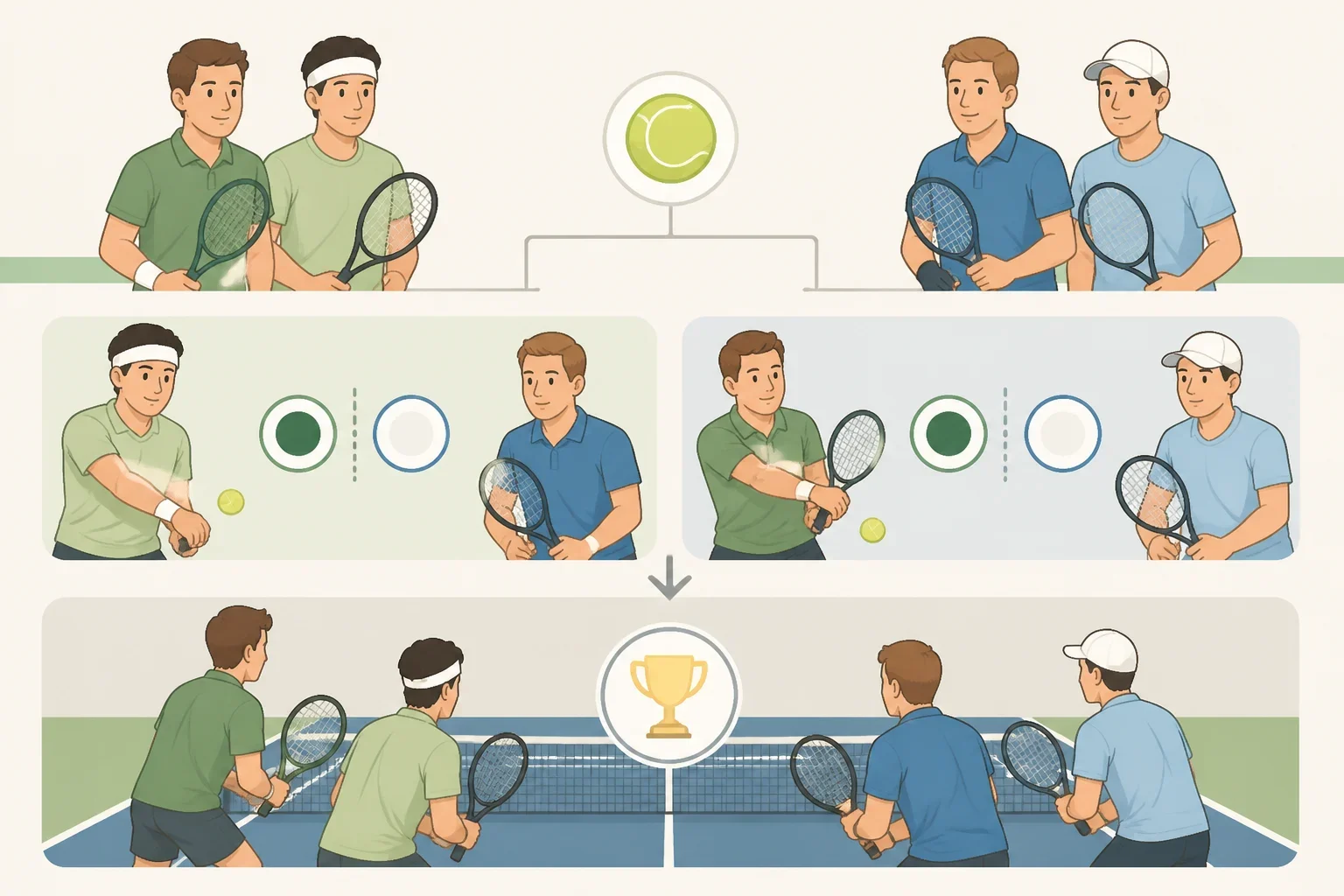
Doubles has settled a Billie Jean King Cup tie before. In April 2025, Great Britain needed a deciding doubles match to beat the Netherlands and reach the 2025 Finals, according to The Independent.
The arithmetic behind that tie tracks the same split scenario described above. Debutant Sonay Kartal won both of her singles matches, giving Great Britain one win on the board. Britain's top-ranked player, Katie Boulter, split her two matches, beating Germany's Tatjana Maria in three sets before losing in straight sets to the Netherlands' Suzan Lamens, The Independent reported. With the two nations tied on wins after singles, doubles carried the result, and Great Britain won it.
That tie is a useful illustration of how a split forces doubles to decide things, but it was reported as a 2025 qualifying tie under that round's rules at the time, not as a complete description of the current 2026 Finals format. It shouldn't be read as a stand-in for how Shenzhen's ties are structured.
Where a tie fits in the 2026 Finals bracket
Every tie in Shenzhen is one round of a knockout draw with eight teams, working through quarterfinals, semifinals, and a final, all held at the same venue over six days, according to the official site. The field is made up of seven nations that won their Qualifiers ties, plus host nation China, per the same source.
That's a smaller field than the Finals used in recent years, which fielded 12 teams before the competition was restructured, according to The Independent. Because the draw is a knockout format, winning a tie sends a nation into the next round, and losing one ends that nation's run through the 2026 Finals, no matter how the singles-and-doubles breakdown played out on the way there.
Billie Jean King Cup rules: what varies by round
The two-singles-plus-doubles structure described here applies to the 2026 Finals specifically. Qualifying rounds have used different formats in past editions; the 2025 Great Britain-Netherlands tie referenced above, for instance, was reported under that year's qualifying rules rather than the Finals structure now in use in Shenzhen.
Anyone following a tie outside the Finals, whether in Qualifiers or a future edition of the competition, should confirm the match order and scoring directly through the official site rather than assuming the two-win, three-match structure carries over automatically.
What to remember next
The 2026 Finals format comes down to one number: two match wins clinches a tie, built from two singles matches and one doubles match played in a single day, according to the official site.
Watch the score two ways. If one nation sweeps both singles matches, the tie is over before doubles even starts. If the singles split 1-1, doubles decides it.
Before following a specific nation through the Shenzhen bracket, check the official Billie Jean King Cup site for that tie's actual order of play, since qualifying rounds and other editions of the competition haven't always used the same structure as this year's Finals.