
NBA Take Foul vs Clear-Path Foul: What's the Difference?
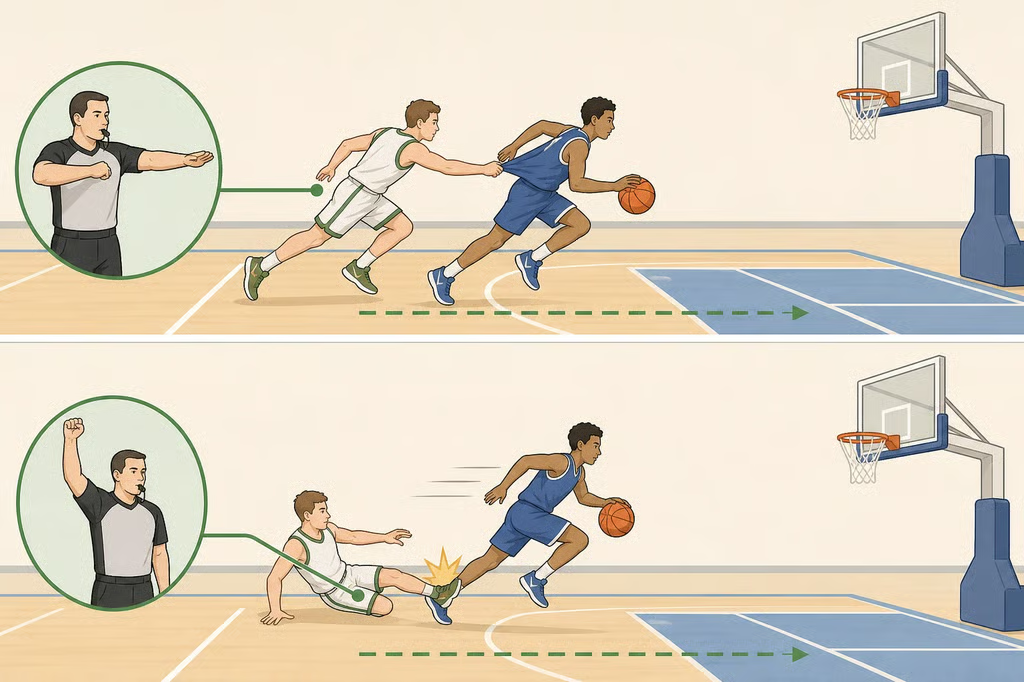
NBA take foul vs clear-path foul calls can look identical in real time, but the penalties attached to them are not. A transition take foul costs the defense one free throw and the ball. A clear-path foul costs two free throws and the ball (NBA Official Rules; ESPN). The difference comes down to geography and intent: where the ball sits, where the nearest defender stands, and whether that defender ever tried to make an actual basketball play.
This guide reflects the NBA's official playing rules published for the 2025-26 season, the most recent rulebook available at the time of writing. The 2026-27 season is already underway, so check the league's current rules release if a newer version has since superseded this one before treating any of this as the active standard. The guide also covers NBA rules only; college, high school and recreational leagues define and penalize these fouls differently, if they address them at all.
The league added the transition take-foul penalty for the 2022-23 season after deliberate fast-break-stopping fouls spiked, climbing toward an estimated 1.4 per game in 2021-22 from just 0.32 per game in 2017-18 (ESPN). The clear-path rule predates it by decades, dating back to 1984-85 and settling into the two-free-throw format it still carries by 2006-07 (ESPN).
Difference between an NBA take foul and clear-path foul
A transition take foul is a foul in which the defender makes no play on the ball at all. It can happen during a transition scoring opportunity or in the moment right after a change of possession, before the offense has had any chance to push the ball up the floor, as long as the contact doesn't already meet clear-path criteria (NBA Official Rules).
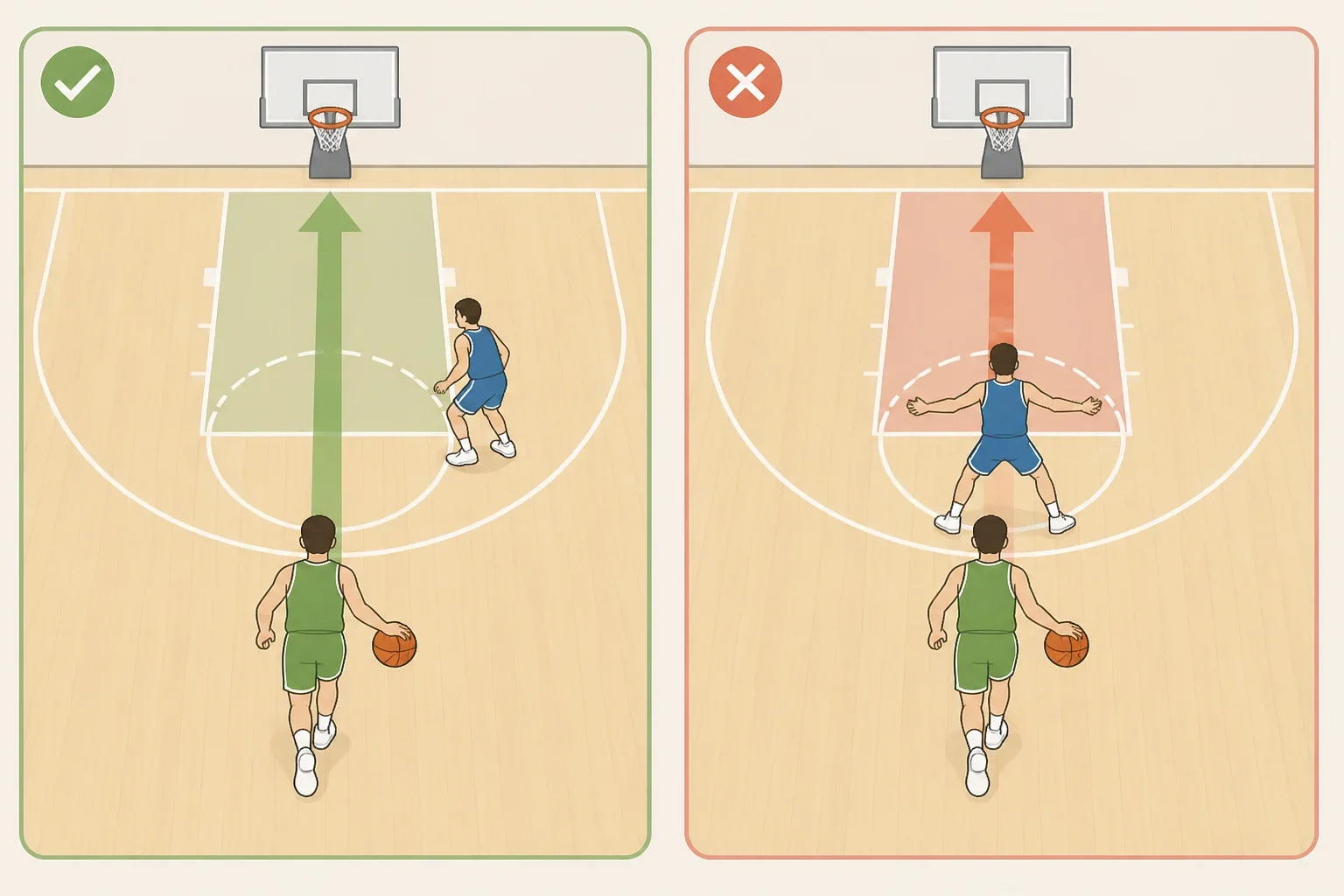
A clear-path foul is narrower. It requires a personal foul during an established transition scoring opportunity, with the ball already ahead of the tip of the backcourt circle, no defender positioned ahead of the offensive player, that player in control of the ball or with a pass already released to him, and the foul itself costing the offense that scoring chance. Those four practical checks all have to line up. The phrase "transition scoring opportunity" has real limits, too: it doesn't exist if the offense fails to push the pace right after the turnover, slows down considerably, or settles into a half-court set (NBA Official Rules).
Clear path is a positional test: ball location, defender position, ball control. A take foul is a question of intent, namely whether the defender made a legitimate play on the ball and whether the contact fell inside one of the two qualifying windows. The NBA borrowed the take-foul concept from its G League, which had tested a version since 2018-19. Because that rule went in so early there, the deliberate stop-the-break foul never really caught on in the G League (ESPN).
Edge cases that decide the call
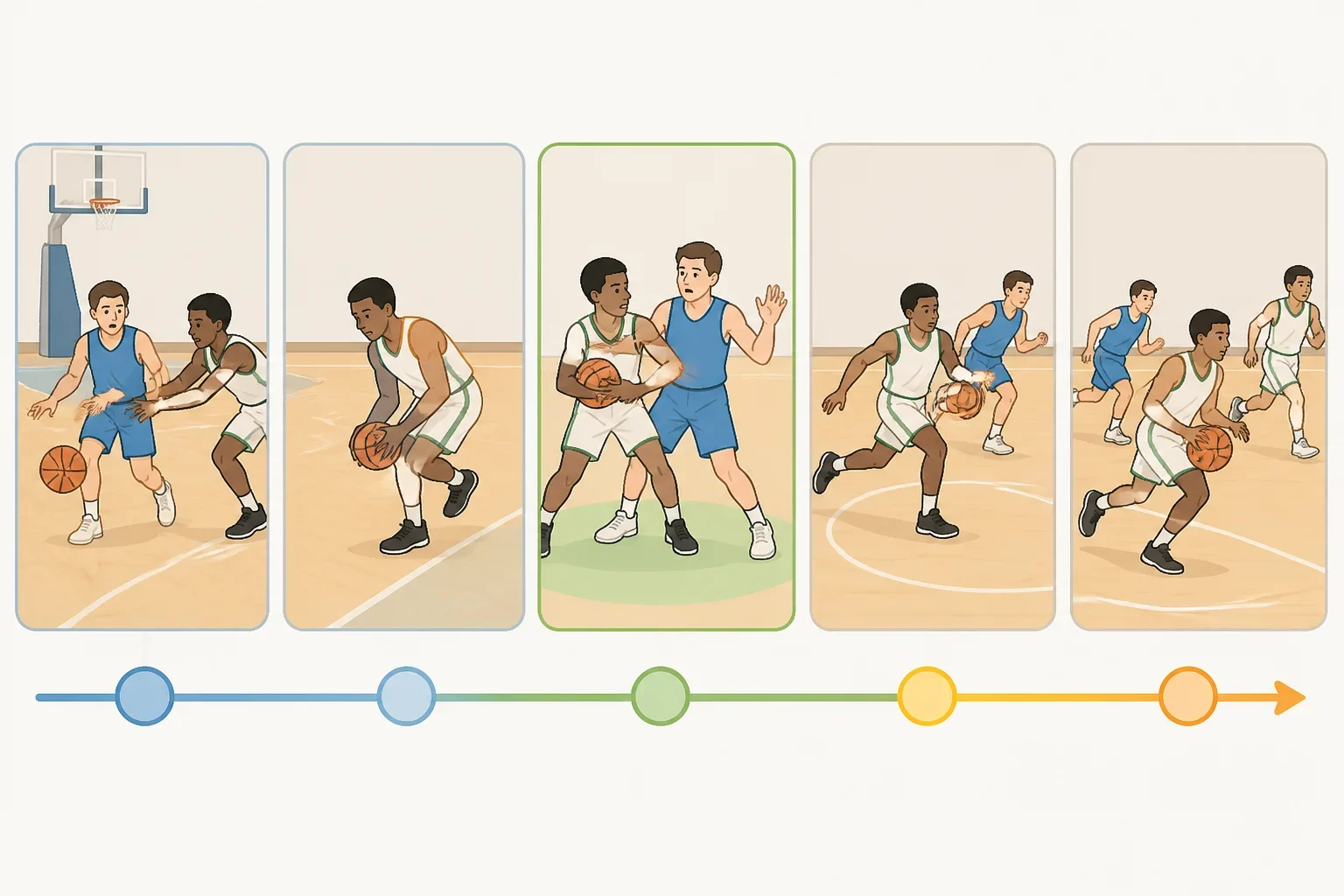
Officials work through a short sequence on every transition whistle: is there a qualifying window, does the play meet the clear-path positional test, did the defender make a real play on the ball, and is it a shooting foul instead. Five situations account for most of the confusion on this call.
Immediately after a turnover. Right after a steal, before the offense has pushed the ball anywhere, a defender grabs an opponent who doesn't even have the ball and makes no attempt to reach for it. No scoring opportunity has formed yet, so clear path can't apply. The take-foul rule reaches into this exact window, though: a foul committed immediately after a change of possession, before the offense has had a chance to advance the ball, still counts as a transition take foul as long as the defender made no legitimate play on the ball (NBA Official Rules).
A fully developed breakaway. Compare that to a ball handler who has already crossed the backcourt circle with nobody between him and the rim and gets fouled from behind while dribbling. Ball position, defender position and ball control all line up, so that's clear path, worth the stiffer two-shot penalty (NBA Official Rules).
A genuine attempt at the pass. A trailing defender who lunges to deflect or intercept a pass meant for that breakaway player, and makes contact instead, is excluded from clear path by the rule text covering legitimate interception attempts (NBA Official Rules). The play then falls under the applicable ordinary-foul rules instead. If officials decide the contact wasn't actually a play on the ball, the transition take-foul criteria could still apply, provided the contact falls inside one of that rule's two qualifying windows (NBA Official Rules).
A shooting foul. A player fouled in the act of shooting draws neither special penalty. The rulebook excludes that situation from both the clear-path definition and the transition-scoring-opportunity definition that feeds the take-foul rule, so the play reverts to standard shooting-foul administration instead (NBA Official Rules).
Late in a close game. The game clock matters, but only for one of the two rules. The transition take-foul penalty is written to exclude the final two minutes of the fourth quarter and any overtime entirely, one of the rule's four explicit conditions (NBA Official Rules). The clear-path criteria reviewed here carry no comparable clock exception, so a play meeting that positional test late in a tight game gets evaluated the same way it would in the first quarter.
NBA take foul penalty vs clear-path foul penalty
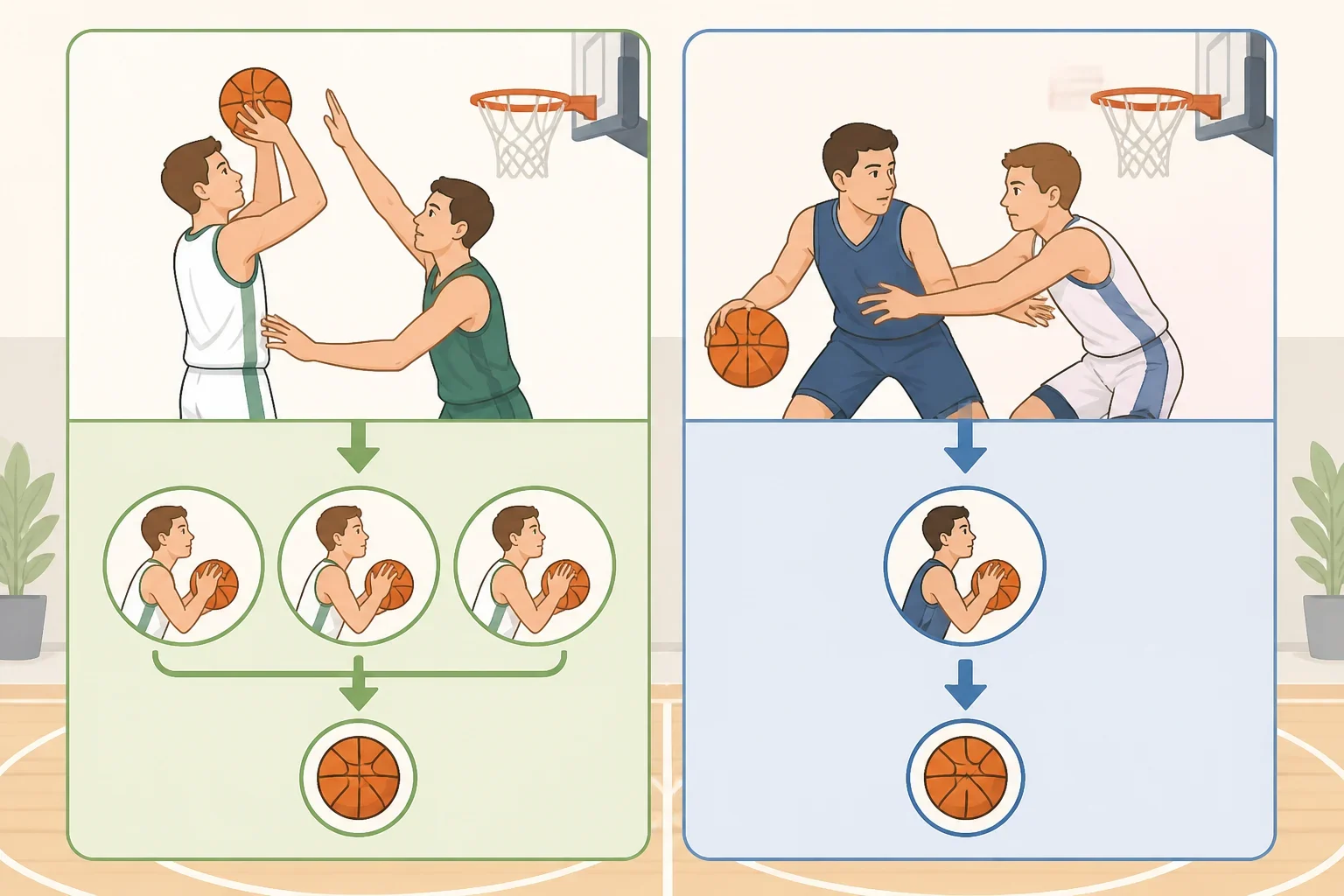
The extra free throw on clear-path calls reflects the narrower set of positional conditions the foul has to meet.
Transition take foul Clear-path foul Free throws One (NBA Official Rules) Two (ESPN) Possession Offense retains the ball Offense retains the ball Ball location after the foul Sideline nearest the stoppage, no closer to the baseline than the free-throw line extended (NBA Official Rules) Sideline nearest the spot where play was interrupted (basketballforcoaches.com) Exempt in final two minutes of regulation or overtime Yes, one of four explicit conditions written into the rule (NBA Official Rules) Not addressed in the clear-path criteria reviewed here
Ahead of the 2022-23 season, ESPN calculated that the combined value of a take-foul free throw and the possession that follows would land around 1.89 points, close to the value of an uncontested dunk or layup, roughly the deterrence math the league was betting on (ESPN).
In an early November 2022 sample, the NBA found teams averaging roughly 2.0 points off each take foul once the free throw and ensuing possession were combined, while the call's frequency had already dropped by about half over that stretch, from 0.36 per game to 0.19 per game (NBA.com). Those figures come from the rule's first season, not a current league-wide rate. Monty McCutchen, the NBA's senior vice president and head of referee development and training, said at the time that the league wanted the foul out of the game entirely (NBA.com). NBA.com's reporting from that stretch noted defenders had started giving chase in transition rather than fouling, the exact behavior shift the rule was built to produce (NBA.com).
Rule updates since the foul was introduced
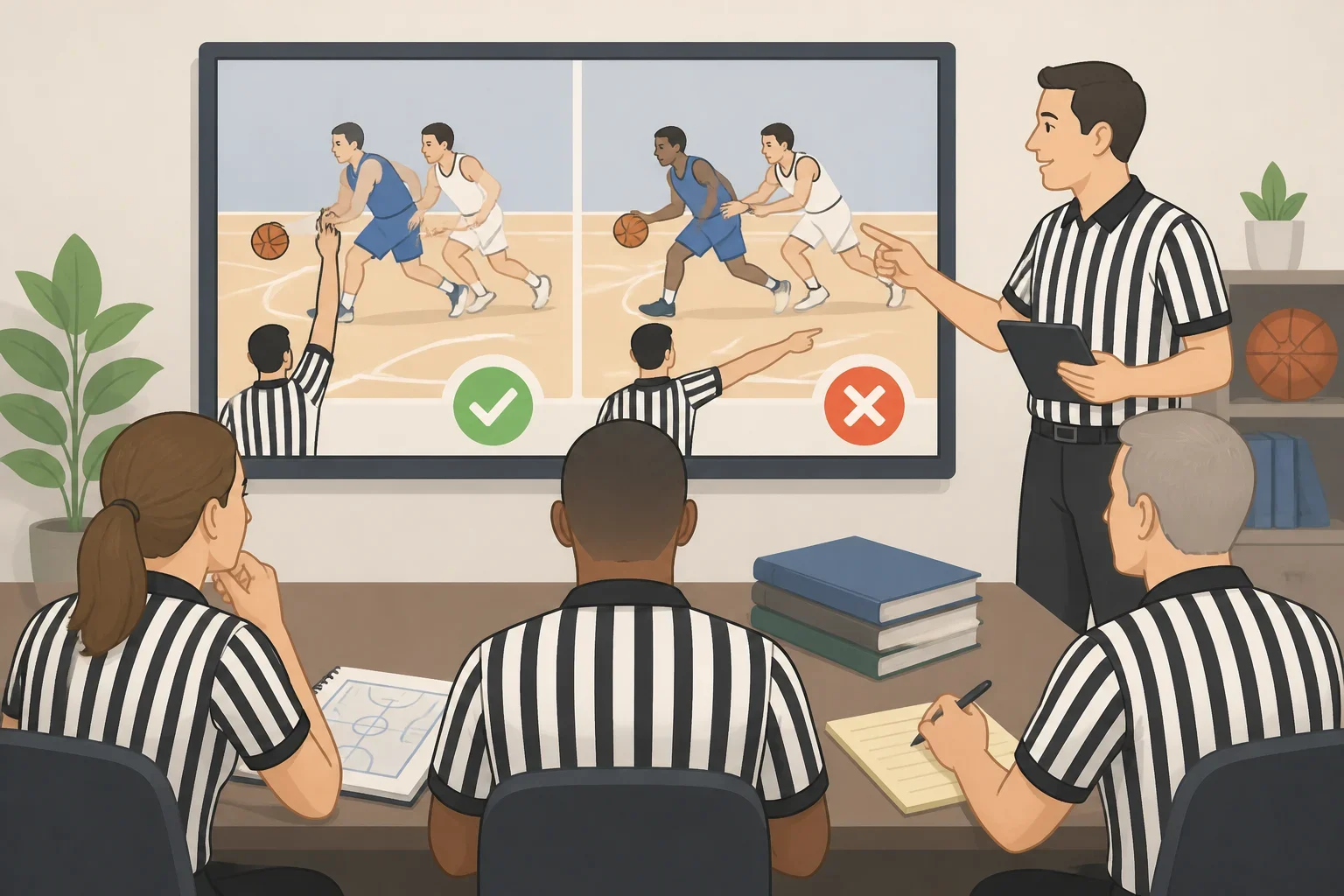
The NBA has kept refining how officials apply this distinction since the rule's first season. The league's April 2024 points-of-emphasis materials included transition take fouls in Part 3 of its video series to teams, alongside flopping and bench conduct (NBA Official).
What to remember next
Clear path is the narrower, positional foul: ball position, defender position and ball control all have to line up, and it costs two shots. A transition take foul covers a wider range of non-basketball-play fouls across two separate windows for one shot, except inside the final two minutes of regulation or overtime, when that lighter penalty no longer applies.