
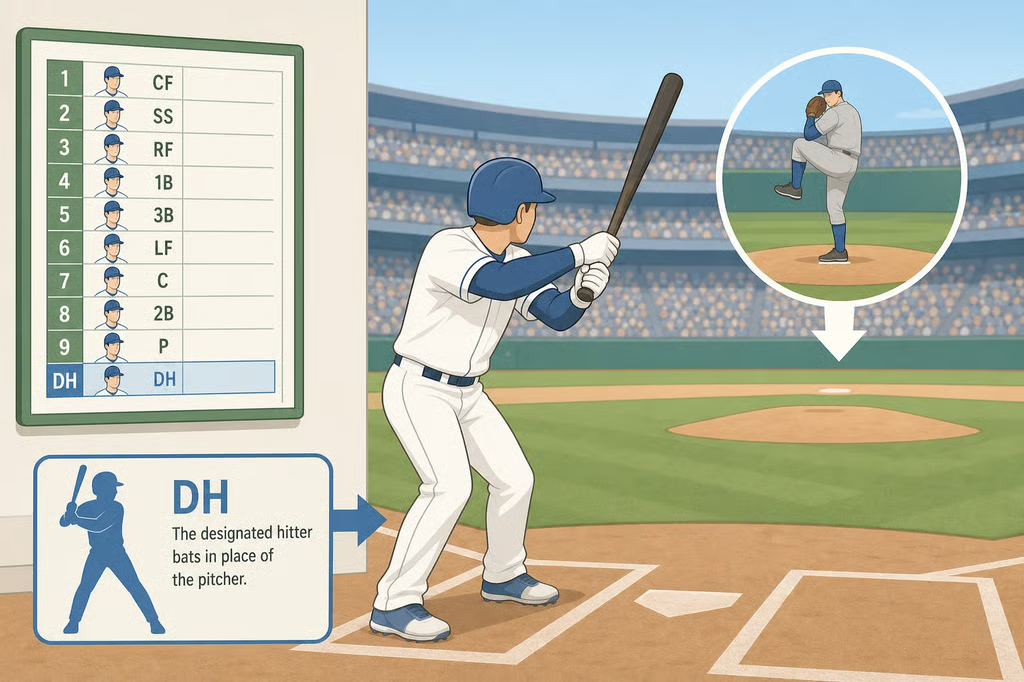
Yes. Both teams can use a designated hitter (DH) in every World Series game, regardless of which ballpark hosts it. The DH bats in place of the pitcher, allowing teams to keep another hitter in the lineup without adding a defensive player. Although using a DH is optional, the same rule applies to American League and National League teams.
That wasn't always the case. Before MLB adopted the universal DH in 2022, World Series batting rules could change depending on the host ballpark. Pitchers sometimes had to bat when their teams played on the road, forcing managers to adjust their lineups and substitution strategies. The current rule is simpler, although there are still circumstances in which a pitcher can step into the batter's box.
How the designated hitter rule works
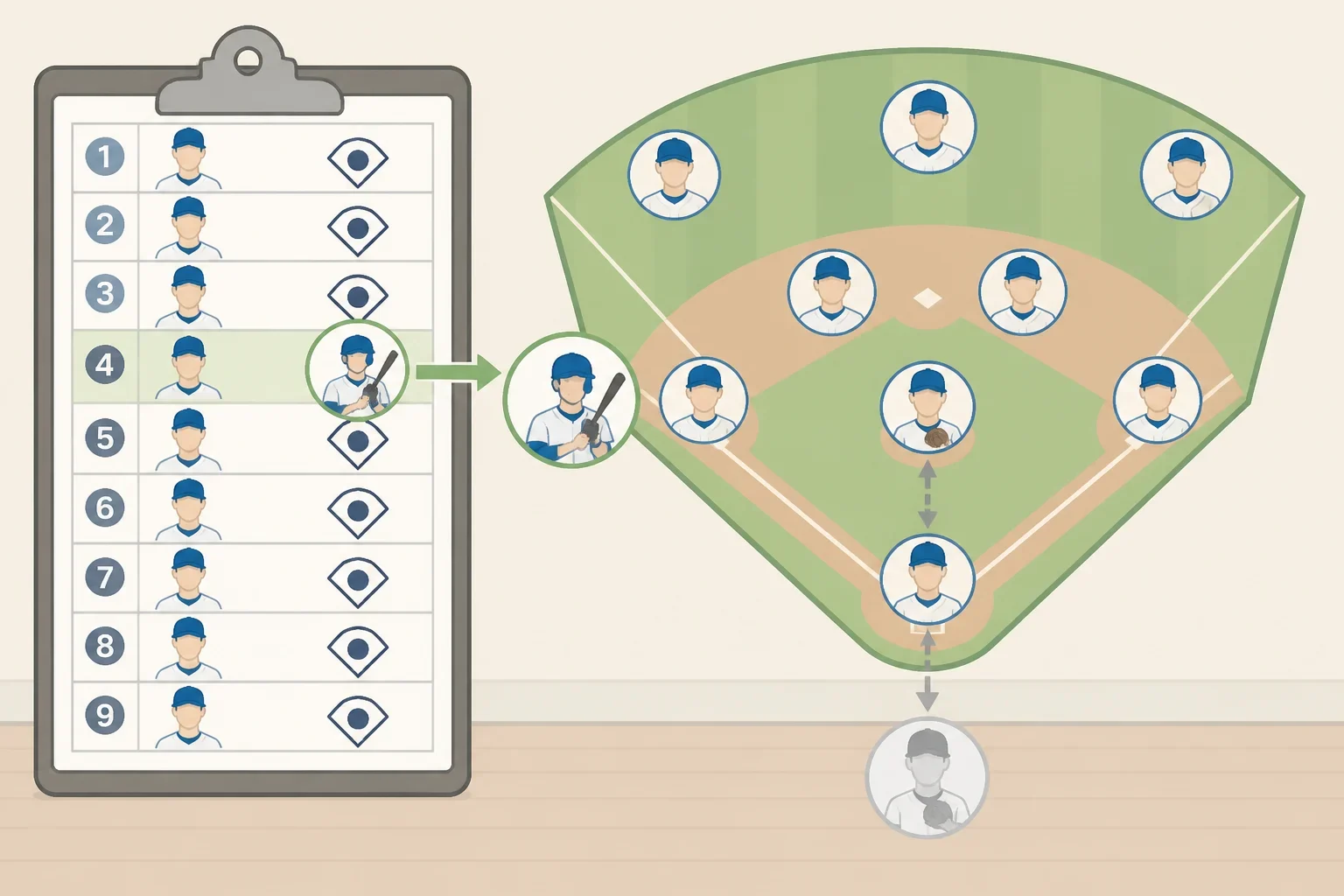
Under MLB's Official Baseball Rules, Rule 5.11, a team can name a designated hitter to bat in place of its starting pitcher and subsequent pitchers. The DH occupies one of the nine spots in the batting order but normally does not play defense.
The pitcher remains one of the team's nine defensive players. When the team comes to bat, however, the designated hitter takes the pitcher's place in the lineup. Managers can then change pitchers without automatically changing who bats in that spot.
Using a DH is optional, but teams must make that choice before the game begins. The designated hitter must be identified on the lineup card submitted to the umpire. If a team starts without a DH, it cannot introduce one later, even after replacing its starting pitcher.
The DH can also be replaced during a game. A pinch hitter or pinch runner who enters for the designated hitter assumes that role in the batting order. The original DH cannot return after being substituted out.
If the DH moves to a defensive position, he can remain in his batting-order spot, but his team loses the DH role for the rest of the game. The pitcher must then be accounted for in the batting order under MLB's substitution rules.
How the DH fits into a World Series lineup
A team using a designated hitter typically lists 10 players on its starting lineup card: nine defensive players, including the pitcher, and a separate DH.
Only nine players appear in the batting order. Those spots belong to the eight defensive position players and the designated hitter, while the pitcher normally does not bat.
The DH can appear anywhere in the order, from leadoff to ninth. Managers choose that position based on the player's offensive strengths and how the rest of the lineup is constructed.
For example, a team might use a powerful hitter as its DH and place him in the middle of the order, where he has more opportunities to drive in runners. Another club might use the position for a regular starter who needs a break from playing defense.
The lineup becomes more complicated when a starting pitcher is also one of his team's best hitters. MLB has a specific provision that allows a player to serve as both the starting pitcher and designated hitter.
Can pitchers still bat in the World Series?
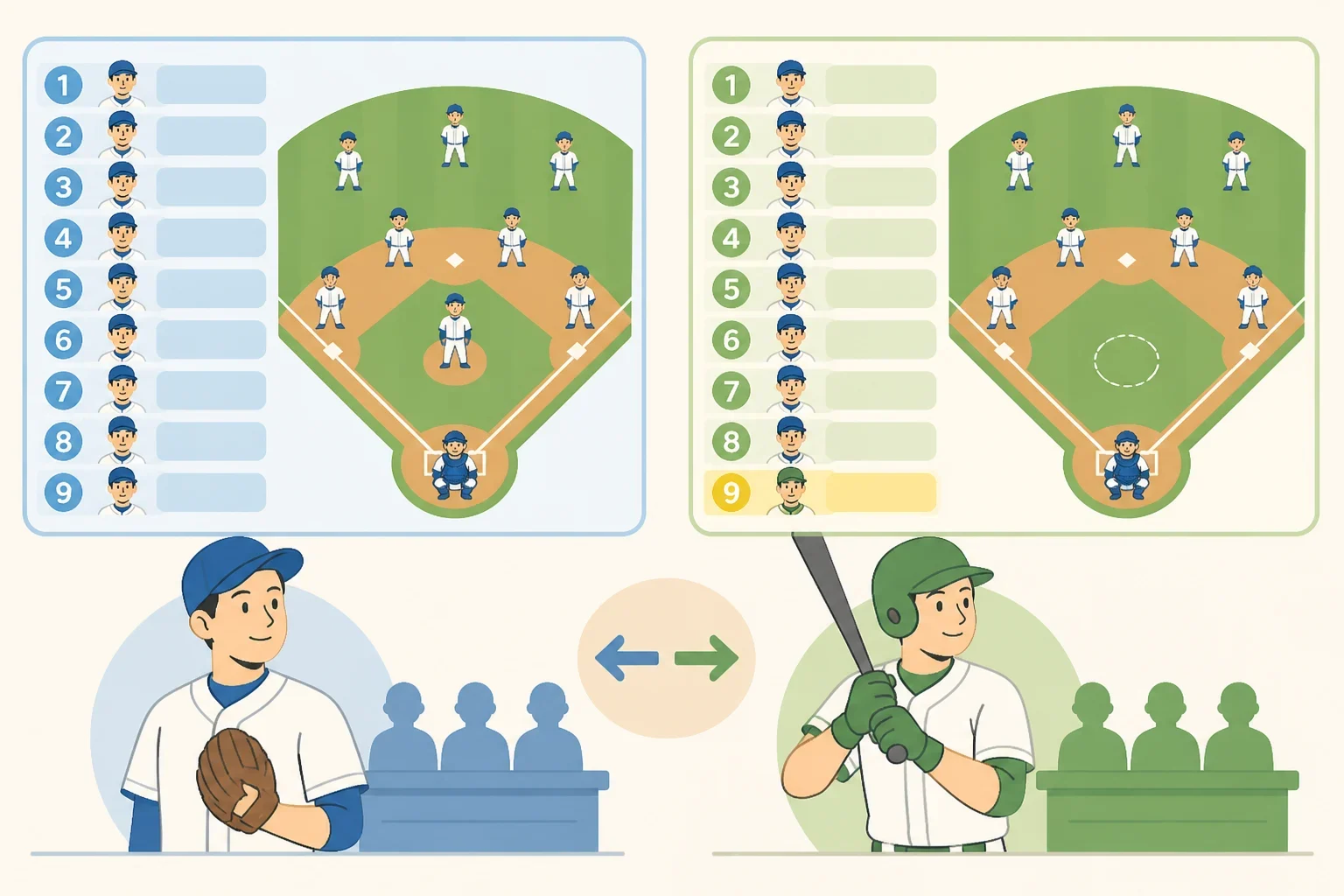
Yes. Although the universal DH means pitchers generally do not bat, there are two main ways a pitcher can still appear in the lineup.
The first is when a team chooses not to use a designated hitter. The pitcher's spot then remains in the batting order, although the manager can use pinch hitters and make substitutions. Declining the DH does not mean the same pitcher must take every turn at bat.
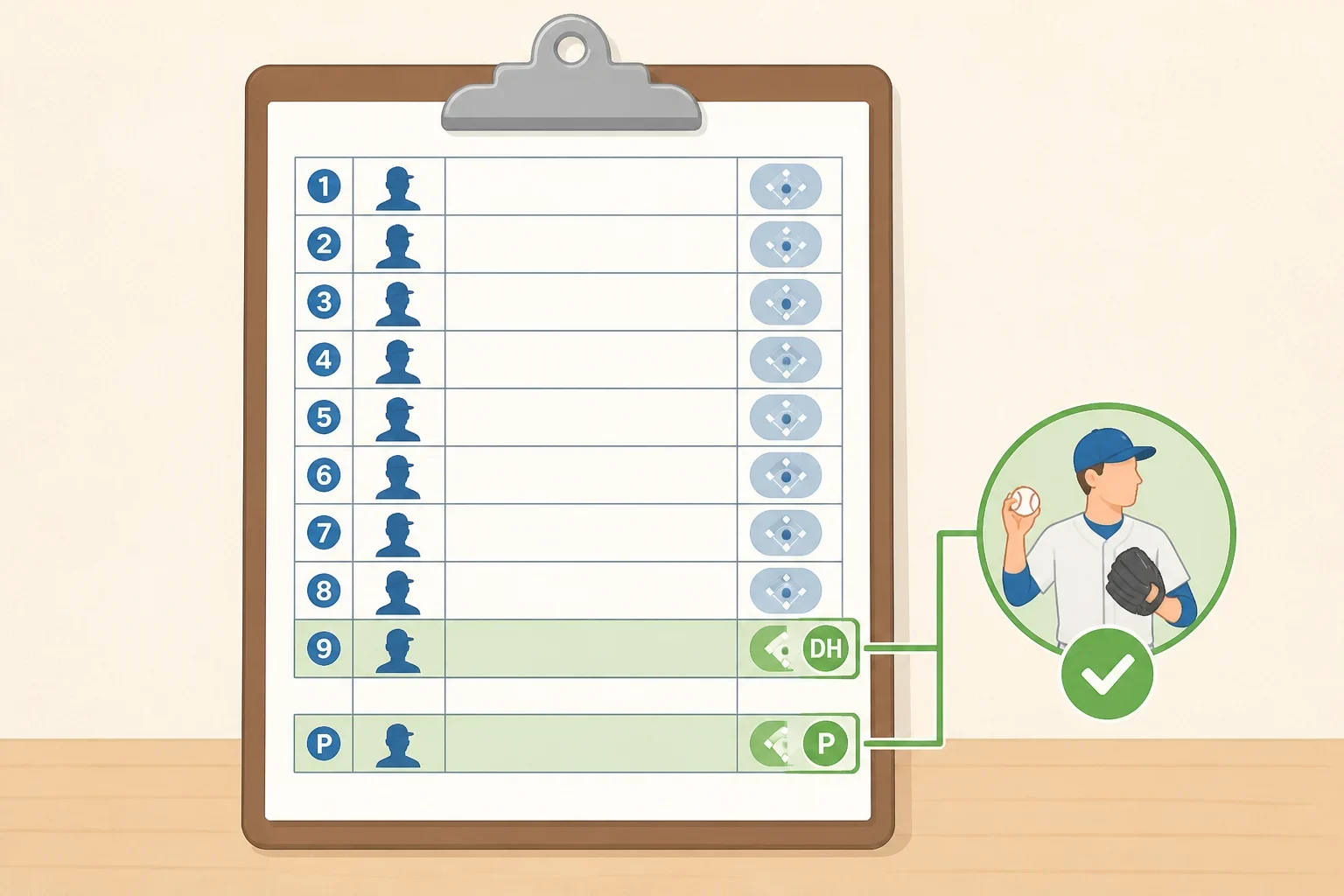
The second involves MLB's Ohtani rule, named for two-way star Shohei Ohtani. Introduced in 2022, this provision allows a starting pitcher to serve as his team's designated hitter in the same game.
Under the rule, the manager lists the player twice on the starting lineup card: once as the pitcher and once as the DH. MLB detailed this arrangement in its April 2026 explanation of two-way player rules.
If the player leaves the mound, he can continue batting as the designated hitter. If he is replaced as DH, he can remain on the mound but can no longer bat for himself.
For instance, a two-way starter could pitch six innings, leave the mound, and continue taking his scheduled turns at bat. His team would be able to bring in a relief pitcher without removing his bat from the lineup.
This special arrangement must be established on the original lineup card. A player who begins the game solely as a DH may also enter as a pitcher under MLB's substitution rules, but that is different from being designated as both the starting pitcher and DH before the game.
Why teams use a DH in the World Series
The designated hitter gives managers more flexibility when building their batting orders. Rather than having the pitcher occupy a lineup spot, a team can use an additional offensive player who may be better equipped to reach base, hit for power, or drive in runs.
As MLB explains in its designated hitter position guide, teams use the role in several ways. Some have a regular DH, while others rotate position players through the spot to give them a partial rest day without removing their bats from the lineup.
The DH can also help a team accommodate two strong hitters who normally play the same defensive position. One can play the field while the other serves as the designated hitter.
The rule changes how managers handle pitchers, too. Without a DH, a manager might face a difficult decision when the pitcher's batting spot comes up with runners in scoring position: let the pitcher hit or replace him with a pinch hitter.
With a DH, that decision generally disappears. The manager can make pitching changes based on matchups, fatigue, and game situations without sacrificing the designated hitter's place in the batting order.
The DH does not guarantee a stronger offense, however. Teams still need productive hitters, and managers must consider how substitutions could affect their options later in the game. A poorly timed defensive change, for example, can eliminate the DH role and force the team to adjust its batting order.
How the World Series DH rule changed
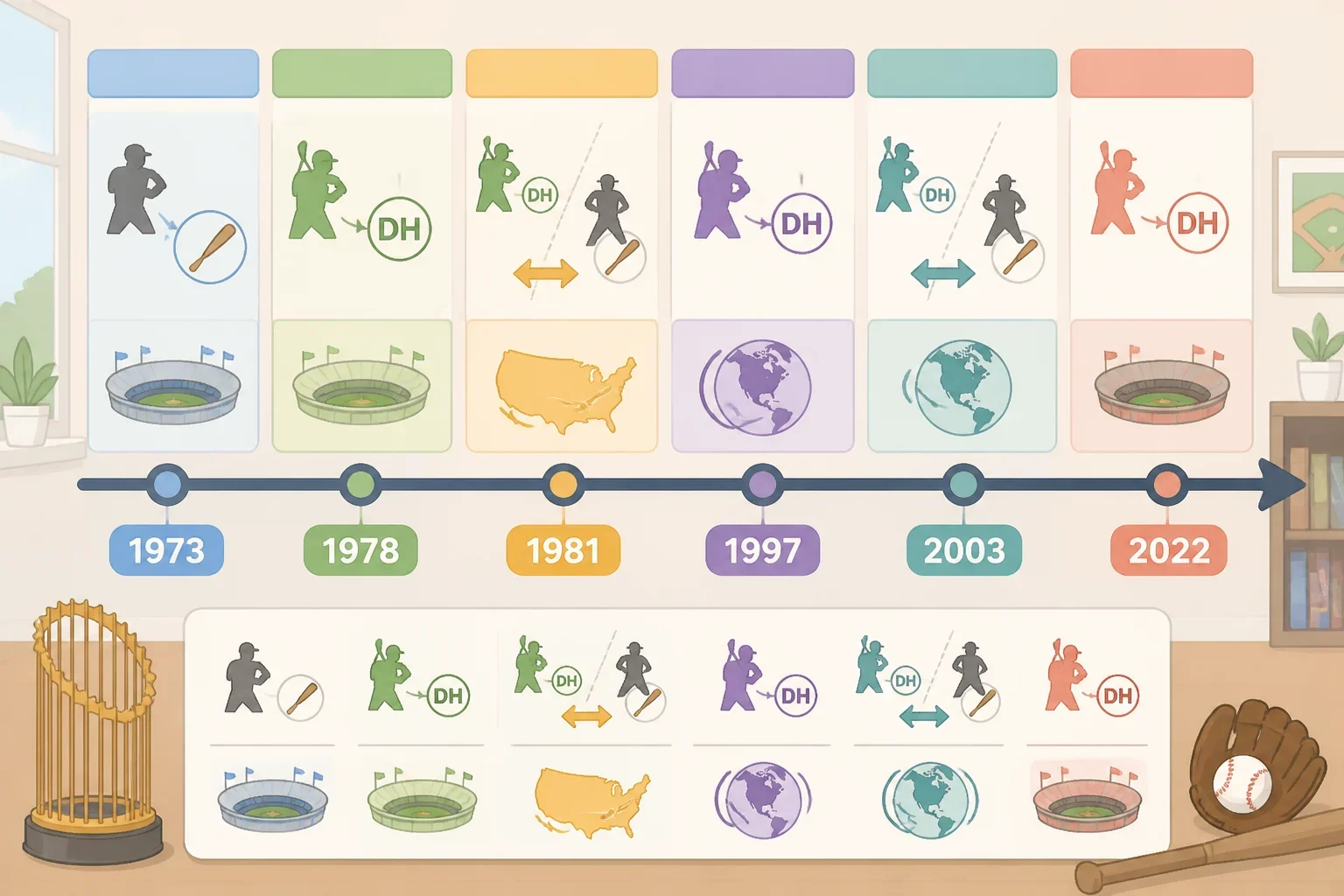
The American League introduced the designated hitter in 1973, but the National League continued requiring pitchers to bat. For decades, that difference created unusual circumstances when teams from the two leagues met in the World Series.
According to MLB's historical account of World Series DH rules, the designated hitter was not used in the World Series from 1973 through 1975. Beginning in 1976, both teams used a DH in even-numbered years, while pitchers batted in odd-numbered years. That arrangement lasted through 1985.
The format changed again in 1986. Instead of alternating by year, World Series games followed the batting rules of the home team's league.
Games hosted by American League clubs used the designated hitter. Games at National League ballparks generally required pitchers to bat, meaning the same team could have different lineup options during a single World Series.
The distinction temporarily disappeared in 2020, when both leagues used the DH during the pandemic-shortened season. The National League returned to pitchers batting in 2021 before MLB and the players' union agreed to adopt the universal DH beginning in 2022.
The change eliminated one of the World Series' longstanding strategic differences. Managers no longer have to remove a regular DH from the batting order simply because their team is playing at a National League stadium.
The DH rule is the same at every World Series ballpark
Both teams can use a designated hitter throughout the World Series, whether the games take place at American League or National League stadiums. The universal DH eliminates the old need to change batting rules when the series moves between cities.
Pitchers can still bat if their teams decline the DH or use the two-way starting pitcher provision. Otherwise, the designated hitter takes the pitcher's place in the batting order, giving managers another offensive option without changing the nine-player defensive alignment.
The easiest way to see which arrangement a team is using is to check its starting lineup. A separate DH means the pitcher normally will not bat, while a starting pitcher listed in both roles signals the two-way exception. Whatever the lineup, the rule no longer changes when the World Series moves to a different ballpark.