
- College football overtime rules 2025: what changes each period
- How does college football overtime work?
- College football overtime rules 2025: OT1, OT2 and OT3 explained
- College football overtime timeout rules for 2025
- Why the NCAA built the third-overtime shootout
- College football overtime rules 2025 at a glance
College football overtime rules 2025: what changes each period
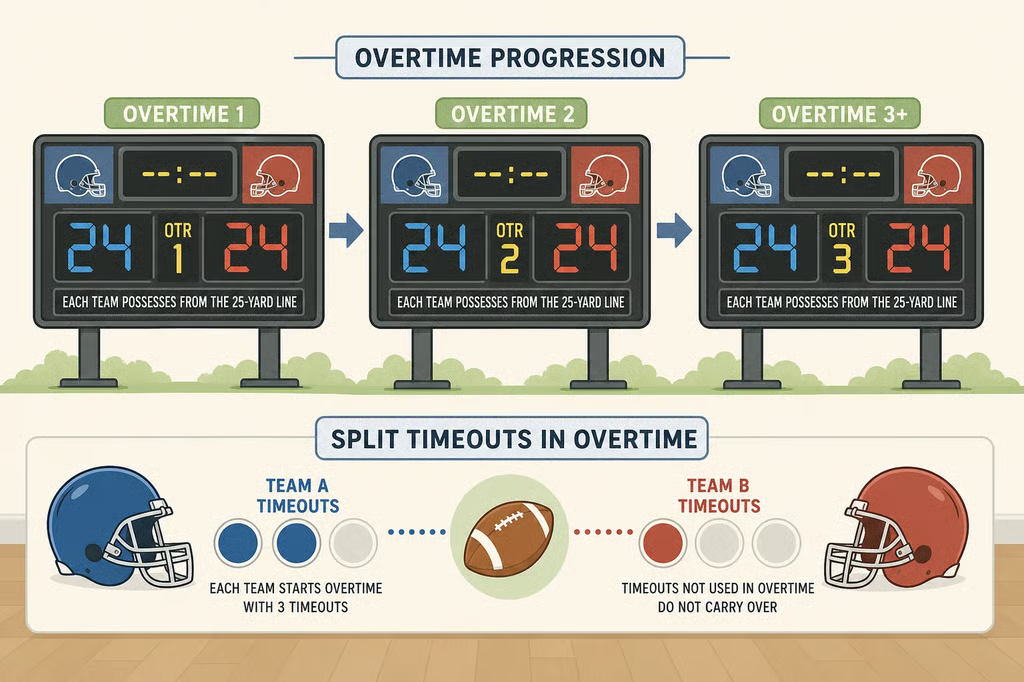
College football overtime rules for 2025 touch exactly one part of the game: timeouts. The scoring format hasn't moved since 2021: games still open with full possessions from the 25-yard line and, if neither team blinks, shift into alternating two-point attempts by the third overtime, according to Sporting News.
Each team now gets a single timeout in the first overtime and a single timeout in the second, down from the old rule that handed out one timeout for every overtime period regardless of how many the game needed, per Sporting News and the National Football Foundation. Once a game reaches a third overtime, each side is capped at one timeout total for the rest of the game, however long it drags on, per the National Football Foundation.
That timeout cap barely registers in most games, since the scoring format itself shifts twice before any contest ever reaches a third overtime. Here's how NCAA football overtime rules play out stage by stage, and where the 2025 timeout change fits into each one.
How does college football overtime work?

College football has used some version of overtime since 1996. A tie after regulation sends a game into overtime, there's no way for an NCAA game to end tied, and overtime periods run on a play clock only, with no game clock counting down, per Sporting News.
Team captains, up to four per side, meet at the 50-yard line for a coin toss. The winning captain picks offense, defense, or which end of the field both teams will use for that period, and the choice can't be deferred, Sporting News notes.
Whichever team leads once a full overtime period ends, after its opponent has had a chance to answer, wins the game outright. A tie at the end of the period just means another overtime gets played, per Sporting News.
These rules apply the same way at every level of the sport, whether it's a season-opening game played in Europe or the national championship. That's different from the NFL, which runs separate overtime formats for the regular season and the playoffs, Sporting News adds.
College football overtime rules 2025: OT1, OT2 and OT3 explained
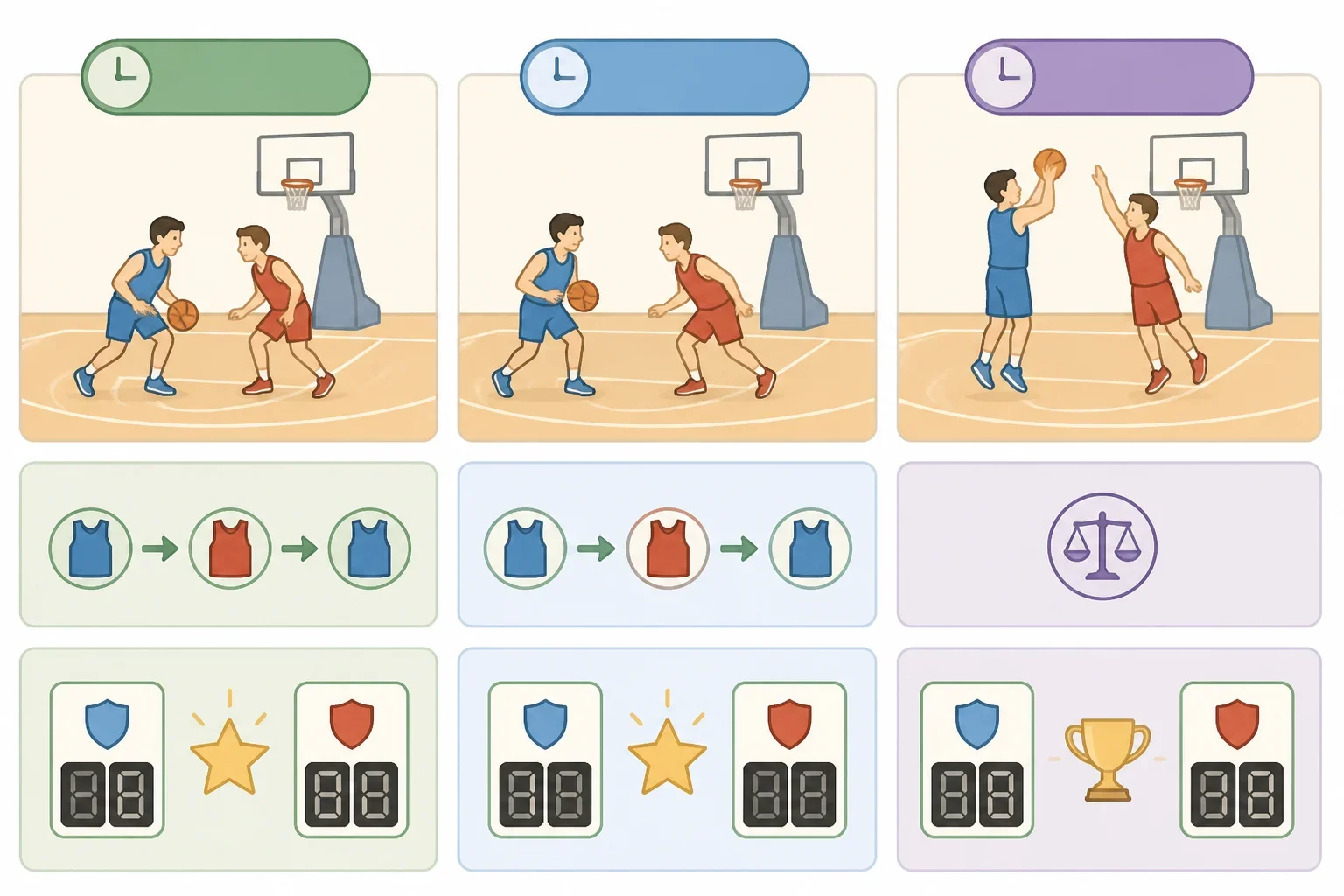
In the first two overtimes, each offense starts its possession at the 25-yard line, unless a penalty moves the spot, and holds the ball until it scores or fails to pick up a first down, Sporting News explains.
The extra-point rule is where OT1 and OT2 split. Score a touchdown in the first overtime and a team can still choose between a kicked PAT or a two-point try. Score one in the second overtime and that choice disappears, the conversion becomes mandatory, which marks the start of college football's two-point conversion overtime rules, per NCAA.org.
A third overtime drops the full-possession format altogether. Teams alternate two-point conversion attempts, and the game ends the moment one team is ahead and the other has failed to answer, NCAA.org reports.
Illinois' nine-overtime win over Penn State shows exactly what that change accomplished. The teams combined for just 14 plays from the third through ninth overtimes, far fewer than the 23 plays they ran in the first two overtimes alone, back when possessions still started at the 25, according to NCAA.org.
College football overtime timeout rules for 2025
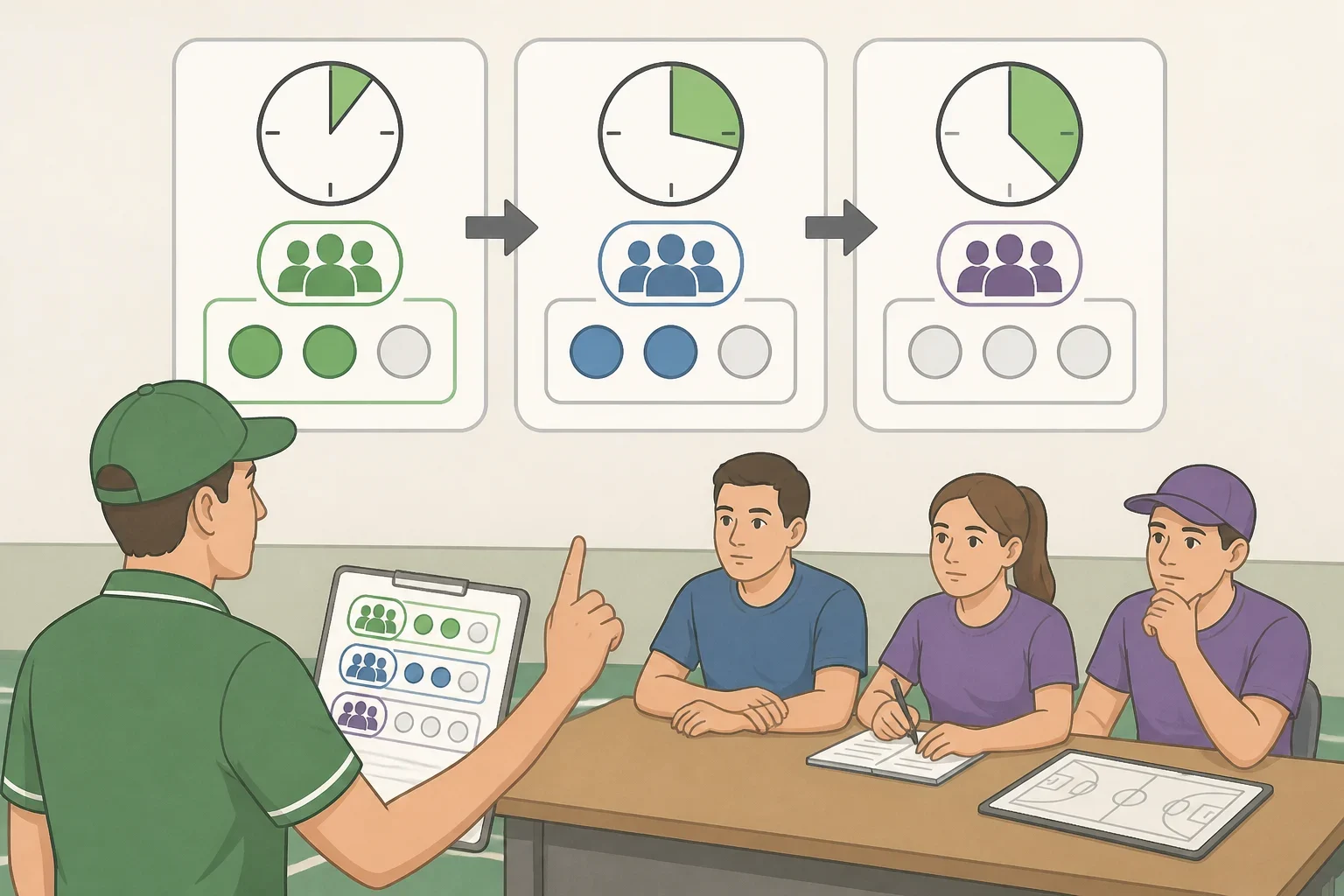
Before the 2025 season, each team got one timeout per overtime period, full stop, and an unused timeout never carried into the next one, Sporting News notes. That carryover restriction still runs one direction: a timeout saved from regulation doesn't transfer into overtime either, so a team that finishes the fourth quarter with a timeout in reserve still starts OT1 with only the single timeout that period allows, per Sporting News.
The 2025 rule keeps that per-period structure for the first two overtimes: one timeout in OT1, one in OT2, per the National Football Foundation. From the third overtime through the end of the game, each team is held to one total timeout, whether the shootout lasts two rounds or nine, per the National Football Foundation.
One wrinkle worth knowing before a close game gets there: a timeout called in the gap between two overtime periods, rather than during live play, counts against the period about to start, not the one that just ended, per Sporting News. A coach who calls timeout the instant OT1 wraps up is actually spending the OT2 timeout, since OT1's allotment was never going to roll forward anyway.
Media timeouts follow a similar split. Broadcasts get one break after the first overtime and one after the second, but none once the game reaches the third-overtime shootout, per the National Football Foundation.
Why the NCAA built the third-overtime shootout
The Football Rules Committee built the rule around a simple goal: fewer snaps for players who've already ground through regulation and two overtime periods, per NCAA.org.
The push for reform traces back to a 2018 marathon between LSU and Texas A&M that went seven overtimes and produced roughly 200 plays, not counting special teams snaps and penalties. Committee members decided that was too much to ask of college players, NCAA.org reports.
Alternating two-point attempts first showed up starting in the fifth overtime during the 2019 and 2020 seasons, a direct response to that LSU-Texas A&M game. The committee moved the threshold up to the third overtime for the 2021 season, which is the structure still in place now, per NCAA.org.
Steve Shaw, the NCAA's secretary-rules editor for football, put the logic plainly: once a game has gone 60 minutes plus two overtime periods without a winner, it's time to get the players off the field, per NCAA.org.
In the NCAA's 2021 sample across all three divisions, 79 of 84 overtime games, 94%, were decided in the first or second overtime, before any third-overtime shootout came into play, per NCAA.org.
Then-rules committee chair David Shaw, Stanford's head coach at the time, framed it as a tradeoff: the goal is ending a game "as fairly and safely as possible," and the two-point play is "the best option" once a winner has to be decided, according to NCAA.org.
Not every fan is sold. ESPN's Elle Duncan has argued that cutting special teams and full possessions turns overtime into a play-calling contest rather than actual football, while the New York Post's Ryan Dunleavy has called the current format too confusing for fans to follow, per Sporting News.
College football overtime rules 2025 at a glance
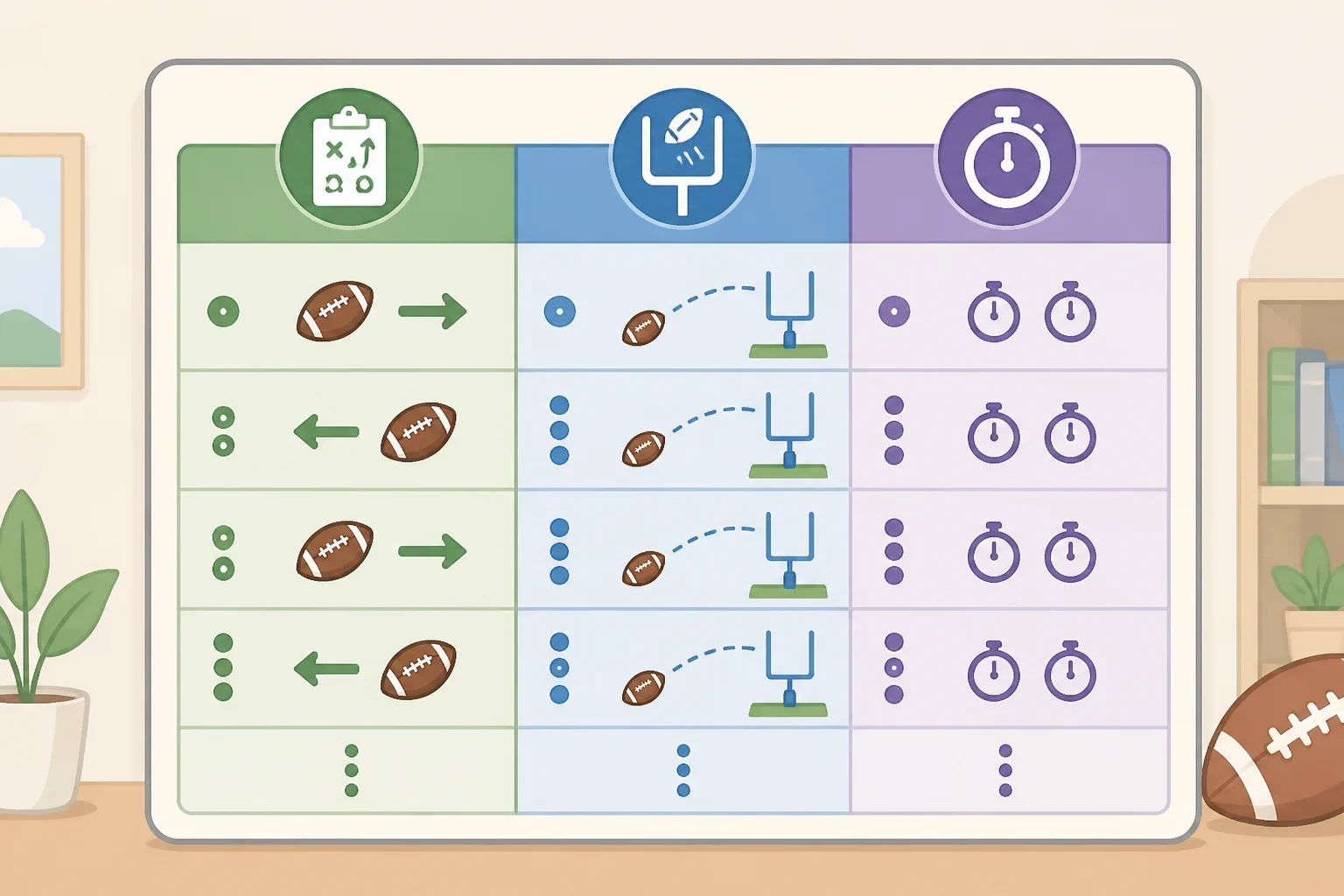
Overtime period Possession format Extra-point rule Timeouts per team OT1 Full possession from the 25-yard line Kick or two-point try, team's choice 1 OT2 Full possession from the 25-yard line Two-point try required 1 OT3 and beyond Alternating two-point attempts, no full possession Two-point try only 1 total for the rest of the game
Scoring-format details come from NCAA.org; the current timeout rules come from the National Football Foundation. Media timeouts follow the same split: one after OT1, one after OT2, none once the shootout starts.
When a game runs past regulation, check the overtime number on the scoreboard first. That number tells which rule set is in play, but not whether either sideline has already burned its timeout, so a glance at the broadcast graphic settles that part.