
How baseball stadiums convert to soccer fields: a comparison
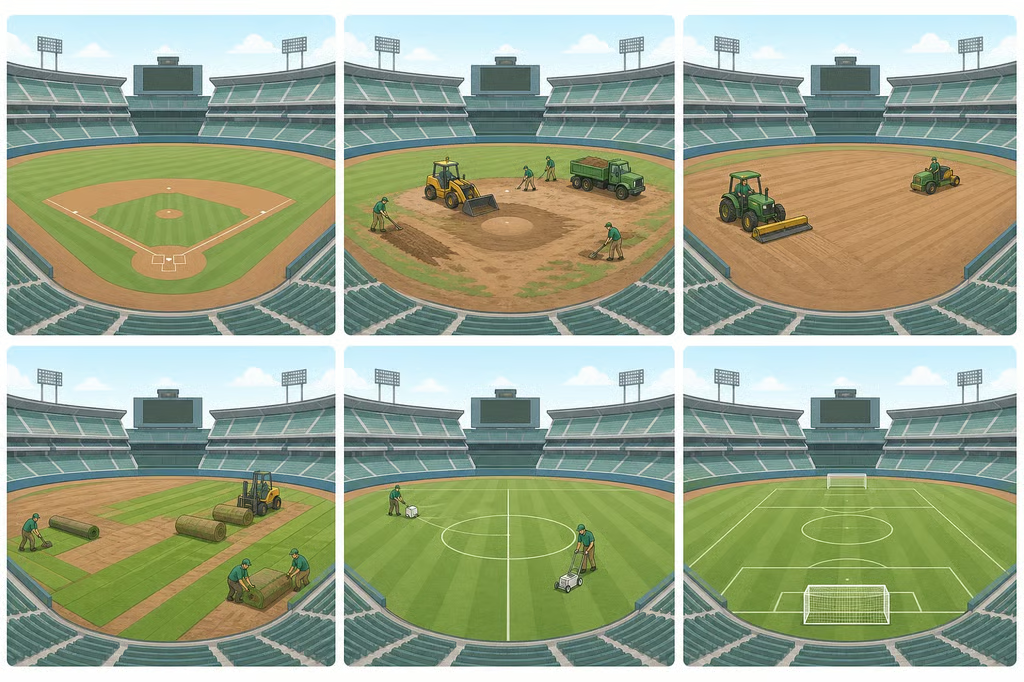
Last month, Spot Sports posted a five-minute video following Citi Field's turnaround between a Mets game, an NYCFC match, and a concert, all inside the same week. It's the kind of footage that raises an obvious question for anyone who follows a ballpark hosting a soccer date: how do baseball stadiums convert to soccer fields, exactly?
The honest answer is that there's no single industry process. Some venues physically rebuild the playing surface for every match and tear it back down afterward. Others manage one grass field through a packed, mixed-event calendar and never do a full rebuild at all.
Two U.S. ballparks show the split clearly. At Covenant Health Park in Knoxville, home to the Double-A Knoxville Smokies and USL League One club One Knoxville SC, hosting a soccer match means installing a temporary sod surface over the infield and removing it afterward. At Citi Field in Queens, the Mets' grounds crew instead works to preserve a single grass field through baseball, soccer, and concert dates, according to a case study from SGL System, a turf-equipment company that profiled the team's approach last year. Those are two different jobs, not two versions of the same one, and the difference explains what's actually happening on the field before a scheduled soccer date.
How Covenant Health Park converts a baseball field for soccer
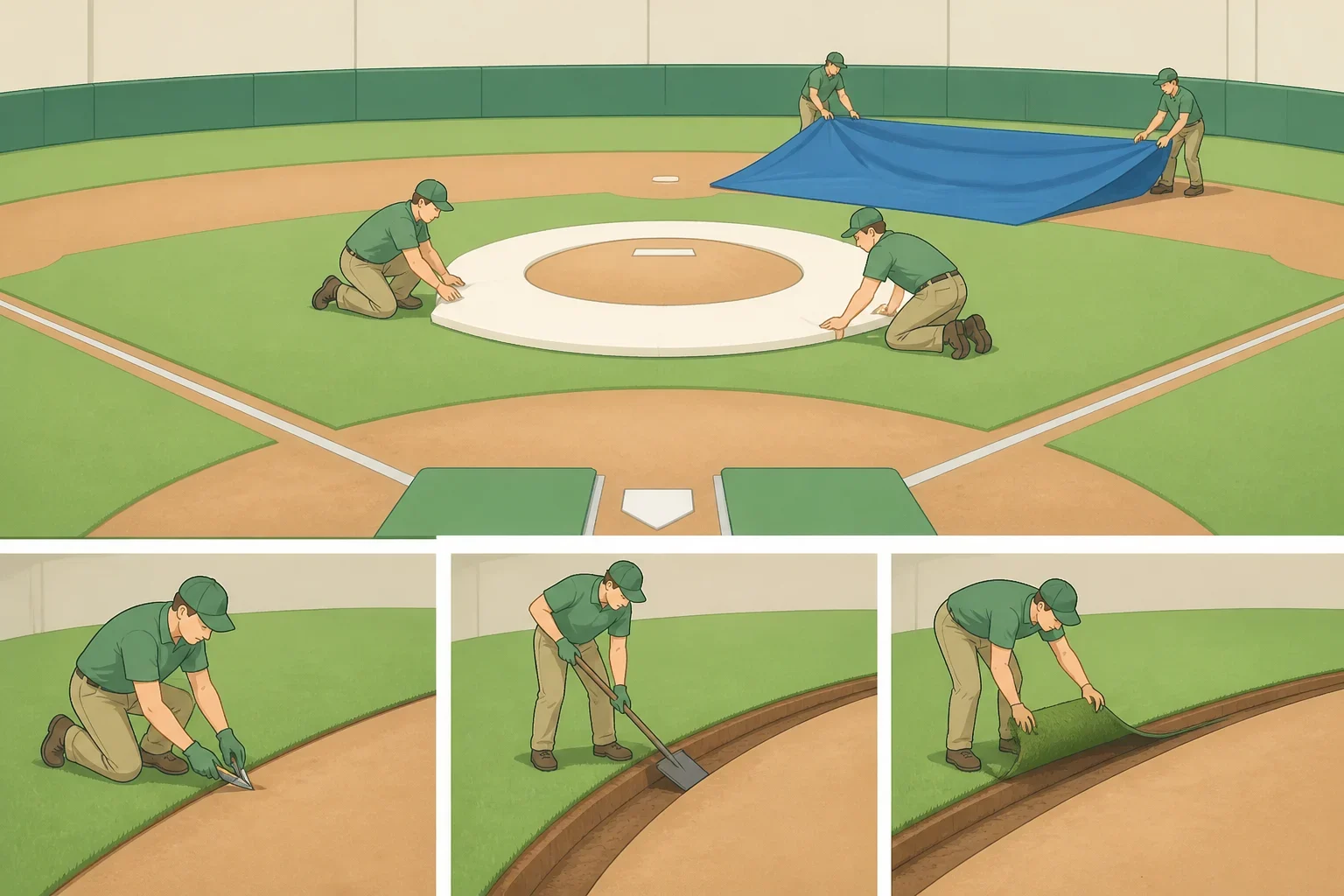
Knoxville's conversion starts with protecting the baseball infrastructure already in place. Crews lay padding over the field, then seal and tarp the retractable pitcher's mound before anything else happens, according to a joint release from Visit Knoxville and turf contractor Earthadelic, published early last year. Edge cuts around the warning track and infield are made by hand, and that soil gets stored for reuse rather than tossed.
From there, crews mark the soccer field's perimeter with string lines, cover non-turf areas with fabric secured by sod staples, then roll out a Bermuda-grass sod blend sourced from Crossroads Sod Farm in Sweetwater, Tennessee. Edges get trimmed by hand with machetes before the field is watered in, per the same release.
The sod has to hit a narrow window: rooted enough to hold up during a match, but not so rooted that it resists removal a day or two later. Reversing the process means cutting the sod away, pulling the fabric, running a magnetic roller to collect every staple, and refilling the edge cuts with stored topsoil, according to Visit Knoxville and Earthadelic.
Two available accounts differ slightly on timing. Earthadelic's original release projected roughly 12 hours to install the sod and about nine hours to remove it, with 10 employees on each end. By the middle of last year's season, Knox News reported the process typically ran closer to eight hours with the same 10-person crew. Neither figure cancels the other out; they read like separate snapshots of a process that tightened up as the season went on.
Cost is a bigger constant. Each conversion runs at least $7,000 before labor, driven mostly by 15,000 square feet of sod. Nine planned conversions across last year's season implied roughly $63,000 in sod alone, Knox News reported.
Weather turned into a real problem last year. The Smokies had nine games postponed, and a rescheduled One Knoxville SC match against the Richmond Kickers was rained out a second time, sometimes after the field had already been flipped for a game that never happened, according to Knox News. One Knoxville SC has no grounds crew of its own and leans on the Smokies' staff whenever rain threatens a soccer weekend.
The financial arrangement looked shaky, too. Smokies president Chris Allen said he doubted Earthadelic was breaking even on the conversions, framing the contractor's involvement as more of a community partnership than a profitable deal, Knox News reported. Earthadelic owner Steve Polte, for his part, told the outlet he'd like to keep doing the conversions for another decade if the budgeting could be refined.
Citi Field's soccer field conversion: what the record actually shows
Citi Field's public record looks different, and it's worth being precise about what it does and doesn't confirm. No published source describes Citi Field laying and removing a temporary soccer surface the way Knoxville does. What's documented instead is a turf-management strategy built around keeping one grass field intact through a demanding calendar.
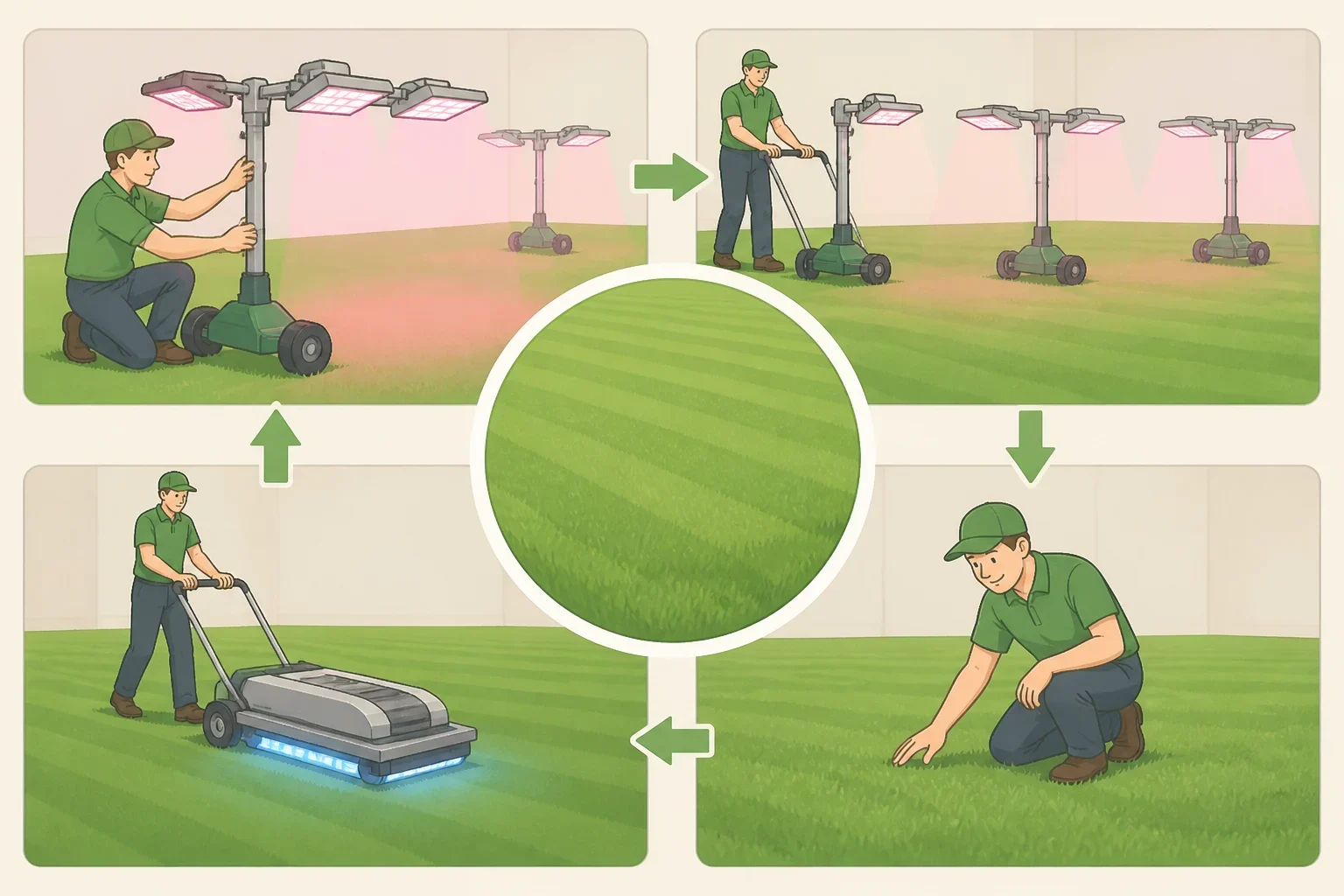
The Mets' grounds team aims to preserve as much of the original grass coverage as possible, which limits how often the field needs re-sodding even during heavy stretches, according to SGL System's case study. One section of the field pulls triple duty depending on the event: it serves as the soccer goalmouth, the baseball team's warm-up zone, and storage space for the baseball tarp, and the crew treats that zone as a priority for drainage and compaction control.
To manage recovery, the crew uses three LED120 grow-light units and two BU10 supplemental units positioned differently depending on the event, plus a UVC180 system to guard against fungal disease, SGL System reports. The UVC treatment gets used before the concert floor goes down and after it's removed, and again ahead of the baseball tarp in hot, humid conditions, when trapped moisture raises disease risk.
That equipment exists because the schedule leaves almost no slack. Citi Field packs 81 home baseball games into roughly six months, often in stretches of seven to 10 games across as many days, according to SGL System. Layer soccer and concerts on top of that, and the short gaps between events limit how much maintenance the crew can realistically do before the next setup.
The clearest real-world example comes from July 2023, when Citi Field hosted an MLB game, an NYCFC match in front of 20,000 fans, a Burna Boy concert, and a private 500-person corporate event within days of each other. Mets senior director of event operations Jenny Ice told BizBash her team had to be deliberate about splitting staff across leads rather than assigning everyone to every event, especially with one key team member out on her honeymoon that week. Mets staff identified the soccer-to-concert turnaround as the toughest flip, since it meant pulling goals, LED boards, and on-field seating before concertgoers arrived.
What that reporting supports is a shared-surface management approach and a demanding event calendar, not a confirmed second method for physically converting a baseball field to a soccer pitch. SGL System is a turf-equipment company describing its own client's results, and BizBash is reporting the Mets staff's account of event logistics. Neither lays out a step-by-step field build comparable to what Knoxville's turf contractor has published.
Why the two approaches differ
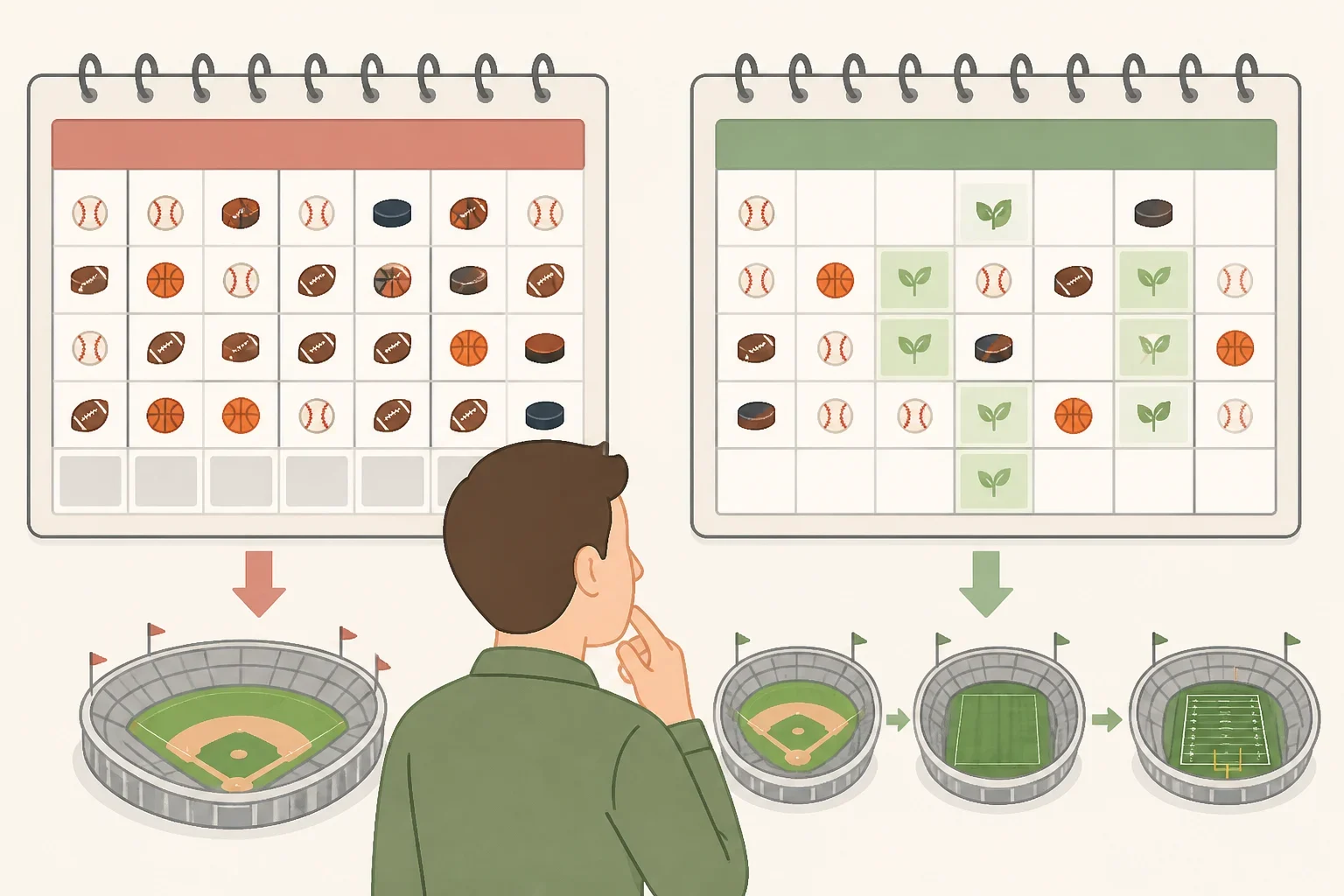
Schedule congestion plays a large role in which method a venue can even attempt. Knoxville's overlapping minor-league seasons allowed for nine planned conversions across last year, according to Visit Knoxville and Earthadelic. Citi Field's 81-game stretch inside six months, often bunched into seven-to-10-game homestands, leaves comparatively little room for any kind of physical rebuild between events, per SGL System, which explains why grow lights and UVC treatment stand in for a teardown at the bigger venue.
Staffing capacity compounds that gap. One Knoxville SC's lack of its own grounds crew already showed up in last year's rainouts, when the club had to lean on Smokies staff. Citi Field's event operations team, by contrast, splits leads across roles to manage overlapping baseball, soccer, and concert logistics, Ice told BizBash.
Cost is a live question specifically at the smaller venue. Allen's comments about Earthadelic likely losing money on the arrangement, and Polte's stated willingness to continue if the budgeting improves, point to a conversion model that hasn't fully settled into a sustainable routine, per Knox News. Available reporting doesn't address whether Citi Field's turf-recovery approach carries comparable cost pressure, so that comparison stops here rather than being assumed.
What to remember next
Two documented realities exist for putting soccer on a baseball field, and they aren't interchangeable. Knoxville's contractor has published a specific sod-installation and removal sequence, complete with costs, crew size, and a sod source. Citi Field's public record covers grass-recovery equipment and event-turnaround logistics, not a comparable field-build process.
Readers tracking a specific stadium's soccer schedule should check what that venue's own communications or grounds staff describe before assuming either model applies. A minor-league park sharing a field with a soccer club may be closer to Knoxville's every-match rebuild, while a major-league stadium juggling a full entertainment calendar may be managing one surface the way Citi Field's turf case study describes. Either way, a soccer date at a shared-use ballpark is never just a line-painting job, and the weather, staffing, and budget behind it are worth watching alongside the game itself.