

- Mixed 4x400 Relay Rules Explained: DQs, DNFs and Records
- Mixed 4x400 relay team order: how teams built their lineups
- Mixed 4x400 relay exchange rules: what the Kujawy Pomorze report shows
- Mixed 4x400 relay disqualification rules: DQ, DNF and non-record results
- Quick reference: what each outcome actually confirms
- What to check next
Mixed 4x400 Relay Rules Explained: DQs, DNFs and Records
Jamaica's mixed 4x400m team was disqualified at the World Indoor Championships earlier this year after officials ruled the baton exchange illegal. The call moved Spain up to silver and lifted Poland into bronze, the country's first medal of that meet, according to World Athletics. It's the clearest sign this season that mixed 4x400 relay rules can rewrite a podium, even when the public report never names the exact provision behind the call.
That's the honest limit of what's publicly available. The Jamaica ruling confirms an illegal exchange can erase a result. It doesn't say which part of the exchange broke down, and World Athletics' race report doesn't cite a rule number.
The event itself is still new. Kujawy Pomorze 26 marked the mixed 4x400m's debut at the World Indoor Championships, the first significant change to that program in 22 years, according to World Athletics. The same race report described the event's arrival as carrying "the expected drama and spectacle of this new event," noting a pile-up during the first exchanges that hurt the medal chances of both pre-meet favorites, the Netherlands and the United States.
This piece works through what the 2026 season's official race reports actually establish about team order, exchange calls, and results, drawing on the World Indoor Championships and the World Athletics Relays. That covers World Athletics' own competitions. NCAA meets, high school championships, and local invitationals may follow different declaration and exchange procedures, so confirm the specifics with whichever governing body runs the meet in question.
Mixed 4x400 relay team order: how teams built their lineups
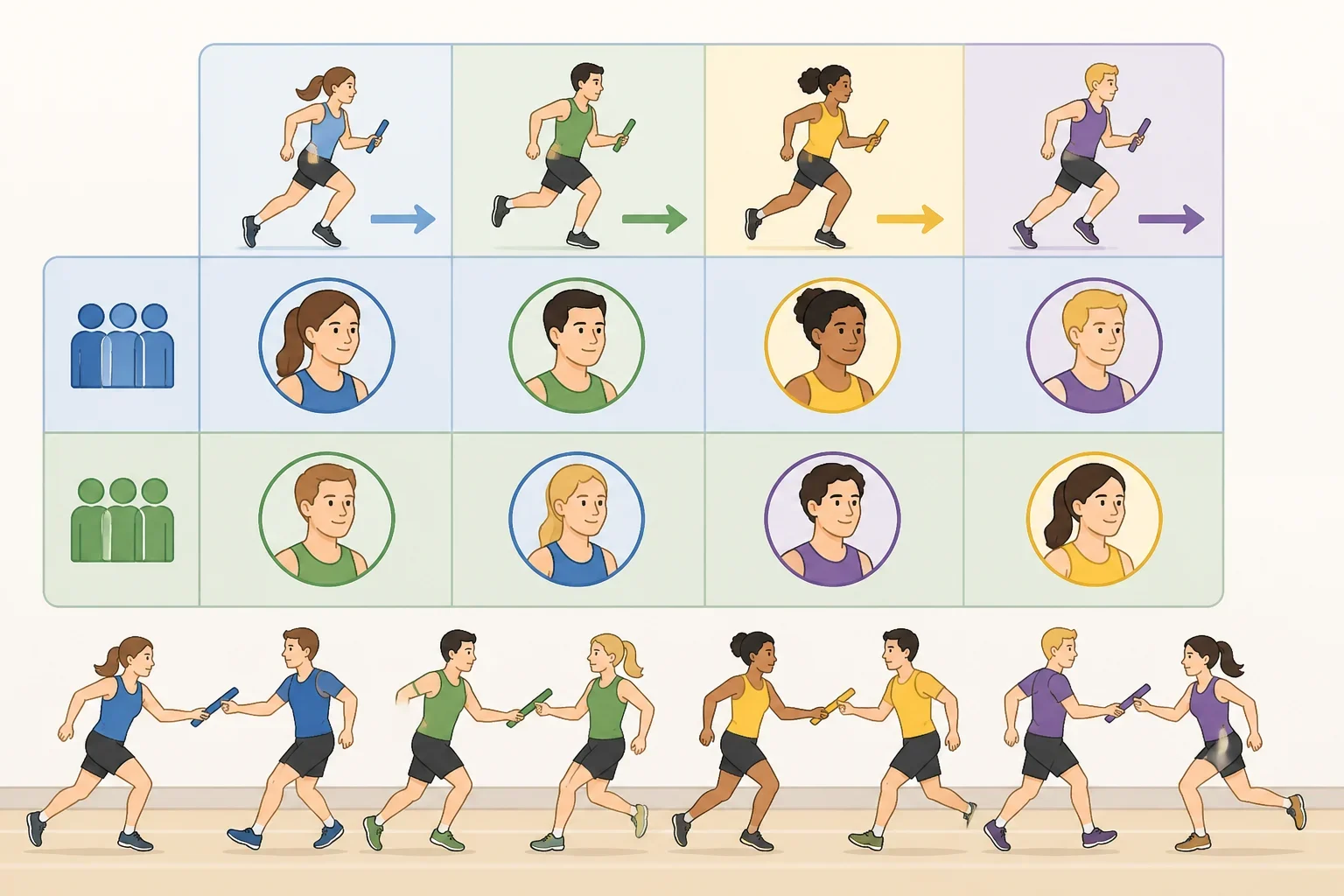
The mixed 4x400m pairs men and women on the same team, but this season's race reports describe splits and finishing times, not rulebook language. Readers who want the exact composition requirement, and whether running order is restricted beyond that, should check the current World Athletics Competition and Technical Rules directly rather than infer it from results.
What the reports do show is running order as a real tactical decision. At the World Athletics Relays in Gaborone, Bryce Deadmon and Paris Peoples ran the opening two legs for the US, building an early lead, according to World Athletics. In a later heat, Kenya's George Mutinda and Mercy Oketch produced strong opening legs and led for most of the race, only for Great Britain & Northern Ireland's anchor Yemi Mary John to close the gap and win at the line, 3:09.69 to Kenya's 3:09.87, per the same World Athletics report.
Those are two different sequencing choices. One team built its lead early, the other saved its fastest closer for last. Both got their teams into the final. The disqualification this season centered on the baton exchange itself, not on which athlete ran which leg.
Mixed 4x400 relay exchange rules: what the Kujawy Pomorze report shows
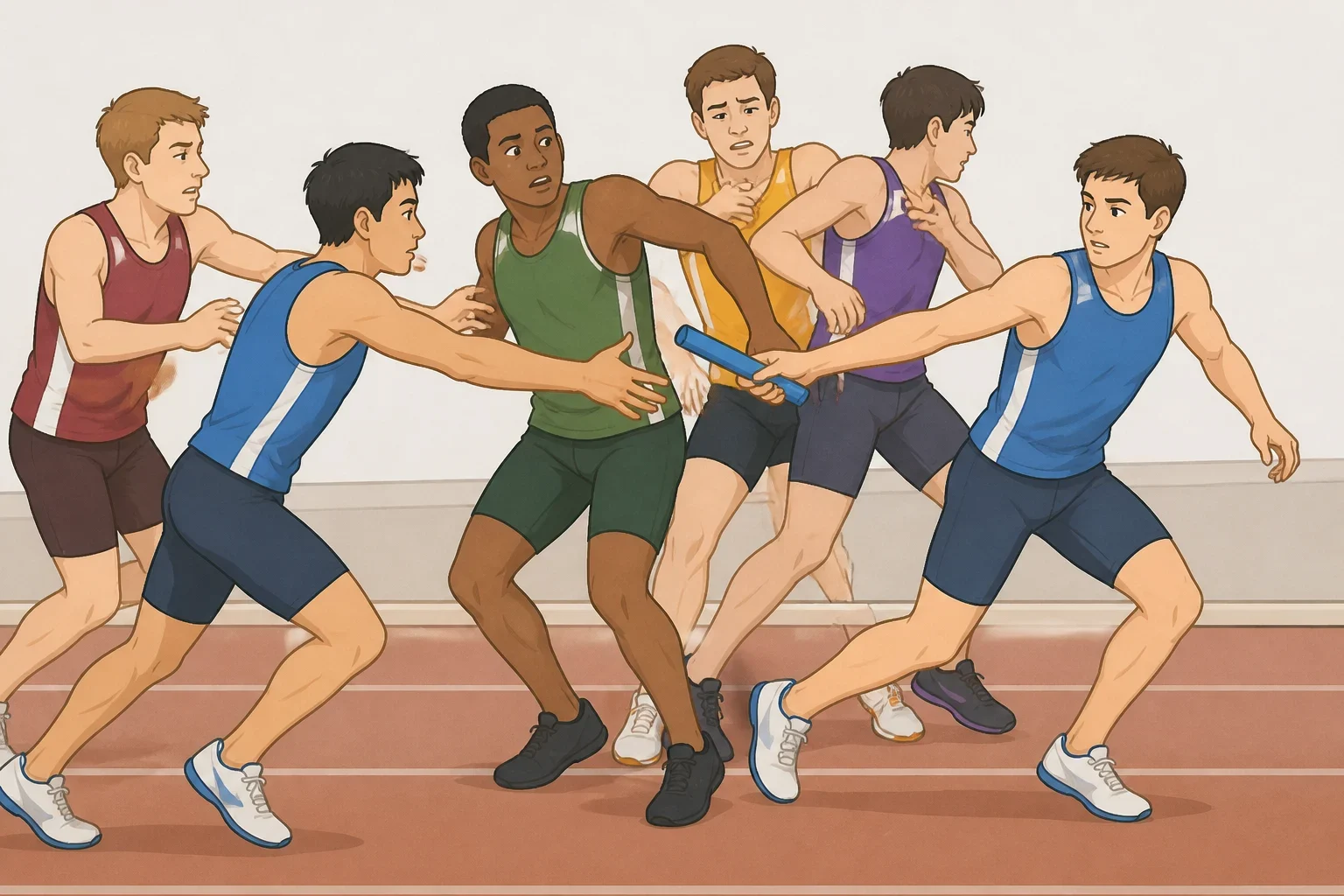
The Kujawy Pomorze final showed how crowded a mixed relay exchange can get, and how little of that shows up in a results sheet. Belgium's anchor Jonathan Sacoor said he knew some teams would push for an early advantage, and that he didn't see what happened behind him in the pack beyond it being "very messy," according to World Athletics. Poland's Justyna Święty-Ersetic, whose 50.94 anchor leg helped move Poland to bronze once Jamaica was disqualified, recalled "pushing and jostling, as well as falls" in the same race, per the same World Athletics report.
The report does not identify that described contact as the reason for any other disqualification. Jamaica is the only team named as disqualified, and the report calls the violation an "illegal baton exchange" without saying whether it involved where the baton changed hands, how possession transferred, or something else entirely.
That gap matters for anyone trying to figure out exactly what went wrong. The marked exchange zone, the baton possession requirement, and what happens if a baton is dropped are all covered somewhere in the current World Athletics Competition and Technical Rules. The race report simply isn't the document that spells them out, so anyone comparing 4x400 mixed relay penalties across this season needs the rulebook itself, not the recap.
Mixed 4x400 relay disqualification rules: DQ, DNF and non-record results
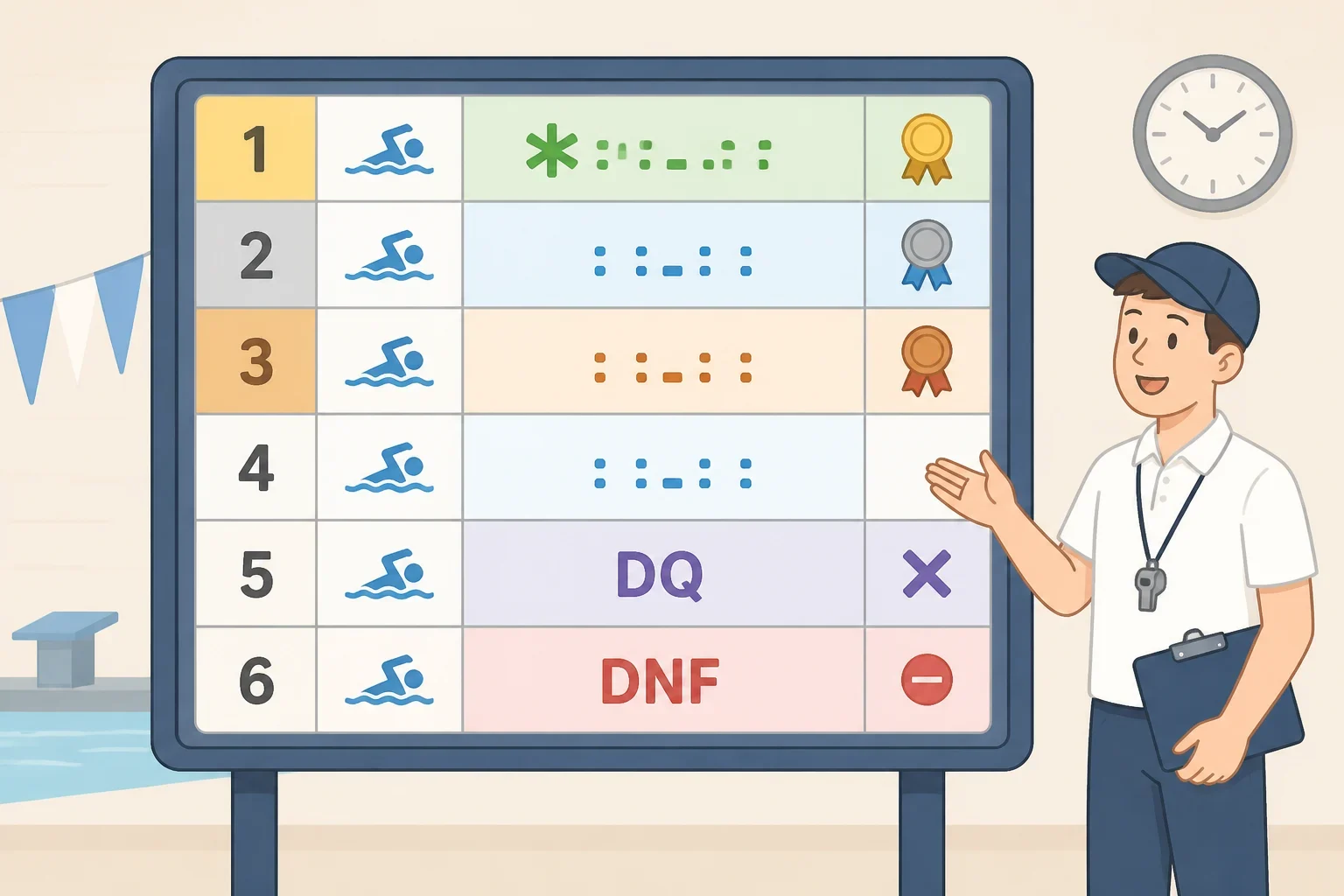
A season of mixed 4x400m racing shows how differently a result can go sideways. Jamaica's disqualification is one version. Poland's finish at the World Athletics Relays final in Gaborone was another: the supplied report lists the team as DNF and does not cite a rule violation, an outcome unrelated to the DQ Jamaica picked up two months earlier at a different championship, according to World Athletics.
A results correction is a third category. In the heats at that same meet, a misplaced start line in lane 3 meant some finishing times didn't cover the full race distance. World Athletics marked those results with asterisks, ruling them ineligible for statistical purposes, and corrected the error before the next day of competition without affecting anyone's qualification, per World Athletics.
Then there's the fast-but-not-a-record scenario. Belgium's 3:15.60 in Kujawy Pomorze was the fastest indoor mixed 4x400m time recorded at that point, good enough for the inaugural world indoor title, but short of the 3:12.44 mark World Athletics set as the minimum standard for recognizing an official indoor world record in the event, according to World Athletics. That standard had already been tested once before: the Netherlands ran 3:15.63 to win last year's European Indoor Championships, the previous fastest indoor mark, before Belgium edged past it in Kujawy Pomorze. The win counted. The record didn't.
Outdoors, the bar sits somewhere else again. The US already holds the outdoor world record in the event, set at the 2024 Olympic Games, which is one reason officials treat indoor and outdoor marks as separate benchmarks even though it's the same four legs and the same baton, according to World Athletics.
Quick reference: what each outcome actually confirms

Result What the cited report confirms What it does not establish Jamaica, World Indoor Championships Disqualified for an illegal baton exchange Which specific exchange provision applied Poland, World Athletics Relays final Listed as DNF, no rule violation cited Any connection to the earlier Jamaica DQ Lane 3 start-line error, World Athletics Relays heats Times asterisked and ruled ineligible for statistics; qualification unaffected Which individual results beyond lane 3 were affected Belgium's 3:15.60, World Indoor Championships Fastest indoor time recorded, below the 3:12.44 record threshold Whether a future run under that mark would be ratified as a record
What to check next
A DQ, a DNF, and a fast-but-not-record time describe three different outcomes in a mixed 4x400m race, and a scoreboard alone won't tell them apart. The public race report confirms what happened to the result. It doesn't always confirm which rule caused it, as Jamaica's case shows.
When a result looks like a surprise, check the meet's official results and any published technical decisions before assuming the broadcast replay explains it. And if the race in question isn't a World Athletics event, confirm exchange, declaration, and disqualification procedures with that level's own governing body. NCAA and high school meets, among others, may run this event differently.