

Ineligible Receiver Downfield Penalty Explained: NFL Rules
An ineligible receiver downfield penalty gets called when a lineman or other non-eligible player is positioned more than one yard past the line of scrimmage at the moment the quarterback releases a forward pass. Under NFL rules, only eligible receivers are allowed to cross that line before the pass is thrown, according to Sporting News.
The NFL rulebook labels this foul "Ineligible Downfield Pass," or IDP. It's a separate designation from the kicking-game version, "Ineligible Downfield Kick," or IDK, per NFL.com.
A useful case study for how this plays out on the field: the Philadelphia Eagles' 22-21 loss to the Atlanta Falcons in September 2024, when officials flagged Philadelphia's offensive line three times for ineligible man downfield in a single game, Sporting News reported. It's still a clear example of why a guard or center can get flagged on a play he never touched the ball.
How far downfield can an ineligible receiver go in the NFL?
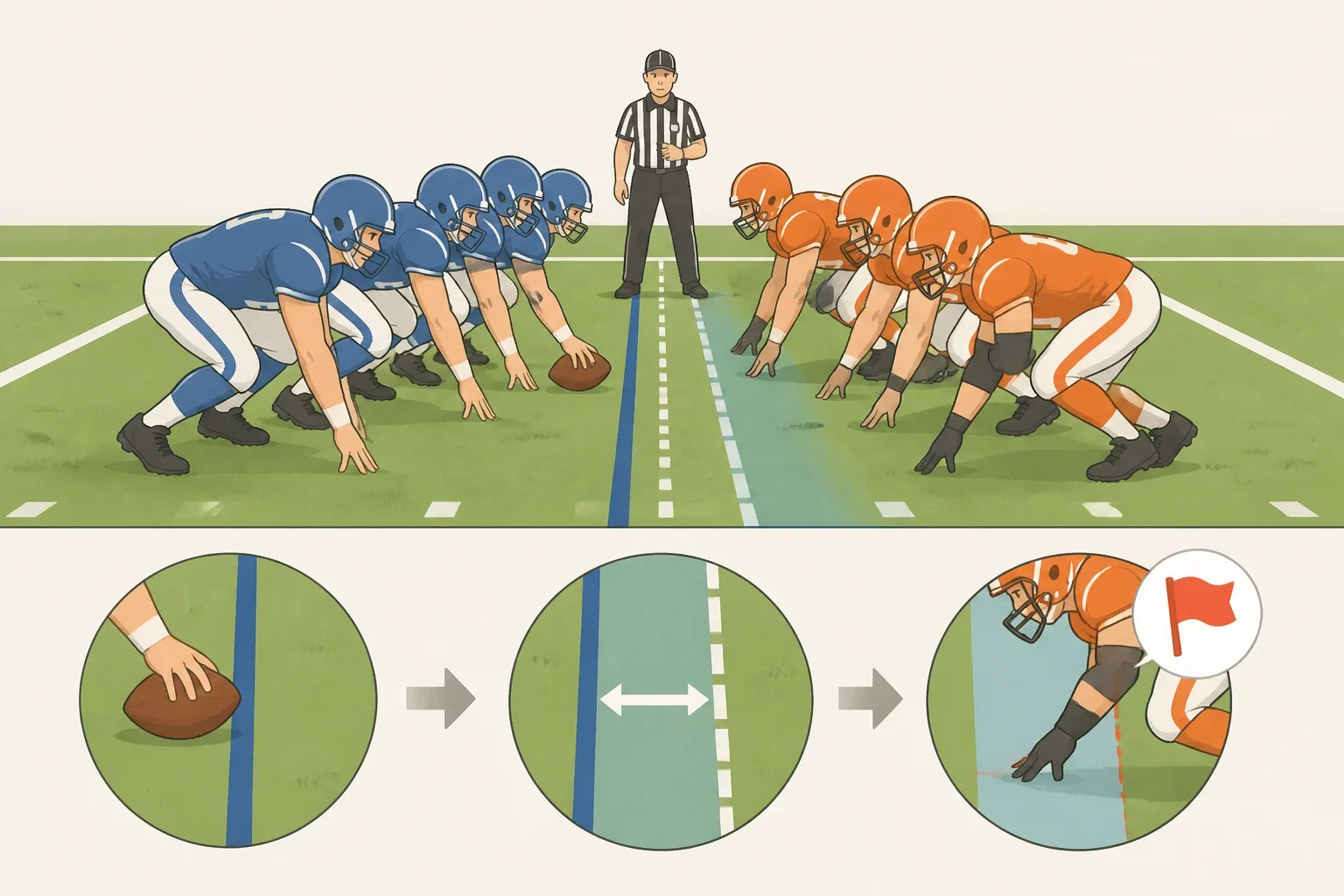
The margin is narrow. An ineligible player gets one yard of cushion beyond the line of scrimmage before the pass leaves the quarterback's hand. Cross that mark and a flag can come out, Sporting News reported.
That one-yard limit explains why this call can look like it's punishing a lineman for something unrelated to the pass itself. The Eagles' flags against Atlanta show exactly that: two of the three fouls that game wiped out completed gains, not incomplete throws, per Sporting News.
Who counts as an eligible receiver
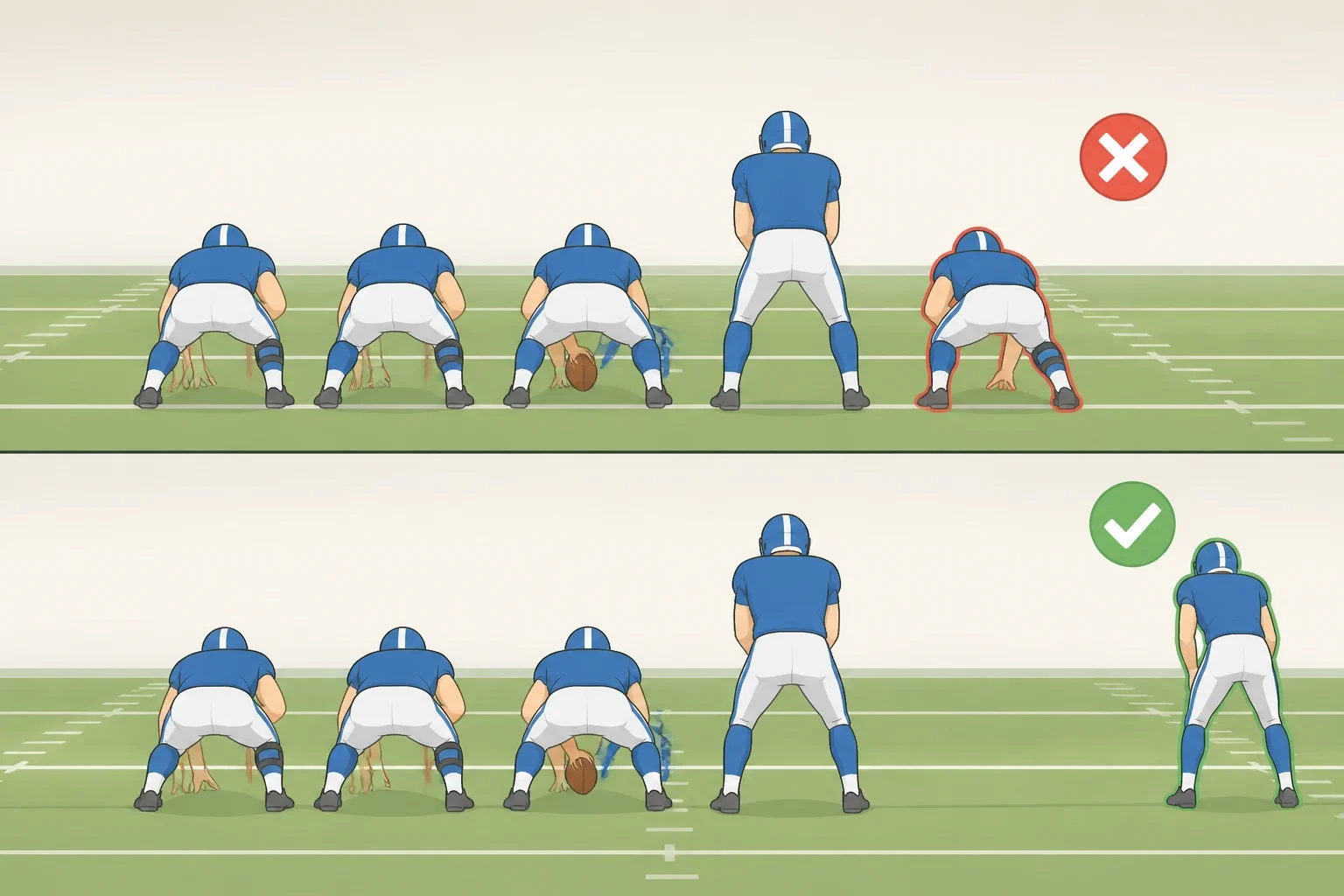
Offensive linemen, and generally any offensive player wearing a number between 50 and 79, are treated as ineligible receivers on a given play, Sporting News reported. That number range is a handy shortcut for fans and broadcasters, but it isn't the entire test.
There's one notable exception. An extra offensive tackle can become eligible for a specific play, but only if he reports to the referee before the snap and lines up in an eligible spot, such as a tight end position, per Sporting News. Skip the reporting step, and lining up in the right spot doesn't change his status.
That's a different question from the one that decides the penalty itself. Reporting and alignment settle whether a player is allowed to catch a pass. Whether he draws a flag later in the play comes down to something else: where his body is the instant the quarterback releases the ball, which is the one-yard test covered above.
Inside the Eagles' three flags against Atlanta
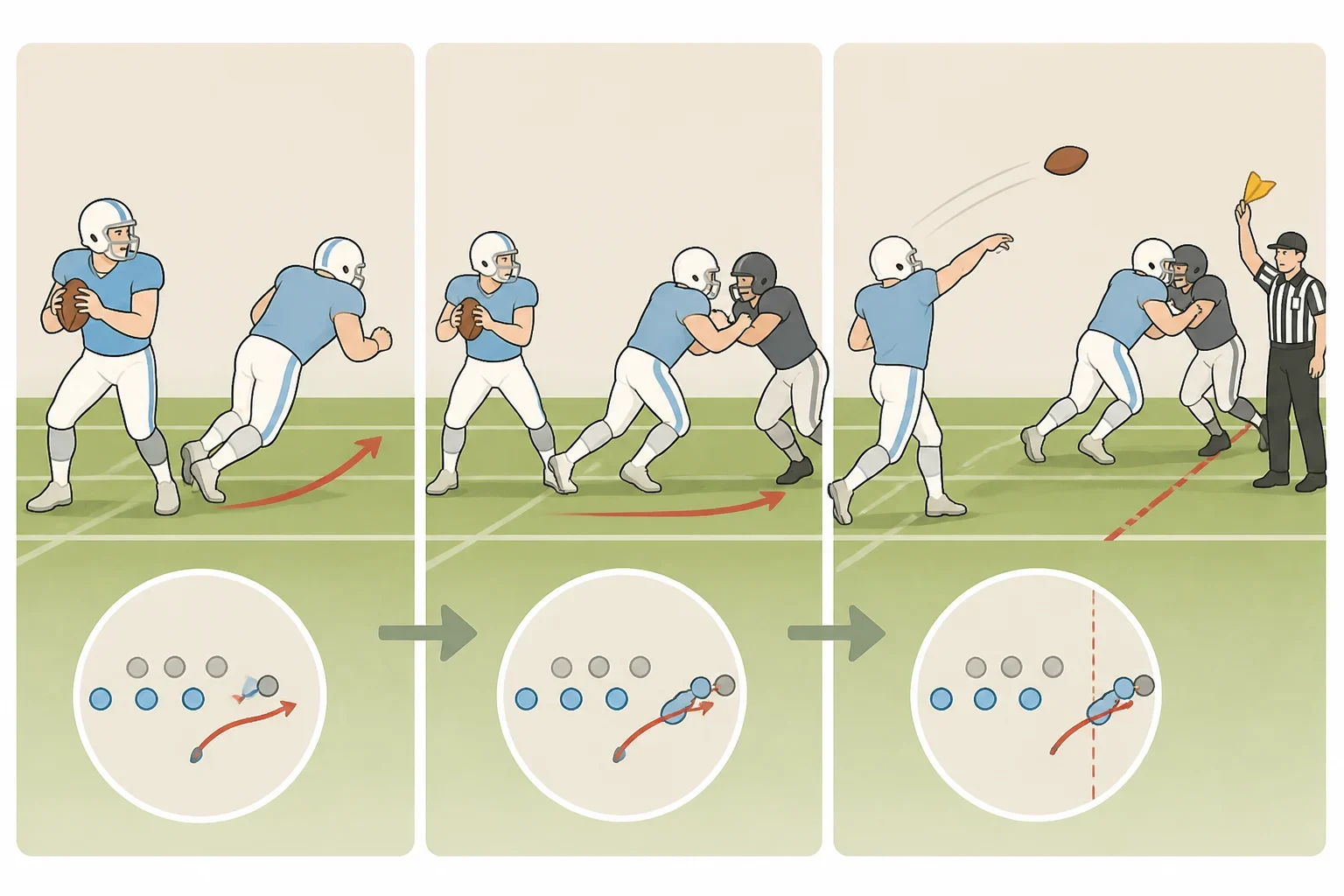
Picture a lineman pulling to block as if the play is a run or a screen. If the quarterback instead throws downfield and that blocker has already crossed more than a yard past the line of scrimmage the moment the ball leaves his hand, the flag comes out regardless of what the pass does next. That's the exact spot Cam Jurgens landed in twice against Atlanta.
Jurgens's blocking assignment often sends him to the second level of the defense. Both of his flags came on short completions from quarterback Jalen Hurts to receiver Britain Covey, plays that had already picked up positive yardage before the whistle, Sporting News reported.
Right tackle Lane Johnson picked up the third flag on a first-and-goal pass in the second quarter, which pushed Philadelphia back from the 4-yard line to the 9, according to Sporting News.
Eagles head coach Nick Sirianni attributed the flags to a mix of factors rather than one clean explanation. "Some of them are on us as coaches," he said. "Some of them are on a player going too fast. We coach that, not to go too fast, but some of them are on us in the certain scenarios of when we call them," per Sporting News.
Sporting News described the broader problem as a timing issue between quarterback and offensive line. Sirianni's comments point to the same theme: coaching decisions, specific game situations, and players simply moving too fast off the snap can all put a lineman on the wrong side of the one-yard limit before the ball comes out.
What the five-yard penalty really costs
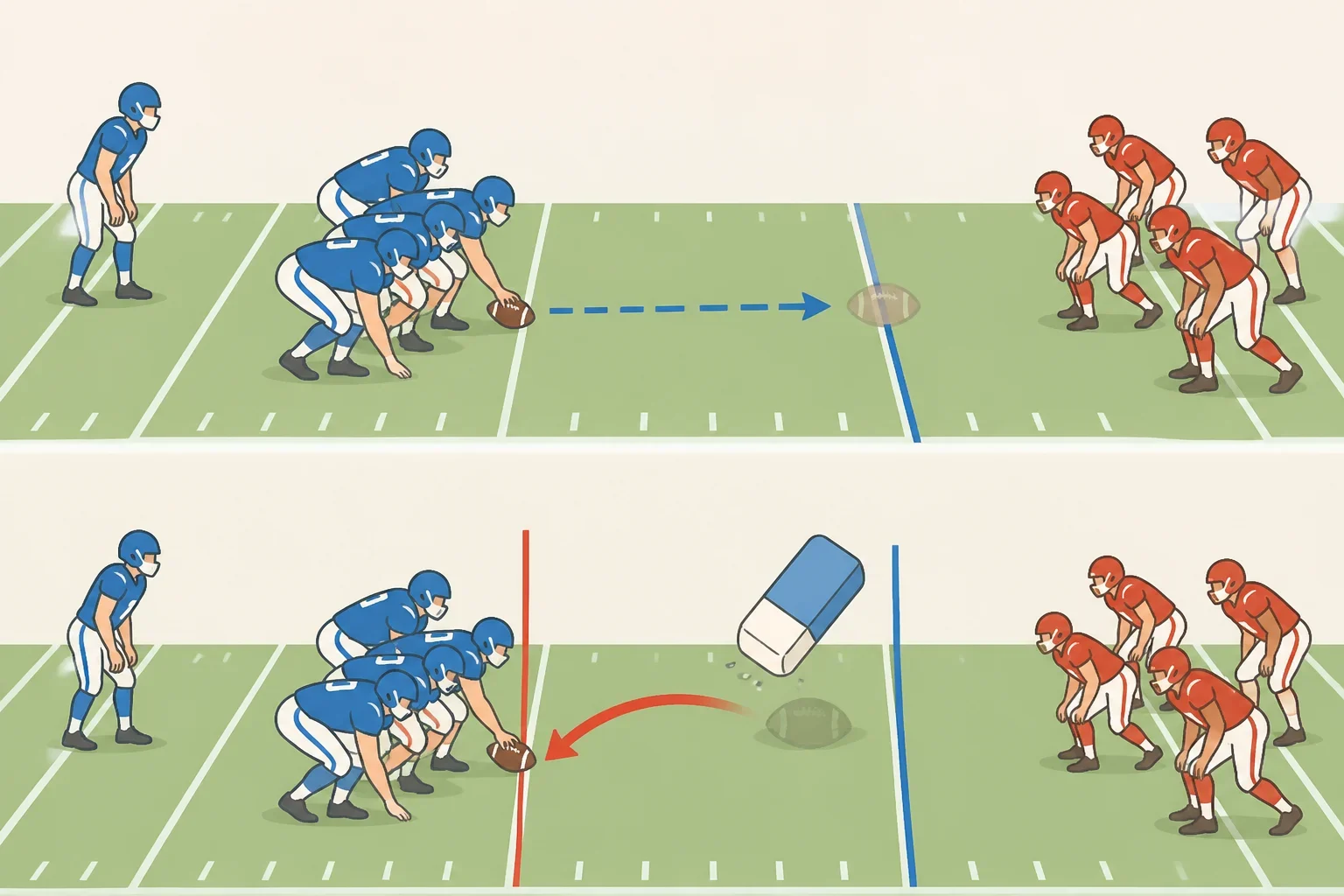
On paper, this is a five-yard penalty, Sporting News reported. That number describes the formal punishment, not necessarily the damage on the scoreboard.
Johnson's flag matched that formal cost exactly, moving the ball from the 4-yard line to the 9. Jurgens's second flag cost far more: it erased a completed 14-yard catch and run by Covey, and combined with the five-yard penalty, it produced a 19-yard swing in field position, Sporting News reported.
The foul itself is always worth five yards. The total damage depends entirely on how much the offense had already gained before the flag landed.
What to remember next
Two moments decide whether this flag flies: where a player lines up and reports before the snap, and where his body is the instant the quarterback lets go of the ball. The five-yard number printed on the penalty doesn't always tell the full story, as Jurgens's negated 14-yard gain against Atlanta showed.
Next time a lineman draws this flag on what looks like a routine short pass, check his position at the moment the ball leaves the quarterback's hand. That's the spot officials are judging, not how far the play travels afterward.