
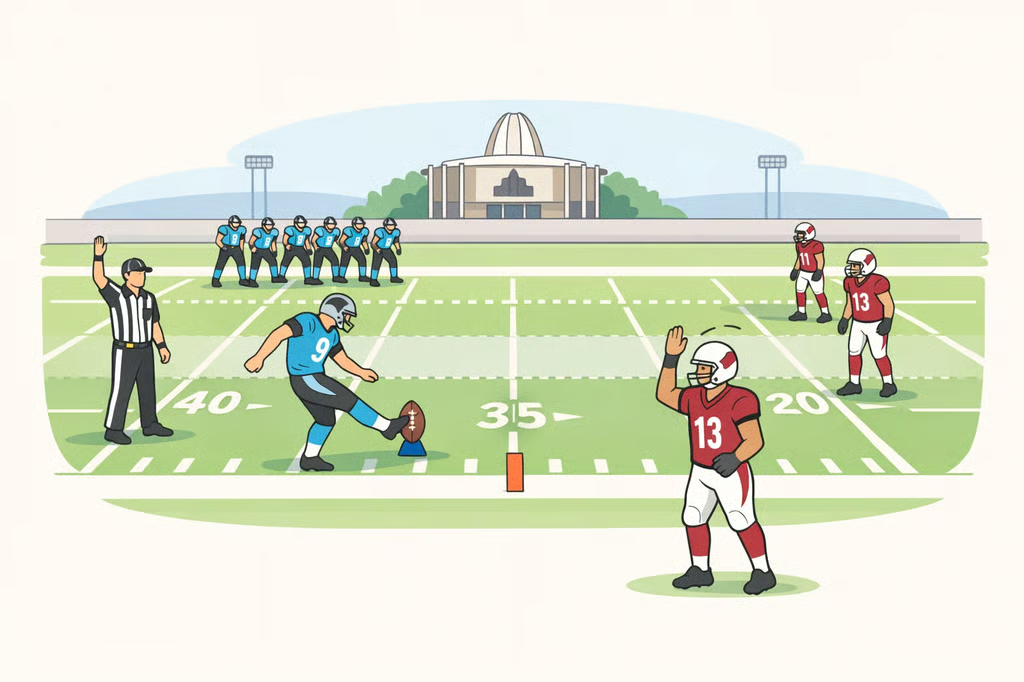
The Carolina Panthers and Arizona Cardinals will open the 2026 NFL preseason Thursday, Aug. 6, in the Pro Football Hall of Fame Game. Beyond marking the return of NFL action, the matchup will offer the first live look at four rule changes affecting kickoff formations, touchbacks, declared onside kicks and potential player disqualifications.
Kickoff alignment will be the most visible change because it applies to standard free kicks. The remaining rules require specific circumstances and may not come into play during the preseason opener.
The matchup also has a direct connection to the Pro Football Hall of Fame Class of 2026. Former Panthers linebacker Luke Kuechly and former Cardinals wide receiver Larry Fitzgerald will be recognized during pregame activities alongside Drew Brees, Roger Craig and Adam Vinatieri, according to the Pro Football Hall of Fame.
Panthers vs. Cardinals kickoff time and TV channel
The game is scheduled for 8 p.m. ET on NBC at Tom Benson Hall of Fame Stadium in Canton, Ohio. The official NFL schedule lists Arizona as the designated home team.
Because the Hall of Fame Game takes place before the standard preseason schedule, Carolina and Arizona will each play four exhibition games instead of three. Coaches will use the additional game to evaluate rookies, reserves and players competing for roster positions, while established starters may receive limited snaps or sit out entirely.
That makes individual assignments more revealing than the final score. Kickoff alignment, special-teams discipline and situational decisions should provide a clearer indication of how each team is adapting to the league’s new rules.
New kickoff alignment changes the return formation
The most noticeable change affects the receiving team’s setup-zone formation on standard kickoffs. Under the official 2026 NFL rulebook, more receiving-team players must place a front foot on the restraining line, limiting how many can start deeper in the setup zone.
The receiving team must align as follows:
- At least five players must have a front foot on the restraining line. Six are required if the receiving team places more than nine players in the setup zone.
- No more than four players may line up off the restraining line, with no more than two in any one of the three setup-zone areas.
- If four players line up off the restraining line, at least one must be positioned on each side of the field.
The revised formation spreads receiving-team players more evenly across the setup zone. It also reduces the number who can gather behind the front line before the return begins.
The adjustment continues the dynamic-kickoff format that the NFL introduced in 2024 and made permanent in 2025. The league designed the format to place kicking- and receiving-team players closer together, reducing the distance and speed involved in initial contact while encouraging more returns.
An improperly aligned receiving team can be penalized for an illegal formation. Special-teams units must account for the number of players on the restraining line as well as their placement across the setup zone.
The alignment requirement applies regardless of the score or quarter, so viewers should be able to see it on most standard kickoffs.
Onside kicks no longer require a deficit
Teams may now declare an onside kick at any point in a game, regardless of the score or quarter.
The timing provision is not entirely new. Under the 2025 NFL rulebook, a team could declare an onside kick at any point but only while trailing. The 2026 rule removes the deficit requirement, allowing a tied or leading team to attempt one.
The kicking team must still notify officials before the play. The change therefore does not restore the traditional surprise onside kick, in which a team could attempt a short recovery kick without announcing its intentions.
Removing the deficit requirement gives coaches more flexibility. A team could attempt an onside kick early in the game, while tied or while holding a lead. The receiving team would know what was coming and could use the required recovery formation, making the decision a calculated risk rather than a true surprise.
The rule will appear in the Hall of Fame Game only if one of the teams declares an attempt. Coaches sometimes use preseason games to test special-teams personnel, but they may also avoid showing strategies they intend to use during the regular season.
Kicks from the 50 get a revised touchback spot
A narrower change applies when a kickoff originates from the 50-yard line, a situation that can occur after a penalty is enforced on the receiving team.
Under the revised rule, the receiving team takes possession at its 20-yard line if the kick:
- Goes out of bounds beyond the receiving team’s goal line
- Strikes the receiving team’s goal post, uprights or crossbar
- Lands at or beyond the goal line and is downed in the end zone by the receiving team
The provision prevents the kicking team from receiving an excessive field-position advantage by deliberately sending the ball beyond the field of play from the shorter distance.
It does not change the result of every touchback. The kick must originate from the 50-yard line and meet one of the conditions specified in the rule. Because that sequence requires an unusual penalty and kickoff situation, it may not arise during the game.
League officials can assist with potential ejections
League officiating personnel may now consult with on-field officials when they are considering whether to disqualify a player for a flagrant football or non-football act.
The consultation may occur even when no penalty was called on the field, but it must take place before the next snap. The rule gives officials access to additional information before deciding whether conduct warrants an ejection.
This is not a broad expansion of replay review. It applies to potential disqualifications rather than ordinary holding, contact, formation or judgment penalties.
NFL clubs also approved broader correction authority that would have applied during a work stoppage involving officials represented by the NFL Referees Association. That contingency will not be active for the Hall of Fame Game. The NFL and the union reached a seven-year collective bargaining agreement on May 8, before the previous agreement was due to expire.
What to watch during the game
Receiving-team alignment should provide the clearest look at how the 2026 rules change play on the field. Before each standard kickoff, watch how many players place a foot on the restraining line and how the remaining players are distributed across the setup zone.
The other changes depend on circumstances that may never occur. An onside kick must be declared, the revised touchback spot requires a kick from the 50, and league consultation becomes relevant only if officials consider disqualifying a player.
The Hall of Fame Game will not provide a complete verdict on the rules after one preseason contest. It will, however, show how special-teams players and coaches begin adjusting to formations and strategic options that will remain in effect throughout the 2026 NFL season.