
- What Is Banana Ball? 11 Rules Behind the 2026 League
- How does Banana Ball work? Scoring and the clock
- How the Showdown settles a tie
- Banana Ball baseball rules for hitters and pitchers (Rules 3-8)
- How fans and lineups can change a Savannah Bananas game
- What to watch on the scoreboard
- Savannah Bananas rules: where they apply and where they don't
What Is Banana Ball? 11 Rules Behind the 2026 League
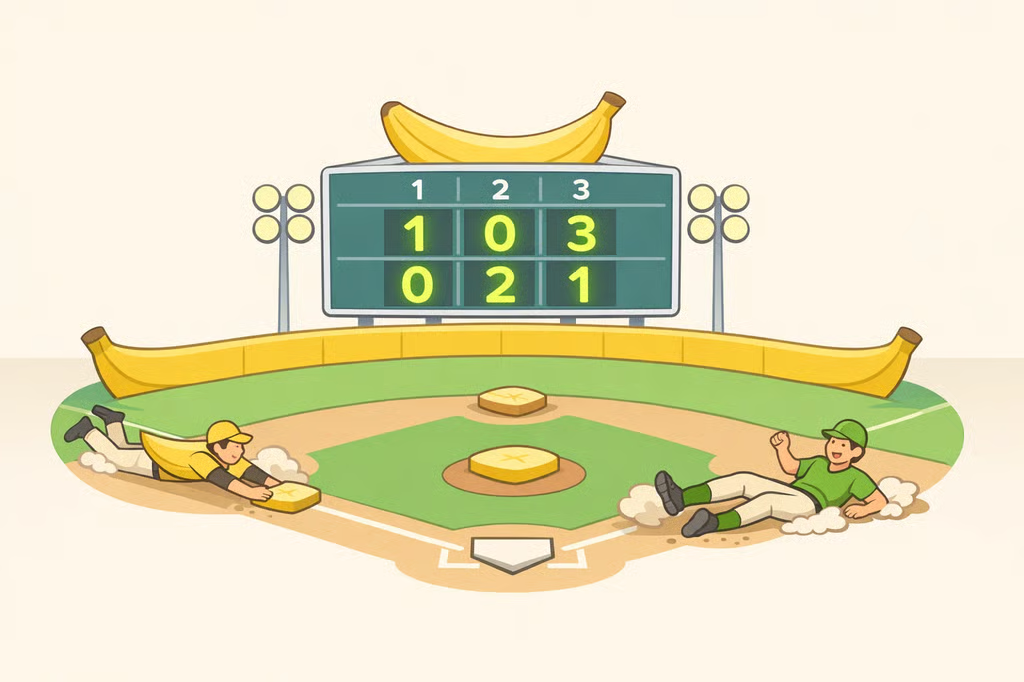
Banana Ball uses a real bat, a real ball and a real diamond, but the scoreboard doesn't track a normal box score. Teams earn points for winning innings instead of piling up runs, and a hard game clock can stop a new inning from ever starting. So, what is Banana Ball? It's baseball reshaped by 11 modified rules, built by the Savannah Bananas and formalized into a six-team Banana Ball Championship League for the 2026 season, following the club's 2025 World Tour Championship (MLBAnalytic).
The format has also drawn large crowds this year. The Bananas and the Texas Tailgaters pulled roughly 102,000 fans into Texas A&M's Kyle Field earlier this year (Sporting News), and their 2026 games at Knoxville's Covenant Health Park and Neyland Stadium had been sold out since December 2025 (Knox News).
This guide covers the 11 rules described in detail by ESPN, Knox News, and the Register-Guard's 2026 coverage. MLBAnalytic's separate account of the league's 2026 rulebook also lists two additional features, a "Trick Play Equalizer Point" bonus for the visiting team and a designated fielder substitution, that the other three outlets don't break down. Those two aren't covered in step-by-step detail here, but check the league's rules page if a broadcast or scoreboard references them. Everything below is separate from the rulebooks used by MLB, NCAA, high school and local recreational leagues, which run on their own systems for scoring and tiebreakers.
How does Banana Ball work? Scoring and the clock
The Savannah Bananas started as a college summer team in the Coastal Plain League in 2016 and went independent in 2022 (ESPN). The Banana Ball Championship League that launched in 2026 has six teams: the Bananas, Party Animals, Firefighters, Texas Tailgaters, Indianapolis Clowns and Loco Beach Coconuts. Knox News describes the 11 rules layered on top of standard baseball as changes meant to speed up play and pull the crowd into the action.
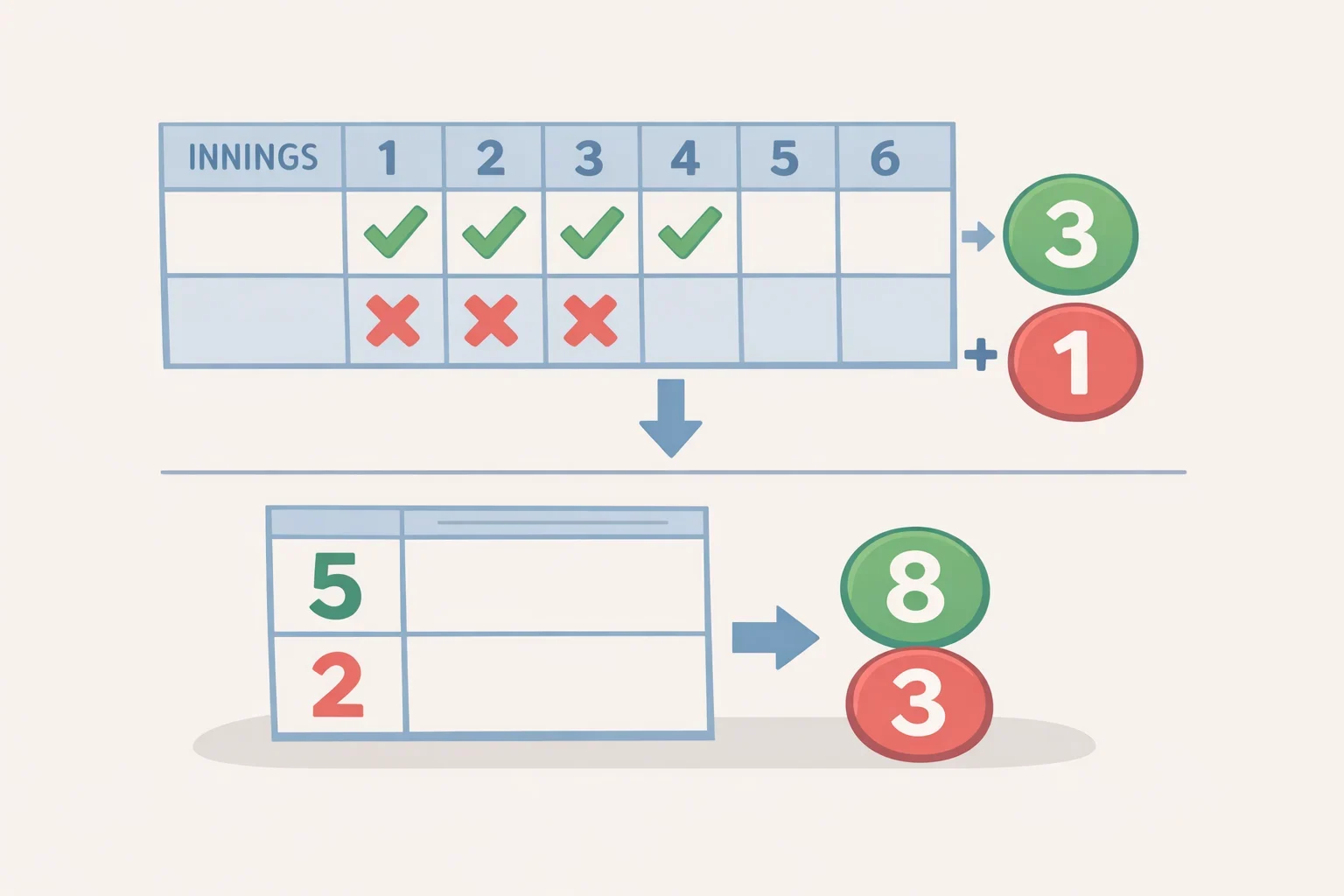
Rule 1: Win the inning. Runs still happen exactly as they would in a normal game: batters cross the plate, runners advance, the action looks familiar. What's different is how those runs convert into the number on the board. A team earns one point for winning an inning outright, no matter the margin (Register-Guard). If Team A scores five runs to Team B's two in the same inning, Team A collects one point, not five. The final inning breaks that pattern: every run scored counts as its own point, keeping a team behind on points alive if it can still put runs on the board late (Knox News). ESPN's account describes the format as built around nine innings inside the two-hour limit, so that final inning is typically the ninth unless the clock ends the game sooner (ESPN).
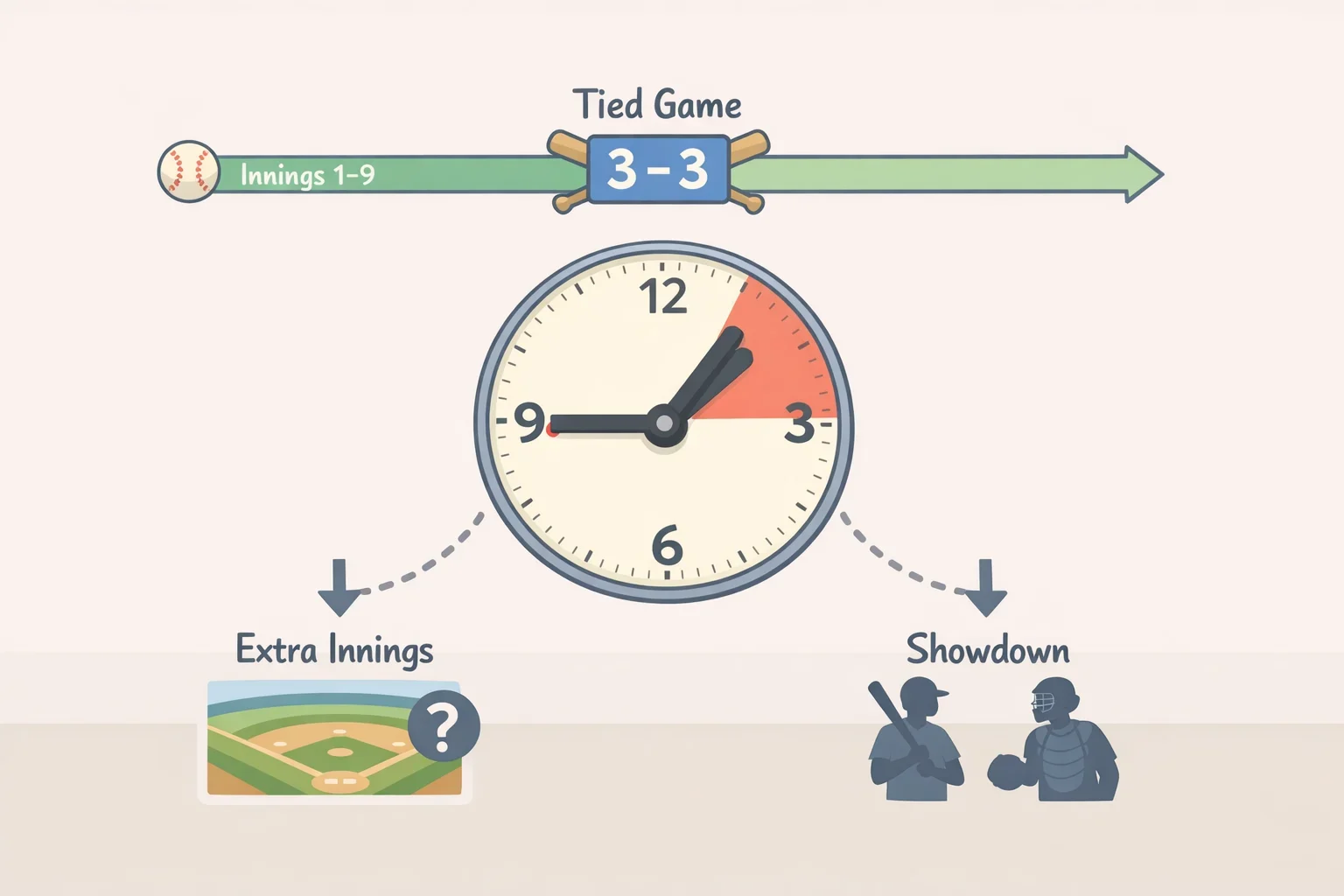
Rule 2: Two-hour time limit. Games are designed to fit inside two hours. ESPN's tiebreaker rule triggers "in the event a game is tied after nine innings or two hours of play," and within that window, no new inning can begin once the clock passes one hour and 50 minutes unless the score is tied. Knox News and the Register-Guard describe the same cutoff more simply, as a two-hour limit on starting new innings. In practice, a trailing team needs to force a tie before the 1:50 mark to keep the game going. A tie that survives to the cutoff doesn't lead to a standard extra inning. It sends the game to the Showdown.
How the Showdown settles a tie
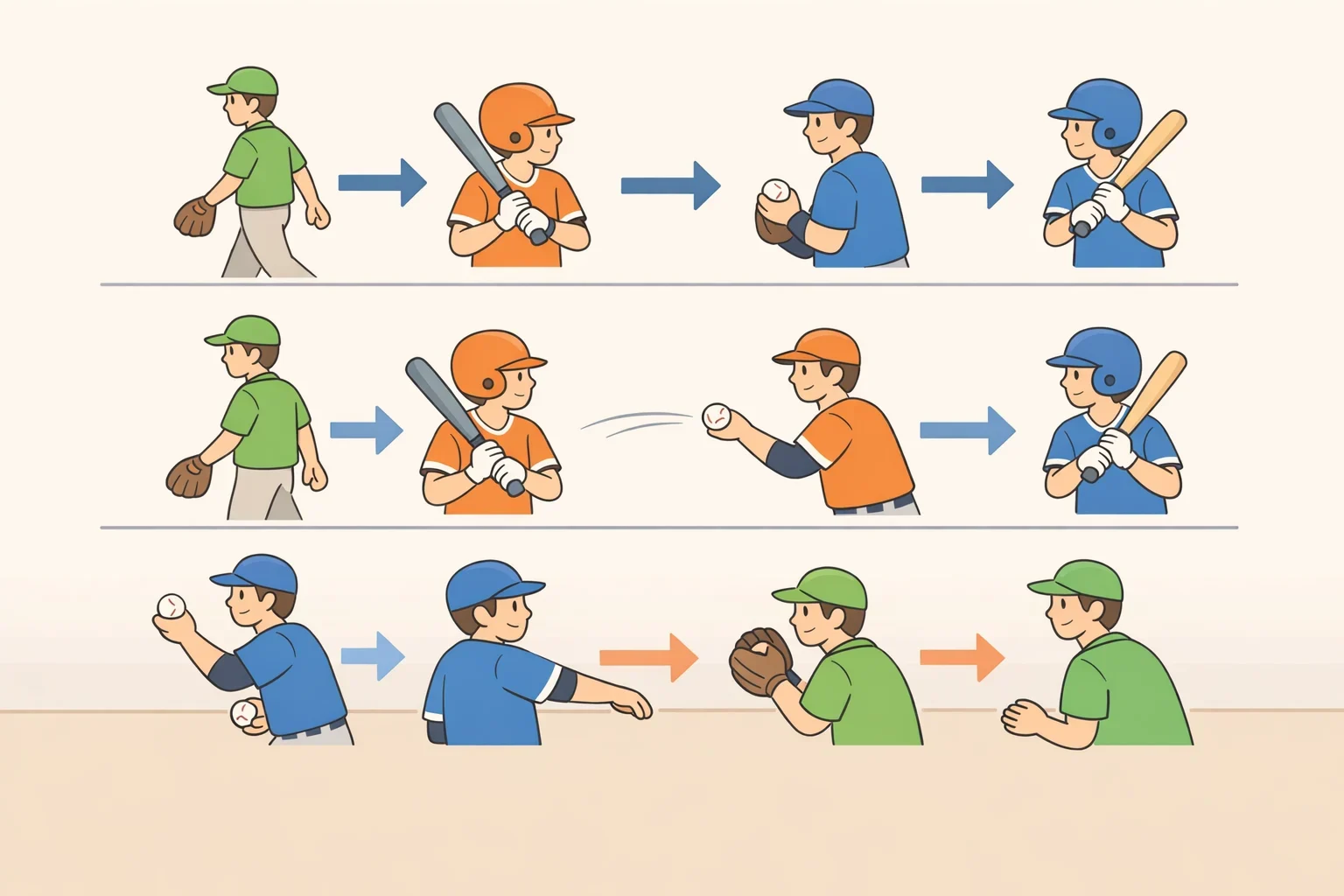
Rule 9: The Showdown. This one is presented here, ahead of Rules 3 through 8, because it's the direct outcome of the clock rule above. If the game is still tied once the two-hour window closes, play skips straight to a three-round tiebreaker instead of a conventional extra inning (Knox News).
- Round 1: One hitter faces a pitcher, a catcher and a single fielder.
- Round 2: The fielder leaves, so it's pitcher and catcher only.
- Round 3: The fielder returns, but the bases are loaded for the hitter (Knox News; MLBAnalytic).
In each round, the hitter has to score to earn a point. An out ends the round with nothing to show for it, a result the league calls a "Showdown Shutdown" (Register-Guard). In the bases-loaded final round, every run scored counts as its own point rather than just the one needed to win, and a home run at any point in the Showdown ends the game on the spot (Register-Guard). If neither team has broken through after three full rounds, the game continues with bases loaded and one fielder, round after round, until someone wins (Register-Guard; Knox News).
Banana Ball baseball rules for hitters and pitchers (Rules 3-8)
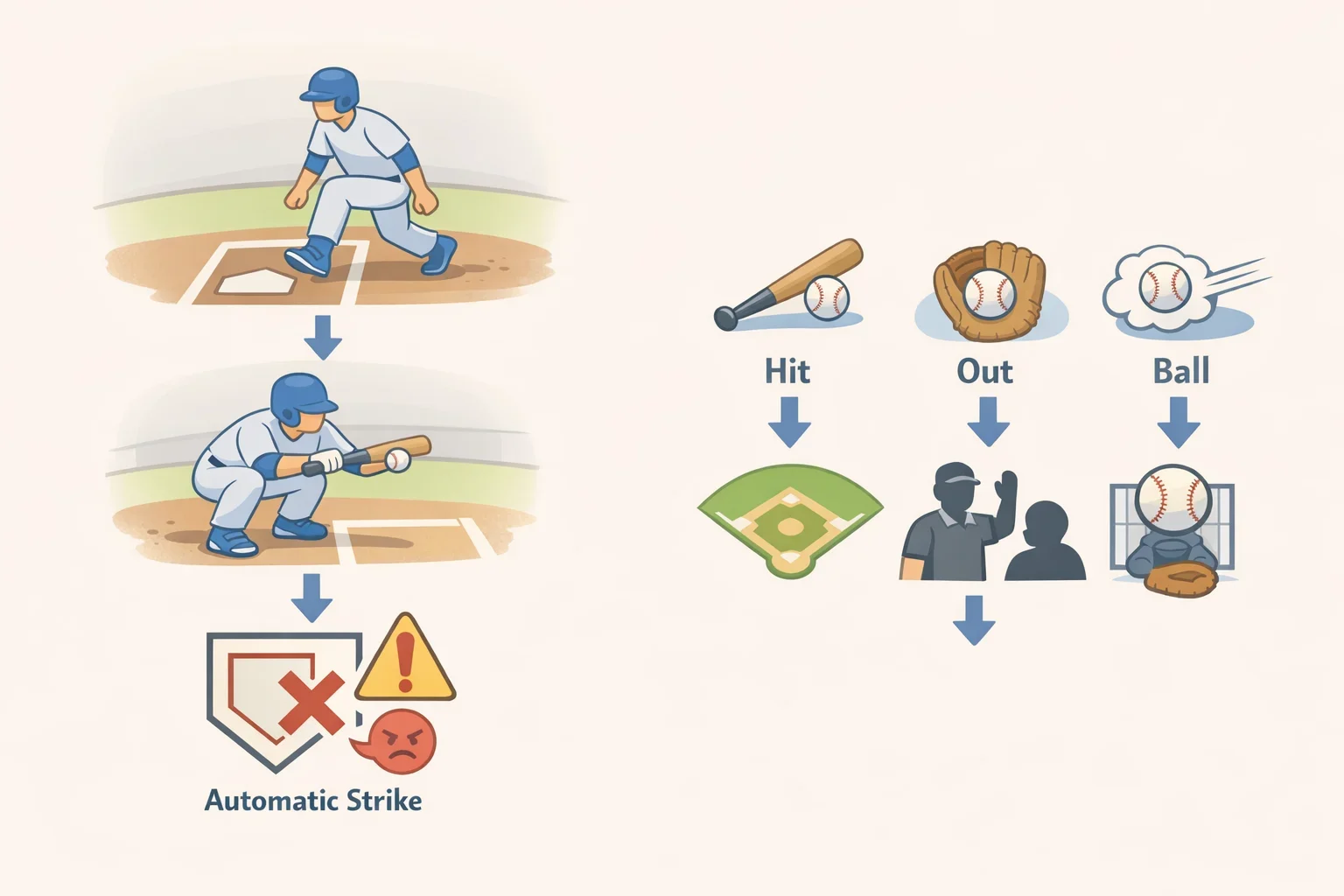
These rules govern the pace of a single at-bat, from a batter stepping out to a pitcher left to work through trouble alone.
Rule 3: No stepping out. A batter who leaves the box after settling in is charged an automatic strike.
Rule 4: No bunting. Any bunt attempt results in immediate ejection rather than a standard out at first.
Rule 5: Steal first. A batter can take first base outright on any wild pitch or passed ball, at any point in the at-bat.
Rule 6: No walks. On ball four, the batter-runner may advance beyond first while the defense passes the ball among its fielders. After every required fielder has touched the ball, the defense can attempt to retire the runner.
Rule 7: No mound visits. No coach, catcher or teammate is permitted to visit the mound at any point in the game, for any reason.
How fans and lineups can change a Savannah Bananas game
Rule 8: Fans can record outs. A foul ball caught cleanly by a fan in the stands is ruled an out for the defense. A bobbled or juggled catch doesn't count.
Rule 10: The Challenge Rule. Each team carries one replay challenge covering fair-or-foul calls, tag or force plays, missed-base calls and catches. A team keeps its challenge if the call is overturned, but loses the ability to challenge again if the original call stands. A fan chosen before the game to represent the crowd gets one additional "Fan Challenge," announced with confetti and a sign.
Rule 11: The Golden Batter Rule. A team can send any hitter in its lineup to the plate out of turn, once per game. In the league's own example, if the No. 6 and No. 7 hitters make the first two outs of an inning, the team can use the Golden Batter to send the No. 3 hitter up in the No. 8 spot instead. The original No. 8 hitter stays in the game and remains eligible to pinch-run if the No. 3 hitter reaches base, and the next scheduled batter is simply the No. 9 hitter.
What to watch on the scoreboard
- Watch the point total, not the run total. A lopsided inning is still worth one point (Rule 1) unless it's the final inning.
- Check whether it's the final inning. If so, every run counts as its own point.
- Once the game is tied late, watch the clock (Rule 2). The 1:50 mark and the two-hour cutoff are what send a tied game to the Showdown (Rule 9) instead of extra innings.
- Track foul territory (Rule 8) and each dugout's challenge flag (Rule 10). Either one can erase or create an out.
- Notice if a team skips its expected batter mid-inning. That's the Golden Batter Rule (Rule 11) in action, usable once per team, per game.
Savannah Bananas rules: where they apply and where they don't
These Savannah Bananas rules govern the Banana Ball Championship League's 2026 season specifically. MLB, NCAA, high school and standard recreational baseball run on their own separate rulebooks, with their own systems for scoring and settling ties (Register-Guard; ESPN).
Fans planning to attend or stream a 2026 game should confirm the exact clock cutoff, the Showdown trigger and any venue-specific features, including the Trick Play Equalizer Point and fielder-substitution rules referenced by MLBAnalytic, directly through the Banana Ball Championship League before first pitch (MLBAnalytic). The format's novelty rules have shifted between seasons before, so checking the current rulebook is the safest way to know exactly what's in play at any given ballpark.