
- Why Is the Women's 800m World Record So Hard to Break?
- Who has come within a second of the record?
- What makes the women's 800m world record so hard to break?
- Jarmila Kratochvílová's 800m record: a case study in speed and endurance
- Jarmila Kratochvílová's 1:53.28 800m record: what's confirmed
- What this means for today's 800m runners and coaches
- What the record shows, and what it doesn't
Why Is the Women's 800m World Record So Hard to Break?
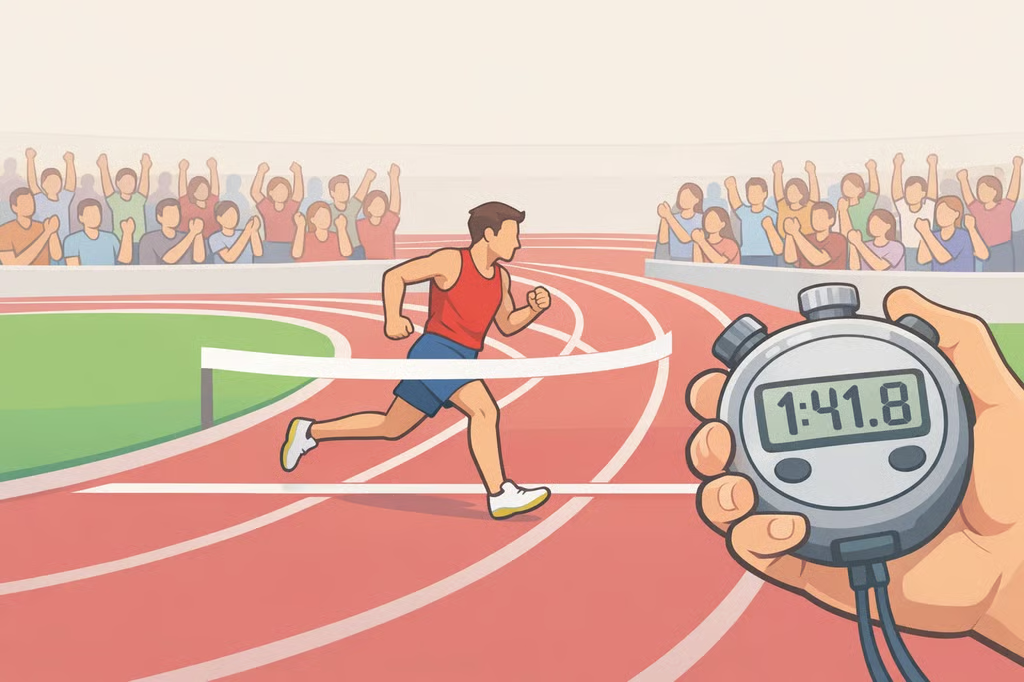
Jarmila Kratochvílová ran 800 meters in 1 minute, 53.28 seconds on July 26, 1983, at the Olympic Stadium in Munich. World Athletics, the sport's global governing body, still lists that time as the current women's 800m world record (World Athletics). That single fact carries most of the answer to why the record has proven so hard to break: in the more than four decades since, almost no one has finished close enough to seriously threaten it.
The sources reviewed for this article identify three athletes who have come within a second of 1:53.28 since it was set: Pamela Jelimo of Kenya in 2008, Caster Semenya of South Africa in 2018, and Audrey Werro of Switzerland in 2026 (Wikipedia). Over two laps of a track, a one-second gap isn't trivial. It separates a genuine world-record threat from a very good race. This piece looks at what's confirmed about that gap, what Kratochvílová's own career suggests about the demands of running that fast, and what practical use the history has for today's 800m runners and coaches.
Who has come within a second of the record?
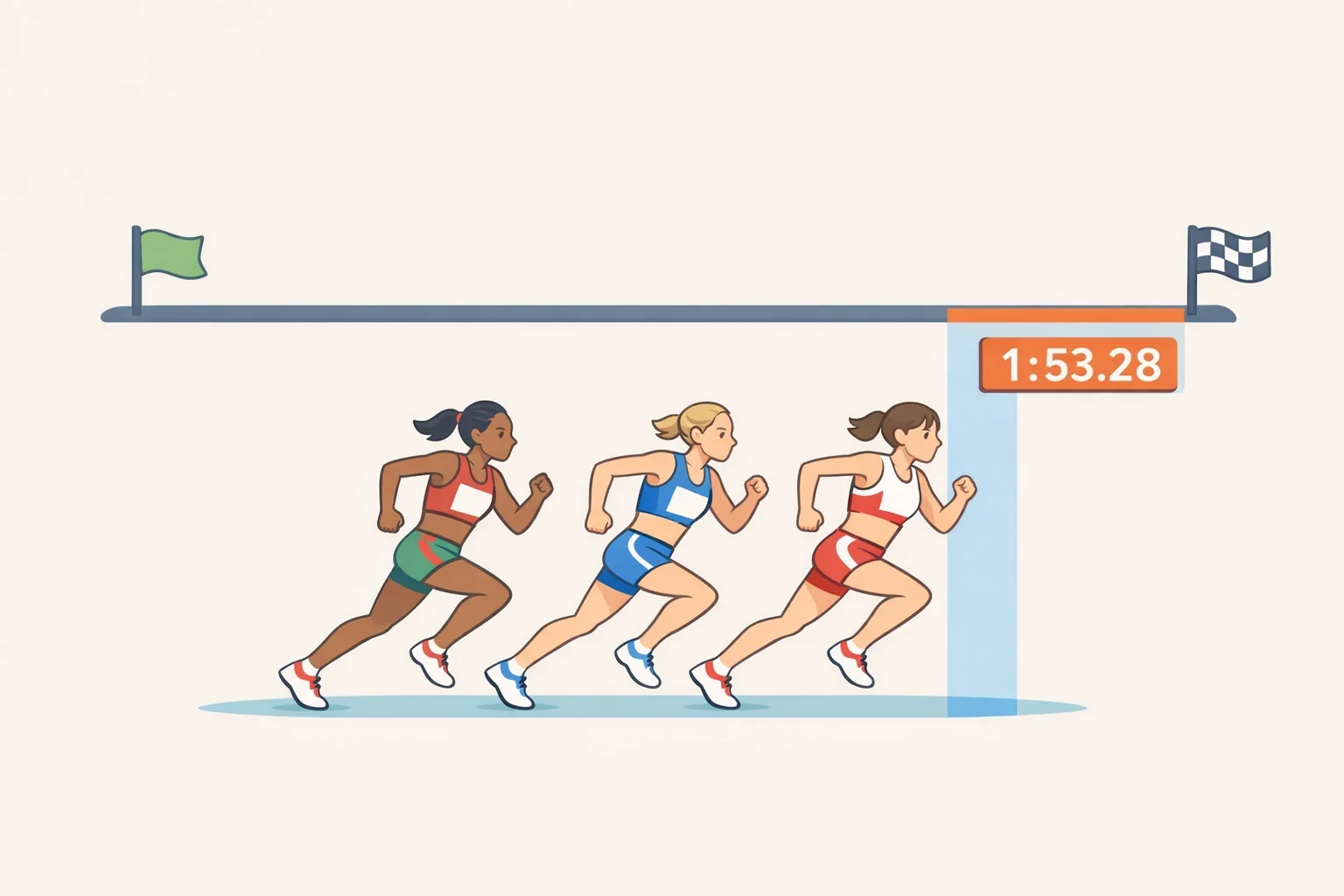
Three athletes appear in the account reviewed for this article as finishing within a second of Kratochvílová's mark: Jelimo (2008), Semenya (2018), and Werro (2026) (Wikipedia). That source confirms they landed inside the one-second window. It doesn't include their exact times, the specific races, or lap splits. Readers who want those numbers should check World Athletics' results and rankings pages directly, since that's where the sport keeps its official marks.
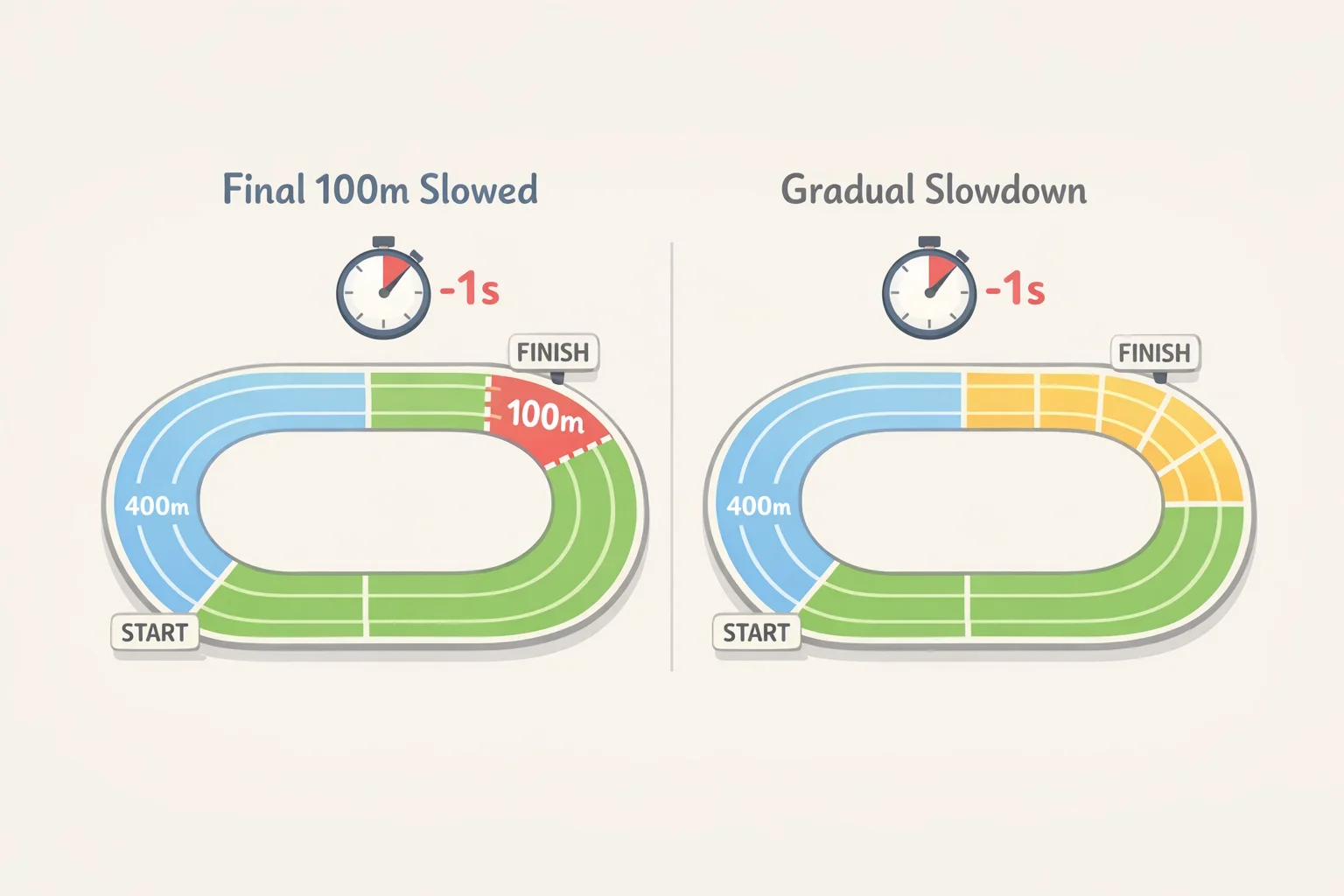
A one-second deficit over 800m is worth thinking through rather than filing away as "close." Imagine two runners who hit the bell, the 400m mark, at the same split. If one loses a full second to the other only in the final 100 meters, that's a collapse in closing speed. If the same second gets lost gradually across the whole second lap, that's a fitness gap. Both produce the same finishing time, but they point to different weaknesses. Without splits for Jelimo's, Semenya's, and Werro's closest runs, there's no way to say from the available sourcing which pattern applies to any of them.
What the reviewed sources do support: three athletes, from two continents, across three different years, have finished inside that window, and the same 1:53.28 has stood through all of it (Wikipedia). For a competitive 800m runner or a coach setting a season target, that's a real number to measure against, not a symbolic "old record" line.
What makes the women's 800m world record so hard to break?
The 800m sits in an awkward spot in track and field. It's too long to run as a pure sprint and too short to run as a pure endurance event, which is why coaches commonly treat it as a hybrid: an athlete needs enough raw speed to be competitive through the first 400m and enough fitness to keep that speed from collapsing on the second lap. That framing shows up constantly in how the event gets coached, but the research available for this article doesn't include a peer-reviewed breakdown of the specific energy systems behind elite 800m pacing. Readers who want that level of technical detail should look to sports-science research or a certified coaching organization rather than treat this paragraph as complete.
What the record does offer is one detailed, documented case: Kratochvílová's own career. That's the strongest evidence available here, and it's worth examining for what it actually shows, not for what it might generalize into.
Jarmila Kratochvílová's 800m record: a case study in speed and endurance
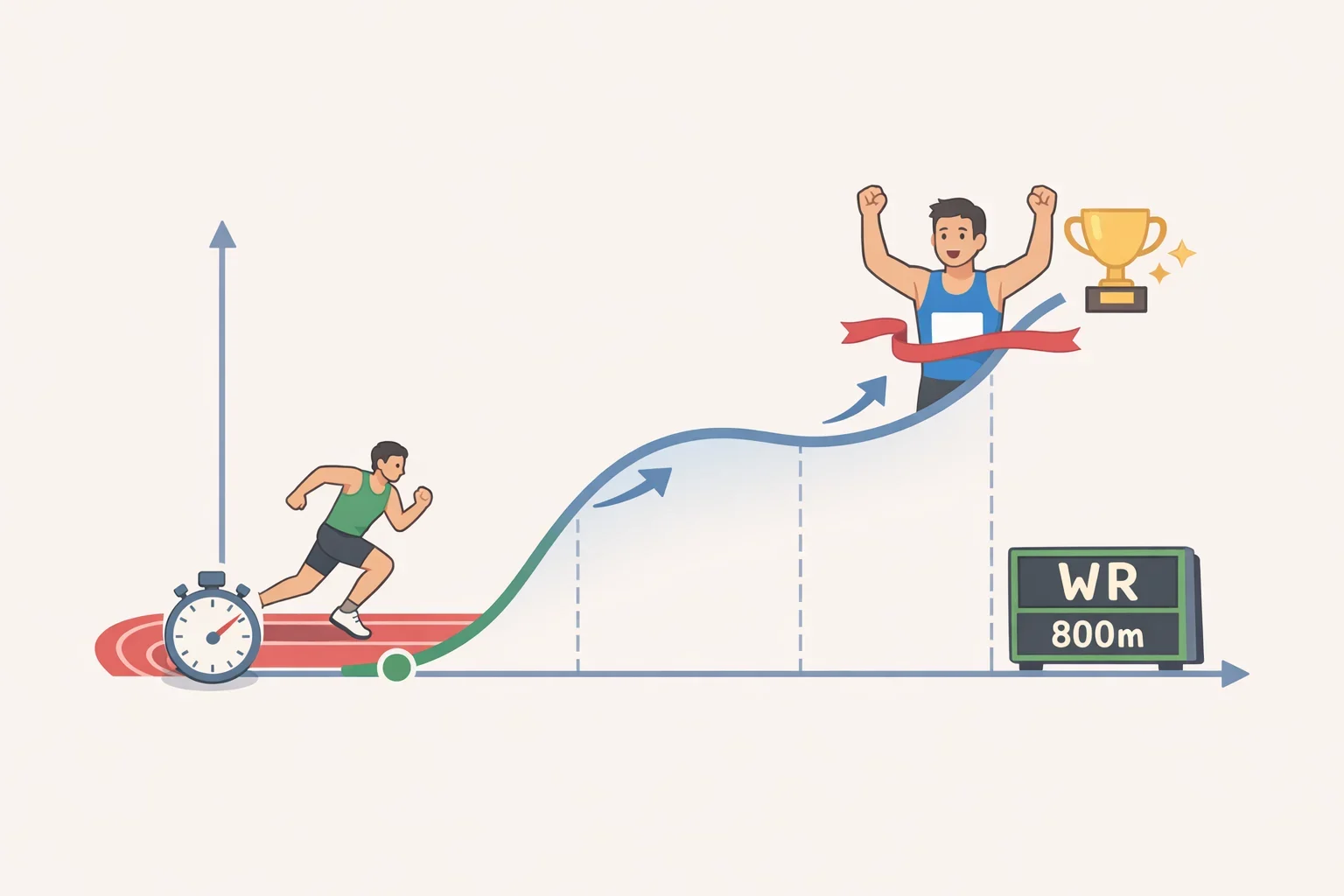
Kratochvílová didn't break 53 seconds for the open 400 metres, a genuinely fast time for that distance, until she was 27 years old. She set her 800m world record five years later, at age 32 (Wikipedia). That's a late-developing timeline by most sprint standards, and the world record itself arrived only after roughly half a decade of carrying elite open-400m speed.
That speed wasn't a one-off. At the same championships where she set the 800m world record, Kratochvílová also won a silver medal for Czechoslovakia in the 4×400m relay (Wikipedia). A relay medal doesn't independently confirm a specific open 400m time, but it's consistent with the sprint speed visible across the rest of her results from that period.
Put together, the picture is of an athlete who had real top-end speed and had held it for years before combining it with 800m-specific fitness into one performance. That's a plausible explanation for how one runner reached 1:53.28. It isn't proof that later elite 800m runners lack the same combination, and the available sourcing doesn't say why the gap has persisted for the athletes who came closest. It shows one runner's path, not a rule for the event.
Jarmila Kratochvílová's 1:53.28 800m record: what's confirmed
Strip away the interpretation and the confirmed facts are simple. Kratochvílová ran 1:53.28 on July 26, 1983, at the Olympic Stadium in Munich, and World Athletics currently lists that mark as the standing world record for the women's 800m (World Athletics). One widely cited account describes it as the longest-standing unshared world record in athletics, for men or women (Wikipedia). That superlative traces back to a single secondary source rather than an official World Athletics designation, so it's worth treating as a commonly repeated claim about the record's place in women's 800 metres record history, not a governing-body ranking.
The sources reviewed for this article don't establish what testing or disciplinary documentation, if any, was associated with this specific performance. That's a gap in the available material, not a finding in either direction, and it shouldn't be read as a clearance or a red flag. Readers interested in that history should look for contemporaneous meet records and any official statements from that era rather than draw a conclusion from what simply isn't covered here.
What this means for today's 800m runners and coaches
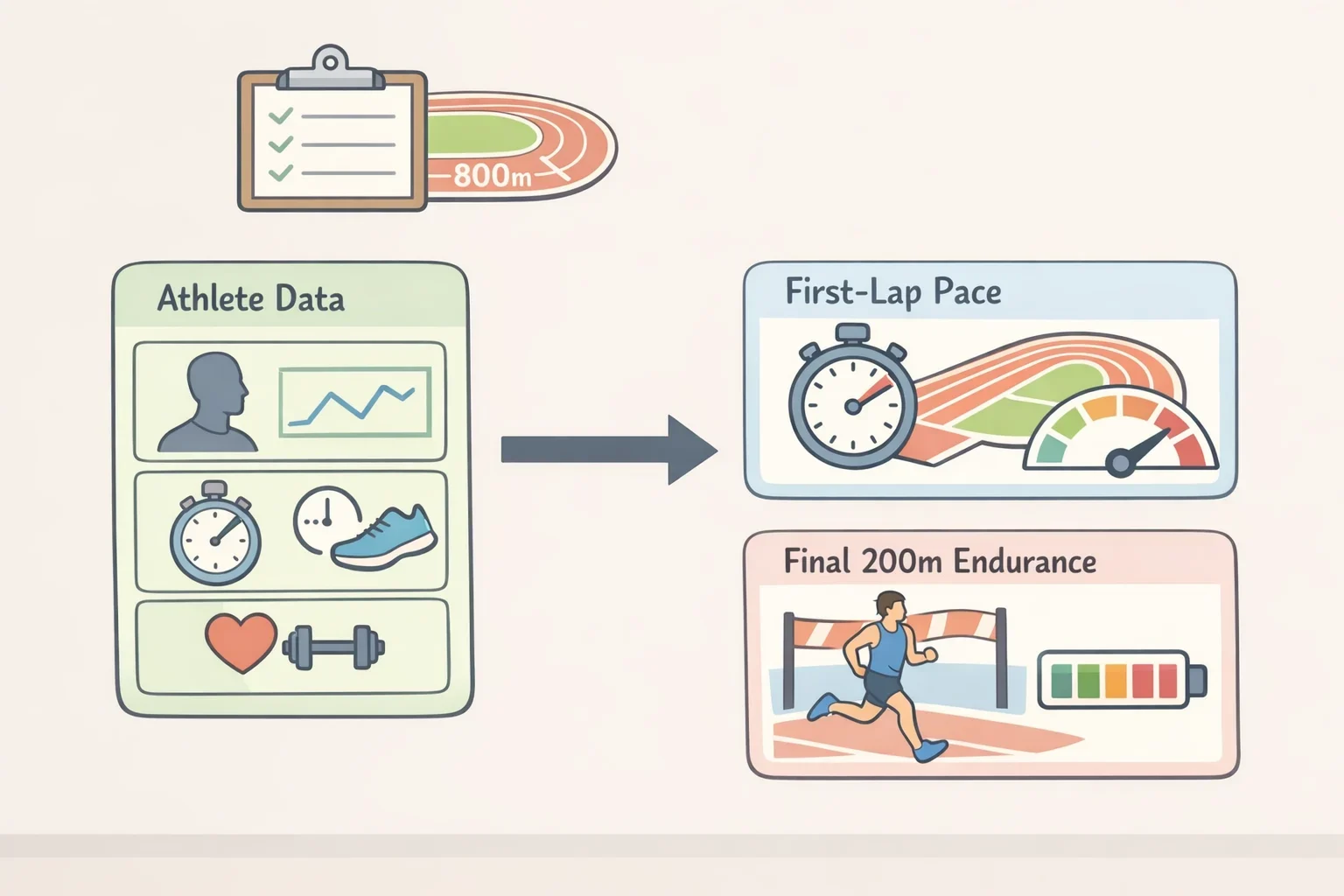
None of this history hands over a training plan, and it shouldn't be used as one. Kratochvílová's timeline shows that elite 800m speed can develop over years, not weeks, and that a runner's fastest 800m may come well after her fastest open 400m rather than alongside it. That's a useful thing for a developing middle-distance runner to hear if progress feels slow within a single season. It isn't a guarantee that patience alone produces a world-class time.
For a competitive 800m athlete, the practical use of 1:53.28 is as a pacing benchmark, a number to check current splits against, not a formula to copy. A coach evaluating an 800m runner's readiness to chase a faster time typically looks at:
- Current open 400m and 800m personal bests, to see where speed and endurance stand relative to each other
- How pace holds up through the final 200m in recent races, since that's where most 800m results are decided
- Recovery between hard speed-endurance sessions, since that kind of training is demanding and needs adequate rest to avoid overuse problems
- Race experience at a fast first-lap pace, since holding early speed without blowing up on the second lap takes practice as much as fitness
That kind of individualized assessment depends on an athlete's actual race history and injury background, which is exactly the sort of call a certified coach is positioned to make. A single 43-year-old world record isn't.
What the record shows, and what it doesn't
Kratochvílová's 1:53.28, run July 26, 1983, in Munich, remains the official world record for the women's 800m (World Athletics). The sources reviewed for this article name three runners, Jelimo, Semenya, and Werro, as having come within a second of it across the more than four decades since (Wikipedia). For the current official listing, or news of any future challenge to that mark, check World Athletics' athlete profile directly.
The honest takeaway is narrower than a tidy explanation would suggest. The available evidence documents the size of the gap, and one runner's path to closing it decades ago, far more clearly than it explains why later elite runners haven't matched her. Treat Kratochvílová's career as a benchmark and a case study, not a blueprint, and take questions about pacing strategy or speed-endurance training to a certified coach who can work from actual splits rather than a four-decade-old world record.