
Balance exercises for older adults: why walking feels harder
A walk that once felt automatic can turn into real effort by the 60s and 70s. An age-comparison study of men in their 20s, 70s, and 80s found maximal aerobic capacity (VO2max) was 29% lower in the older group and 51% lower in the oldest group, while maximal leg power fell even further, down 40% and 64%, according to research published last year.
That gap between fading power and fading endurance is why balance exercises for older adults, paired with strength training, deserve equal billing with walking. The study included only men, so the exact percentages aren't universal. But the pattern, power fading faster than endurance, points to what training should prioritize: not just more walking, but leg strength, power, and balance work done on purpose.
The National Institute on Aging frames activity around three components trained somewhat separately: work toward roughly 150 minutes of moderate aerobic activity a week, strength training at least two non-consecutive days a week, and balance exercises about three days a week, according to NIA guidance. That's general guidance built from multiple lines of evidence, not one study proving all three must be trained in this exact combination.
This guide covers why walking can start feeling harder, who should check with a professional before higher-challenge balance work, a sample weekly routine with regressions, and the signs that call for a doctor visit instead of more exercise. It's written for active adults 60 and older, plus caregivers and coaches. Anyone with a recent fall, a cane or walker, a neurological condition, or new unsteadiness should read the next section before attempting unsupported balance drills.
Why walking can feel harder with age
Two systems drive how walking feels: aerobic capacity, how efficiently the body delivers and uses oxygen, and muscular power, how much force the legs produce and how fast.
In the same comparison, maximal leg force was 29% lower in the older group and 52% lower in the oldest group versus young men, while maximal contraction velocity, how quickly a muscle generates force, dropped 17% and 28% (age-comparison study). Strength and speed decline together, which could show up as a harder push-off from a chair or a slower step off a curb, though the study didn't test those specific tasks.
The same research split participants using a threshold of at least 10,000 steps per day and found the high-activity group had higher VO2max than the low-activity group, but not higher maximal leg power. That's an association, not proof walking fails to build power; the more active group may simply have started fitter. It does suggest brisk walking supports endurance without necessarily maintaining leg power on its own, which is why dedicated strength and balance work belongs in the routine below.
Who this routine fits, and when to check with a professional first
This plan fits adults who want to maintain or build walking stamina and steadiness and don't have a new or unresolved mobility concern.
A past fall, regular use of a cane or walker, a recent joint replacement, or a neurological or vestibular condition are good reasons to get an individualized assessment from a physical therapist or doctor before trying unsupported or higher-challenge balance drills. That's not a reason to avoid exercise: a physical therapist can typically adapt these same movements to a safer starting point.
Older adults without an existing injury or chronic condition who plan to increase activity gradually generally don't need medical clearance first, according to NIA guidance, assuming none of the flags above apply.
General guidance links strength and balance training to improved balance measures, but the specific routine below hasn't been tested as its own program, and no plan guarantees against falling. The research section further down explains that distinction more directly.
Balance exercises for older adults: a weekly plan
This routine combines fall prevention exercises for older adults with the strength and aerobic work above, built around NIA's three weekly targets. The setup: a sturdy chair or kitchen counter, clear floor space, and flat, supportive shoes.
A few minutes of easy walking or marching in place before starting lets muscles warm up and heart rate rise gradually; a similar cool-down brings it back down. That warm-up and cool-down habit helps prevent injury and other exertion-related problems, without specifying an exact duration, according to NIA guidance.
A starter schedule, and how to progress
- Monday: 10-minute walk plus balance drills
- Tuesday: strength session (all five exercises below)
- Wednesday: 10-minute walk
- Thursday: balance drills
- Friday: strength session
- Saturday: 10-minute walk plus balance drills
- Sunday: rest or gentle stretching
That's roughly 30 minutes of walking in week one, well short of the 150-minute long-term target, and that's intentional. Starting with a modest, specific goal, such as a 10-minute walk three times a week, then building from there, is a reasonable approach, per NIA guidance. Once the schedule feels controlled, change one thing at a time: add an extra short walk on a rest day, or extend one existing walk by a few minutes. Repeat that single change only after the new version feels just as controlled, working gradually toward 150 minutes without a fixed weekly timetable.
Do balance drills when alert and steady, not at the tail end of a tiring strength session or long walk. Fatigue affects balance, so placing these drills earlier in a session, or on their own, is the safer default.
Strength exercises, twice a week
Each session covers all five exercises below: one to three sets of 8-12 reps, at an effort where the last rep or two feels genuinely difficult, matching the standard from NIA guidance: stop at the point where another repetition would be hard. Rest between sets as needed, and keep at least one full day between strength sessions, which is why the schedule above spaces them out.
- Sit-to-stand from a chair. Sit toward the front edge, feet flat and hip-width apart, then stand by driving through the heels and extending hips and knees together, tracking knees over the toes. Watch for rocking forward with the upper body instead of pushing through the legs. Beginners can use a higher, firmer chair or push off the armrests.
- Calf raises at the counter. Holding the counter, rise onto the balls of both feet, then lower slowly. Watch for the ankles rolling outward at the top; shorten the range of motion if that happens.
- Standing hip abduction. Holding the counter, lift one leg straight out to the side, knee facing forward, then lower with control. This is a common coaching cue for building the hip strength involved in side-to-side stability. Watch for leaning the torso toward the counter instead of isolating the hip.
- Wall push-ups. Stand an arm's length from a wall, palms flat at shoulder height, then bend the elbows to bring the chest toward the wall before pushing back. Keep elbows closer to 45 degrees from the body rather than flaring to 90.
- Light resistance-band row. Loop a band around a stable anchor at chest height, hold one end in each hand, and pull the elbows back while squeezing the shoulder blades together. Watch for the shoulders shrugging toward the ears instead of the elbows driving back.
Push-ups and rows train opposite movement patterns, pushing and pulling, and both are common choices for building the posture and upper-body strength that supports everyday tasks like carrying groceries.
Balance drills, about three times a week
The hold times and reps below are a general starting sample for this routine, not a clinically validated prescription. Treat them as adjustable, and increase difficulty only once the current level feels steady.
- Single-leg stance. Hold near a sturdy counter, starting with both hands on it. Progress to fingertip support only once the full hold feels steady, and move toward no support only with a physical therapist's input if a recent fall, assistive-device use, or a neurological or vestibular condition applies.
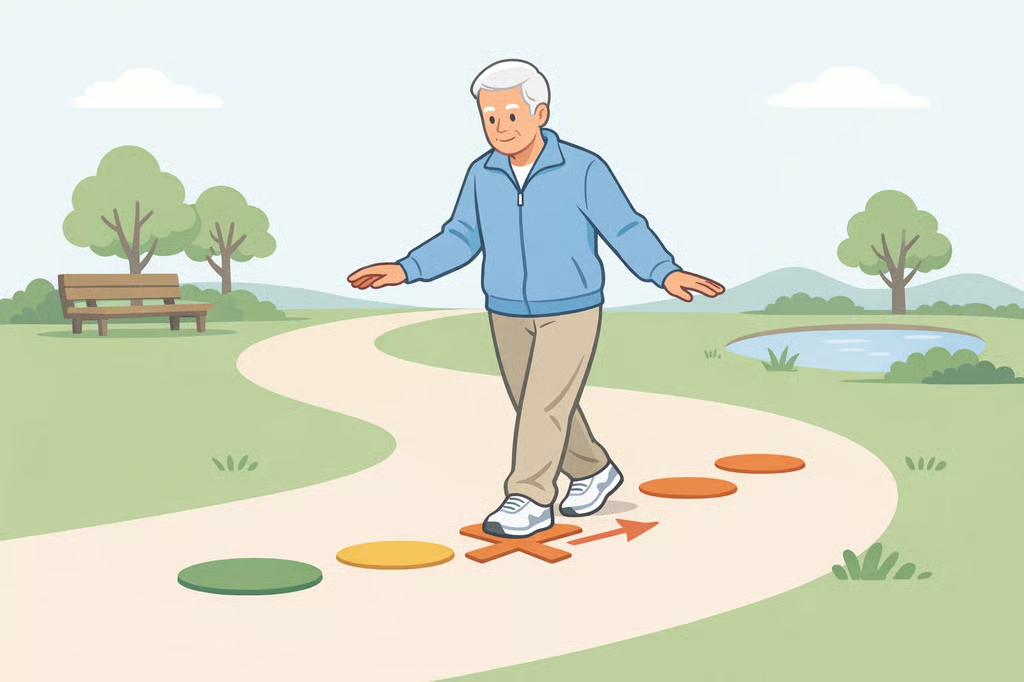
- Heel-to-toe walking. Walk along a counter or wall placing one foot directly in front of the other, several slow steps per pass, eyes forward.
- Weight shifts. Holding the counter, shift weight side to side, then front to back. This is a lower-challenge entry point for anyone not ready for single-leg work.
For readers who can't yet stand unsupported, seated marches or seated weight shifts are a reasonable starting point, along with shorter walking intervals and rest breaks, and doing all balance work with both hands on a stable surface until confidence builds.
When to stop or scale back
Stop a set when form breaks down, such as knees caving inward or a noticeable wobble, and reach for the counter before losing balance rather than after. Sharp pain, dizziness, or breathlessness clearly out of proportion to the effort isn't ordinary muscle fatigue; treat it as a reason to stop and check in with a doctor or physical therapist.
Progressing further
A 12-week trial in adults averaging 70 found that performing the lifting phase of resistance exercises quickly improved a measure of toe-grip force development more than doing the same exercises at normal speed (the toe-grip trial). The researchers noted this faster-tempo style doesn't require special equipment and may suit older adults working to stay ahead of frailty. That trial measured a specific lab force test, not walking ability or falls, so it's worth considering only after consistent progress with the basics above, ideally with a trainer's guidance.
What the balance research shows, and its limits
The three-part framework of endurance, strength, and balance reflects NIA's general activity guidance rather than one study proving all three must be trained together this way. Separate research helps explain why balance and ankle control respond to training at all: an eight-week trial of 90 adults averaging 66 combined resistance training on an unstable surface with targeted brain stimulation, three 30-minute sessions weekly (the balance-training trial).
The combined group improved several proprioception and balance measures more than the other training groups tested. Its fall-risk score also dropped compared with a health-education control group and its own starting point, but the trial didn't establish that the home drills above reduce real-world falls. The brain-stimulation component isn't something to replicate without supervision, but the result is consistent with the idea behind proprioception exercises for seniors: ankle position sense and balance appear trainable, which is why the conventional drills above, not specialized lab equipment, are the practical starting point for most readers.
When exercise isn't the first answer
A newly slower, harder, or less steady walk deserves a look, separate from the ordinary fatigue that follows a long day or a bad night's sleep.
In a study of 2,620 adults 60 and older, using any psychotropic medication, a category that includes antidepressants, benzodiazepines, and antipsychotics, was linked to more than double the odds of declining to abnormal Timed Up and Go performance over four years, while using two or more psychotropic medications separately predicted more than double the odds of transitioning to slower gait speed over that same period (the medication study). Those are two distinct outcomes tracked over the same four years, and the second applies specifically to taking two or more of these medications, not just one.
These are observational associations, not proof the medications directly caused the change; the condition being treated may also play a role. Never stop or adjust a prescribed medication without talking to the prescribing doctor.
Other reasons to see a doctor or physical therapist before continuing a routine include a recent fall, new dizziness or unsteadiness, breathlessness or fatigue out of proportion to effort, chest discomfort, or new numbness or pain while walking. If walking has become newly slower, harder, or less steady, bring the full medication list to the next appointment along with a specific description of what's changed.
Begin with the starter schedule above this week, using the lower-capacity versions if standing unsupported doesn't feel steady yet. Increase one variable, more walking minutes, an added set, less support, only once the current version feels fully controlled. Any new or worsening unsteadiness, breathlessness, or fatigue is a reason to talk with a doctor or physical therapist before adding more, not a reason to push through it.