
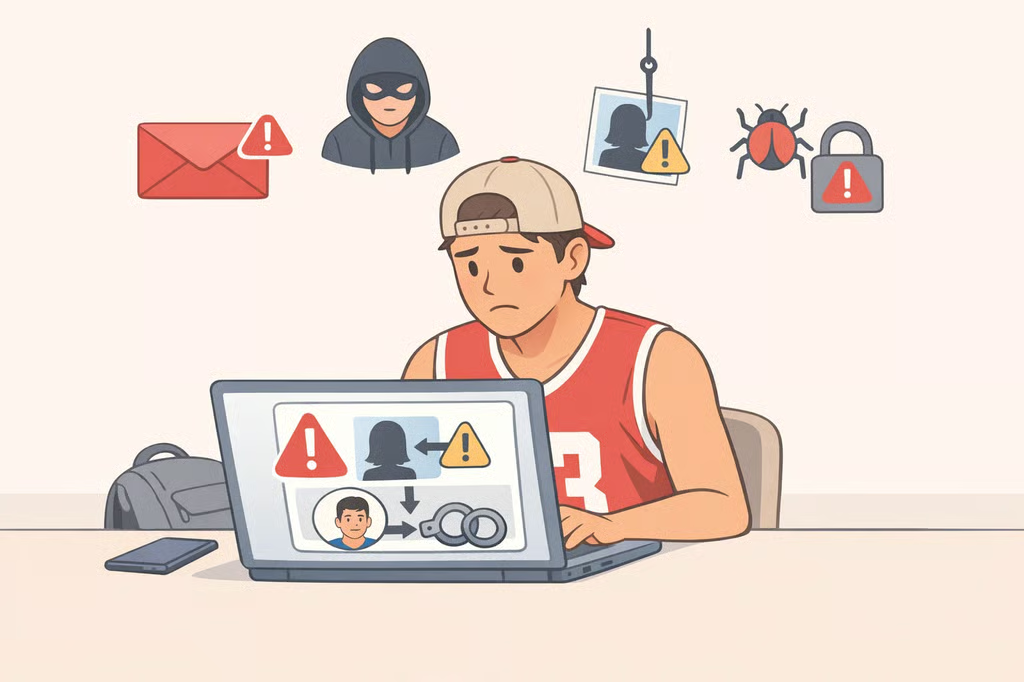
NCAA Student-Athlete Sextortion Warning: FBI Safety Tips
The FBI has warned minors and young adults about a scheme called financially motivated sextortion, describing it as an evolving online threat, according to the FBI. No NCAA student-athlete sextortion warning was identified in the sources reviewed for this article. The guidance here comes directly from FBI and FTC materials, translated for a college sports audience.
From October 2021 through March 2023, the FBI and Homeland Security Investigations logged more than 13,000 reports of online financial sextortion of minors, involving at least 12,600 victims, according to an FBI release. FBI Sacramento has said offenders often target boys between the ages of 14 and 17, though any child can become a victim, according to an FBI Sacramento release. Nothing in the sources reviewed breaks out victim rates for student-athletes specifically, and nothing establishes that college athletes fit that age or risk profile more than any other young person.
The overlap that matters here is exposure, not proof of targeting. In one documented case, an offender used screenshots of a victim's school account, friends' accounts, and a parent's account, plus a claimed home address, to make a threat feel inescapable, according to an FBI Salt Lake City PSA. That case shows how public connections can be used to add pressure. Similar visibility may exist on team rosters, tagged teammates, and family accounts common in college sports, though no case in the sources reviewed ties that specific setup to a student-athlete victim.
College rosters include athletes who are still legal minors alongside teammates who are adults. Federal sextortion data mostly track minors, so where a recommendation below comes from guidance aimed at children, that's noted, and where it's general account-security advice that applies at any age, that's noted too.
How the sextortion scheme works
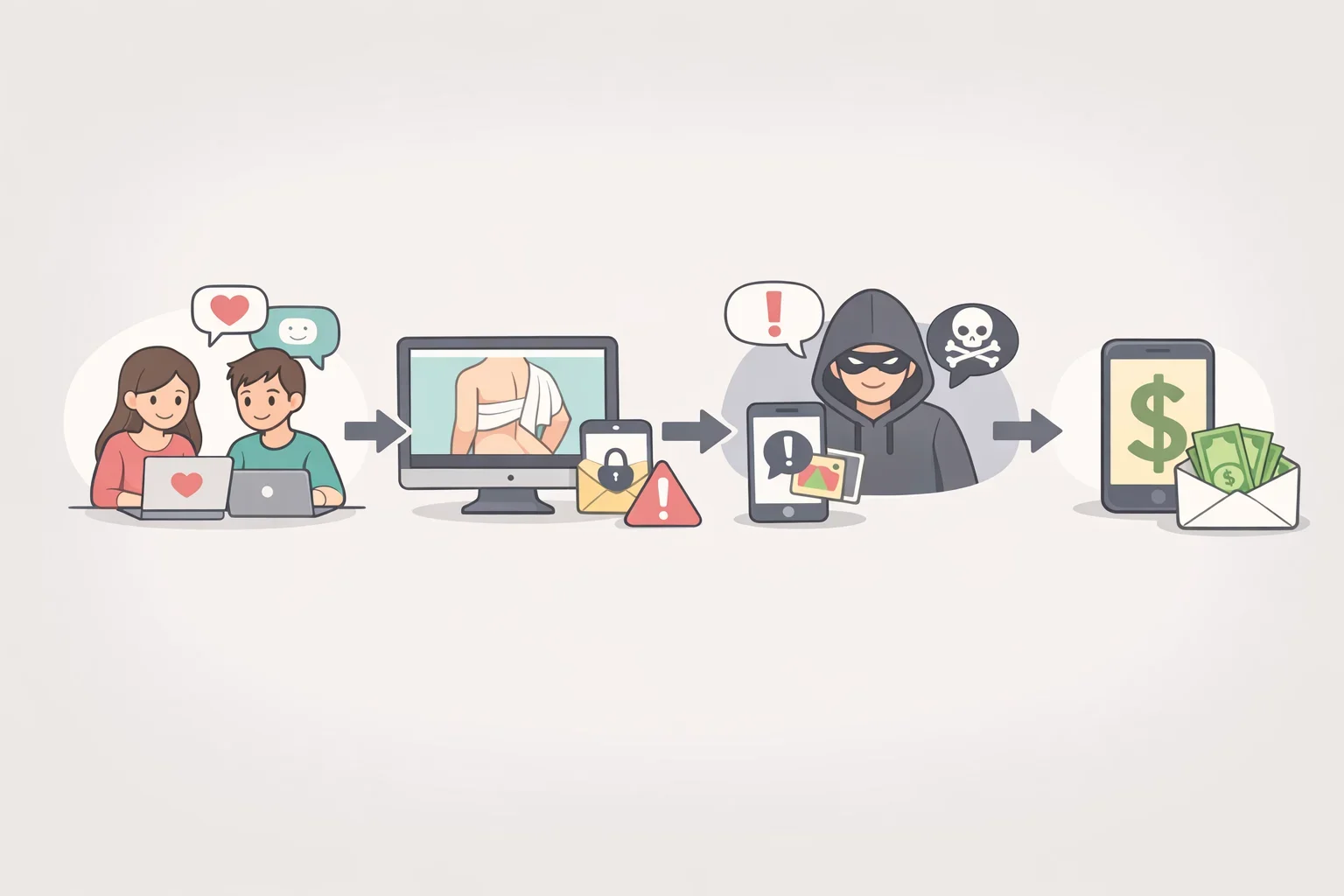
Sextortion happens when an offender coerces someone into producing explicit images or video, then threatens to release the material or cause harm unless the target pays or sends more content, according to an FBI Sacramento release.
The FBI describes the financially motivated version as the latest iteration of an older crime. Sextortion has historically been driven by sexual gratification and control, but this version is mostly about money, with offenders demanding payment through gift cards, wire transfers, or cryptocurrency, according to the FBI. Reports of financially motivated sextortion targeting minors rose by more than 20% during the six months ending in March 2023, compared with the same period a year earlier, according to FBI Sacramento.
The setup usually starts with trust. Offenders often pose as an interested peer, commonly pretending to be a young woman, on social media or gaming platforms before requesting images, according to the FBI. FBI Jacksonville has said the pattern can start on any site, app, messaging platform, or game where people meet and communicate, guidance the agency directs at protecting children online, according to FBI Jacksonville.
One tactic changes how a target should respond. Offenders sometimes claim to already have explicit material when they don't, and sending a new image to disprove the claim only hands them something real to use, the FBI warns.
Offenders are usually located outside the United States, primarily in west African countries such as Nigeria and Ivory Coast, or Southeast Asian countries such as the Philippines, according to the FBI.
The consequences can be severe. The FBI counted at least 14 suicides tied to sextortion within its October 2021 to March 2023 reporting window, and separately says it is aware of more than 20 sextortion-related deaths overall, a broader figure covering a different scope rather than the same count restated (FBI). Shame, fear, and confusion often keep victims from reporting what's happening, which can make it less likely they seek help early, according to FBI Jacksonville.
FBI Jacksonville reported a 60% increase in sextortion complaints filed with the Internet Crime Complaint Center across Florida during the first seven months of 2025, compared with the same stretch of 2024, with losses approaching $1 million (FBI Jacksonville). That's a state-level snapshot from last year, not a national count, but it shows the scheme was still active as recently as then.
How student-athletes can prevent sextortion
None of the following steps guarantee protection. They reduce the personal details an offender can use to sound credible, but they don't stop someone from making contact, and they can't undo it once explicit material already exists.
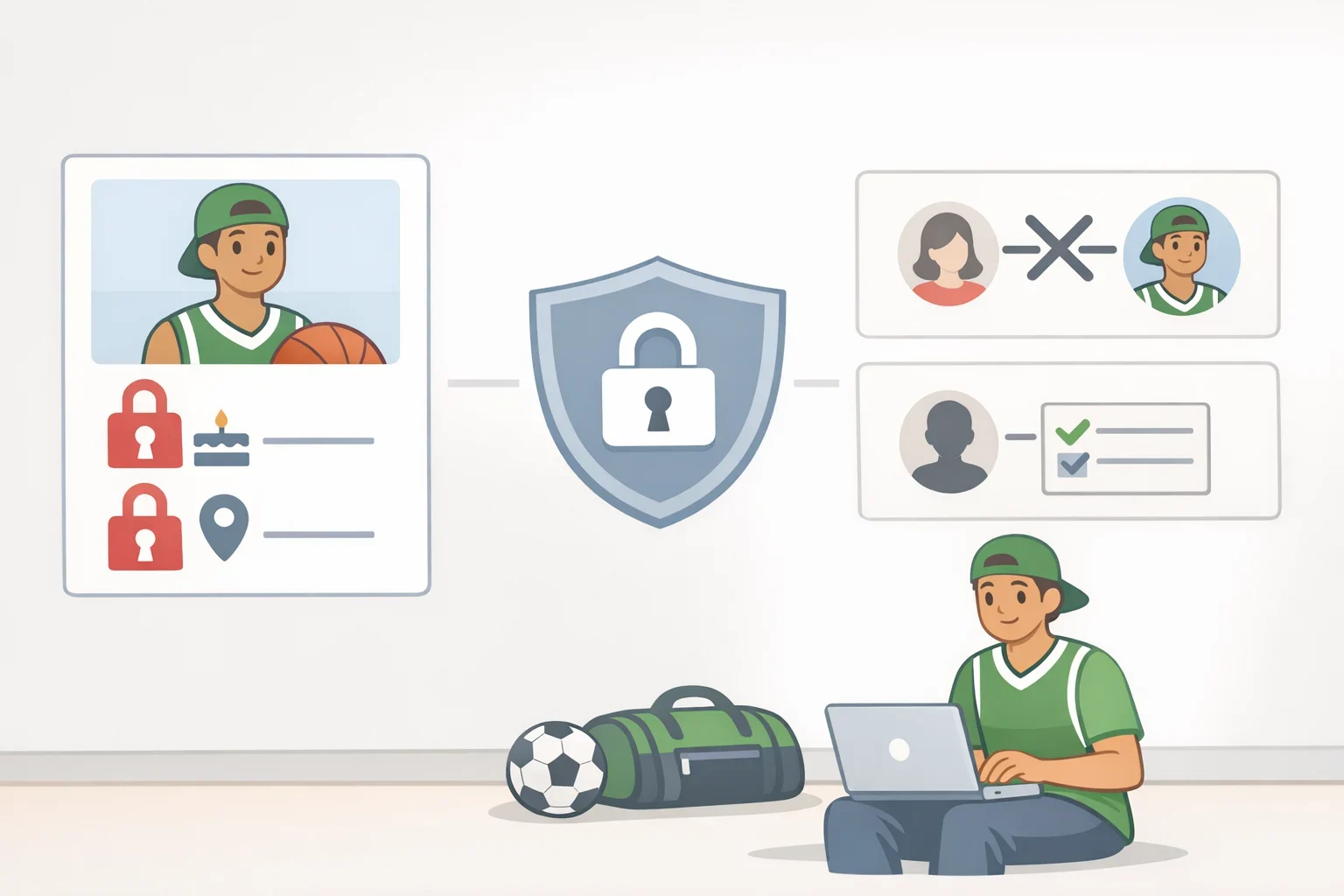
Limit what's visible on personal profiles. FBI Jacksonville recommends avoiding detailed personal information in online profiles, including full names and exact birth dates, and using initials or partial information instead where a platform allows it (FBI Jacksonville). That guidance is aimed at children's accounts. As a practical matter, fewer identifying details on any personal profile gives an offender less to work with, at any age. Team-managed roster pages and official social accounts sit outside an individual athlete's own settings, so these changes only cover accounts an athlete personally controls.
Restrict tagging and message requests where the platform allows it. The Salt Lake City case shows how an offender referenced a victim's school account, friends' accounts, and a parent's account to make a threat feel unavoidable (FBI). As a practical takeaway rather than an FBI recommendation, limiting who can tag an account or view a followers list won't remove that kind of visibility entirely, but it can narrow how much a stranger outside a friend group can piece together.
Watch for a relationship that moves too fast. A new online contact who quickly pushes toward private messaging or image requests is a warning sign worth taking seriously, and a claim of already having compromising images is sometimes a bluff, according to the FBI.
Secure accounts with a strong password and two-factor authentication. Use a unique password for each account and turn on two-factor authentication where it's available, starting with email, since a compromised inbox lets an intruder request password resets on linked accounts within minutes, per the FTC. This is general account-security guidance that applies regardless of age or sport.
Know the signs of an actual account takeover. A login alert never triggered, a password change never made, or messages sent that weren't written all point to a genuine hack rather than a deception scheme, the FTC notes. If those signs show up, change the password immediately, sign out of all devices, and confirm the recovery email and phone number on file belong to the account owner (FTC).
What to do if you are a sextortion victim
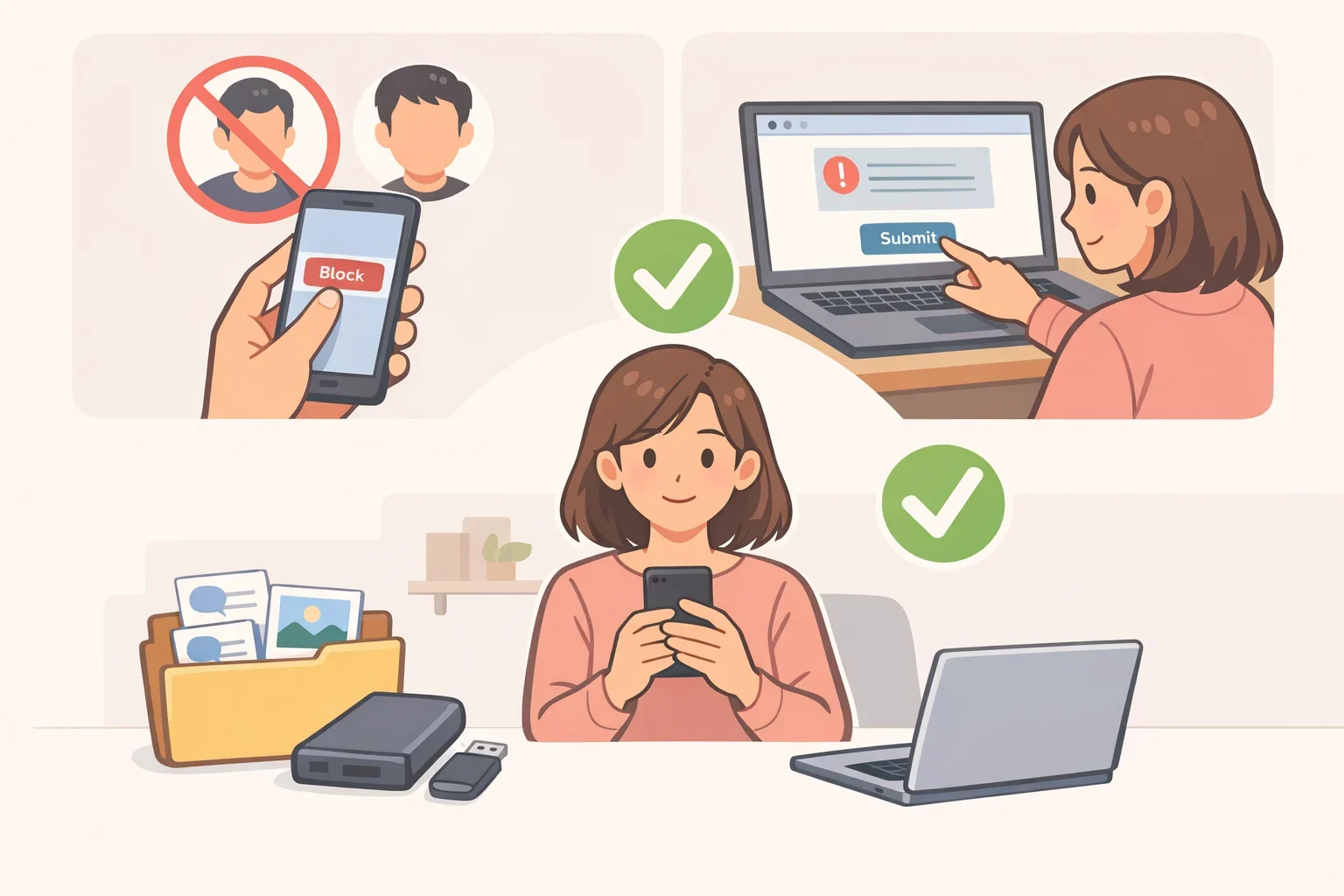
Here's what the FBI advises anyone caught in a sextortion scheme:
- It isn't the victim's fault. Shame, fear, and confusion often keep victims from asking for help or reporting what's happening, according to FBI Jacksonville.
- Get help before sending money or more images. Ask a trusted adult or law enforcement for help; cooperating with the demands rarely stops the harassment, but law enforcement intervention can, according to the FBI.
- Report the account through the platform's safety feature, then block the predator. Both steps are part of the FBI's guidance for cutting off contact (FBI).
- Report the scheme to law enforcement. File a complaint at IC3.gov, the channel FBI Jacksonville points victims toward, or contact the FBI directly through tips.fbi.gov or 1-800-CALL-FBI.
- Save all interactions. Don't delete messages or communications from the offender, even if they're embarrassing; those interactions can help law enforcement identify and stop the predator, according to FBI Sacramento and the FBI.
- Pursue image removal if explicit content has already been shared. The FBI names the National Center for Missing & Exploited Children's Take It Down tool and the Is Your Content Out There? resource as options for potential removal (FBI). Check each tool directly for what content and age groups it covers, since that detail isn't spelled out in the FBI's guidance.
For student-athletes specifically, looping in a coach, athletic trainer, or campus counseling resource alongside law enforcement is a practical suggestion based on how college athletic departments are typically structured. It isn't a step named directly in FBI guidance.
Start this week by checking who can tag, message, or view a followers list on personal accounts, and confirm two-factor authentication is active on email and social logins. If a threat does arrive, don't negotiate, and don't send money or additional images. Save tips.fbi.gov and IC3.gov somewhere accessible, preserve the messages, and report through the platform's safety tool and to law enforcement.