
Jump Tests for ACL Injury Risk: What They Can and Can't Show
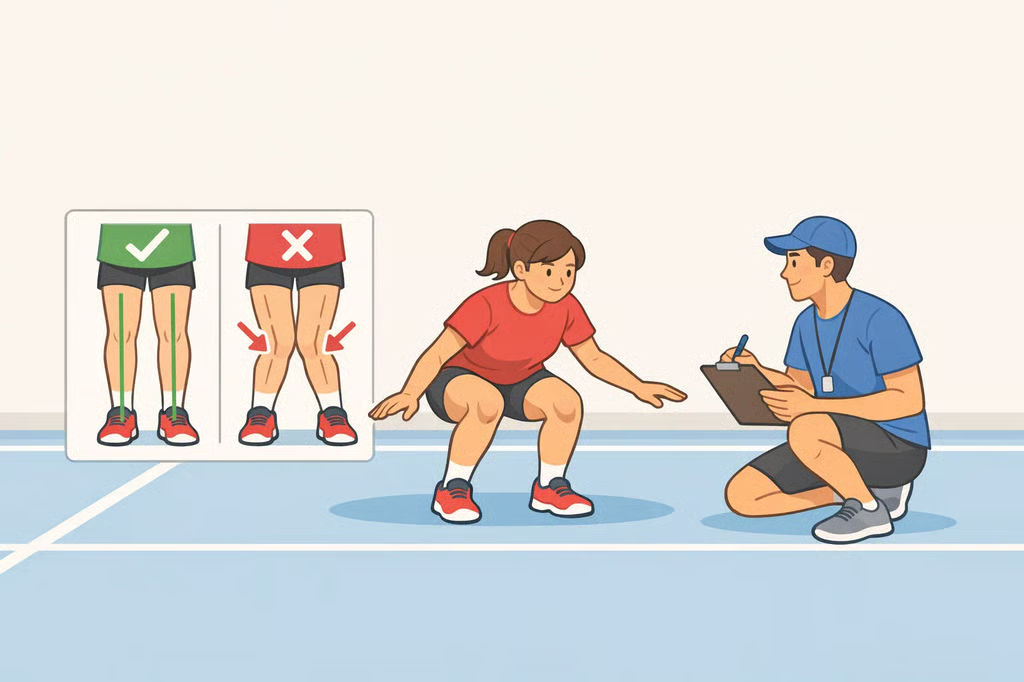
Picture a basketball coach watching an athlete land from a jump and noticing her knee cave inward instead of tracking over her toes. That kind of observation sits at the center of a jump test for ACL injury risk called the Landing Error Scoring System, or LESS, which is used on fields and in clinics to flag movement patterns linked to anterior cruciate ligament injury. Researchers who study the test are careful to note that its validity and effectiveness "have not been fully confirmed," according to a 2023 study that compared LESS scores against 3D motion-capture data.
That gap between what a jump test flags and what it can actually predict matters for anyone using one, whether that's a high school soccer coach, an athletic trainer working with a club volleyball team, or a parent who just heard a screening score described as "high risk." A 2022 scoping review of ACL screening research found that predicting a future injury from any single test is methodologically difficult, and that findings linking specific screens to later injuries remain "highly controversial." The National Athletic Trainers' Association takes a broader view, recommending multicomponent preventive training for anyone in sports and physical activity, with extra emphasis on athletes in jumping, landing, and cutting sports, according to a position statement published earlier this year.
This piece walks through what jump-landing tests like LESS actually measure, what the evidence does and doesn't support, and how athletes, parents, and coaches can put a screening score to responsible use.
Can jump tests predict ACL injury risk?
Start with the plain-language version. A jump-landing test asks an athlete to jump and land while a coach, clinician, or evaluator watches for specific movement patterns tied to ACL-injury risk factors. It's a screening tool built to spot risk factors, not a device that tells one athlete their future.
The 2022 scoping review grouped jump tests alongside five other screening categories used to assess ACL injury or reinjury risk: balance and postural control, gait and running mechanics, joint laxity, joint morphology and body measurements, and strength testing. Across all six categories, the review reached the same conclusion. Predicting who gets hurt in a complex, dynamic sport from one screening test is methodologically hard, and the research tying specific tests to later injuries is inconsistent enough that the authors called it controversial.
That doesn't make screening pointless. The same review concluded these tests can still supply clinically relevant information about ACL-related risk factors and help clinicians tailor prevention work to an individual athlete, even without the ability to say who will get injured and who won't. The 2023 LESS study lands in a similar spot, describing the test as a way to identify "risky motion patterns that may increase the likelihood of ACL injuries." That's language about elevated risk, not certainty, and it sets the boundary the rest of this article works within.
How a jump-landing test for ACL injury actually works
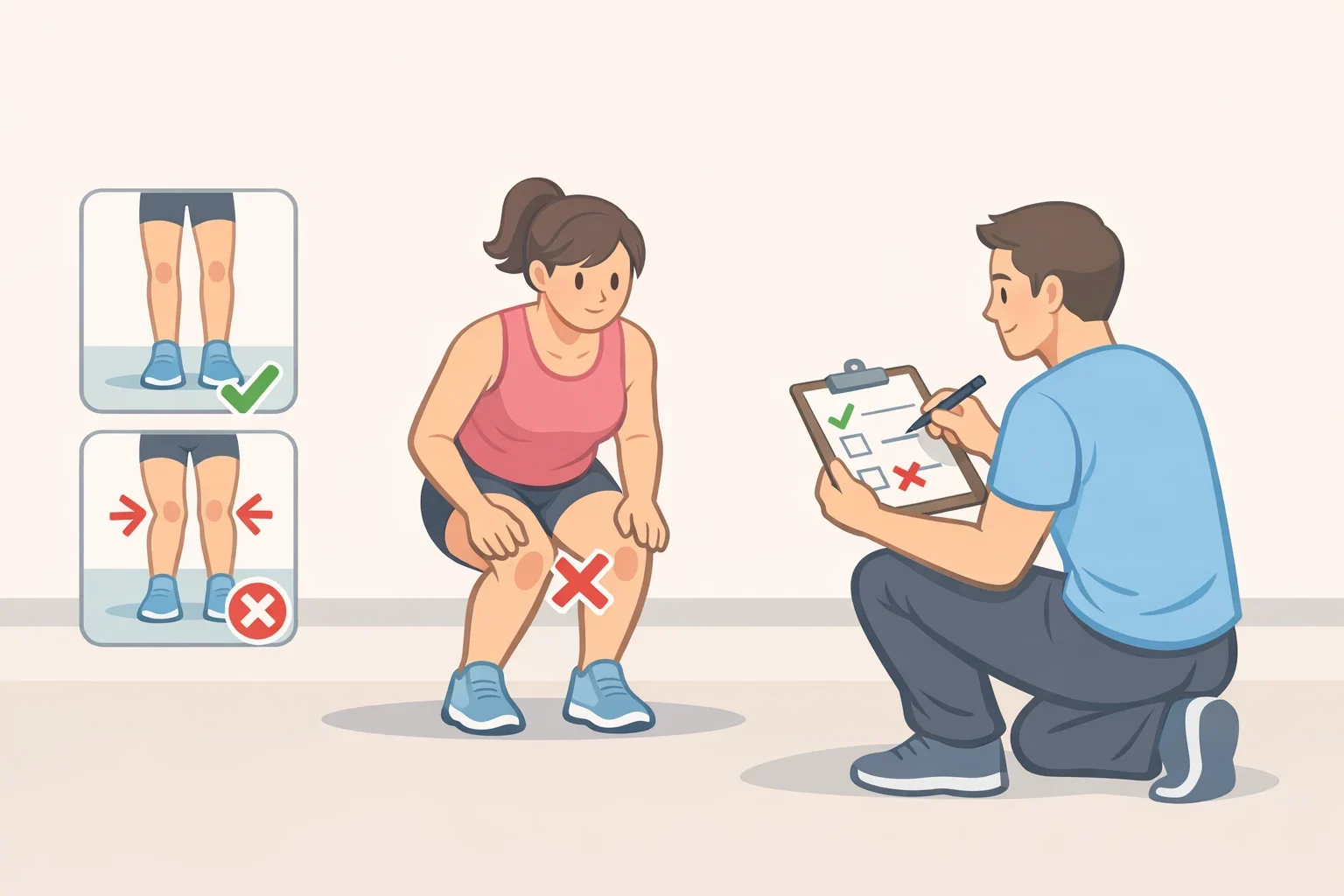
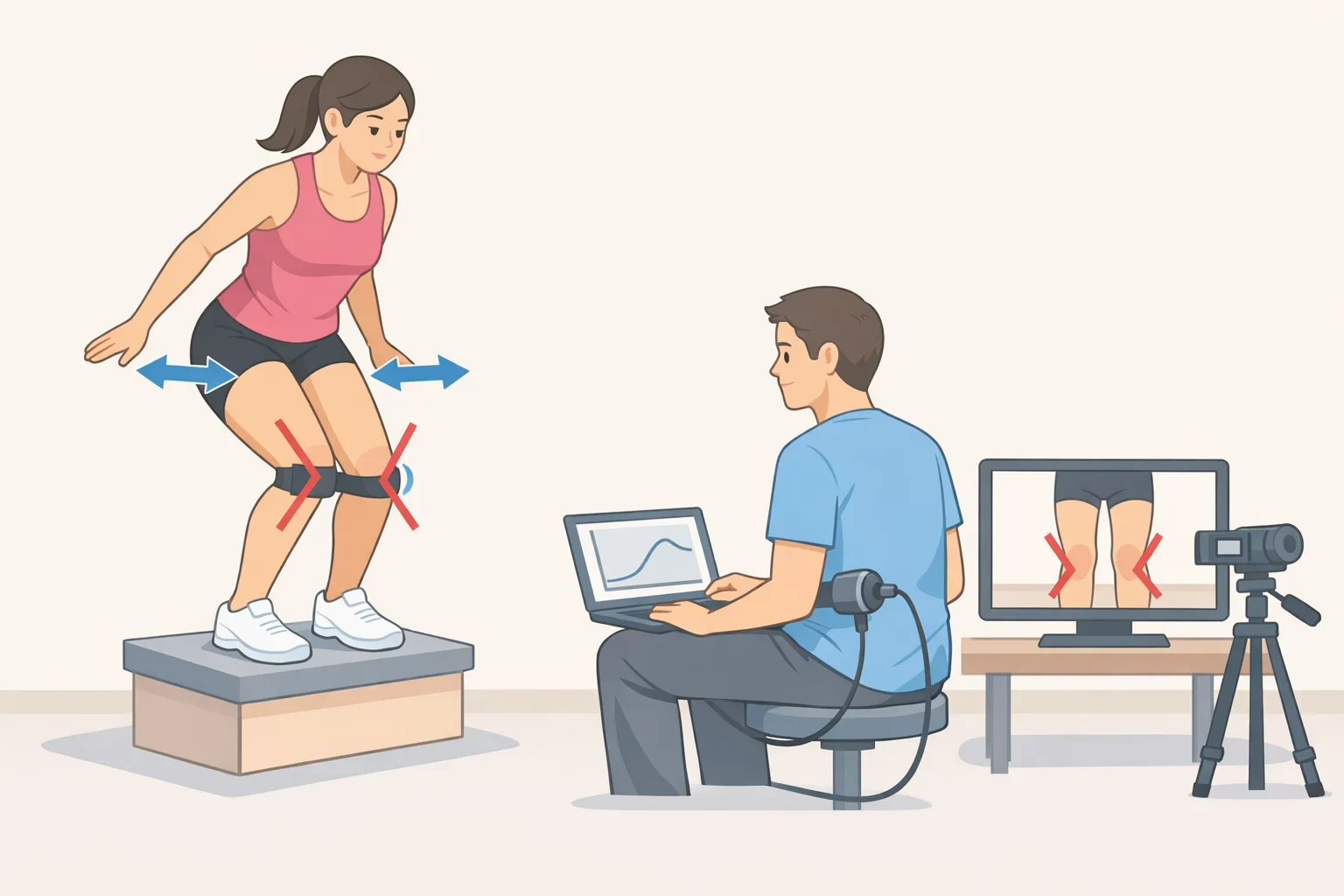
LESS is built around a jump-landing task. An athlete performs the jump, and an evaluator scores the landing for errors, things like limited knee bend or a knee drifting inward, against a set scoring checklist. The 2023 study set out to test whether that kind of checklist scoring lines up with 3D motion-capture data, the more detailed method typically used in biomechanics labs.
It analyzed 16 female basketball and badminton players, all either 19 or 20 years old, comparing their LESS scores against 3D kinematic readings. Higher LESS scores tracked closely with knee valgus at landing, the inward collapse of the knee that shows up repeatedly in ACL research, at a correlation strength of r = 0.87 (P < .0001). Scores also correlated, less strongly, with internal tibial rotation, the lower leg twisting inward beneath the knee, at r = 0.57 (P = .02).
The same study defined a LESS score of 6 or higher as a marker of risky landing mechanics within its own sample. Using that threshold, 7 of the 16 participants, or 43.8%, showed movement patterns the researchers classified as risky, and the study's authors concluded LESS can serve as an effective way to identify those patterns.
That's a real finding, worth sizing correctly. Sixteen athletes, all in a narrow age range, all female, and all from two sports, is a small and specific sample. The score-of-6 threshold was defined for that group; it hasn't been established as a universal clinical cutoff across other ages, sexes, or sports. A youth football player or a male basketball player landing awkwardly on a LESS screen isn't automatically covered by numbers generated from 16 young women playing basketball and badminton. Treat the specific cutoff as informative within its own study, not as a fixed diagnostic line.
Knee valgus during landing: what the evidence shows
Knee valgus is the term for a knee that caves inward, toward or past the midline of the foot, during landing instead of tracking straight over the toes. It's one of the most closely watched movement flaws in ACL screening, and peak knee valgus during landing has been shown to predict ACL injury, according to background research cited in a 2021 study on hip mechanics.
That 2021 study looked at what actually controls how much a knee caves inward on landing. Researchers had 23 healthy females perform double-leg drop jumps, then compared two measures of hip strength against how much knee valgus showed up during the landing's deceleration phase. One measure was how quickly the hip abductor muscles, which sit on the outside of the hip and help control leg position, could develop force right after landing. The other was straightforward maximal strength, tested isometrically.
The results split in a way that matters for training decisions. Peak rate of torque development in the first 0 to 50 milliseconds after landing significantly predicted lower peak knee valgus (P = .011, R² = .32). Rate of torque development measured over a longer 0 to 200 millisecond window did not significantly predict valgus (P = .45, R² = .03), and neither did maximal isometric hip strength (P = .49, R² = .03).
In this sample and this task, early hip-abductor force production, rather than maximal isometric strength, was the measure associated with better knee control on landing. That's a useful thread for anyone trying to connect jump-landing biomechanics research to actual training, and it's worth raising with a qualified coach or physical therapist. It's also worth restating plainly what the study did and didn't show: this was an observational association in 23 healthy females performing one specific drop-jump task, not a trial testing whether adding explosive hip drills lowers ACL injury rates.
Turning a jump test into a prevention plan
None of this evidence supports skipping prevention work while waiting for a perfect predictive test. NATA's position, published earlier this year, calls for everyone participating in sports and physical activity to take part in a multicomponent preventive training program. Some groups get flagged for extra attention within that framework: athletes in high-risk sports involving landing, jumping, and cutting, such as basketball, soccer, and team handball, along with female athletes and young athletes returning to play after a previous ACL injury.
That broader recommendation isn't limited to those groups, though. NATA's guidance applies to all athletes and physically active people, not just those who screen "high risk" on a jump test. A clean-looking landing score doesn't exempt someone from prevention training, and a flagged score doesn't mean an athlete is broken. A jump-landing score is one input into a broader ACL injury risk assessment, not a standalone verdict.
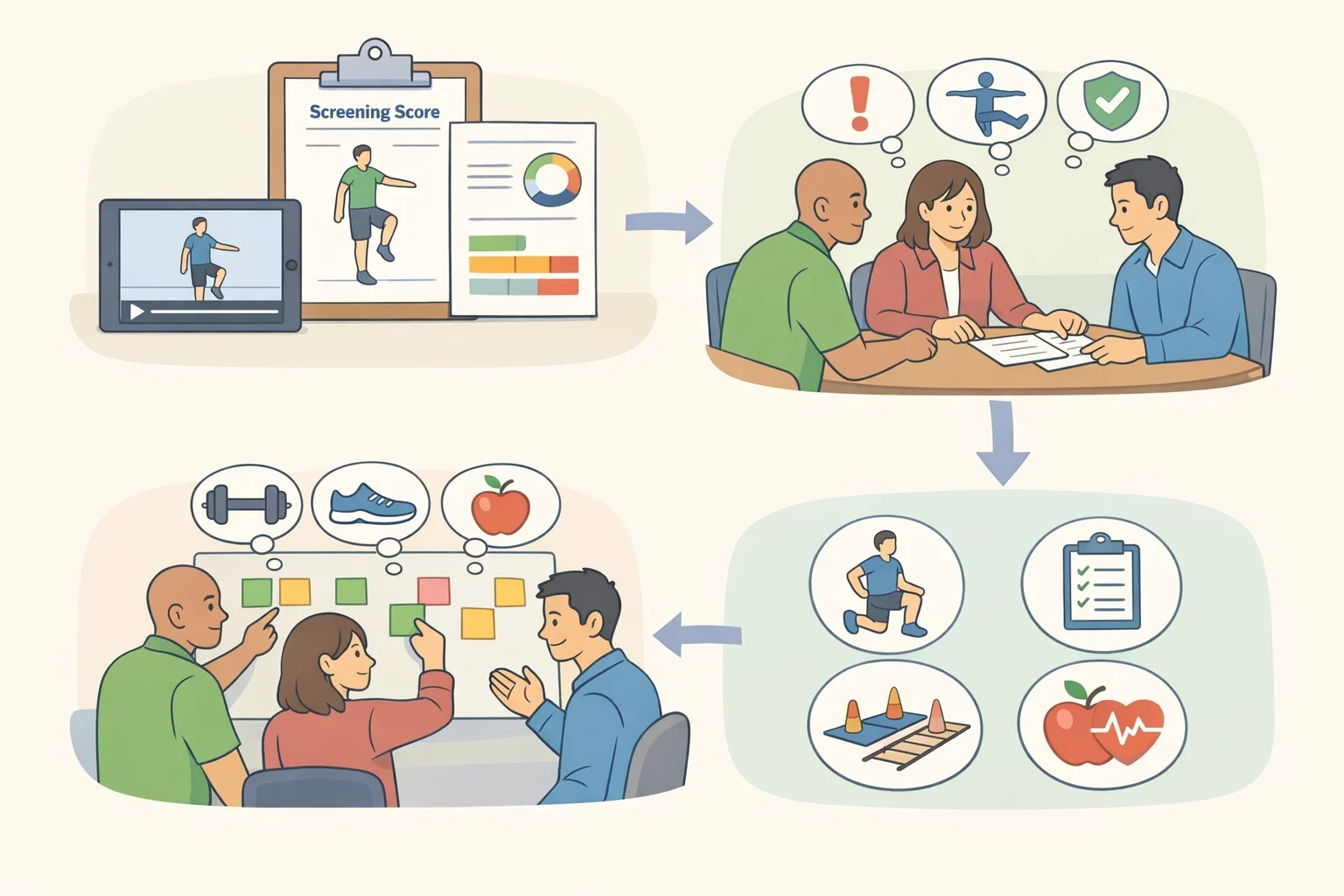
If a screen turns up a concerning score, a reasonable next sequence looks like this:
- Have an athletic trainer, physical therapist, or qualified strength and conditioning professional review the score or video, not just the number alone.
- Use the result to inform a multicomponent prevention program rather than isolating one drill or one number.
- Reassess periodically instead of treating one session as a permanent label.
- Skip self-diagnosis. A single screen doesn't make an athlete "high risk" or "cleared" on its own.
When a jump test isn't the right move
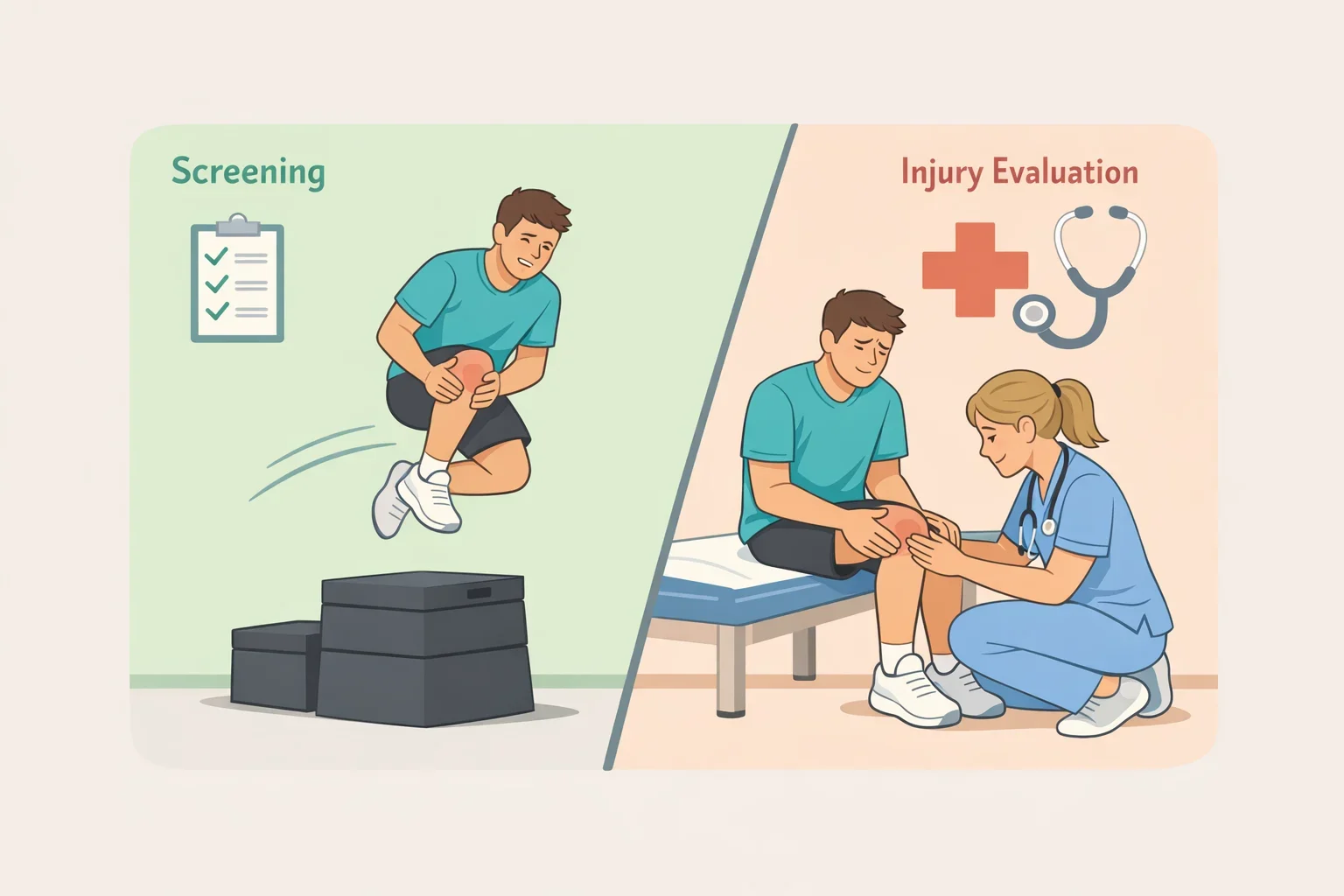
A landing screen assumes a healthy knee that's simply being evaluated for movement quality, not an injured one. It isn't built to diagnose a current knee problem. An athlete dealing with acute pain, swelling, joint instability, an inability to bear weight, or a recent knee injury should skip repeated test jumps and get evaluated by a doctor, athletic trainer, or physical therapist first. Screening tools are meant for healthy athletes trying to understand movement risk factors, not for sorting out an injury that's already happened.
What to do next
A jump test tells a coach or clinician something real about how an athlete lands. It doesn't tell them whether that athlete will tear an ACL. The most useful way to treat a screening score is as the start of a conversation, not the end of one.
Athletes and coaches curious about their own landing mechanics should ask a qualified athletic trainer, physical therapist, or strength and conditioning professional to administer or interpret a screen like LESS. From there, build the result into ongoing training rather than filing it away as a label. Progress gradually with any hip-strengthening or landing-mechanics work a professional recommends, and stop and get evaluated if pain, swelling, or instability shows up during that training rather than pushing through it.