

- Premier League promoted teams 2026-27 predictions: stay up?
- Hull, Ipswich and Coventry Premier League predictions: where the models agree and split
- Hull City: the clearest statistical warning sign
- Coventry City: the strongest results-based case, with less to verify
- Ipswich Town: automatic promotion clouded by an unconfirmed coaching situation
- What the opening fixtures can and can't tell you
- What would change these predictions
Premier League promoted teams 2026-27 predictions: stay up?
Two forecasting models have run the numbers on the 2026-27 Premier League season, and both land on the same order for the three promoted clubs: Hull City carries the most relegation risk, Coventry City the least, with Ipswich Town in between. Where the Opta Analyst supercomputer and the Sky Sports supercomputer can't agree is how much danger Hull is actually in, a gap of 42.9 percentage points between the two models' figures for the club, 38.7% versus 81.6%. Anyone reading Premier League promoted teams 2026-27 predictions before the season starts should treat that gap as the headline finding, not a footnote.
It matters because the last two Premier League seasons have punished newcomers without exception. Every promoted club went straight back down in 2023-24, and the same thing happened again in 2024-25 (Opta Analyst, today). Sky Sports' supercomputer, notably, projects the same outcome again this year: its full 2026-27 table has Coventry, Hull and Ipswich all finishing in the relegation zone, not just carrying elevated risk of it (Sky Sports, 3 days ago). That reshapes how to read the rest of this piece. Coventry being the "safest" of the three doesn't mean either model is calling them safe outright.
This article works through what the available promotion data and forecasts actually show for the three clubs, not around confident predictions the numbers can't support. It covers how each club got up, the evidence for and against their survival case, and specific things worth watching once matches start. The supplied research doesn't include current transfer business, wage structures, or up-to-date squad news for any of the three clubs, so treat squad-building questions as open until you check each club's official announcements closer to kickoff.
Hull, Ipswich and Coventry Premier League predictions: where the models agree and split

Both supercomputers rank the three clubs identically by relegation risk: Hull highest, Ipswich in the middle, Coventry lowest (Opta Analyst, today; Sky Sports, 3 days ago). Where they split is scale. Opta's spread across the three is tight: 27.9% for Coventry, 31.2% for Ipswich, 38.7% for Hull. Sky's spread runs much wider, from 43.1% for Coventry to 47.5% for Ipswich to 81.6% for Hull (Opta Analyst, today; Sky Sports, 3 days ago).
Agreement on order, real disagreement on magnitude, and it matters most around Hull. Read these figures as data-driven projections made before a ball has been kicked, not fixed outcomes.
Opta offers a partial explanation for its own pessimism on Hull, suggesting the forecast is most likely tied to the club's underlying numbers from last season rather than a quirk of the model (Opta Analyst, today). The supplied Sky Sports material doesn't offer a comparable explanation for its own, much larger, figure. The more useful exercise is looking at what each club did last season and matching that against what both models seem to be picking up. The next three sections do that club by club.
Hull City: the clearest statistical warning sign
Hull won promotion through the play-offs after finishing sixth in the Championship, sealed by top scorer Oli McBurnie's close-range finish in the 95th minute against Middlesbrough at Wembley (Liverpool FC, two months ago). A play-off run decided by one dramatic finish is context worth knowing, not proof of squad strength on its own.
Both models single out Hull as the biggest relegation risk of the three, and Opta offers a reason why. Its own reporting ties the pessimistic forecast to Hull's underlying numbers from last season rather than their final Championship position (Opta Analyst, today). In plain terms, a sixth-place finish can mask a team that was riding results rather than controlling matches, and that's the concern being flagged here, even without a public breakdown of the figures behind it.
That reasoning doesn't settle the question on its own. The supplied research doesn't cover Hull's summer transfer business, departures, or confirmation of how the squad has changed since Sergej Jakirović guided them up in his first season in charge (Liverpool FC, two months ago). A club can address an underlying performance gap with recruitment or a tactical shift over the summer. Whether Hull did that isn't something the available data confirms either way.
The better move than guessing is watching the early matches closely. Track how many shots Hull face, how many high-quality chances they concede, and whether their results start drifting away from the run of play the way both models suggest happened last season. A defense that looks stretched in August is a real warning sign. Games that look tighter than the scoreline suggests would point to genuine improvement over the summer.
Coventry City: the strongest results-based case, with less to verify
Coventry's promotion case reads the cleanest of the three on paper. They won the 2025-26 Championship, returning one of the Premier League's founding members to the top flight after a 25-year absence. They didn't drop out of the top two from September onward, confirmed promotion with three matches still to play, and finished the season 11 points clear at the top (Liverpool FC, two months ago).
The managerial story behind that run adds weight to it. Frank Lampard took over in November 2024 with Coventry sitting just two points above the relegation zone, turned that into a fifth-place finish and a play-off run that same season, then won the league outright the following campaign (Liverpool FC, two months ago). Among the three clubs, that's the clearest sign of sustained improvement under one manager rather than a single strong season.
What's missing is the same underlying-performance detail available for Hull. There's no expected-goals breakdown for Coventry's Championship campaign in the supplied research, and no information on retained personnel or summer recruitment. Coventry's case rests on final league position, points margin and managerial continuity, which is a strong results-based promotion case, but it isn't the same thing as verified underlying performance, and the two don't always overlap.
Both models still treat Coventry as facing the least immediate risk of the three. Opta gives them the lowest relegation probability at 27.9%, and Sky projects an expected points total only fractionally below Nottingham Forest's, whose own relegation probability of 43.1% happens to match Coventry's figure exactly (Opta Analyst, today; Sky Sports, 3 days ago). "Least immediate risk" is not the same claim as "safe." Sky's own projected table still puts Coventry in the relegation zone.
The test comes immediately. Coventry face the joint-hardest opening five fixtures in the division, and the season opens with a trip to Arsenal on Friday, August 21 (Opta Analyst, today; Sky Sports, 3 days ago). Their points return against that schedule, rather than any single scoreline, is what to watch for signs the Championship title win translates upward.
Ipswich Town: automatic promotion clouded by an unconfirmed coaching situation
Ipswich started the 2025-26 Championship season slowly, winning just three of their opening 10 matches, then recovered to edge past Millwall for the second automatic promotion spot, sealing it with a 3-0 win over QPR on the final day (Liverpool FC, two months ago). That's a genuine turnaround, even if it draws less attention than Coventry's title win.
The complication is at the top of the club. Kieran McKenna, who had taken Ipswich from League One to the Premier League twice, stepped away from management shortly after guiding the club to that second-place finish. Two months ago, Liverpool FC reported that Ipswich still listed the head coach role as vacant, with the club's previous Premier League stint ending in 19th place and relegation.
That report is now roughly two months old, and with the season starting within days, it can't confirm who is actually in charge today. Whether Ipswich has since appointed a permanent head coach, retained key contributors such as Player of the Year Azor Matusiwa, or made significant additions this summer isn't something the available data settles. Check Ipswich's official site for a confirmed head coach and transfer activity before putting much weight on a relegation forecast for them. Both Opta (31.2%) and Sky (47.5%) put Ipswich's risk between Hull's and Coventry's, but that middling figure was calculated without knowing who's coaching the team.
Ipswich's opening match offers a useful comparison point rather than a clean measuring stick. They open against Sunderland, who finished seventh last season but recorded one of the league's weakest open-play attacking outputs, with only Burnley and Wolves managing a lower open-play expected-goals tally, while also facing the third-most shots and fourth-most shots on target in the division (Opta Analyst, today). Opta separately gives Sunderland a 25.9% relegation probability of their own, flagging possible second-season syndrome despite last year's finish (Opta Analyst, today). Both sides carry real questions into that opener, which makes it a fairer early read than most season openers.
What the opening fixtures can and can't tell you
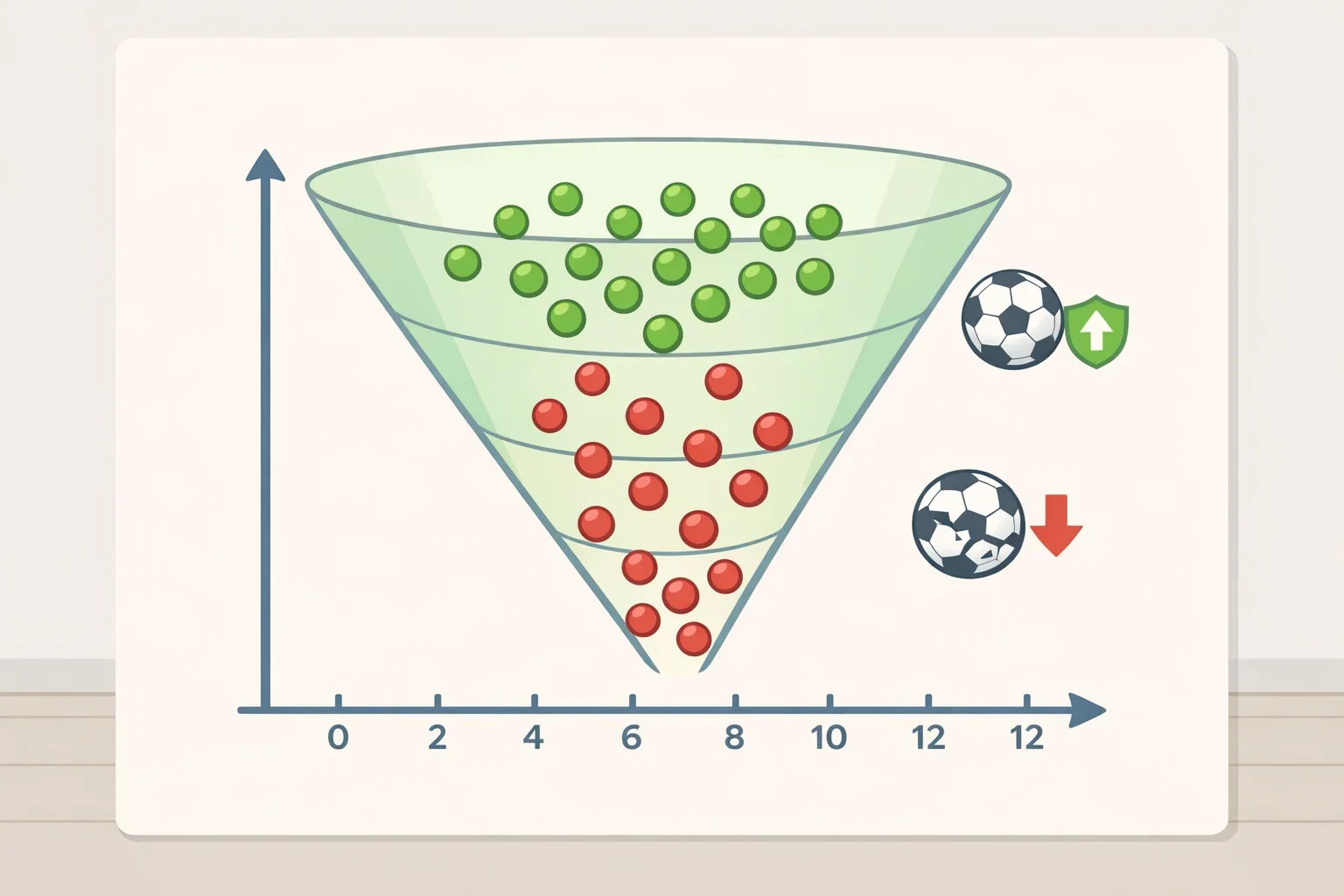
There's a real historical pattern worth knowing before judging any promoted club off its first few results. Across 34 Premier League seasons, none of the 16 promoted teams that collected at least eight points from their opening five matches went on to be relegated that season (Opta Analyst, today). That's a strong association, not a guaranteed cutoff, but it's real and worth tracking as August turns into September.
The three clubs aren't starting on equal footing, which is exactly why that eight-point marker needs context. Coventry face the joint-hardest opening five fixtures in the league. Hull's opening run is the fifth-hardest. Ipswich sit closer to the middle of the pack, opening against Sunderland rather than a heavyweight (Opta Analyst, today; Sky Sports, 3 days ago).
Because Coventry and Hull face tougher opponents early, a slow start from either club should temper how you read those results rather than override everything else known about the team. A one-point return from Coventry's first five games against difficult opposition doesn't carry the same weight as the same return against a soft schedule. Weigh the eight-point threshold against opponent difficulty, not as a standalone verdict.
What would change these predictions

Three specific updates would meaningfully move these forecasts, and none of them are available yet in the research behind this article.
- Confirmed managers and squad news. Ipswich's head coach vacancy, as of two months ago, is the single biggest open variable here. Confirming who's in charge and what's changed in the squad would resolve more uncertainty for Ipswich than for either other club. Hull's summer transfer business and confirmation that Jakirović remains in charge matter too, since that's the club with the clearest performance concern to address.
- Early chance-quality data. Opta ties its pessimism on Hull to the club's underlying numbers from last season, though the specific figures behind that call aren't public. Watching Hull's shots conceded and the run of play in their opening matches will show whether that concern carries over or fades.
- Fixture-adjusted results. Coventry and Hull face two of the toughest opening schedules in the league. Reading their early points totals against that difficulty, rather than the raw eight-point historical benchmark, gives a fairer read on whether either club is in genuine trouble or just facing hard opponents early.
None of the three clubs' survival odds are settled. Both models point to Hull as the club with the clearest reason for concern and Coventry as facing the least immediate risk, though Sky's own projected table still lands Coventry in the drop zone. Ipswich remains the hardest to assess, largely because a two-month-old coaching vacancy hasn't been confirmed one way or the other. Check for club announcements on management and transfers before trusting any forecast for them, and watch the opening month of results against each club's fixture difficulty rather than treating raw points as the full story.