
Richard Masters FIFA World Cup Stake Sale Comments Explained
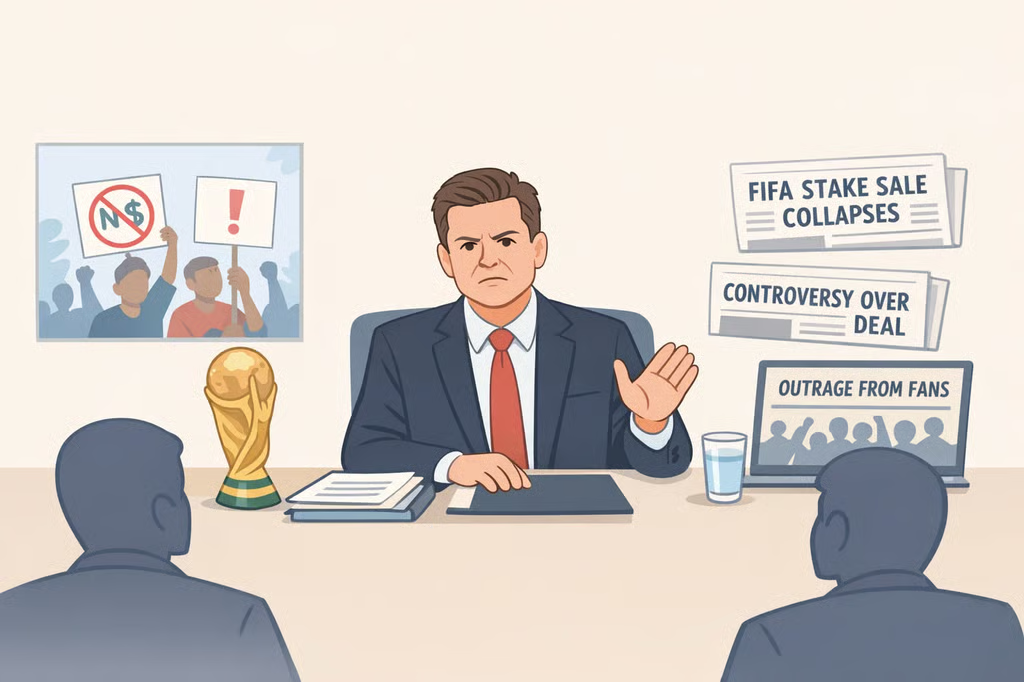
Premier League chief executive Richard Masters says FIFA "pressed the self-destruct button" over its now-abandoned plan to sell a stake in a company managing commercial and ticketing rights across FIFA competitions, including the World Cup. Masters called the collapsed deal "a self-inflicted wound," according to BBC Sport and The Independent, both reporting today. His comments on FIFA's World Cup stake sale plan add fresh scrutiny to Gianni Infantino's leadership at a moment when the FIFA president is fighting to stay in his post following the backlash, per The Independent.
Masters spoke as Infantino faced mounting pressure over the abandoned plan, adding Premier League weight to a dispute that already includes UEFA's threatened boycott, the FA's withdrawn support for Infantino, and FIFPRO's accusation that Infantino committed a "profound abuse of presidential power," according to ESPN reporting 12 days ago.
"This is a problem of FIFA's making," Masters told BBC Sport, according to BBC Sport. "The organisation has pressed the self-destruct button, and the consequences of that flow now into the solutions that need to be found."
Masters argued FIFA should "never" contemplate selling a stake tied to the World Cup, saying the organization is a not-for-profit body that should hold the tournament "in trust for the future of football," per BBC Sport.
Gianni Infantino's World Cup stake sale plan: what FIFA proposed
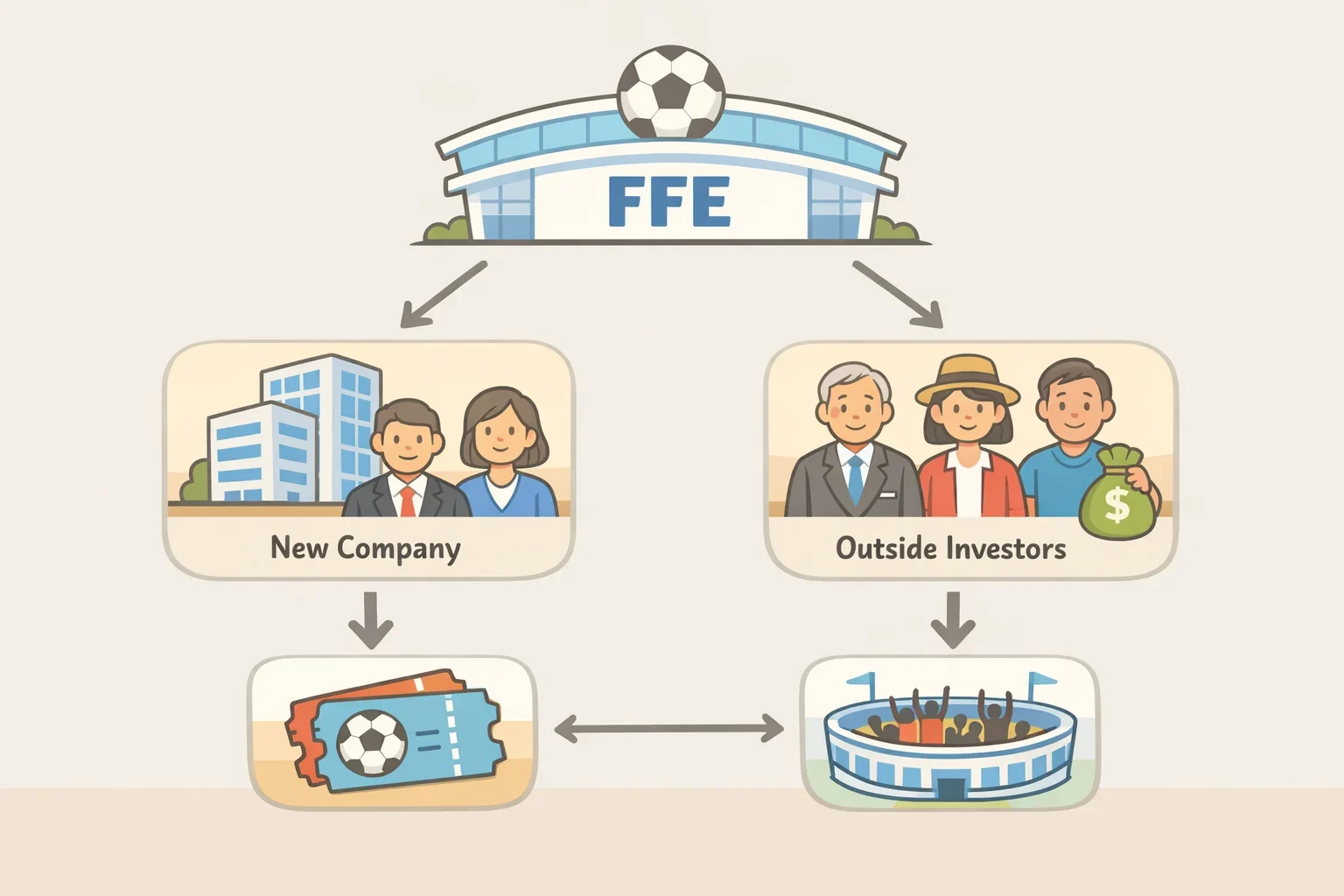
FIFA never proposed selling the World Cup itself. The plan, called FIFA Forward Enterprise (FFE), would have created a new company to manage commercial and ticketing rights across FIFA competitions, with 21% of that company sold to a private investment firm, BBC Sport reported today. The tournament's ownership was never on the table; what critics objected to was giving an outside investor a financial stake in the entity that would run the commercial side of FIFA's biggest events.
FIFA acknowledged "mistakes" were made in developing FFE but said Infantino retained the "full support" of management board members present at a meeting in Morocco, ESPN reported 12 days ago. That admission of error sat awkwardly alongside the board's continued backing of Infantino, and it did little to quiet the criticism building outside FIFA's own ranks.
FFE was abandoned after widespread opposition from several confederations, led by UEFA, which threatened to boycott all FIFA competitions if the sale proceeded, per BBC Sport. FIFPRO Europe nevertheless objected that the proposal would turn the World Cup and other FIFA competitions into investable assets for private capital, according to its statement three weeks ago.
Masters objected to selling any stake linked to the World Cup, even though the proposed transaction was later withdrawn.
Why FIFPRO says the World Cup should be held "in trust"
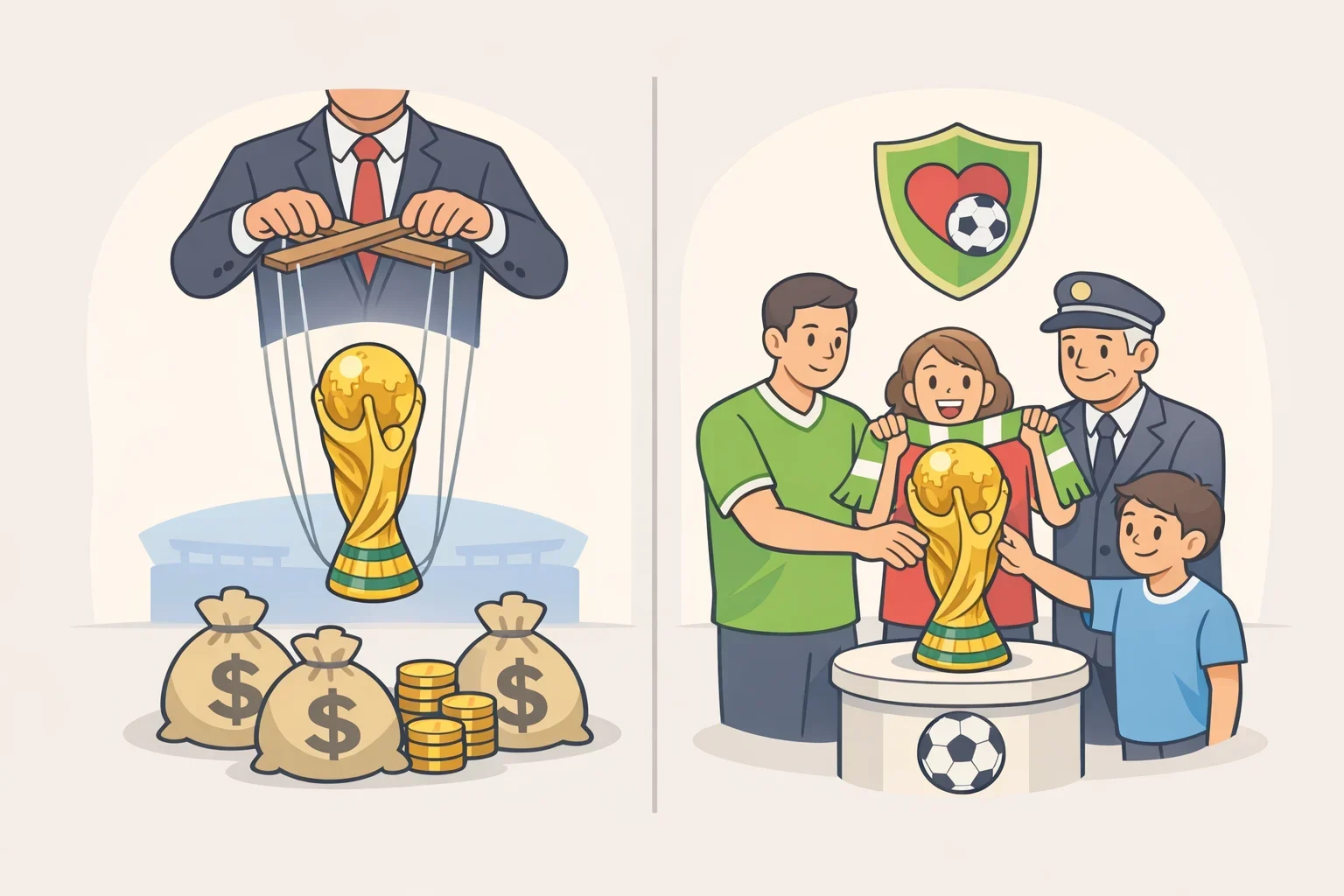
Masters and FIFPRO used strikingly similar language. Masters said FIFA should hold the World Cup "in trust for the future of football," while FIFPRO's letter to FIFA stated the tournament "is not the personal asset of any president. Nor is FIFA itself. They are held in trust for football," according to ESPN.
Two separate FIFPRO communications are worth distinguishing. The global union, which represents over 70 player unions worldwide, sent a letter to FIFA secretary general Mattias Grafstrom accusing Infantino of a "profound abuse of presidential power," reported by ESPN 12 days ago. FIFPRO Europe, its regional arm, issued its own public statement earlier warning that turning FIFA competitions into "investable assets for private capital" would "fundamentally and irreversibly" change the incentives surrounding competitions in which players "work, compete and build their careers," per its statement three weeks ago.
FIFPRO said the withdrawal of FFE "prevented an irreversible decision" but "did not restore the confidence that made such a proposal possible in the first place," adding that confidence "has now been fundamentally broken," per ESPN reporting 12 days ago. The union called governance reforms "now indispensable," though it stressed they are "the responsibility of the future, not an absolution of the past."
FIFPRO also pointed to what it called a "broader pattern" of decisions made without consultation, citing the introduction of in-match hydration breaks. The union said those breaks were presented as a player-health measure but looked "closer to a proof-of-concept for future commercial exploitation by FFE-type investors," according to ESPN. That framing is FIFPRO's own characterization, not an independently confirmed account of FIFA's intent.
FIFPRO Europe noted that neither the union nor players hold a vote within FIFA, despite living with the long-term consequences of decisions made without their input, per its statement. FIFPRO's letter to FIFA also described the FFE process as developed "in secrecy," language that remains the union's allegation rather than an independently confirmed finding, according to ESPN. That allegation echoes the trust-based objection Masters raised separately in his comments to BBC Sport.
FA withdraws support as FIFA's COO departs
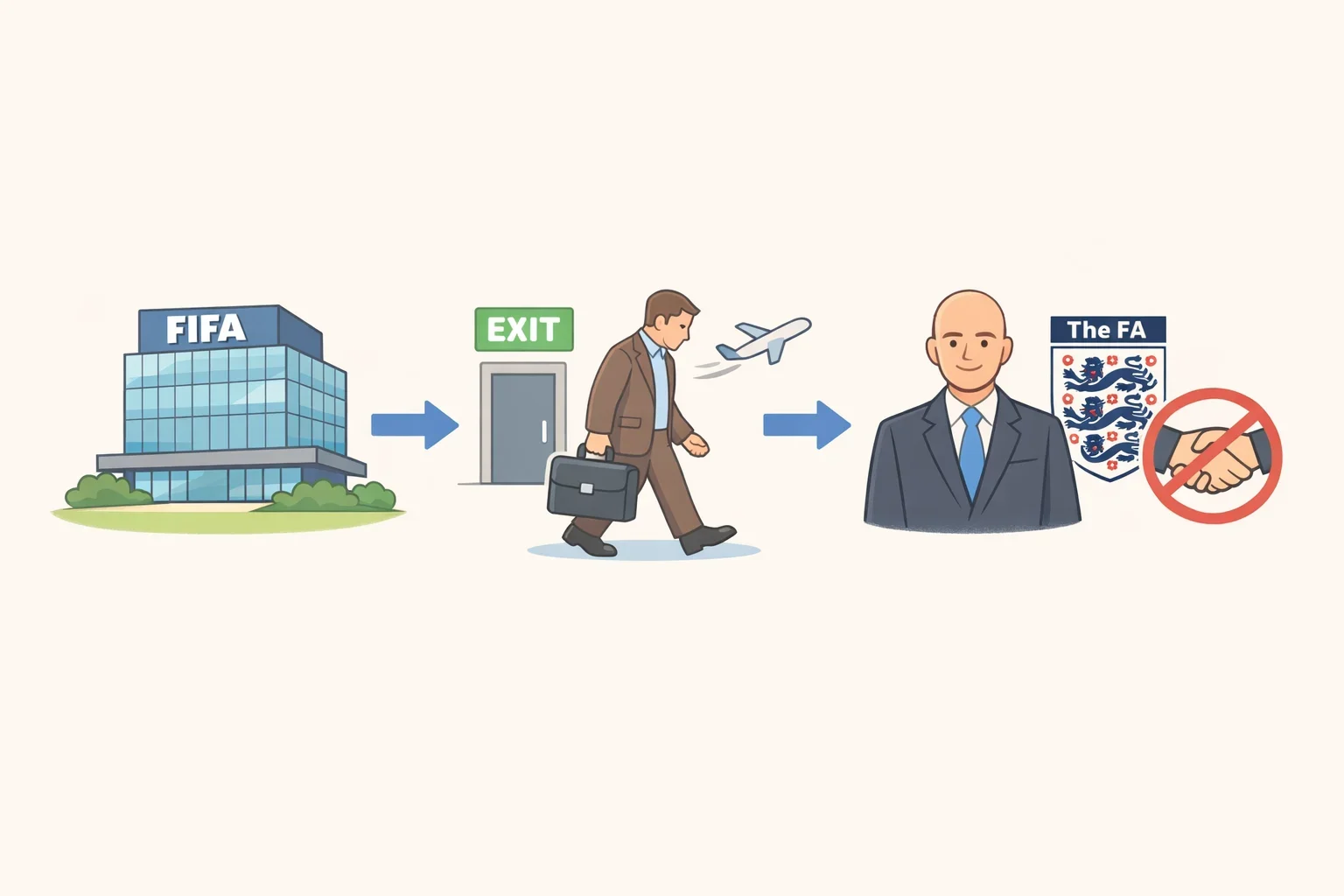
England's FA withdrew its support for Infantino's presidency, a position Masters endorsed directly. "I think it's a bad idea, and the FA have taken the right position regards to Gianni [Infantino]," he told BBC Sport, according to BBC Sport.
FIFA's chief operating officer, Kevin Lamour, left his post yesterday, weeks after saying FIFA staff had been "deceived" over the stake-sale plans and "deserve better than contempt and intimidation," The Independent reported today. Lamour said at the time that speaking out would let him "sleep well tonight," per The Independent.
Norway FA president Lise Klaveness told the Associated Press she believed Lamour had been fired, describing the situation as "management by fear." "Now he is thrown out and we are supposed to move on. It's unacceptable," Klaveness said, adding a call for FIFA's administration "to not submit to orders you know are not in the interests of football." That characterization is reported as her personal assessment rather than a confirmed FIFA position, per The Independent.
UEFA, the FA and FIFPRO have each raised separate objections to Infantino's leadership, and Masters's comments add the Premier League's voice to that criticism. Masters called for a "unifying" alternative to lead FIFA, according to BBC Sport.
What happens next

FFE was withdrawn, so the proposed 21% sale did not proceed. FIFPRO Europe warned that future commercial proposals could still affect player welfare and the international match calendar without meaningful player input, noting that "stakeholder participation in FIFA's decision-making has always been limited," per its statement three weeks ago.
FIFPRO separately sent FIFA secretary general Mattias Grafstrom its demands for governance reform, calling such changes "now indispensable," according to ESPN reporting 12 days ago.
The next formal test comes before FIFA's 18 November 2026 nomination deadline: whether a rival candidate declares against Infantino, and whether FIFA responds to FIFPRO's governance demands or the broader opposition to FFE. As of this week, no candidate has put a name forward to challenge him, and Masters's call for a "unifying" alternative remains unanswered, according to BBC Sport.