
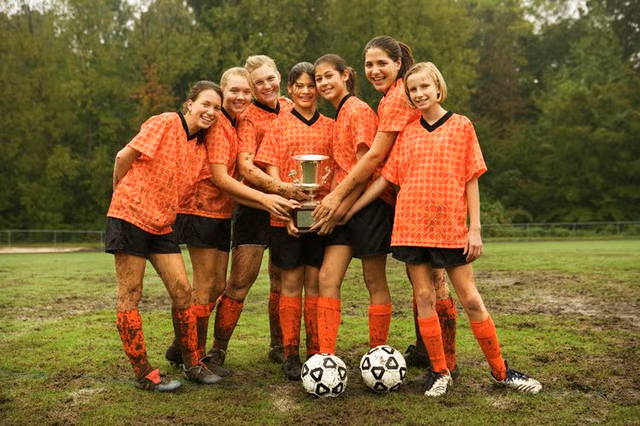


Competitive sports provide kids with a variety of fitness and teamwork opportunities. Competitive athletes also learn the importance of goal setting, time management and mental toughness. Negatives exist, too, such as obsession, burnout and an unhealthy desire to win at all costs -- in addition to potentially lifelong effects of injury. Nevertheless, competitive sports offer enrichment beyond what can be taught in the classroom or at home.
Competition Teaches What Parents Can't
Parents help kids learn important life skills including studying, kindness, manners and work ethic. What they can't do -- on their own -- is teach them how to rebound from a devastating loss. As in sports, life has a way of taking away sure-thing victories, and adults who demonstrate tenacity and persistence are better equipped to overcome failure. There is no better way to learn these lessons than in competitive amateur sports, when the consequence of losing isn't life- or career-threatening.
Coping Skills
Athletes from the tee-ball field to Yankee Stadium take risks and assume responsibility when best-laid plans go awry. While this can result in short-term embarrassment or even injury, planning appropriate strategies -- as well as the focus and discipline required to implement them -- applies to more areas of life than just sports. Competitive athletes develop stress-coping skills that make handling pressure situations easier. And because competitive athletes don't want to let their teammates down, they work hard not to.
Fitness and Nutrition
Children who play competitive sports adhere to rigorous fitness training regimens. These kids know that the fittest among them play harder and perform better. Even though most young athletes won't compete at the collegiate or professional levels, many are more likely to continue exercising as a way to stay physically fit and mentally awake. Athletes generally stick to healthy diets, are less likely to smoke or engage in destructive actions and tend to maintain these behaviors through adulthood.
Sportsmanship
While tales of shouting coaches, angry parents and dirty play abound, don't let a few examples of bad sportsmanship spoil the numerous benefits of competitive sports. Congratulating an opponent on a game well played establishes class, regardless of personal outcome. Athletes that demonstrate humility and integrity engender respect among teammates, coaches, parents and opponents. And losing -- while not fun -- forces the competitive athlete to reevaluate strategies and decisions and may help encourage perseverance.