
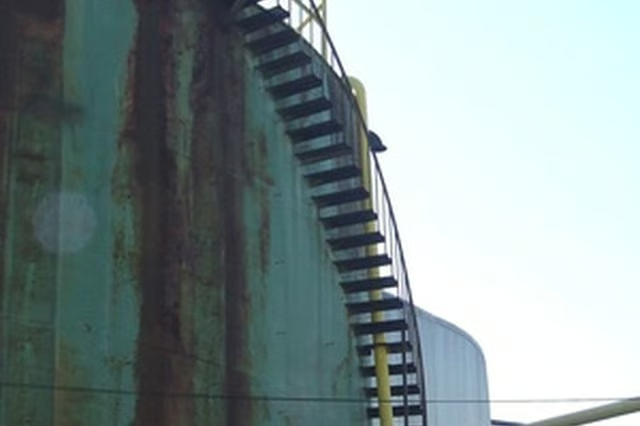


In 2003, falls from stairs or steps resulted in the deaths of 1,307 Americans, and caused a variety of injuries to countless others. It is for this reason that the construction and installation of handrails and guardrails is so readily enforced. Virginia’s handrail regulations are set out in the 2006 revision of Virginia’s Uniform Statewide Building Code, which governs all aspects of building in the state of Virginia.
Handrail and Guardrail Regulations
Virginia building regulations define a handrail as a continuous graspable structure attached to secure posts at each end. The guardrail is the post or rail that extends vertically downwards and connects securely to the surface of the stair or balcony floor. These guardrails are then connected together with supports or balusters to create a continuous safety barrier. Handrails and guardrails are required in compliance with the Virginia Uniform Statewide Building Code and the International Residential Code.
Handrails and Guards on Staircases
Virginia’s Uniform Building code requires that any interior or exterior staircase with more than four risers, or a balcony more than 30 inches above a surface, be fitted with a guardrail. These guardrails must be between 30 and 42 inches above the stair tread or balcony floor and be continuous, covering the full length of the staircase and the full length of the exposed edge of the balcony or landing. Any gaps in the guard-barrier must be small enough to prevent a “sphere with a diameter of 6 inches” passing through the gap. These regulations apply to all properties in the state of Virginia, whether they are commercial, public or private.
Handrails and Guardrails for the Disabled
The American Disabilities Act Accessibility Guidelines is set of rules that are designed to make life easier and safer for disabled American citizens. Although the current guidelines were agreed upon in a review in 2010, the initial checklist was drawn up in 1992 following the 1990 American Disabilities Act, and ensure that disabled people are able to access all public buildings at their convenience and comfort. In order to comply with these guidelines, handrails and supporting rails in Virginia must be provided along both sides of any ramp structure and must extend for at least 12 inches beyond the top and bottom of the ramp. Rails must be between 34 and 38 inches off the ground to ensure easy and safe use.