
NBA Coach's Challenge Rules 2026-27: What's Confirmed
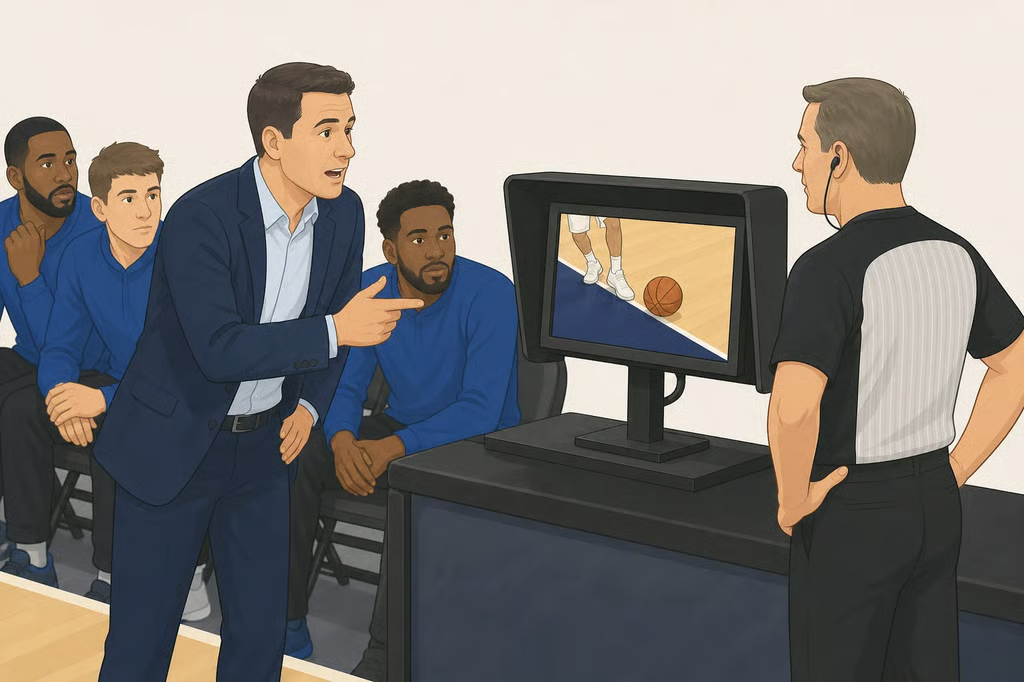
The NBA Board of Governors expanded Coach's Challenge review for out-of-bounds calls starting with the 2024-25 season, according to NBA.com. Once a challenge on an out-of-bounds call is granted, officials and the Replay Center can also check whether a foul near that play should have been whistled, which means a team disputing possession can walk into a foul call instead of winning the ball back.
For readers searching for the NBA coach's challenge rules 2026-27, the available sources confirm that 2024-25 out-of-bounds change and the broader challenge expansion from the 2023-24 season, but nothing in the research verifies whether those provisions carried into the 2026-27 season unchanged. What follows describes the league's most recently confirmed version of the rule, not a fresh announcement tied to this season.
The rest of the mechanics, including which calls qualify for review and what a team wins or loses by challenging, come from the NBA's 2023-24 rulebook as summarized by Sporting News.
What can be reviewed on an NBA coach's challenge
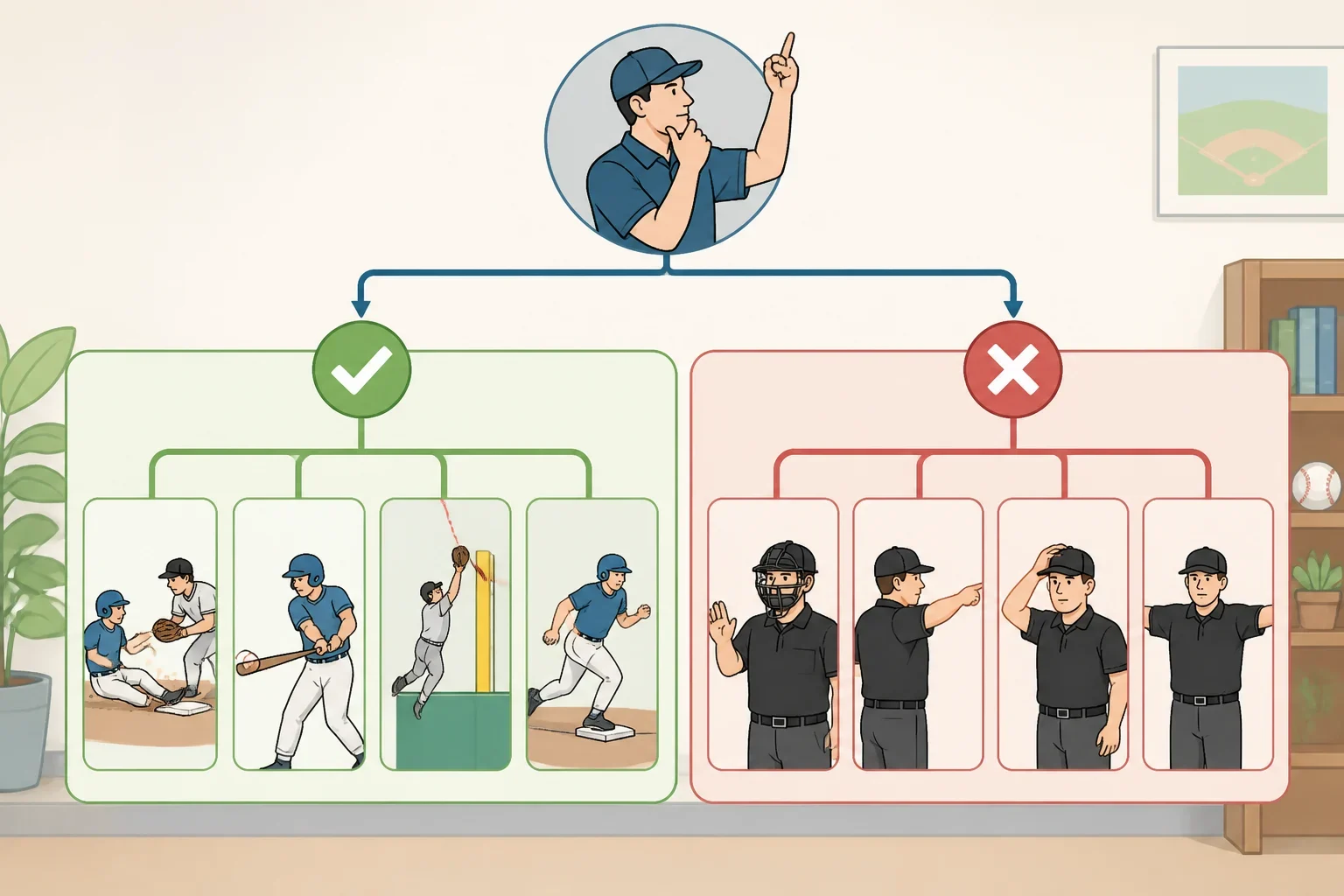
The eligible list is short. A team can trigger review of a personal foul called on its own players, a called out-of-bounds violation, or a called goaltending or basket interference violation, according to Sporting News. Any other officiating decision, and any non-call no matter how obvious it looks on a broadcast replay, sits entirely outside the system, per the same Sporting News summary.
Flopping shows where that line falls. The NBA introduced an in-game flopping penalty alongside the challenge expansion for the 2023-24 season, and the league states that a flopping violation is not directly reviewable through a Coach's Challenge, according to NBA.com. It gets punished through a separate in-game process instead.
Because the eligible list is limited, a replay that appears compelling to viewers may still fall outside the Coach's Challenge system entirely. A missed screen call, a debatable travel, a disputed offensive foul on the defense's own bench, none of those belong to the three categories, so there's no mechanism for a coach to force a second look no matter how the play read on television.
The challenge sequence: timing, timeouts, and what's at stake
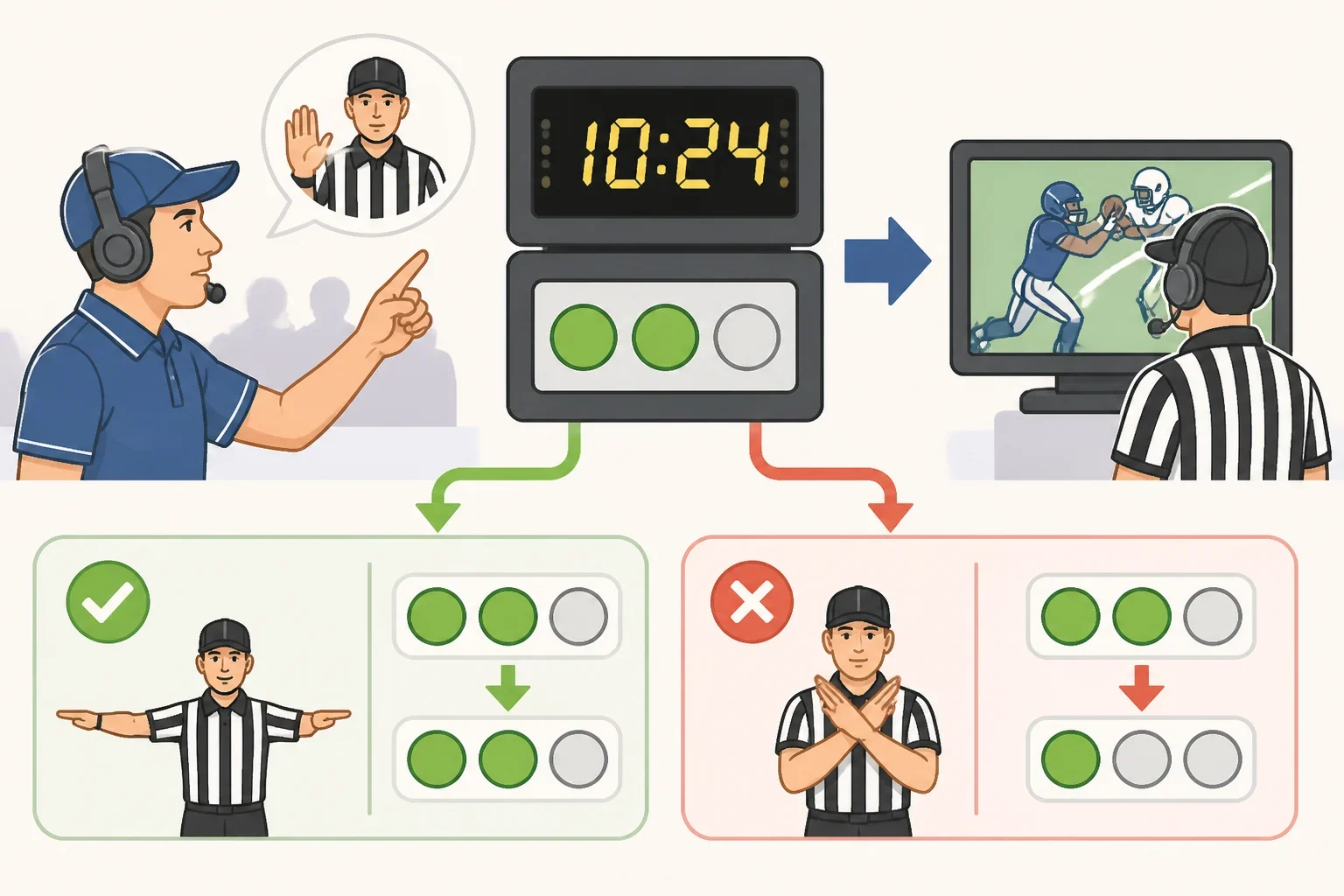
Eligibility is only the first filter. Timing sits at the center of the NBA's instant replay rules for coach's challenges just as much as the review criteria do.
Per the 2023-24 NBA rulebook as reported by Sporting News, coaches could not initiate a challenge inside the final two minutes of the fourth quarter or any overtime period, a window when only the game officials could trigger review on their own. That specific restriction has not been reconfirmed by a source dated to the 2026-27 season, so anyone treating it as in-game strategy should check it against the NBA's current rulebook rather than assume it remained unchanged.
A team also needs a timeout in hand to call for a challenge, and a team with none left cannot challenge no matter how clear the missed call looks, according to NBA.com. Every team starts the game with one challenge before any of this comes into play, per Sporting News.
The mechanics break down into three pieces:
- Eligible calls: a personal foul on the challenging team, an out-of-bounds violation, or goaltending/basket interference, and nothing else, per Sporting News.
- Timeout requirement: a coach must have a timeout available to signal for review, and each team begins the game with one challenge, according to NBA.com.
- Outcomes: a successful first challenge earns a second challenge; an unsuccessful first challenge simply costs the timeout spent to call it, per NBA.com and Sporting News. A second challenge costs the timeout used to call it whether it wins or loses, according to NBA.com.
The NBA's announcement makes one qualification worth flagging separately: a team retains the timeout used for a successful first challenge only if that challenge did not trigger a mandatory timeout, according to NBA.com. The league built the second-challenge timeout loss into the rule deliberately, citing game length and pacing as the reason.
NBA coach's challenge uncalled-foul review: how it works
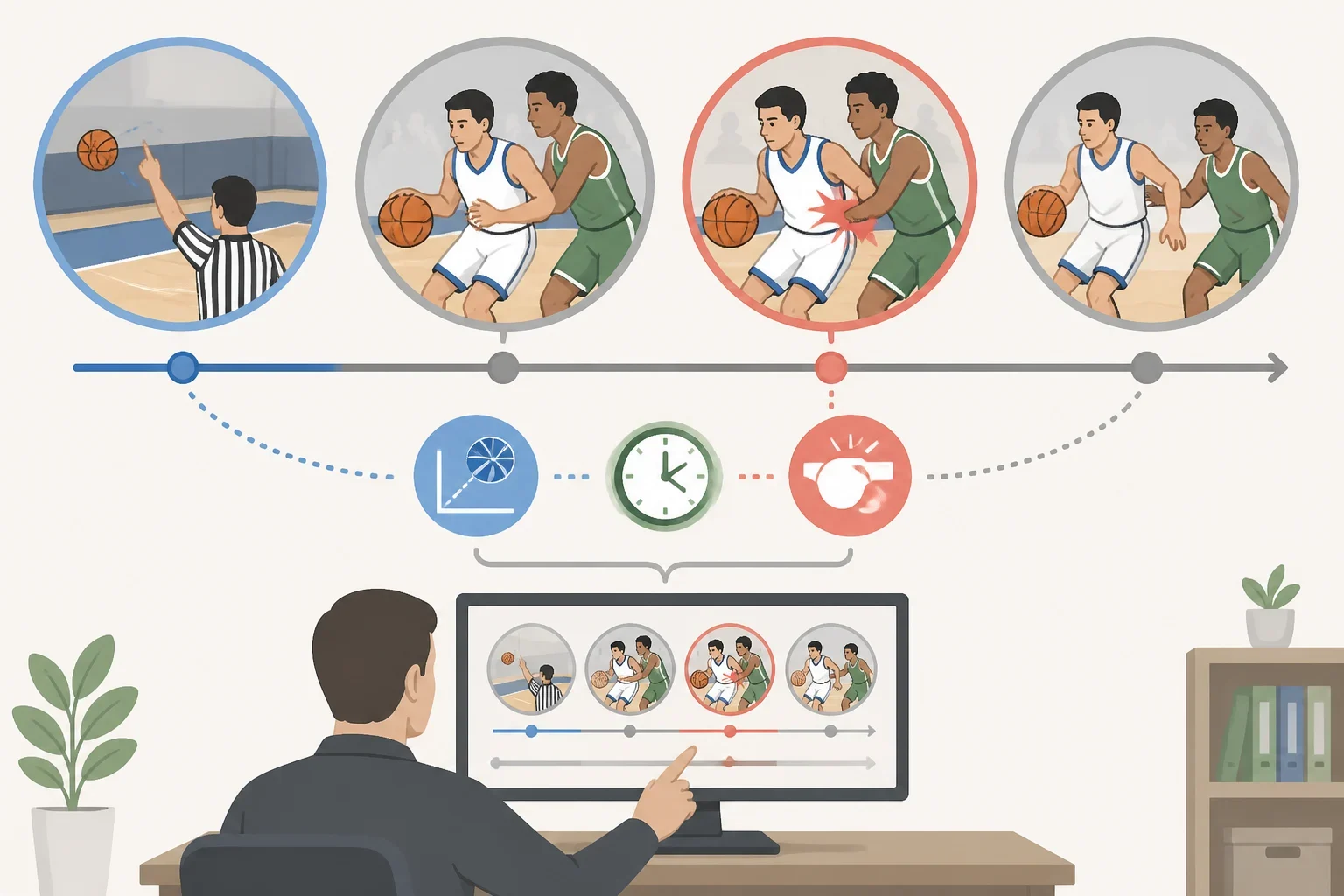
The NBA's Competition Committee, which includes players, coaches, governors, and referees, unanimously recommended the out-of-bounds expansion before the Board of Governors approved it for the 2024-25 season, according to NBA.com. That approval created the NBA out-of-bounds challenge rule at the center of this article: once a coach's challenge triggers review of an out-of-bounds call, the review can widen to include a foul officials never whistled.
Officials weigh three factors to decide whether an uncalled foul counts as proximate to the out-of-bounds play: whether the same players were involved in both, the physical distance between the foul and the violation, and how much time passed between them, according to NBA.com.
The league illustrated the change with an actual Mavericks-Timberwolves play. Kyrie Irving made illegal contact with Jaden McDaniels' left arm before the ball went out off McDaniels, and under the rule in effect at the time, officials correctly determined McDaniels touched the ball last and ruled Dallas' challenge successful, awarding the Mavericks possession, according to NBA.com. Under the expanded rule, the league said that same sequence would instead produce an unsuccessful challenge for Dallas, a foul call on Irving, and possession or free throws for Minnesota if the Mavericks were in the penalty.
This uncalled-foul review only activates inside an out-of-bounds challenge that has already been granted. A coach still cannot challenge a missed foul directly on its own, according to NBA.com. Overturning any call still requires what the rulebook calls "clear and conclusive visual evidence," and for out-of-bounds and goaltending reviews specifically, the Replay Center referee, not the on-court crew chief, makes the final ruling, per Sporting News. On personal foul reviews, that final call stays with the on-court crew chief instead, per the same source.
What the most recently verified rules do not confirm

The one genuinely new wrinkle in this system is the gap between a missed foul reviewed on its own and a missed foul reviewed as a byproduct of something else. A coach cannot force review of a foul that officials simply didn't call. That call only enters the picture when it sits close enough, in players, distance, and time, to an out-of-bounds violation that's already under review through a granted challenge, per NBA.com.
Everything else described here, from the three eligible call types to the escalating timeout cost, reflects the league's most recently confirmed rulebook language rather than a 2026-27 announcement. The absence of a newer source doesn't mean the NBA changed nothing; it means these mechanics haven't been reconfirmed in the research available for this article. Anyone using this as in-game strategy for the 2026-27 regular season should check the NBA's current official rulebook or a current-season NBA Communications release before assuming the final-two-minute restriction, the mandatory-timeout exception, or any other provision here applies exactly as written above.