
- MLB Postseason Roster Eligibility Rules: August 31 Deadline
- August 31 MLB playoff eligibility deadline: who qualifies for 2026
- Which trades, waivers and free-agent signings still count before the cutoff
- Who is eligible for the MLB playoffs: how teams build a 26-man roster
- What happens if a player gets hurt mid-series
- How to check one player's postseason eligibility for 2026
MLB Postseason Roster Eligibility Rules: August 31 Deadline
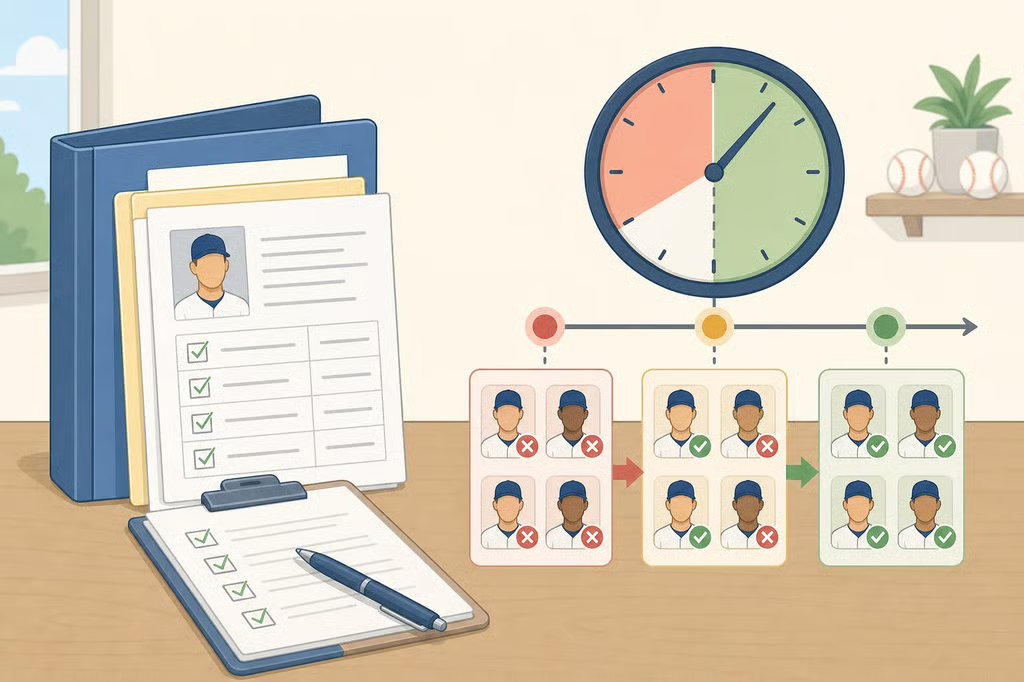
The August 31 cutoff has already come and gone for the 2026 season, which means the question for anyone tracking a club's October chances isn't whether a player still has time to qualify. It's whether he made it under the wire. To pitch or bat in this year's postseason, a player had to be part of his organization by 11:59 p.m. ET on August 31, 2026, and even then his team still has to put him on the 26-man roster for that specific round.
Those are two different questions, and mixing them up is where most confusion starts. Eligibility is a one-time, season-long designation tied to that August 31 moment. Roster selection is a fresh decision a team makes before every round of the 12-team bracket. A player can clear the first bar and still miss the second.
The July trade deadline draws more headlines, but it was never the operative cutoff. Clubs kept swapping players in August through trades, waivers and free agency, and some of those moves counted toward postseason eligibility while others didn't. Here's how the rule actually works, and how to check where a specific player lands.
August 31 MLB playoff eligibility deadline: who qualifies for 2026
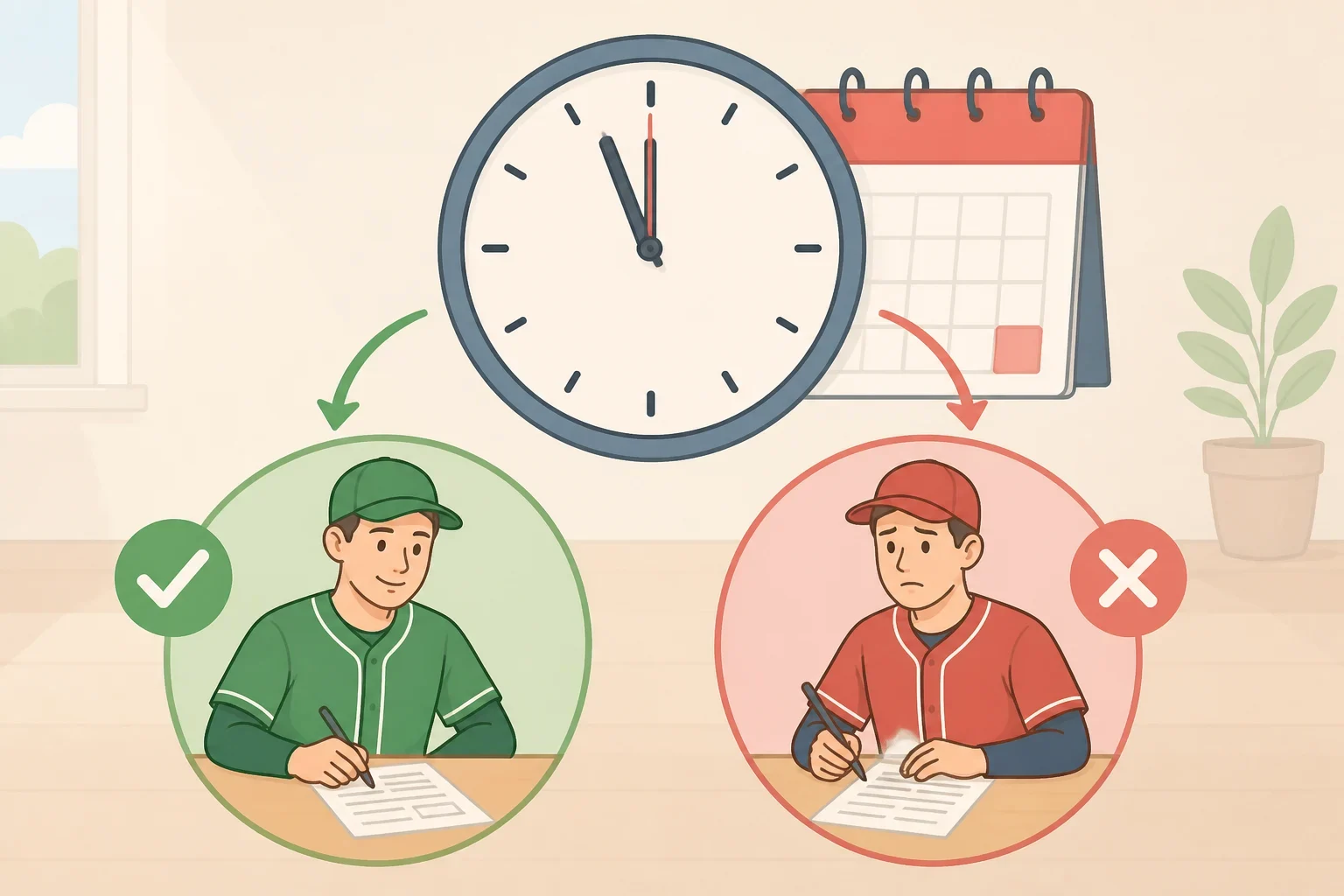
The deciding factor was never a spot on the active MLB roster or even the 40-man roster. It came down to whether a player was part of the organization by 11:59 p.m. ET on August 31, according to CBS Sports. Miss that window with a new team and the postseason is off the table for that club, no matter how the player performs the rest of the way.
CBS Sports treats it as an all-or-nothing line: a player didn't need to be on the big-league roster when the deadline hit, only in the organization, and the rule allows no exceptions once the clock passes, per CBS Sports. The outlet's example makes the point cleanly. If the Dodgers brought Clayton Kershaw out of retirement on September 15, he wouldn't be postseason-eligible, because he'd be joining the organization after the cutoff had already passed, CBS Sports reported.
Eligibility also isn't limited to players who've reached the majors. MLB's postseason rules describe eligible players as those in the organization prior to September, language broad enough to cover minor leaguers, according to MLB.com. A minor leaguer who was already in the organization before that date, even one who never plays a single big-league game, is still part of the pool a team draws from in October.
Which trades, waivers and free-agent signings still count before the cutoff
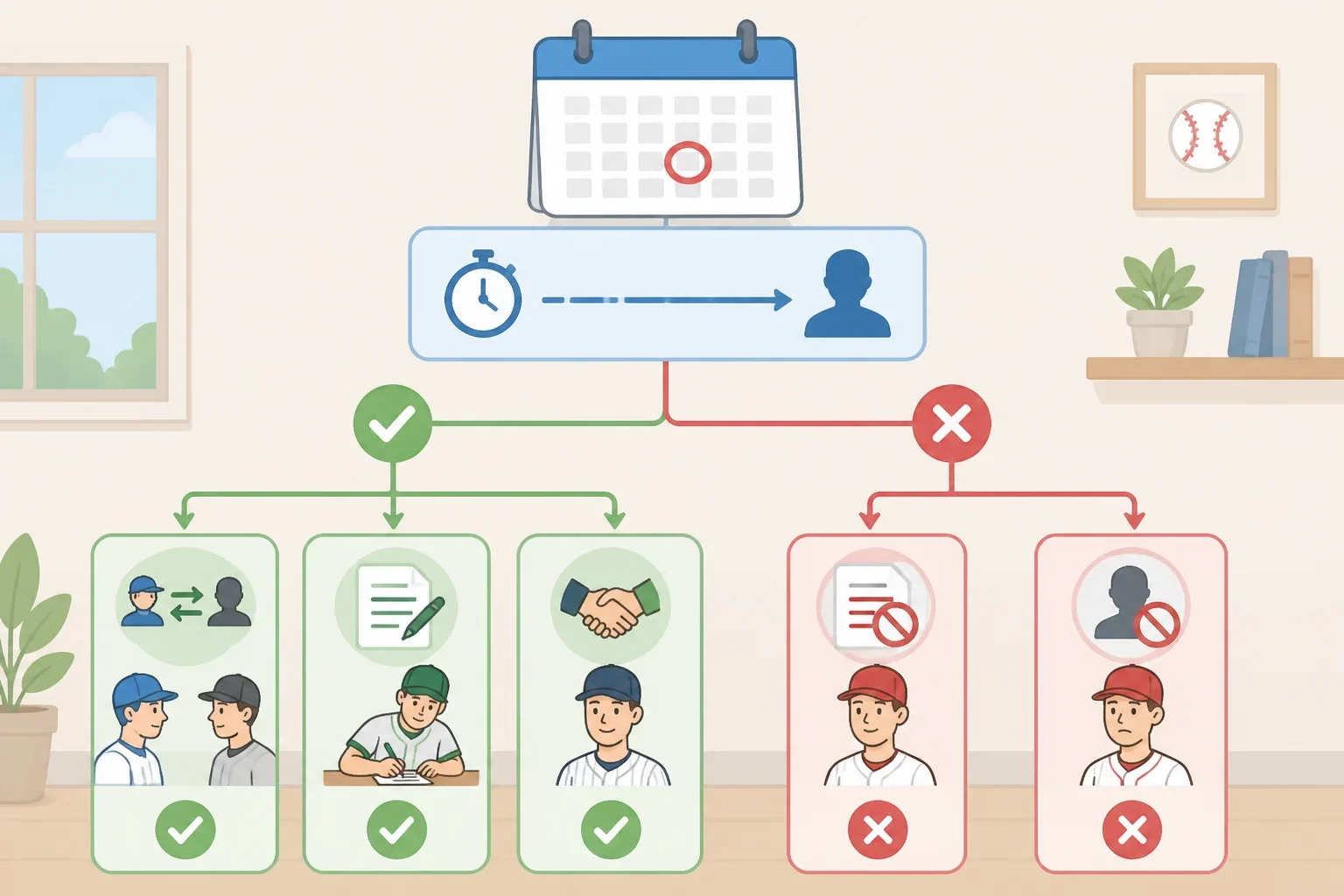
The July trade deadline didn't shut the door on every deal. Clubs could still trade players signed to minor-league contracts, players who hadn't spent time on a 40-man roster that season, and players who hadn't been on the major league injured list that season, CBS Sports reported. A trade in one of those categories closing before August 31 could still land a player in his new team's eligible pool; the same trade closing in September could not.
Waivers stayed active through August and September on a separate track. Priority ran worst-to-first based on record at the time a player was placed on waivers, and once a claim went through, it was irrevocable, meaning the original club had no way to reverse it, according to FanGraphs. No extra compensation changes hands beyond the standard $50,000 waiver fee, and the claiming team takes on the entire remainder of the player's contract, FanGraphs notes.
That contract exposure shapes who actually gets claimed. CBS Sports pointed to Jorge Soler's $13 million salary as an example of a contract expensive enough that a claiming team would likely pass if he hit waivers in August, per CBS Sports. It's one illustration of how cost factors into a claim decision, not a fixed dollar threshold.
Free-agent signings run on the same calendar without a special carve-out. Teams could sign free agents in September just as they can any other time of year, CBS Sports reported, but FanGraphs frames the underlying deadline the same way regardless of transaction type: any player joining a new organization in September isn't postseason-eligible for that club, per FanGraphs. Trade, waiver claim or free-agent signing, timing decides it.
Who is eligible for the MLB playoffs: how teams build a 26-man roster
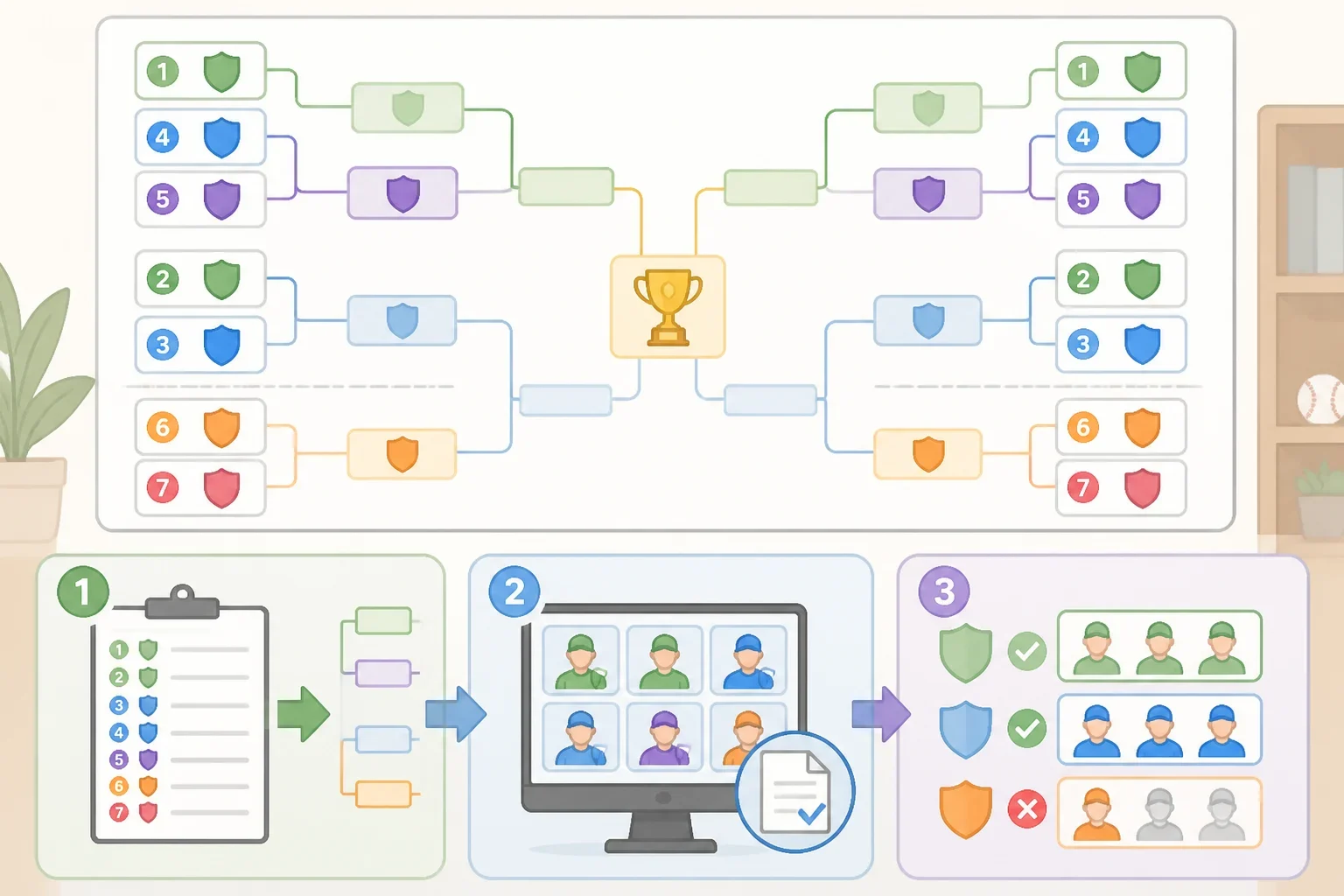
MLB's postseason runs on a 12-team bracket, split into division winners and wild card teams, with the top two seeds in each league earning a bye directly into the Division Series, according to MLB.com. The rest open in a best-of-three Wild Card Series. That explainer dates to 2022, when the current three-wild-card format began, and the round-by-round mechanics it describes have carried forward since. Structural details like seeding and series length are worth confirming against the current postseason regulations rather than assumed unchanged year to year.
Before each round, clubs submit a fresh 26-man roster and can change it from round to round, MLB.com explains, but every name on it has to come from the pool of players already eligible as of August 31. That produces a clear contrast: a player acquired by trade before the cutoff can enter his new club's eligible pool, a player who joins that club in September cannot be added at all, and an eligible player still has to appear on the specific 26-man roster filed for that round to actually play.
That last point is easy to miss. An eligible player can sit out the Wild Card round and still be activated for the Division Series or League Championship Series, since eligibility and roster selection are decided separately.
What happens if a player gets hurt mid-series
Postseason rosters aren't frozen once a series starts. A team can ask the Commissioner's Office for permission to replace an injured player during a series, according to MLB.com. The swap has to match position type: a pitcher can only be replaced by a pitcher, and a position player only by a position player, per the same source.
The replaced player becomes ineligible for the rest of that round, and for the following round too if his team advances, MLB.com states. MLB's explainer doesn't spell out where the replacement has to come from, only that the position match and permission requirement apply.
How to check one player's postseason eligibility for 2026

Anyone trying to figure out whether a specific player could appear in this year's postseason should start with one question: when did he actually join that organization, and does that date fall before or after 11:59 p.m. ET on August 31? Timing decides it more than the type of move, though the category of transaction still matters for whether a trade could even happen that late in the season.
- Confirm the date the player joined the organization against the August 31 cutoff, using an official team announcement or MLB's transaction record.
- Check whether he's listed among the players eligible for that club, since being in the organization by the cutoff is the whole test.
- Look at the actual 26-man roster the team files for the round in question. Eligibility alone doesn't guarantee a spot.
- If he's hurt mid-series, check whether the team requested and received an in-series replacement rather than assuming the roster stays fixed.
For close calls, especially players who moved between organizations late in August, checking MLB's official postseason regulations for the current season beats relying on last year's mechanics carrying over unchanged.