
- Champions League tiebreakers explained: goal difference rule
- The five criteria UEFA uses first
- Why head-to-head doesn't apply anymore
- A hypothetical example: two clubs level on points
- What Champions League league phase ranking rules mean for qualification
- How the tiebreak system escalates
- When ties go beyond goal difference
- What to remember
Champions League tiebreakers explained: goal difference rule
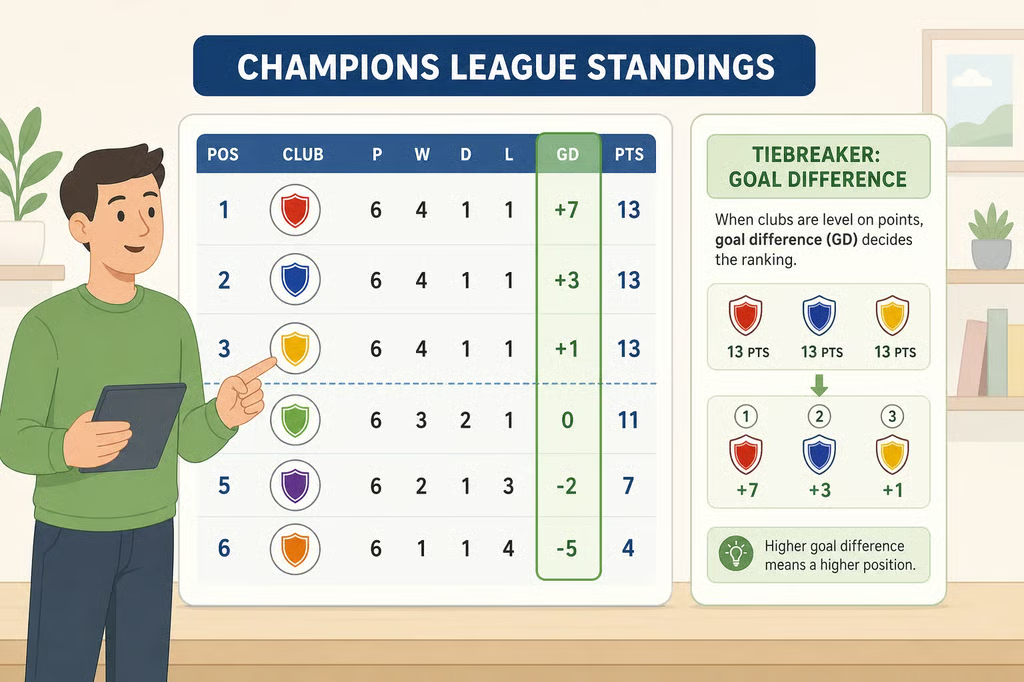
Two clubs level on points in the Champions League league phase are not treated as equals. UEFA sorts them using a fixed sequence of tiebreakers, and goal difference sits first on that list, according to UEFA's standings explainer. Since the competition moved to a single 36-team table in 2024/25, working through these Champions League tiebreakers is part of reading the standings correctly, not a rare technicality.
Being level on points means two or more clubs have matching totals at whatever point the league phase has reached, whether that's after one matchday or all eight. Sorting them out falls to Article 18 of the competition regulations, applied in a specific order, per UEFA. With 36 clubs sharing one table and each playing just eight matches, ties are, in AS's assessment, "almost inevitable."
During Matchdays 1 through 7, UEFA applies five primary criteria. After Matchday 8, those same five apply first, and five more can follow if clubs are still deadlocked. This guide walks through that sequence, works through a hypothetical example, and covers what the resulting rank cutoffs mean for a club's season.
The five criteria UEFA uses first
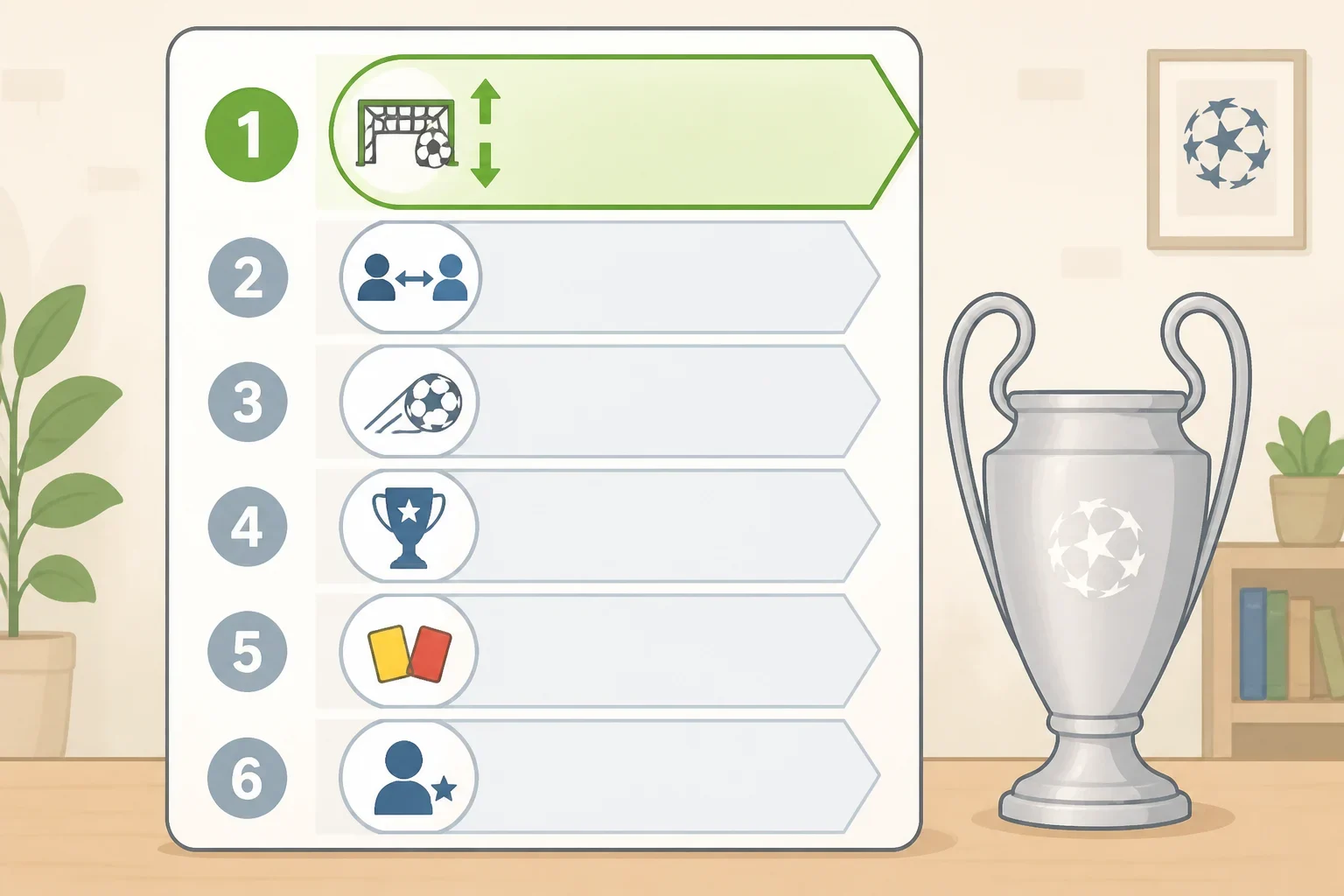
Between Matchday 1 and Matchday 7, UEFA works down this list, per UEFA:
- Goal difference in the league phase
- Goals scored in the league phase
- Away goals scored in the league phase
- Wins in the league phase
- Away wins in the league phase
Goal difference is goals scored minus goals conceded, tallied across whichever league-phase matches a club has played so far, as AS explains. By Matchday 7 that covers seven matches for every club; the full eight-match record isn't locked in until Matchday 8.
If clubs are still tied on all five criteria while games remain to be played, UEFA lists them alphabetically by abbreviated club name, per UEFA. That alphabetical order isn't a sporting result. It holds until the ranking criteria produce an actual separation.
Why head-to-head doesn't apply anymore
The old Champions League format put 32 clubs into eight groups of four, and every club in a group played the same three rivals home and away, per UEFA's format explainer. That shared group schedule is what made head-to-head comparisons workable in the first place.
That structure disappeared with the 2024/25 reform. Clubs are drawn from four seeding pots and face eight different opponents, one home and one away against two clubs from each pot, per UEFA. Because clubs don't share identical schedules, head-to-head is not used in the league-phase ranking sequence at all, as AS notes.
Goal difference fills that gap. It's the first criterion because it can be calculated the same way for every club regardless of who that club actually played, which is exactly what a 36-team, single-table format needs.
A hypothetical example: two clubs level on points
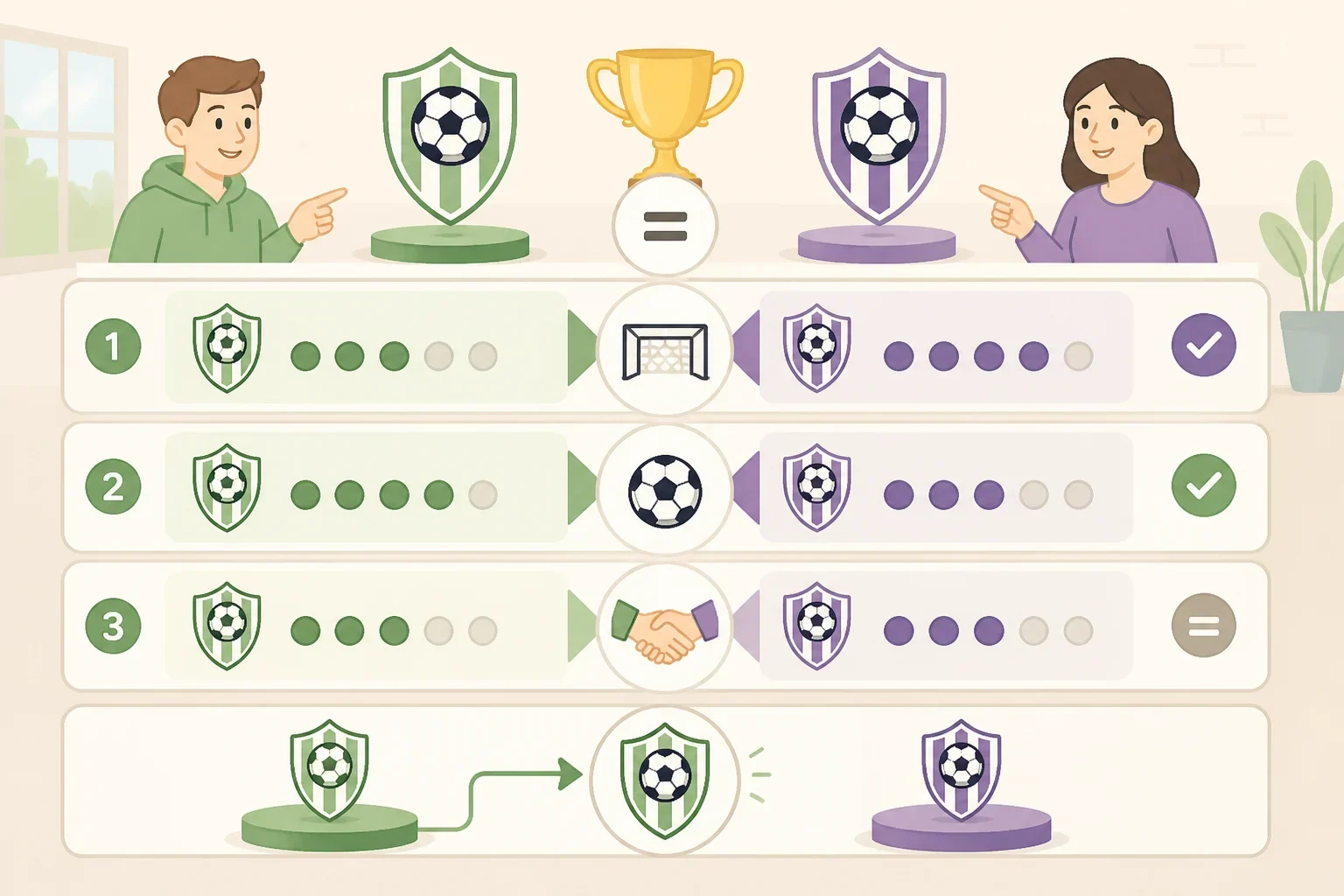
Say Club A and Club B are tied on 12 points after six league-phase matches. Club A has scored 11 goals and conceded 6, a goal difference of plus five. Club B has scored 9 and conceded 7, a goal difference of plus two. Despite equal points, Club A ranks higher on goal difference alone.
Now suppose both finish at plus five instead. UEFA moves to the next criterion: goals scored. If Club A found the net 14 times and Club B managed only 11, Club A still ranks above Club B despite matching points and matching goal difference. Only if goals scored tied too would UEFA move on to away goals, then wins, then away wins.
That sequence is why a single goal can matter well after the final whistle. It can change a club's rank when other teams are separated by narrow goal-difference margins, though the size of any shift depends entirely on how the rest of the table lines up.
What Champions League league phase ranking rules mean for qualification
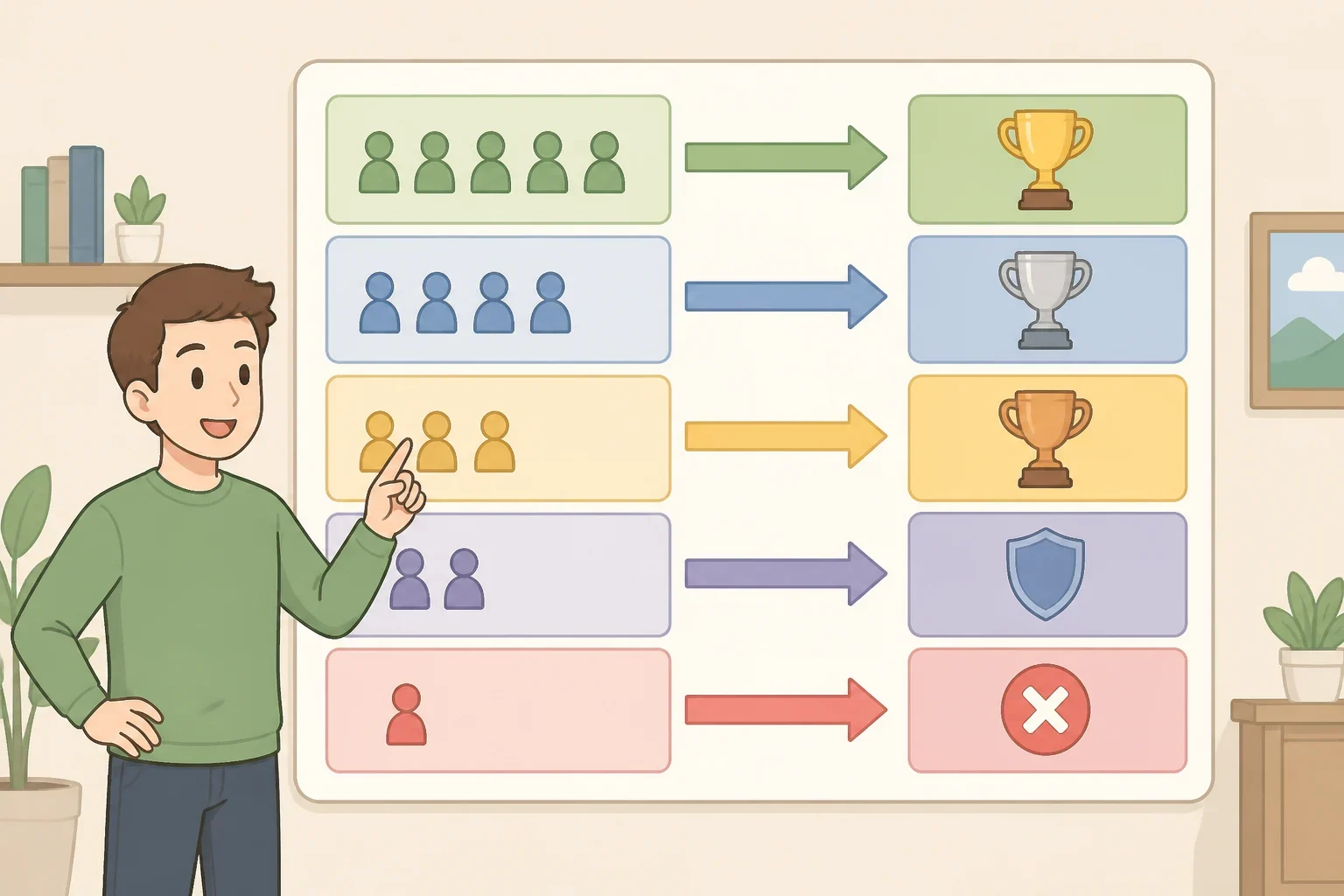
Three cutoff lines decide where a club's season goes, per UEFA:
- 1st-8th: automatic qualification for the round of 16
- 9th-24th: a two-legged knockout playoff round
- 25th-36th: eliminated outright, with no drop into the Europa League
Rank matters inside the playoff bracket too. Clubs finishing 9th-16th are seeded for that draw, while those ranked 17th-24th are unseeded, per AS. Slipping from 16th to 17th on goal difference costs a club its seeded status, though the research doesn't confirm that unseeded status alone guarantees a tougher opponent.
During the 2025/26 season, which wrapped up in Budapest earlier this year, UEFA extended that logic further than in the format's debut season. League-phase rank also set seeding for the quarter-finals and semi-finals: clubs finishing 1st-4th earned a home second leg in the quarter-finals if they advanced, and clubs finishing 1st or 2nd got the same home-leg edge in the semi-finals, according to UEFA. If a seeded club was eliminated along the way, the club that beat it inherited its seeding position for the next round, per the same UEFA release.
A club's final league-phase rank, not any single goal in isolation, was what carried into that knockout-round home-leg advantage; goal difference only mattered there if it was the deciding factor in that final rank. UEFA introduced this expanded seeding link starting with the 2025/26 season, so readers following a later season should confirm the current UEFA regulations before assuming the same structure applies.
How the tiebreak system escalates
The table below summarizes how the criteria stack up across the two stages of the league phase, per UEFA:
Stage Criteria applied What it decides Matchday 1-7 Goal difference, goals scored, away goals scored, wins, away wins Provisional table position; unresolved ties listed alphabetically After Matchday 8, if still tied Same five criteria first, then opponents' collective points, collective goal difference, and collective goals scored, then disciplinary points, then UEFA club coefficient Final league-phase rank, which sets automatic qualification, playoff seeding, and (as of 2025/26) knockout-round home-leg advantage
When ties go beyond goal difference
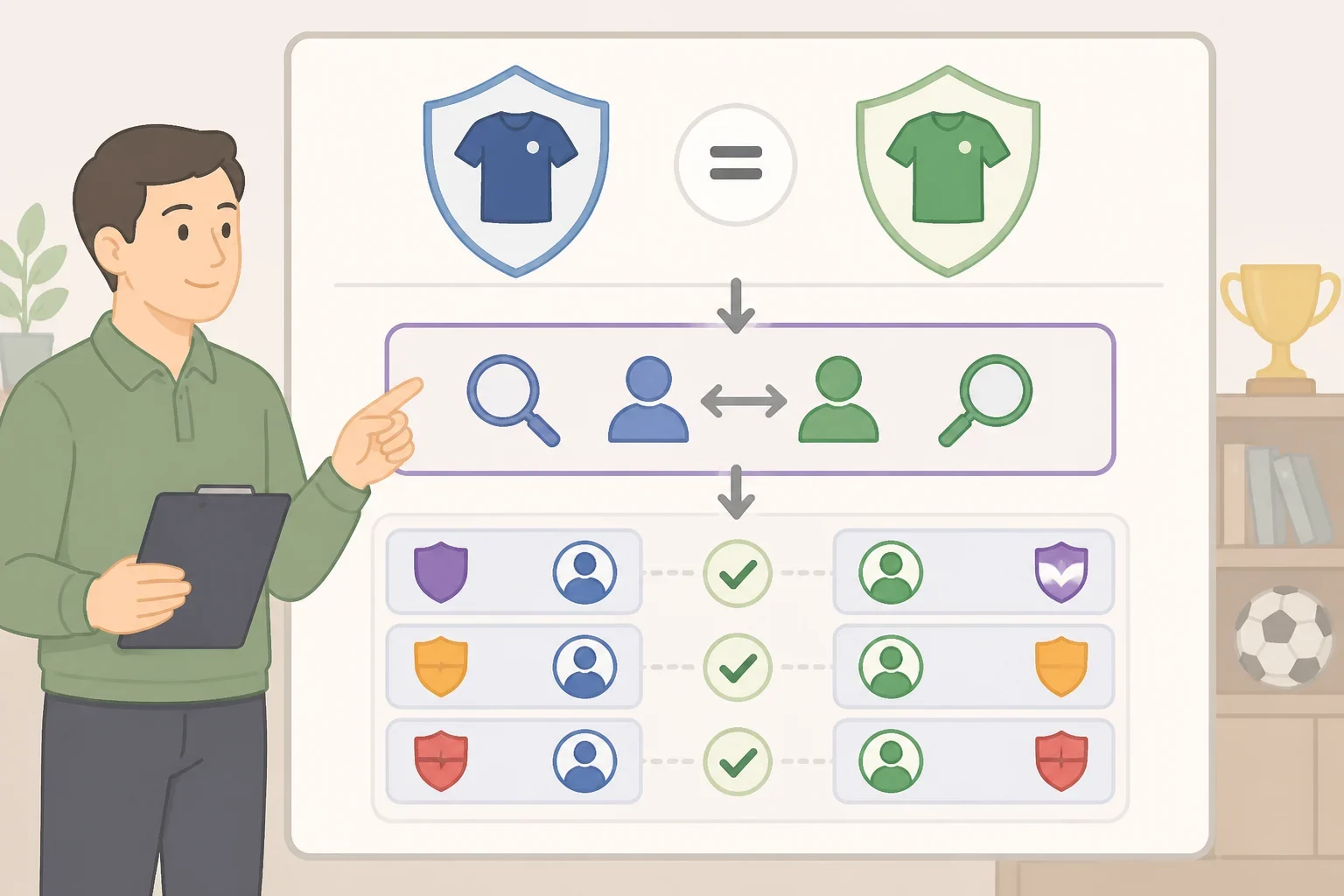
Once the league phase ends after Matchday 8, a tie surviving all five primary criteria moves to a second set of measures based on the tied clubs' opponents, per UEFA:
- Collective points earned by each tied club's league-phase opponents
- Those opponents' collective goal difference
- Goals scored collectively by those opponents
- Disciplinary points (three for a red card, one for a yellow, three for an expulsion for two yellow cards in one match, covering players and team officials)
- UEFA club coefficient
AS describes this full ten-criteria sequence as unlikely to be needed, since it only applies if every one of the first five measures ends in a complete deadlock.
What to remember
When two clubs share the same points, check goal difference first, then goals scored if the gap still isn't clear. Beyond that, confirm the current UEFA regulations for whichever season is underway, since league-phase rank can carry consequences well past qualification, as the 2025/26 season showed with its knockout-round seeding link.