
- NFL Forward Throwing Motion Rule: Fumble or Incomplete?
- NFL fumble vs. incomplete pass rule: what officials look for
- The Goff play, step by step
- A forward-traveling ball that still got ruled a fumble
- What an NFL replay review changes once it rules incomplete pass or fumble
- How to read the next strip-sack replay
NFL Forward Throwing Motion Rule: Fumble or Incomplete?
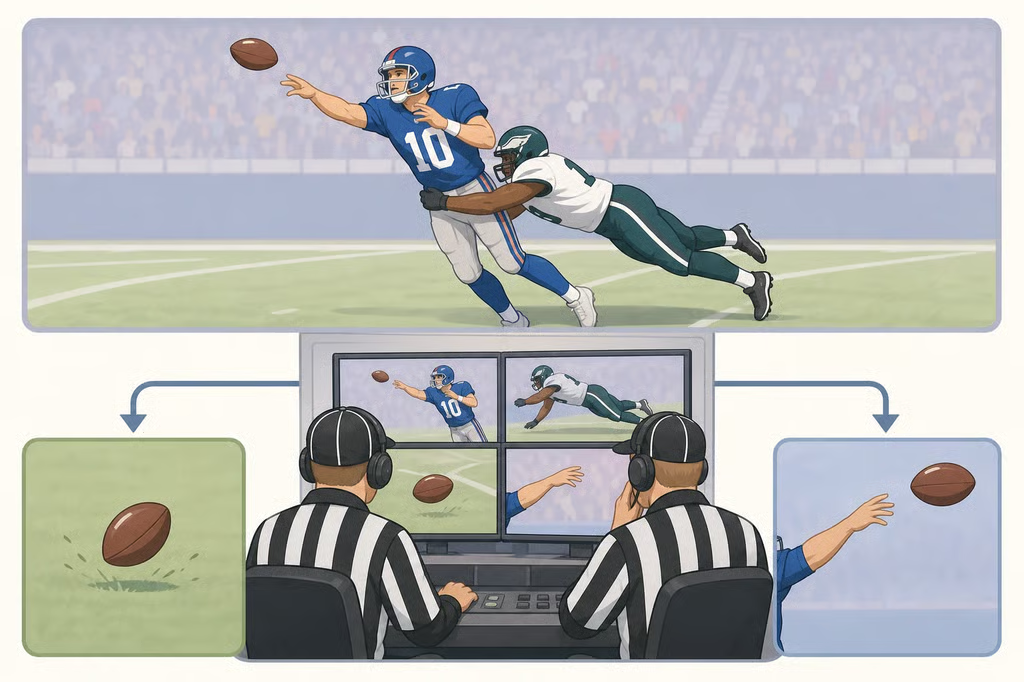
A defender can crush a quarterback, jar the ball loose, and watch it sail backward, and officials can still wave it off as an incomplete pass instead of a fumble. That happened last week when NFL replay officials reversed an apparent Chase Young strip-sack touchdown against quarterback Jared Goff, ruling that his lost ball counted as a pass rather than a turnover under what's often called the NFL forward throwing motion rule (NOLA.com, last week).
NFL vice president of instant replay Mark Butterworth explained the reversal in a pool-report interview after the game, saying the ruling came down to whether Goff had already started his throwing motion when Young hit him (NOLA.com, last week). The call carried extra weight because the game was tied at the end of regulation (NOLA.com, last week).
This explanation covers how NFL officials specifically make that call. Other levels of football, including college and high school leagues, aren't guaranteed to draw the line the same way.
NFL fumble vs. incomplete pass rule: what officials look for
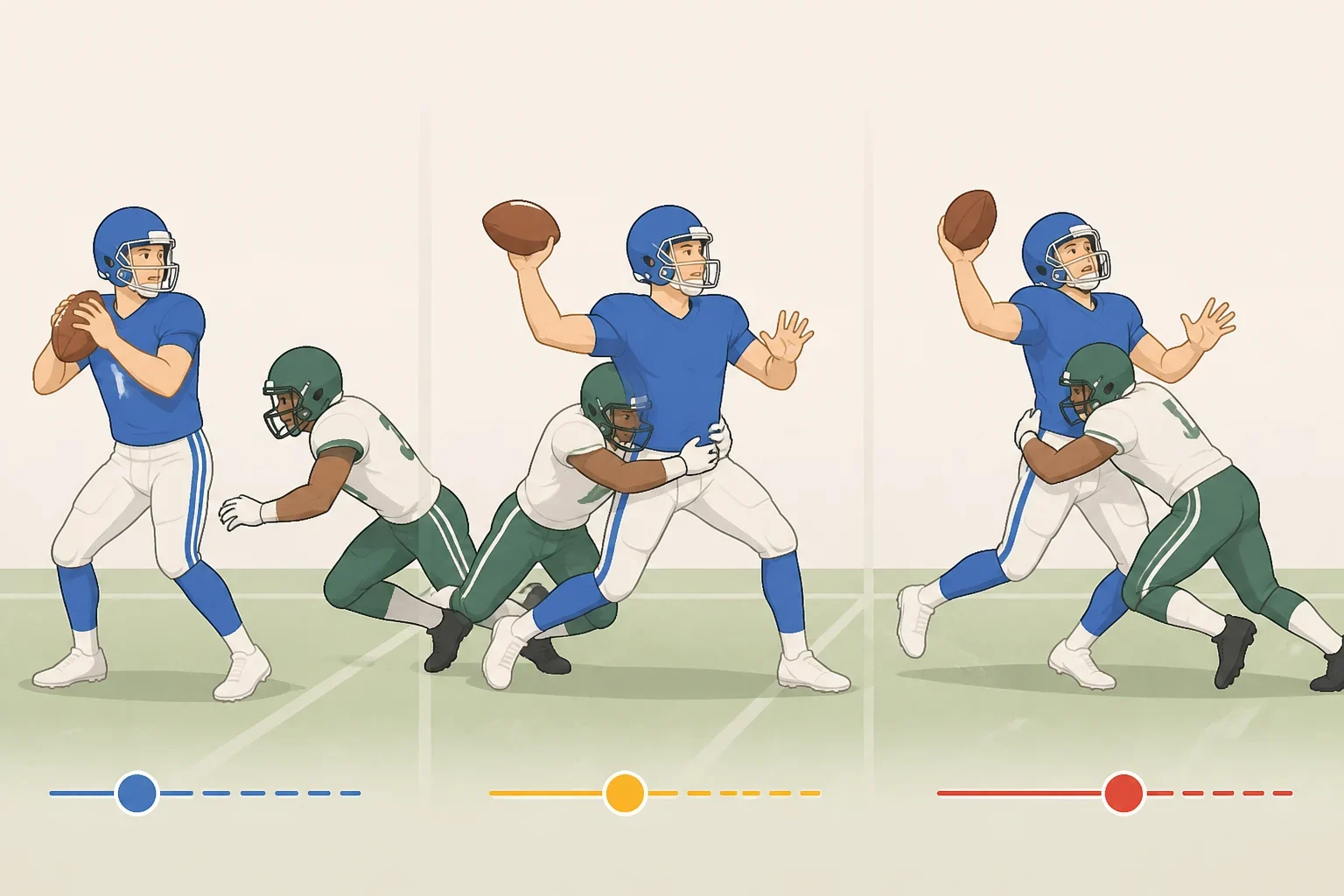
Butterworth drew a specific line for reporters. "If the defender contacts the passer prior to the passer starting his throwing motion, then it can be ruled as a backward pass. Because Goff already started his throwing motion and then the defender contacted him, it is therefore a forward pass," he said (NOLA.com, last week). He added, "the defender's contact made the pass go backwards," in a follow-up answer (NOLA.com, last week).
That explanation establishes two things clearly, with one edge case left open. Losing control of the ball before the throwing hand starts moving forward can turn the play into a fumble, an interpretation Football Zebras confirmed separately in its review of a similar hit on a different quarterback (Football Zebras). And because Goff was already in his throwing motion when Young made contact, officials ruled his play a forward pass rather than a fumble, even though the hit sent the ball backward instead of forward (NOLA.com, last week). What Butterworth didn't spell out is how the league would score a passer who keeps control into his motion but still gets hit hard enough to send the ball backward without it counting as this exact scenario; that distinction sits in the rulebook's own definition of a backward pass, separate from what Butterworth described.
Pinning down exactly when a throwing motion begins is the hard part, since that instant rarely stands out at full speed. Football Zebras reported, citing unnamed sources inside the league's officiating department, on a separate hit on Cowboys quarterback Dak Prescott, saying the standard isn't the moment the ball separates from the passer's hand but anything that shows the ball beginning to slip from his control (Football Zebras). Those same sources determined Prescott had already lost control before his hand started moving forward, the same timing question at the center of the Goff reversal (Football Zebras).
The Goff play, step by step
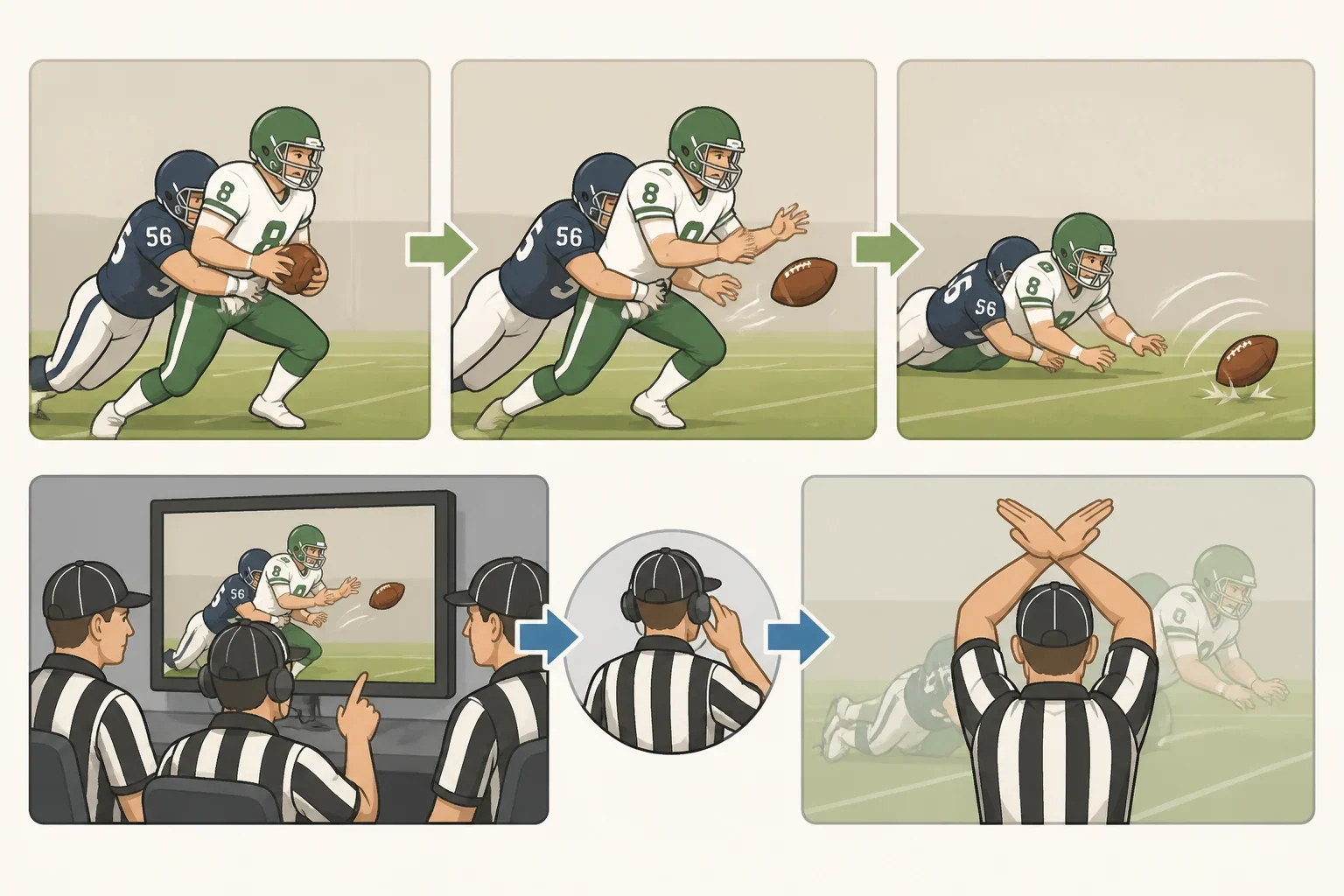
On the field, the sequence looked straightforward. Goff began his throwing motion, Young hit him, and the contact knocked the ball backward, where a defender scooped it up and appeared to score (NOLA.com, last week).
Replay changed the story. Officials determined Goff's arm had already started forward before Young made contact, so the play went into the books as a forward pass that fell incomplete, wiping out both the sack and the touchdown from the game record (NOLA.com, last week).
Saints coach Kellen Moore did not push against the decision once officials explained the rule to him on the field (NOLA.com, last week). Linebacker Kaden Elliss was more skeptical in the moment. "I'm sure that's how the rule is in the rule book," he said, before adding, "It is what it is, it's all right. To me, it looked a whole lot like a sack fumble" (NOLA.com, last week).
A forward-traveling ball that still got ruled a fumble
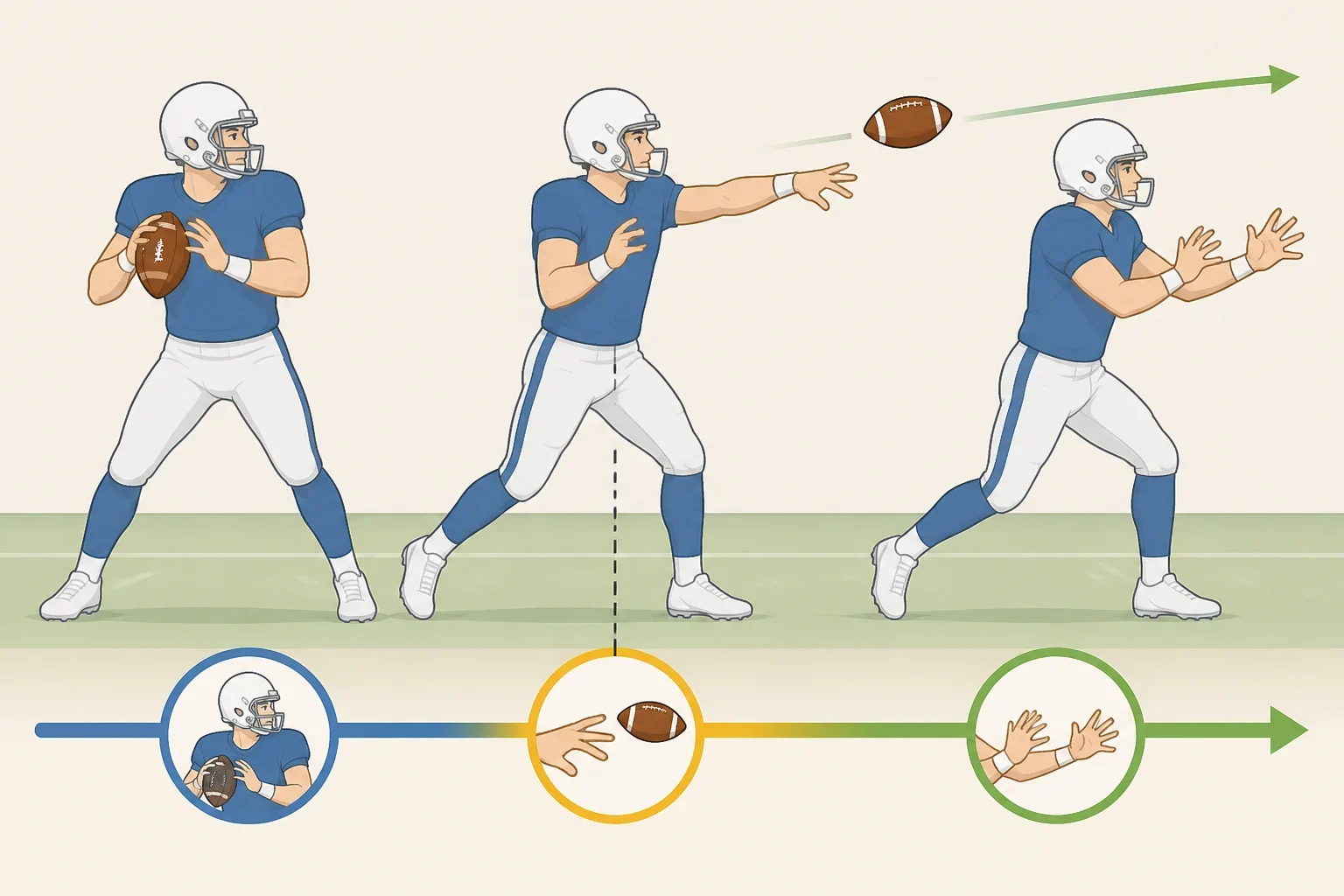
The Goff play doesn't mean a backward-flying ball always survives as a pass, and a forward-traveling ball isn't automatically safe either. Football Zebras documented a game in which a quarterback under heavy pressure was hit and the ball traveled forward, appearing to be caught by a defensive lineman, a sequence on-field officials initially scored as an incomplete pass (Football Zebras).
Replay reversed that call after review showed the quarterback had lost possession before his hand started moving forward, so the loose ball counted as a fumble despite traveling forward (Football Zebras). Because the ball had actually hit the ground before the defender caught it, replay treated the pickup as a legal recovery rather than a catch, and possession went to the defense (Football Zebras).
Line the two plays up and the pattern holds even though the outcomes look like opposites. Goff lost the ball backward but had it scored as a pass because he was still in control when his arm started forward. The quarterback in the Football Zebras case lost the ball forward but had it scored as a fumble because control was already gone before his arm moved. In both examples, the ruling turned on when control was lost relative to the forward motion, not simply on the ball's eventual direction.
What an NFL replay review changes once it rules incomplete pass or fumble
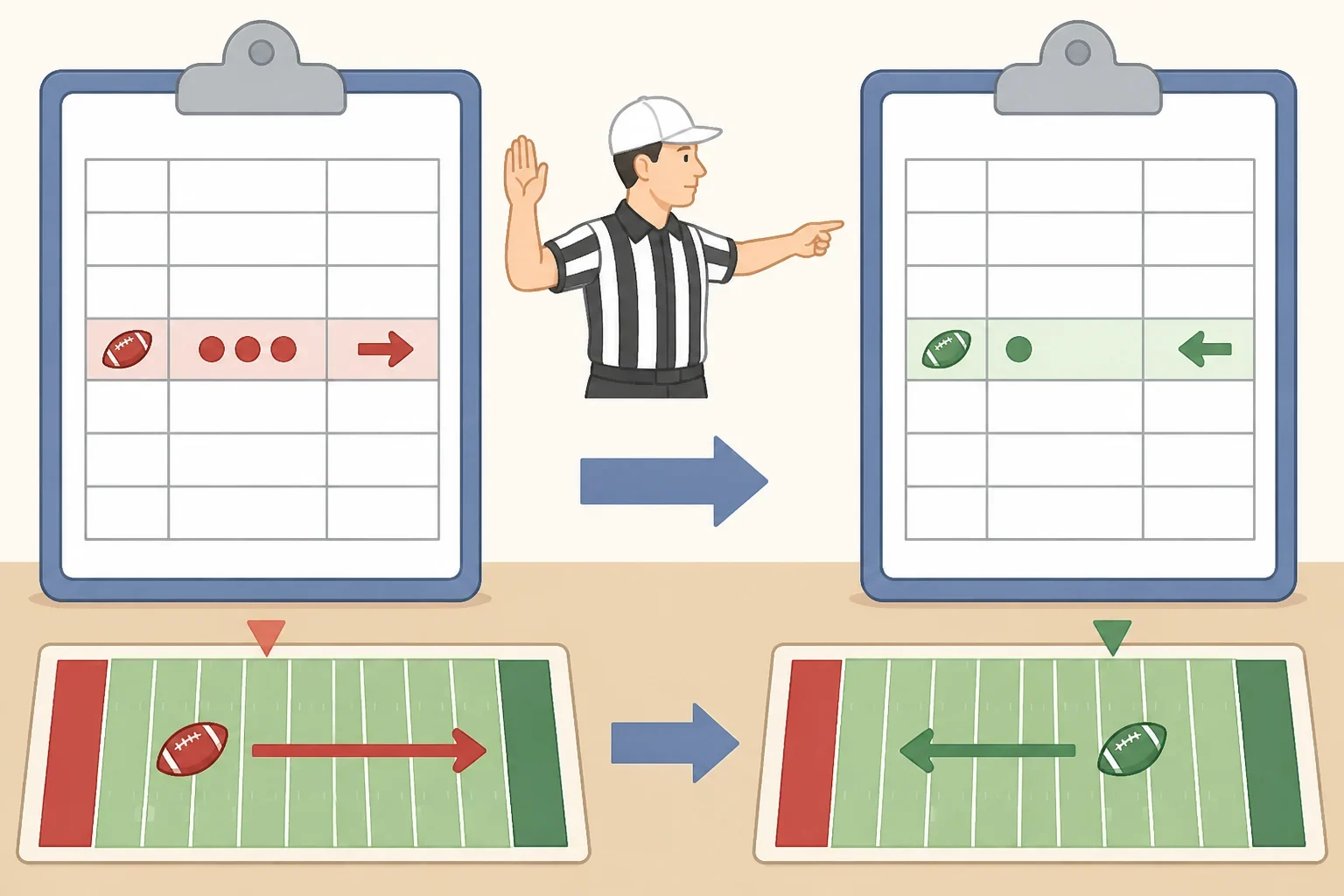
Because this timing is often visible only on frame-by-frame video, both plays above needed replay to get sorted out, and the review swung a different direction each time (NOLA.com, last week; Football Zebras).
Football Zebras' officiating analysis flags a limit on how far a routine review can go. As a general rule of thumb, if a replay official has to shuttle video back and forth to study a possession-versus-motion question, that work can fall outside the standard replay-assist system, requiring a coach's challenge instead, or a booth review if the play was originally ruled a safety (Football Zebras). That's Football Zebras' own read on officiating mechanics rather than a league statement, so treat it as informed analysis rather than settled procedure.
The classification also decides what happens to the ball and to the record book. Because officials ruled Goff's play an incomplete pass, both the sack and the touchdown were wiped from the game record (NOLA.com, last week). In the Football Zebras case, once replay reclassified the play as a fumble, the officials' original incomplete-pass ruling was overturned and the ball was awarded to the recovering defense (Football Zebras).
A forward-versus-backward ruling can also brush up against intentional grounding. NBC Sports reported a league clarification saying grounding shouldn't be called if the passer had already started his motion toward an eligible receiver and contact then knocked the throw off target, a separate rule with its own conditions that's worth knowing about but isn't part of the fumble-or-pass test itself (NBC Sports/Pro Football Talk).
How to read the next strip-sack replay
Direction alone isn't enough to settle a call like this. The question officials are actually asking is whether the passer still had the ball under control when his throwing hand started moving forward.
Goff's ball traveled backward but got scored as an incomplete pass because his arm was already moving forward before Young's hit changed its direction (NOLA.com, last week). The quarterback in the Football Zebras case lost his ball forward but had it scored as a fumble because he'd already lost control before his arm started moving (Football Zebras). Both rulings trace back to Butterworth's on-field explanation and Football Zebras' officiating analysis, not to any rule that automatically ties fumbles to forward-traveling balls.
That distinction is specific to how the NFL officiates these plays. Other levels of football aren't guaranteed to draw the line in the same place.