
- NBA Defensive Three-Second Rule Explained: Paint Rules
- Who this rule applies to
- What is the NBA defensive three-second rule?
- Five things that pause the three-second count
- The ballhandler exception, and what happens after a pass
- Walking through three possessions
- The NBA defensive three seconds penalty
- Don't confuse it with the offensive three-second rule
- What to remember next
NBA Defensive Three-Second Rule Explained: Paint Rules
A defender who parks in the lane for more than three seconds without guarding anyone is breaking one of basketball's more misunderstood rules. The NBA defensive three-second rule stops a defender from occupying the paint with no assignment, but it does not ban rim protection outright, per the NBA Official Playing Rules. Once you know what the rule actually requires, a stalled possession near the basket starts to make a lot more sense.
This guide covers what counts as "actively guarding," the exceptions that let defenders linger near the rim legally, and what happens when a violation gets called.
Who this rule applies to
Defensive three seconds is part of the NBA's official playing rules. FIBA does not use a defensive three-second violation at all, according to Wikipedia, so readers comparing an NBA broadcast to international or FIBA-rule basketball shouldn't assume the paint rules match up.
What is the NBA defensive three-second rule?
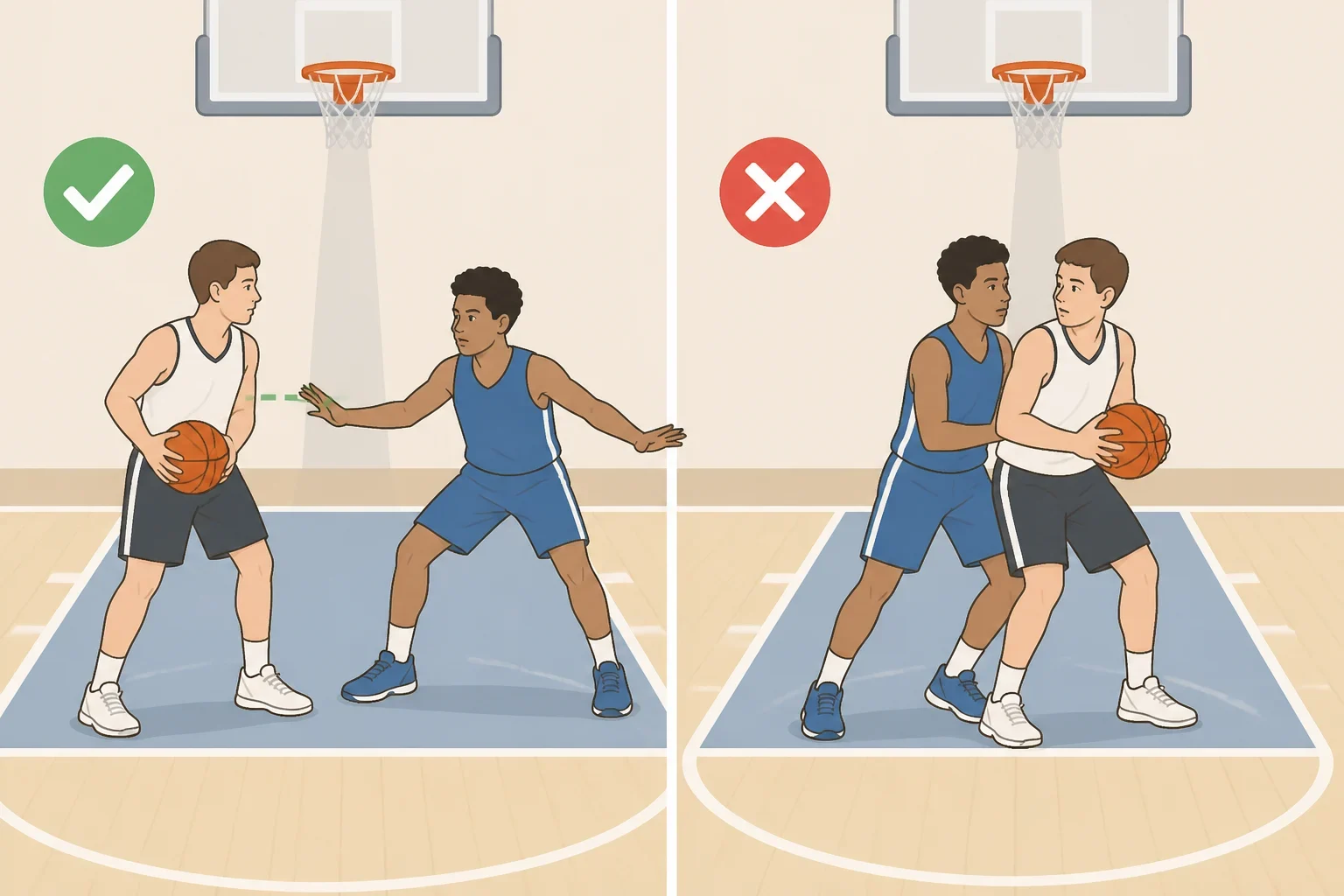
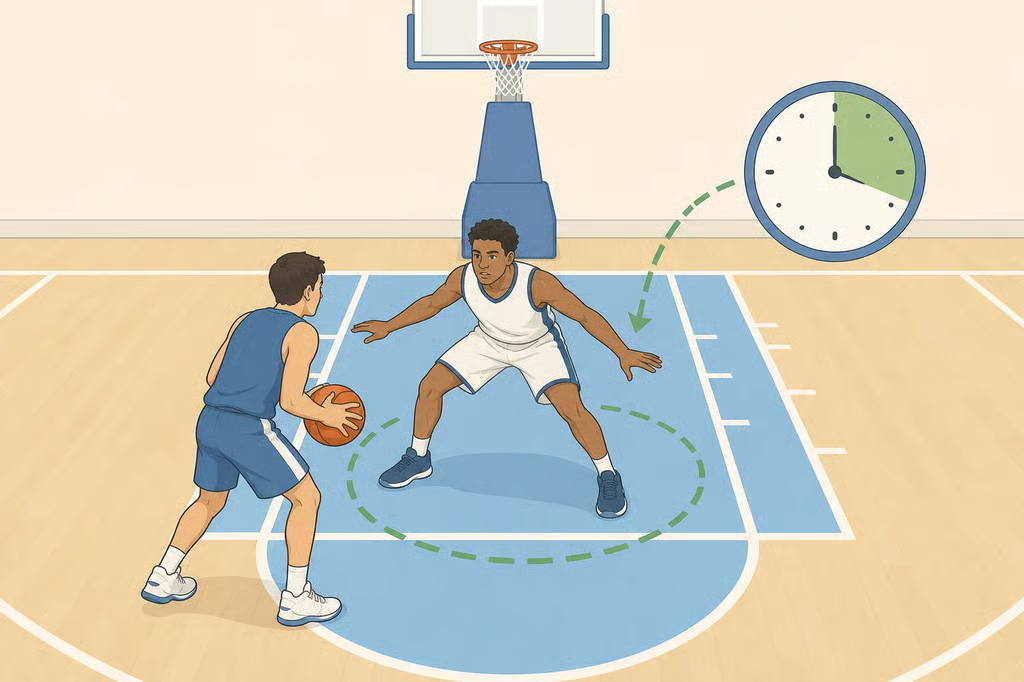
Once the offensive team controls the ball in the frontcourt, a defender standing in the 16-foot lane or the four-foot area beyond the lane's end line has three seconds to actively guard an opponent or leave that space, per the NBA Official Playing Rules. "Actively guarding" has a specific definition built into the rule: the defender must be within arm's length of an offensive player and in a guarding position.
That standard applies no matter which offensive player a defender picks up, and the rulebook explicitly permits double-teaming. Help defense and switching aren't restricted by this rule. Only an unassigned defender standing in the lane is.
The NBA added this rule before the 2001-02 season, the same stretch in which it lifted its earlier ban on zone defenses, according to Wikipedia. The two changes landed together: zone concepts became legal, and the defensive three-second rule set a limit on how long an unassigned defender could sit in the paint.
Five things that pause the three-second count
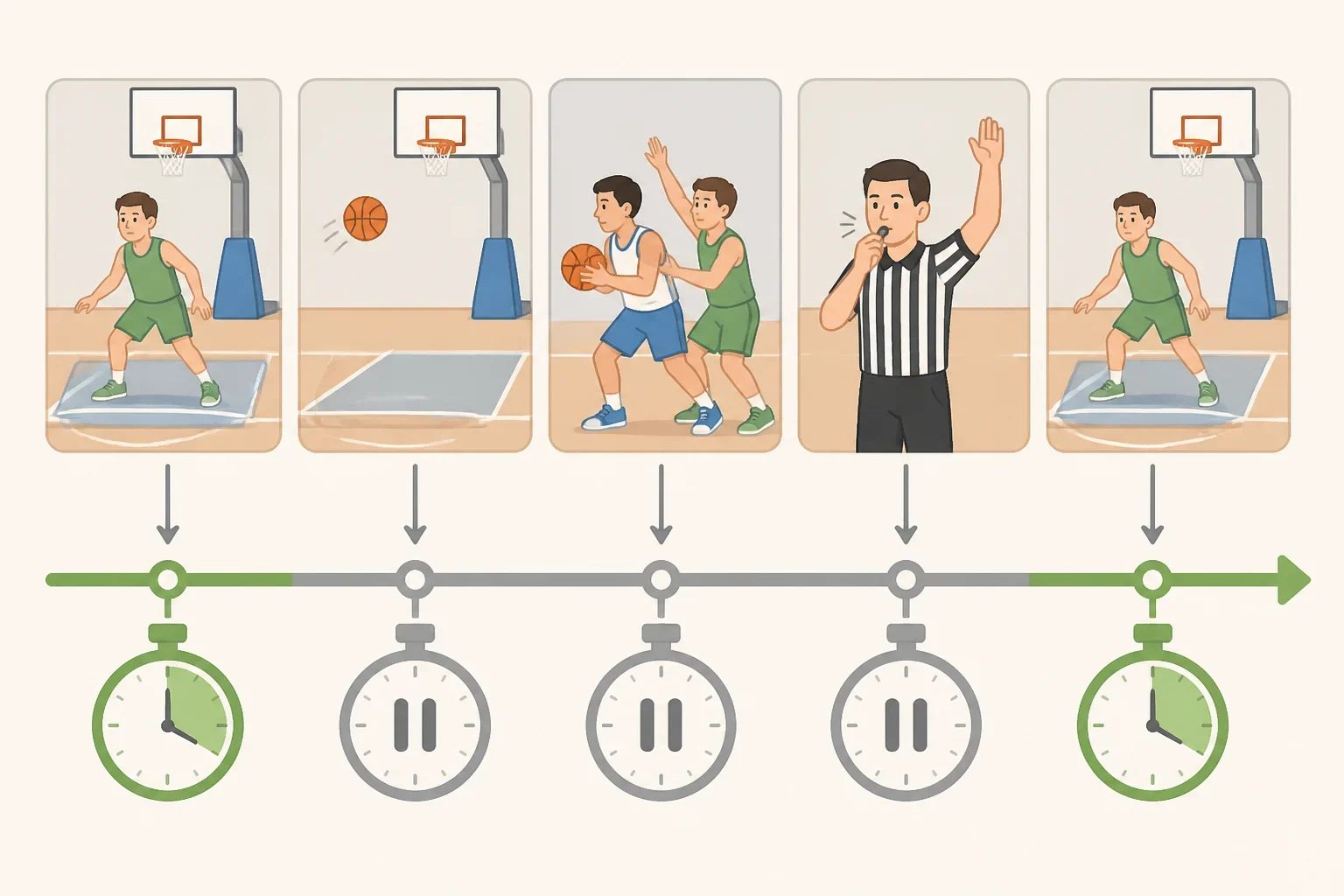
The count doesn't run nonstop the moment a defender steps into the lane. It's suspended whenever any of these conditions apply, per the NBA Official Playing Rules:
- An offensive player is in the act of shooting.
- The offense loses control of the ball.
- The defender is actively guarding an opponent.
- The defender completely clears the 16-foot lane.
- It's imminent that the defender's position is about to become legal.
The last two conditions handle most of the borderline cases referees have to judge in real time. A defender sprinting toward the lane's edge, or one step away from picking up a cutter, often satisfies "imminent" before the count ever reaches three seconds.
The ballhandler exception, and what happens after a pass
A defender guarding the player with the ball can stand in the lane without meeting the arm's-length, guarding-position standard that applies everywhere else, per the NBA Official Playing Rules. That's why a help defender can sag into the paint while shadowing a point guard probing near the free-throw line without drawing a whistle.
That exception has a limit. If another defender steps up to actively guard the ballhandler, the original defender loses the exception and must either pick up a different opponent or exit the lane, per the same rulebook section.
The exception also ends the moment the ball gets passed. The defender must actively guard an opponent or exit the lane.
Walking through three possessions
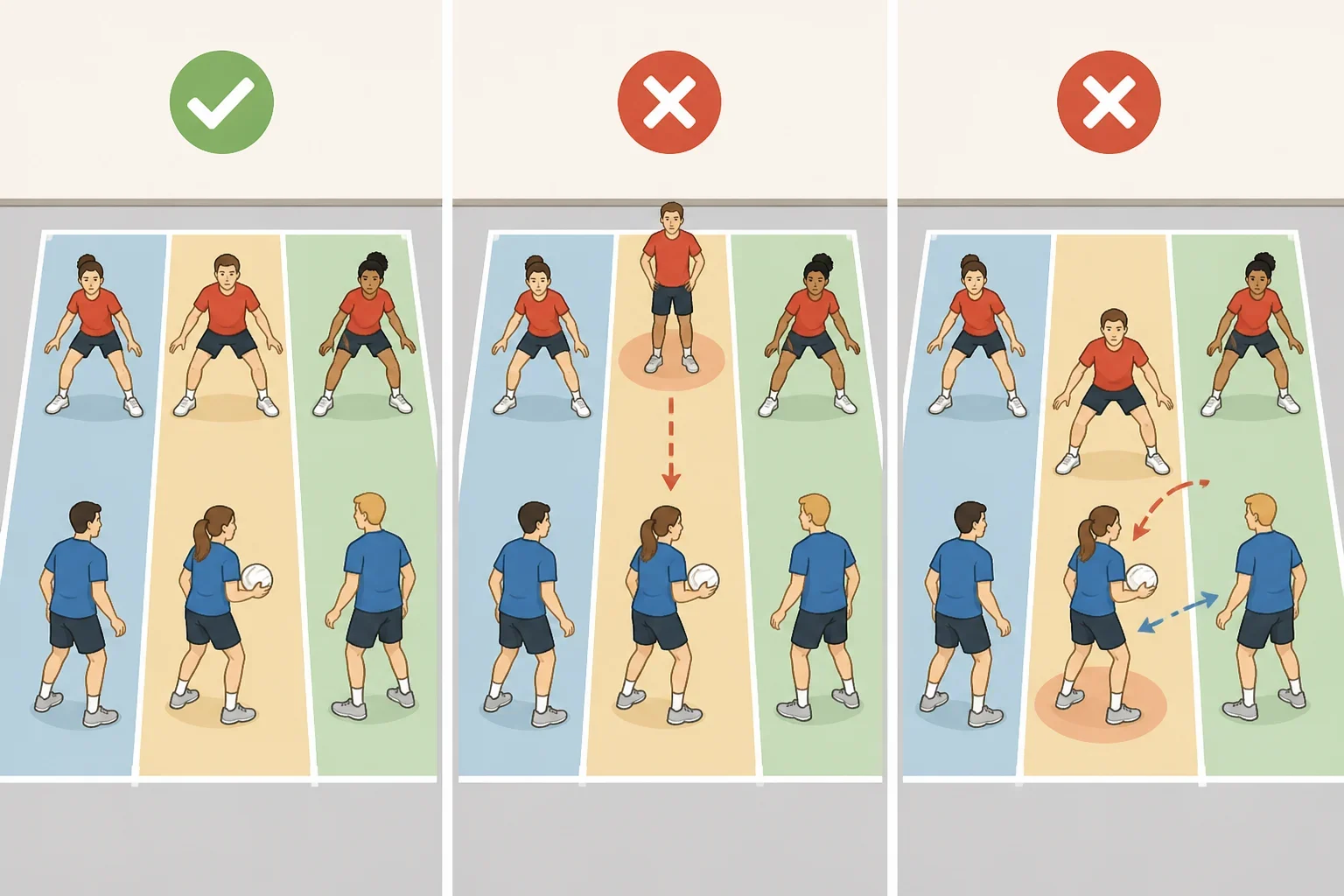
Picture a center standing in the 16-foot lane, square to a power forward, within arm's length and in a guarding position. That's legal no matter how long the possession runs, because the center is actively guarding an opponent the entire time.
Now picture a different center in that same lane with no one to guard while the ball swings from wing to wing. The moment the offense gains control of the ball in the frontcourt, a three-second count starts. If he hasn't picked up an opponent, isn't guarding the ballhandler, and hasn't started clearing the lane by the time three seconds pass, it's a violation.
A third scenario shows the ballhandler exception at work. A help defender sags into the lane to shadow a guard driving the baseline, which is legal without meeting the arm's-length standard. If a teammate switches onto that guard first, the help defender has to immediately pick up another opponent or get out of the lane. Standing still at that point is a violation waiting to happen.
Timing the count itself is straightforward. Deciding whether a defender is "actively guarding" an opponent, or whether a legal position is "imminent," is the harder part for officials, since those judgments hinge on distance and body position rather than a number ticking down.
That judgment call is part of why some borderline cases go uncalled. The NBA's Last Two Minute Reports review officiating in games that were within three points at any point during the final two minutes of the fourth quarter and overtime. Those reports note that plays "only observable with the help of a stopwatch, zoom or other technical support" get documented but generally aren't counted as incorrectly officiated, and the league notes it may revise that view after further review.
The NBA defensive three seconds penalty
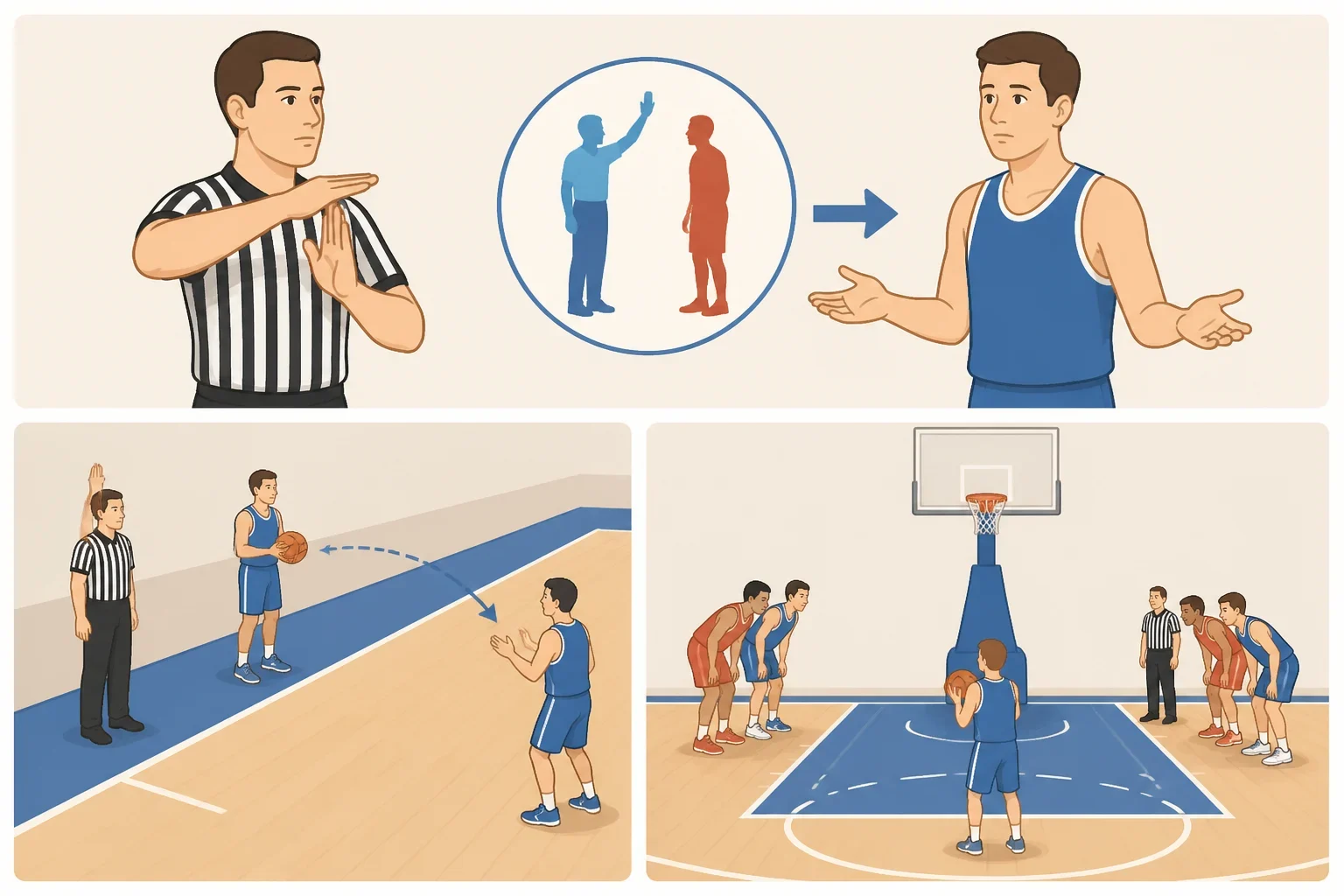
A defensive three-second violation results in a team technical foul, not a turnover, per the NBA Official Playing Rules. The offense retains possession and inbounds the ball at the sideline nearest the free-throw line extended.
The penalty also includes one free throw for the offense, according to Wikipedia. The shot clock stays at whatever time remained when the violation occurred, or resets to 14 seconds, whichever gives the offense more time, per the NBA Official Playing Rules.
If the violation happens during a possession that ends in a made field goal, the rulebook is specific: the violation is ignored, and play resumes as after a successful field goal. The made shot counts regardless.
Don't confuse it with the offensive three-second rule
Basketball has had a three-second rule for offensive players since 1936, decades before the NBA introduced a defensive version, according to Wikipedia. That older rule bars an offensive player from standing in the opponent's lane for more than three consecutive seconds while their team controls a live ball in the frontcourt with the clock running.
The NBA's defensive version arrived before the 2001-02 season and solves the opposite problem: not offensive players parking near the basket, but defenders doing the same without anyone to guard. If a broadcast mentions "three seconds" without specifying which kind, the direction of the call, offense or defense, tells you which rule is in play.
What to remember next
A defender can legally stay in the paint by actively guarding an opponent within arm's length, guarding the ballhandler as long as no other defender takes over that assignment, or clearing the lane before the count runs out. Next time a possession stalls near the basket, check whoever is standing closest to the rim: are they within arm's length of an actual opponent, guarding whoever holds the ball, or already stepping toward the lane's edge?