
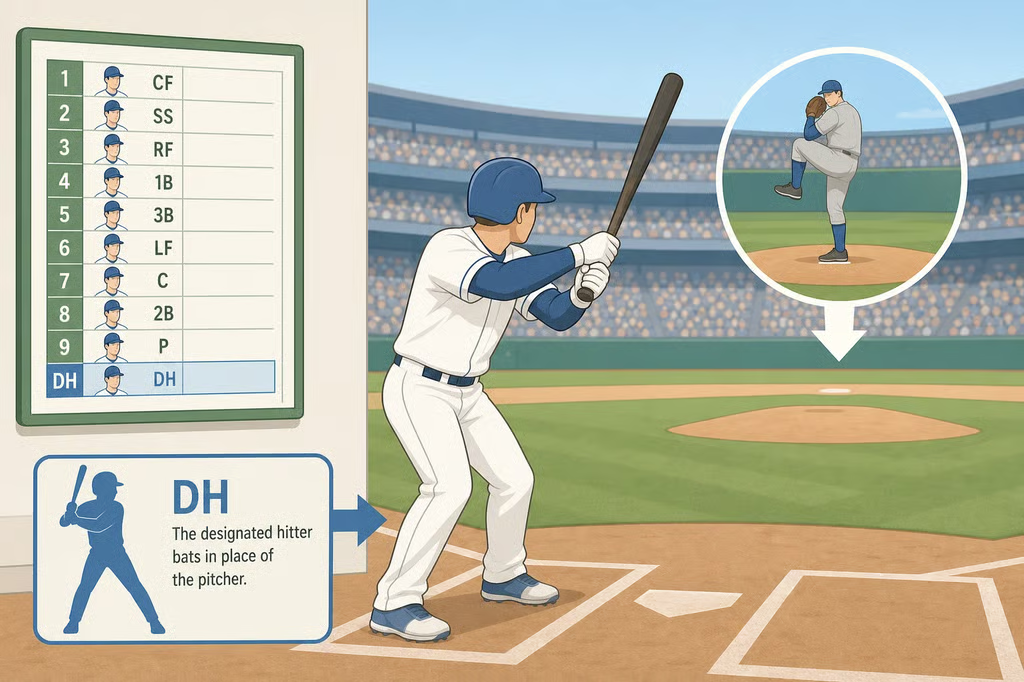
Does the World Series Use a Designated Hitter? Explained
Yes. MLB allows a designated hitter in every World Series game, and both teams may use one no matter which ballpark is hosting. A club can still choose to forgo the DH before first pitch, a decision each team makes on its own before every game. That pregame choice is the main variable left in a rule that used to be far more complicated.
The National League adopted the DH permanently in 2022, after using it for the first time during the pandemic-shortened 2020 season (SABR, 2023). For decades before that, World Series DH rules shifted depending on the year or which city was hosting a given game (Wikipedia, 2026).
What is the World Series DH rule?
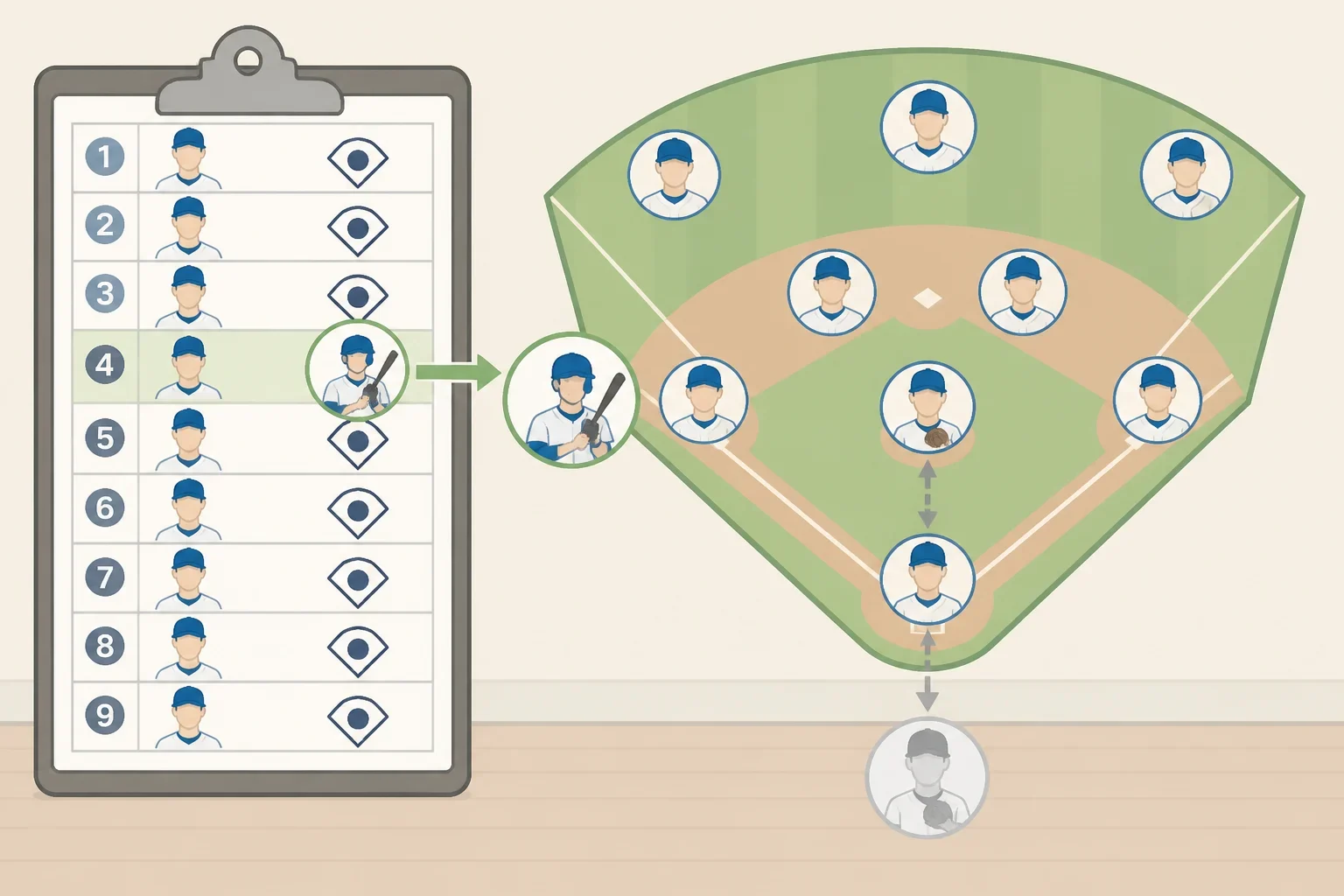
Under MLB's current Official Baseball Rules, Rule 5.11, a club may name a designated hitter to bat for the starting pitcher and for every pitcher who follows him, for the rest of that game (SportRules, 2026). The DH can't bat for any other position player, only for whoever is pitching at the time.
The DH normally doesn't play a defensive position; the role exists to replace the pitcher's turn at bat, not to add an extra fielder. A club can move its DH onto the field and keep that player hitting in the same batting-order spot, but doing so can end the DH role for the rest of the game even though the player stays in the lineup (SportRules, 2026).
Using a DH is optional, but a team has to decide before the game starts. The DH must be named on the lineup card handed to the umpire, and a club that does not identify a DH before the game cannot add one later (SportRules, 2026). If a team begins without a DH, the pitcher's spot in the order is handled through pitchers or pinch hitters for the rest of the game (Wikipedia, 2026).
Since 2022, both leagues have operated under the universal-DH rule, meaning World Series clubs no longer switch batting rules depending on whose home park is hosting, though a club can still decline to use a DH for any given game (MLB press release, 2022).
What a World Series lineup card looks like
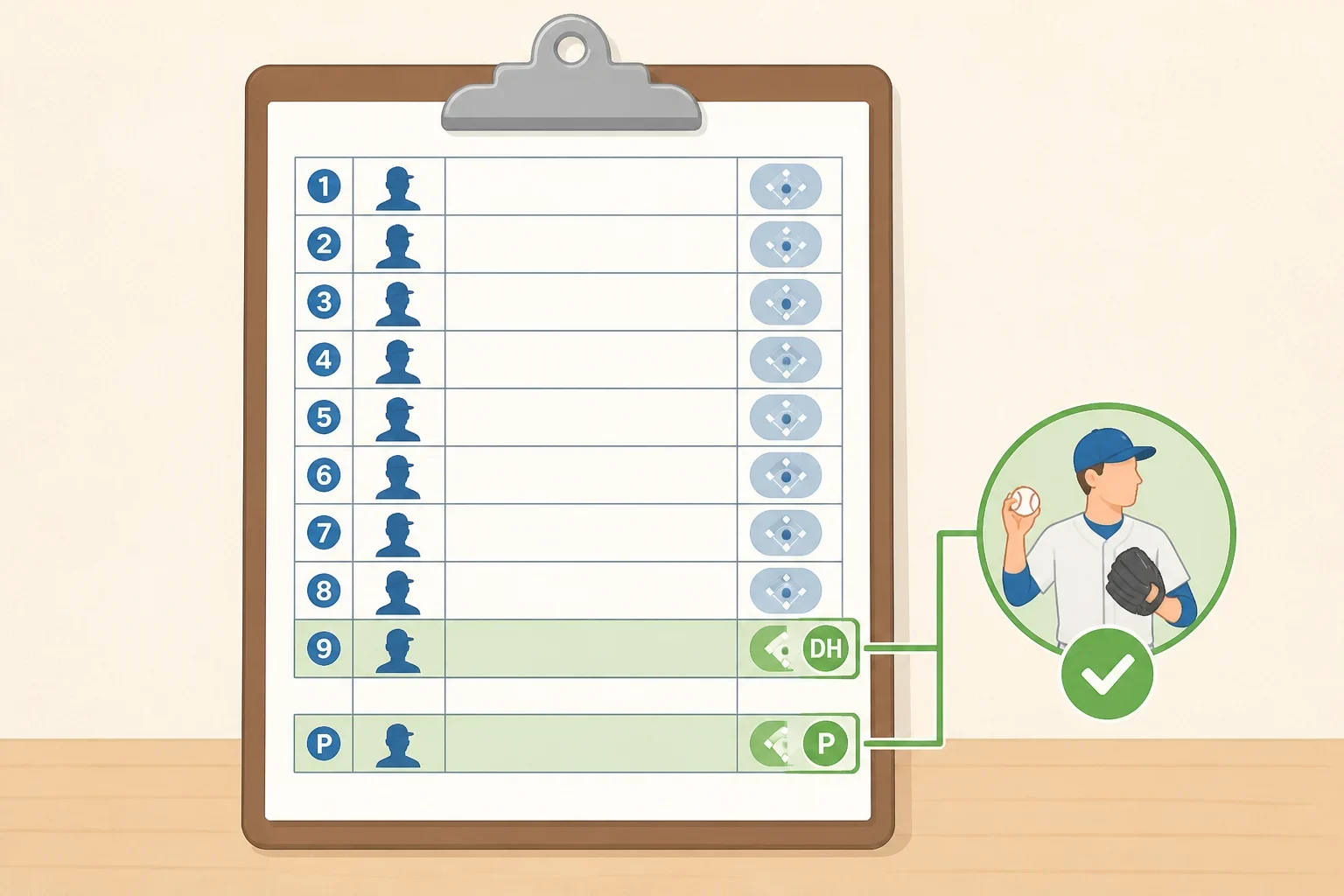
A standard lineup card with a DH lists ten names total: nine defensive players, including the pitcher, plus a designated hitter who occupies one of the nine spots in the batting order without playing the field (SportRules, 2026). The batting order itself only has nine spots, and the DH takes the one that would otherwise belong to the pitcher:
- Catcher
- First base
- Second base
- Third base
- Shortstop
- Left field
- Center field
- Right field
- Designated hitter
The pitcher still appears on the card as the ninth defensive player; he just isn't part of the batting order.
A two-way starter changes that card in one specific way. If a team wants its starting pitcher to also bat for himself, the manager lists that player twice, once as starting pitcher and once as DH, and Rule 5.11(b) then treats him as two separate roles rather than one (MLB press release, 2022).
Splitting the role that way gives the manager flexibility later in the game. If the player is pulled as pitcher, he keeps batting as the DH; if he's replaced as DH, he keeps pitching but can no longer bat for himself (MLB press release, 2022). That flexibility only applies to the player named twice on the original lineup card; a different player can't be subbed in later to recreate the arrangement once it ends (MLB press release, 2022).
Does the pitcher bat in the World Series?
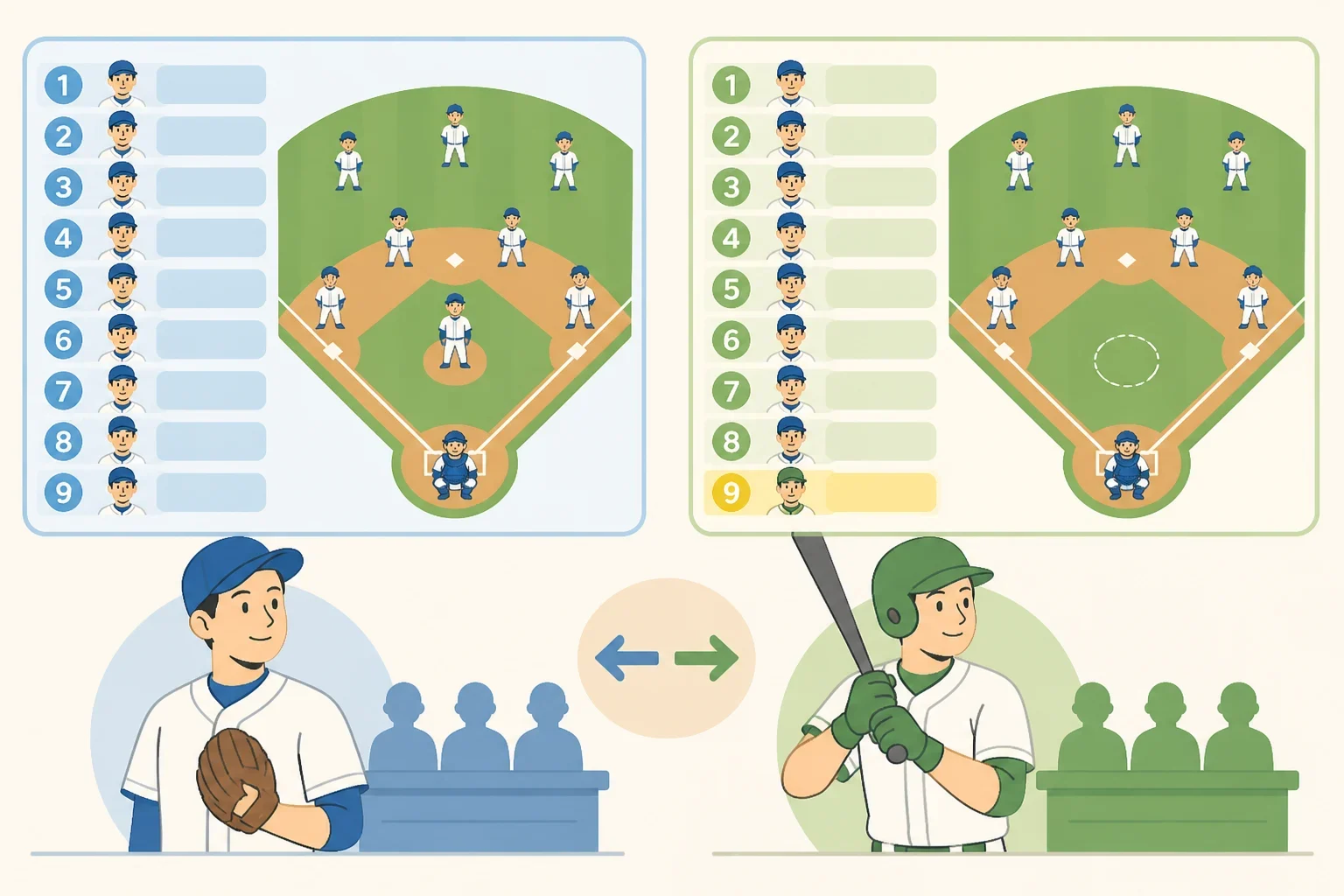
A pitcher can appear in the batting order in two different ways, and it helps to keep them separate. One is declining the DH entirely: a club can start a World Series game without naming one, in which case its pitchers bat all game. Before the 2022 universal rule, National League pitchers generally batted this way, with one exception: the pandemic-affected 2020 season, when the NL used the DH for the first time (SABR, 2023).
The other path is the two-way arrangement described above, where a team's starting pitcher is listed as both pitcher and DH. In that setup the pitcher does bat, but the club hasn't skipped the DH rule; it's using the specific provision that lets one player hold both roles at once. To a viewer, both scenarios show the pitcher batting, but they're governed by different parts of the rule and carry different consequences for substitutions later in the game.
Why World Series DH rules used to be so confusing
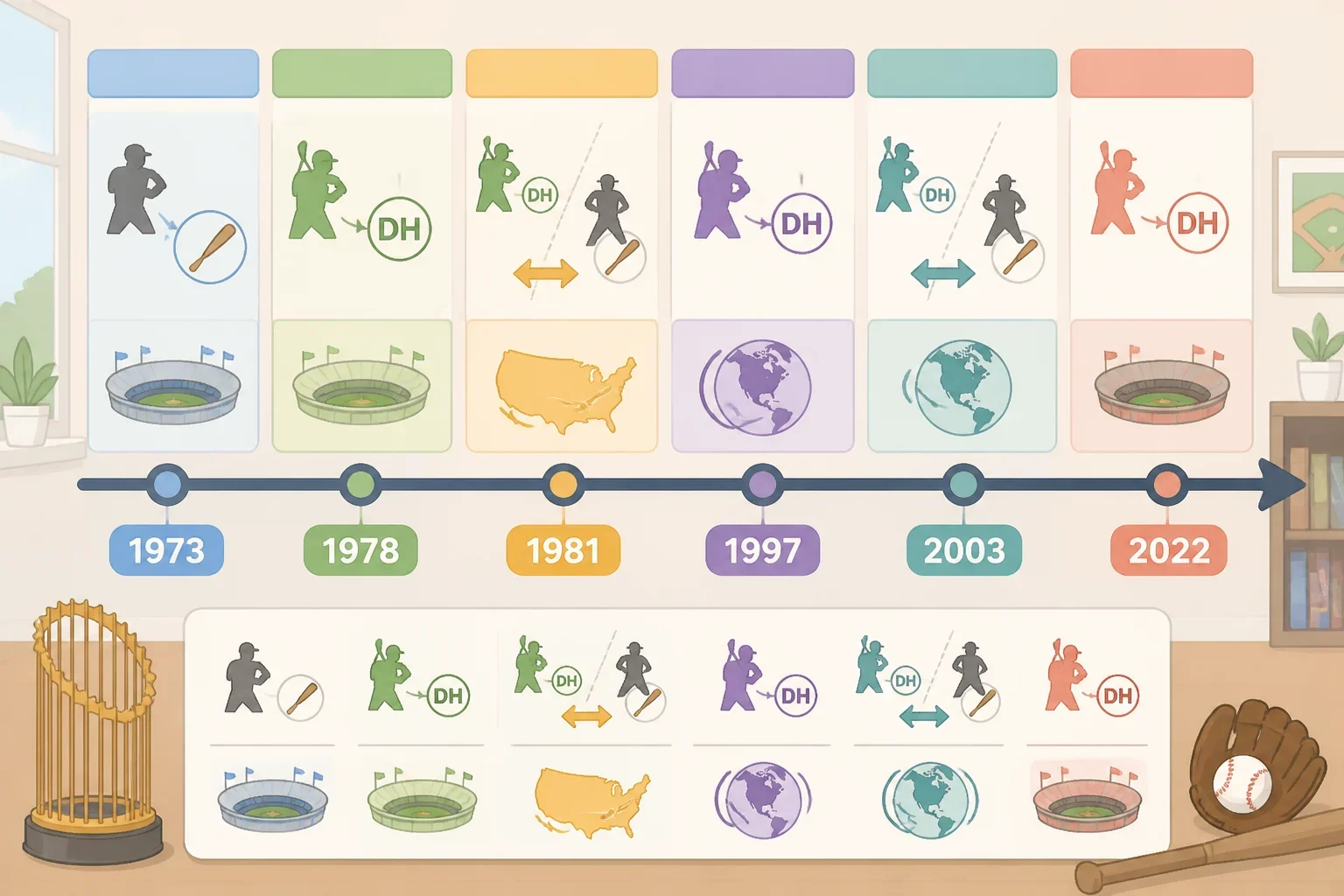
The DH didn't reach the World Series the moment the American League adopted it in 1973. From 1973 through 1975, the Series was played entirely under National League rules, meaning no DH and pitchers batting in every game (Wikipedia, 2026).
Starting in 1976, the DH began alternating by year, used in even years and dropped in odd years, a format that lasted a decade (Wikipedia, 2026). SABR's historical overview of the DH's first 50 years confirms this is when the rule first spread from regular American League play into the World Series itself (SABR, 2023).
Then in 1986, the rule shifted again: the DH was used only in World Series games played at the American League club's home park, so a single Series could run under two different sets of batting rules depending on the city (Wikipedia, 2026). An older edition of the Official Baseball Rules spelled this out directly, stating the DH would be "used or not used as is the practice of the league of the home team," language that only made sense while the two leagues played under different rules (Official Baseball Rules 5.00, 2023).
That clause disappeared once the National League adopted the DH. The rule took effect as part of the 2022 collective bargaining agreement between MLB and the players' union, and the host city has stopped determining whether a pitcher bats ever since; the question now just comes down to which lineup option a club chooses before the game (MLB press release, 2022).
What to remember next
When a World Series lineup card is posted, check one thing: whether the team lists a separate designated hitter or names its starting pitcher twice, once as pitcher and once as DH (MLB press release, 2022). Either way, the card already answers whether that pitcher will stand in the batter's box, and the rule no longer depends on which city is hosting.
For the exact current wording, check MLB's Official Baseball Rules, Rule 5.11 (SportRules, 2026), not older rulebook language built around the pre-2022 split between AL and NL ballparks that still circulates online.