
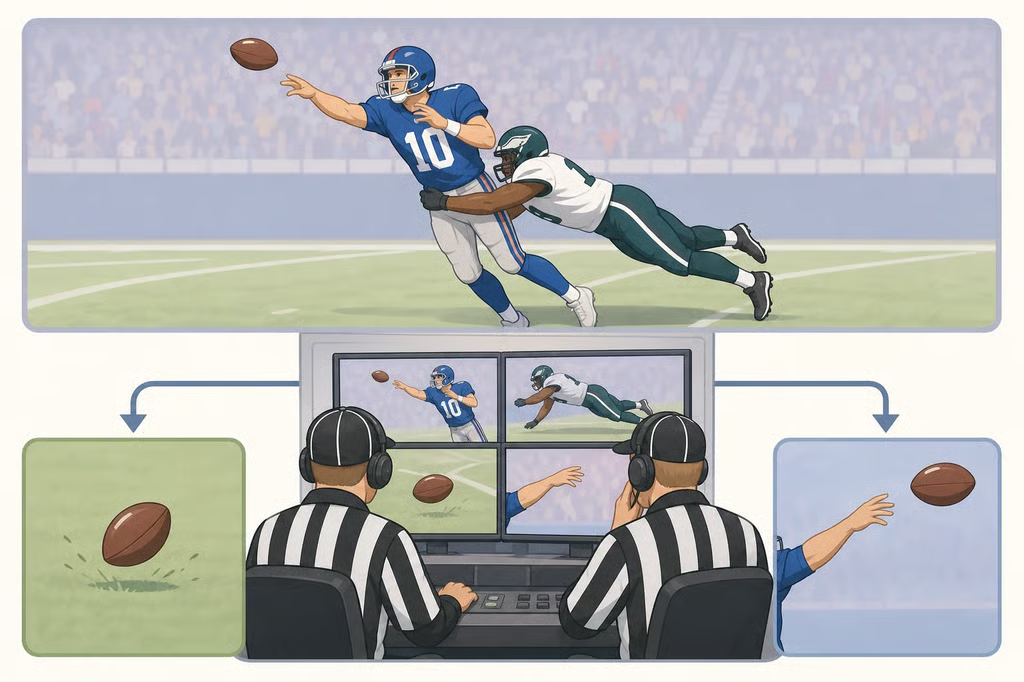
A quarterback gets hit as he throws, the ball flies backward and a defender scoops it up. It looks like a fumble. Under NFL rules, however, it can still be an incomplete forward pass.
That distinction drew attention on Sept. 13, 2026, when New Orleans Saints defensive end Chase Young knocked the ball loose from Detroit Lions quarterback Jared Goff. Saints safety Jonas Sanker recovered it and returned it for an apparent touchdown, but replay overturned the play and ruled the ball an incomplete forward pass.
NFL Vice President of Instant Replay Mark Butterworth explained in a postgame PFWA pool report that the timing of Young's contact was the key. Officials determined Goff had begun his throwing motion before Young hit him. The contact sent the ball backward, but it did not turn the play into a fumble.
The play illustrates why the direction of a loose ball is only part of the NFL's pass-or-fumble determination. Officials also have to consider whether the quarterback controlled the ball, where he was in his throwing motion and when the defender made contact.
When a loose ball is a pass or fumble
Under the 2026 NFL rulebook, a forward pass begins when a player who controls the ball and is trying to pass it forward intentionally moves his hand forward.
Defensive contact can complicate that sequence. If a defender materially affects the passer after the throwing motion has begun and the passer releases the ball, the play can remain a forward pass regardless of where the affected ball ultimately goes.
That is why a ball traveling backward after a quarterback is hit is not automatically a fumble.
The situation changes if the defender makes contact before the passer begins his throwing motion. In that case, the quarterback remains responsible for the direction of the ball if he releases it. If he loses control before beginning the qualifying forward motion, officials can instead rule the loose ball a fumble.
There are also circumstances in which the quarterback can start moving his hand forward and still fumble. If he begins bringing the ball back toward his body after the forward movement and then loses possession, the NFL treats the loss as a fumble. The same applies if he loses possession while re-cocking his arm to attempt another throw.
So the familiar shorthand that a quarterback's "arm was going forward" does not resolve every play. Control of the football and the exact point in the throwing sequence both matter.
Why Goff's backward pass was ruled incomplete
The Goff play came with 9:34 remaining in the second quarter. Detroit faced third-and-16 from its own 32-yard line when Young reached Goff as he tried to pass.
Young's hit knocked the ball backward, Sanker picked it up and ran into the end zone. On the field, the sequence looked much like a strip-sack and defensive touchdown.
Replay produced a different result because officials determined Goff had already begun his throwing motion when Young made contact. Butterworth said that motion had started as Goff brought the ball up during his windup. Young's hit then altered the direction of the attempted pass.
Because the contact came after the throwing motion had begun, officials treated the ball as a forward pass rather than a fumble. When it hit the ground without being caught, the result was an incompletion.
The important point is not that Goff's ball happened to travel backward. It is that the defender's contact changed its path after officials determined the passing motion had already started.
How a forward-moving ball can still be a fumble
The opposite result is possible, too. A loose ball can travel forward and still be a fumble if the quarterback loses control before beginning the qualifying forward hand movement.
A 2024 play involving Dallas Cowboys quarterback Dak Prescott provides a useful example. Football Zebras reported, citing sources in the NFL officiating department, that Prescott was already beginning to lose his grip before his hand moved forward. On that interpretation, the ball's subsequent forward movement did not make the play a forward pass.
The example reinforces the distinction between the ball's path and the quarterback's possession. A football moving toward the opponent's goal line may look like a pass, but if possession was already being lost before the passing motion began, officials can rule it a fumble.
The Goff and Prescott plays therefore look like opposites but turn on the same basic issue: when the quarterback lost or retained control relative to his throwing motion.
How replay can change a pass-fumble ruling
Pass-or-fumble decisions are reviewable under NFL replay rules. Slow-motion video can help officials determine whether the passer still controlled the ball as his hand began moving forward or whether he had already started losing possession.
A ruling of incomplete pass can be changed to a fumble when replay provides clear evidence that possession was lost first. If another player clearly recovers the loose ball during the immediate continuing action, that recovery can be recognized as part of the corrected ruling.
Replay can also reverse a fumble call. If video shows the quarterback retained control into the qualifying throwing motion and defender contact then materially altered the attempted pass, officials can change the ruling to an incomplete forward pass.
That is one reason defenders are coached to continue after a loose ball rather than assuming an incomplete-pass signal will necessarily end the matter. A clear recovery can become important if replay changes the original ruling.
How to read the next strip-sack replay
When a quarterback is hit while attempting to throw, start with possession and timing rather than simply watching where the football goes.
First, did the quarterback still control the ball when his throwing motion began? Next, did the defender make contact before or after that motion started? Finally, had the quarterback already begun bringing the ball back toward his body or re-cocking his arm when possession was lost?
If the quarterback loses control before the qualifying throwing motion begins, the play can be a fumble. If defender contact materially alters a pass after the throwing motion has started, the NFL can still treat it as a forward pass even when the ball travels backward. If the passer begins pulling the ball back or re-cocking his arm and then loses it, the result is a fumble.
The football's direction may be the first thing viewers notice, but it is not the deciding factor by itself. On these close strip-sack plays, possession, throwing motion and the timing of contact determine whether the offense gets an incompletion or the ball remains live as a fumble.
These standards apply to the NFL. College and high school rulebooks can use different language and procedures, so a similar-looking play at another level is not guaranteed to receive the same ruling.