
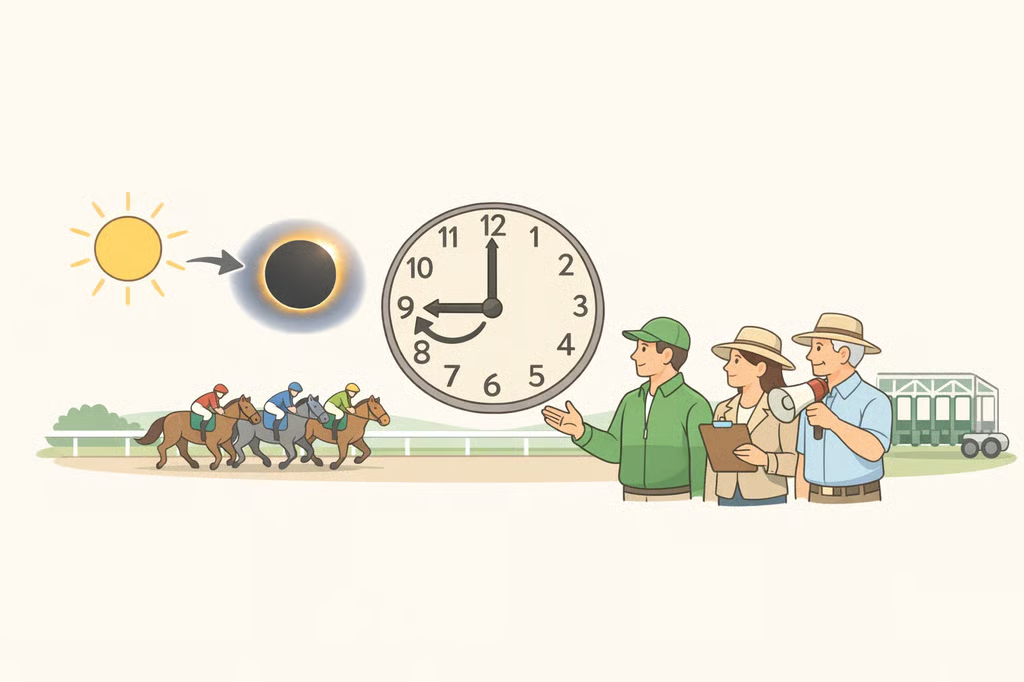
- Solar Eclipse Disrupts Sporting Events: Ffos Las Adjusts
- Ffos Las racing solar eclipse schedule change
- Kempton and The Hundred: solar eclipse horse racing and cricket unaffected
- How much of the sun disappeared
- The 1999 precedent
- Eclipse viewing safety for anyone at the track
- What to check before the next one
Solar Eclipse Disrupts Sporting Events: Ffos Las Adjusts
Last week's solar eclipse disrupted sporting events across the UK, but only one of the three fixtures named in reporting actually changed its published schedule. Ffos Las racecourse in South Wales moved its first race two hours earlier to work around the Aug. 12 eclipse, while Kempton Park and four Hundred cricket matches that same day needed no adjustment because both were already running under floodlights, BBC Sport reported ahead of the event.
The eclipse was the most dramatic one visible from the UK since 1999, and the first time skywatchers on mainland Europe could see a total eclipse in that same stretch, according to BBC Sport. For racing officials planning around a partial eclipse that started cutting into daylight shortly after 18:00 BST, that timing mattered a lot more at some venues than others.
Ffos Las racing solar eclipse schedule change
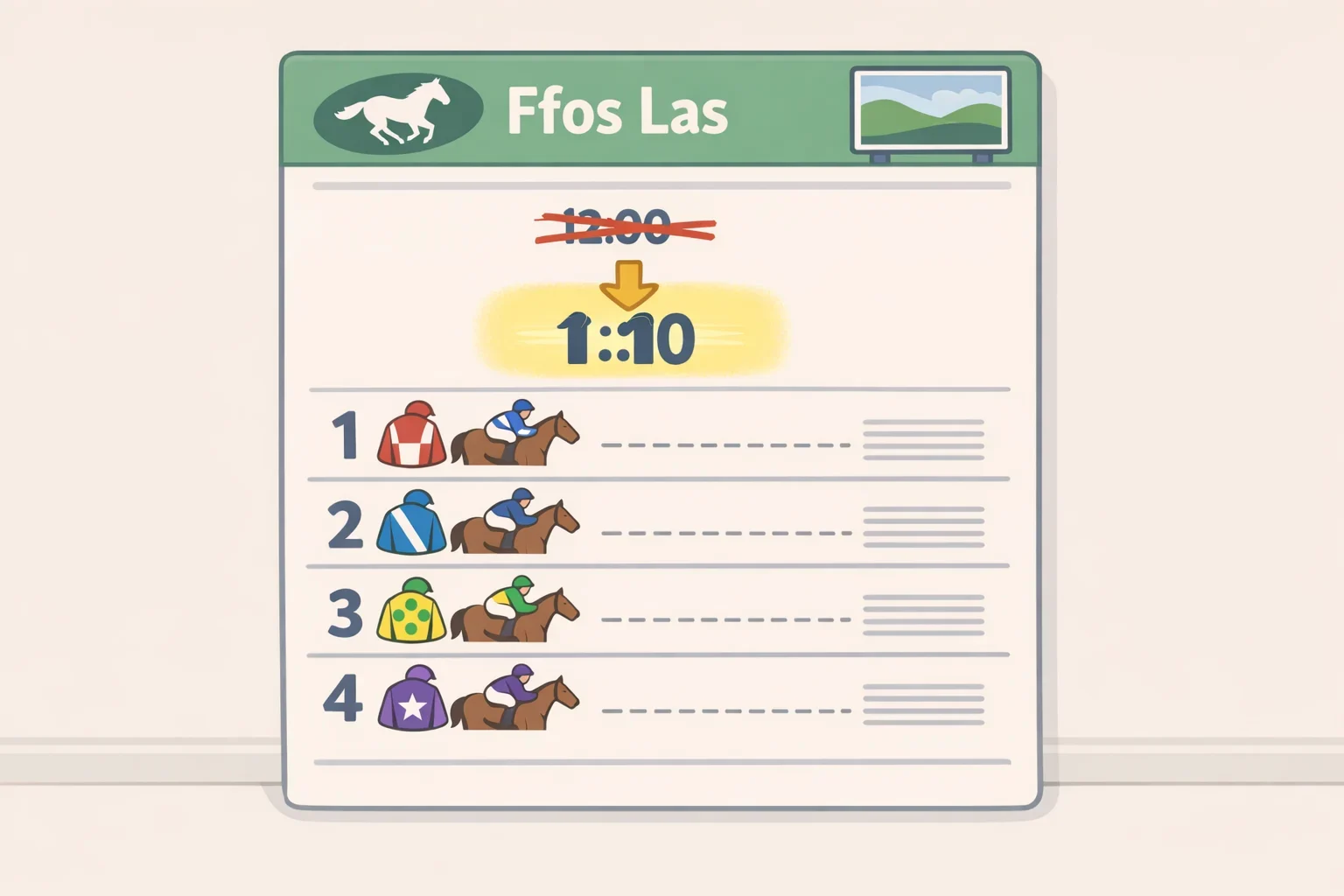
The British Horseracing Authority rescheduled Ffos Las's first race specifically, moving it from 17:40 BST to 15:35, roughly two hours earlier than originally planned, per BBC Sport. Reporting doesn't confirm whether the rest of the card shifted by the same margin, so the change is best understood as affecting the day's opening race, not the entire fixture list.
The timing wasn't arbitrary. In London, the partial eclipse was set to begin around 18:17 BST, peak near 19:13 with the Moon covering roughly 91% of the Sun's disk, and finish by about 20:06, according to NASA. Ffos Las's original 17:40 start would have landed right as the eclipse was building toward its deepest coverage, which likely explains why officials pulled the first race forward rather than leaving it in place.
Kempton and The Hundred: solar eclipse horse racing and cricket unaffected
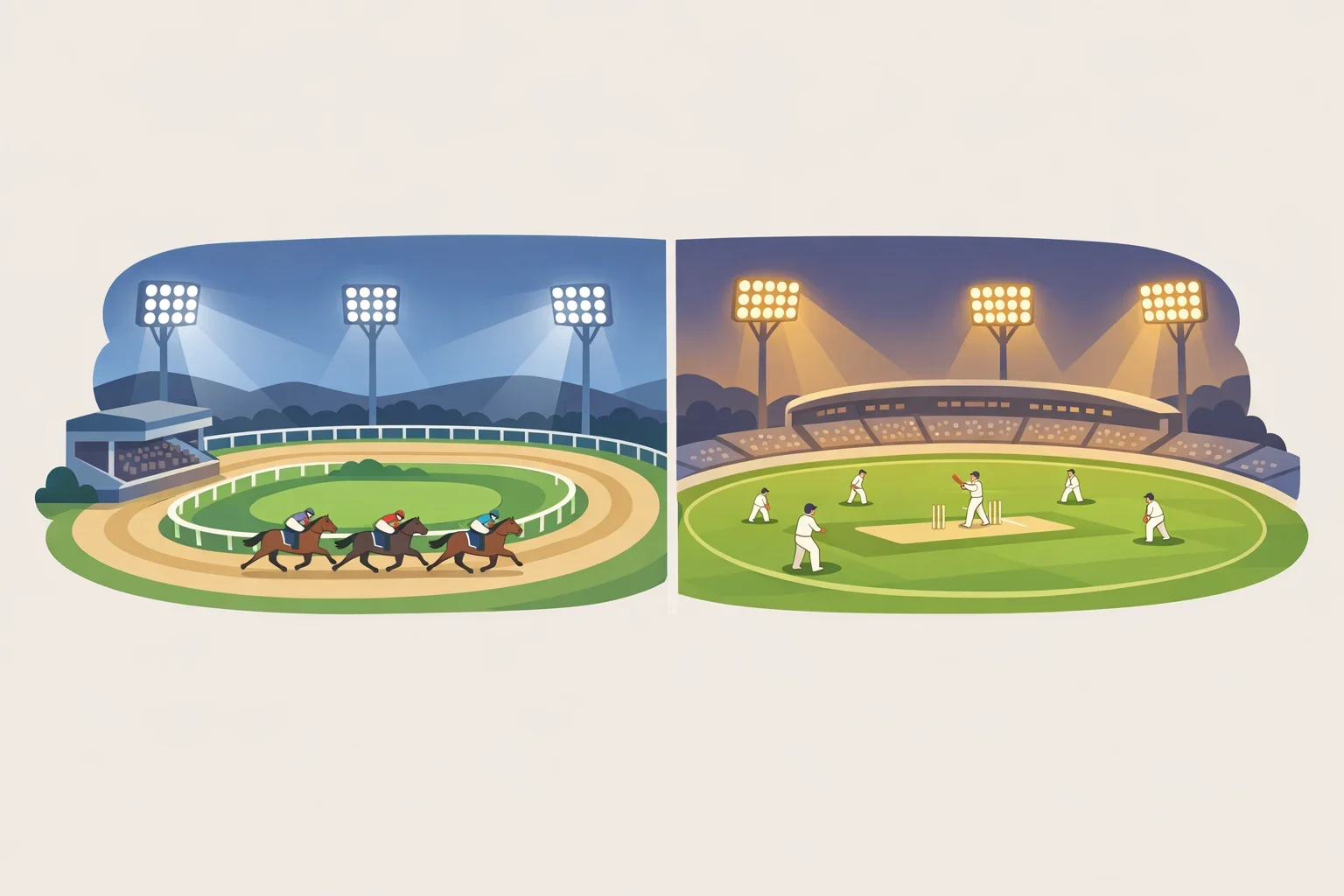
Kempton's evening card, with races set for 19:00 and 19:30, required no schedule change because both were already programmed to run under floodlights regardless of natural light conditions, according to BBC Sport. Artificial lighting made the eclipse a non-issue there in a way it wasn't at Ffos Las.
The same logic applied to cricket. Four Hundred matches scheduled for Aug. 12 were set to keep floodlights on throughout each game rather than rely on evening daylight, organizers said, per BBC Sport. Put the two side by side and the pattern is straightforward: solar eclipse horse racing and cricket disruption comes down almost entirely to whether a venue already runs on artificial light after dark. Tracks and grounds built for floodlit evening play had no reason to touch their start times. Ffos Las, running its card in natural light, did.
How much of the sun disappeared
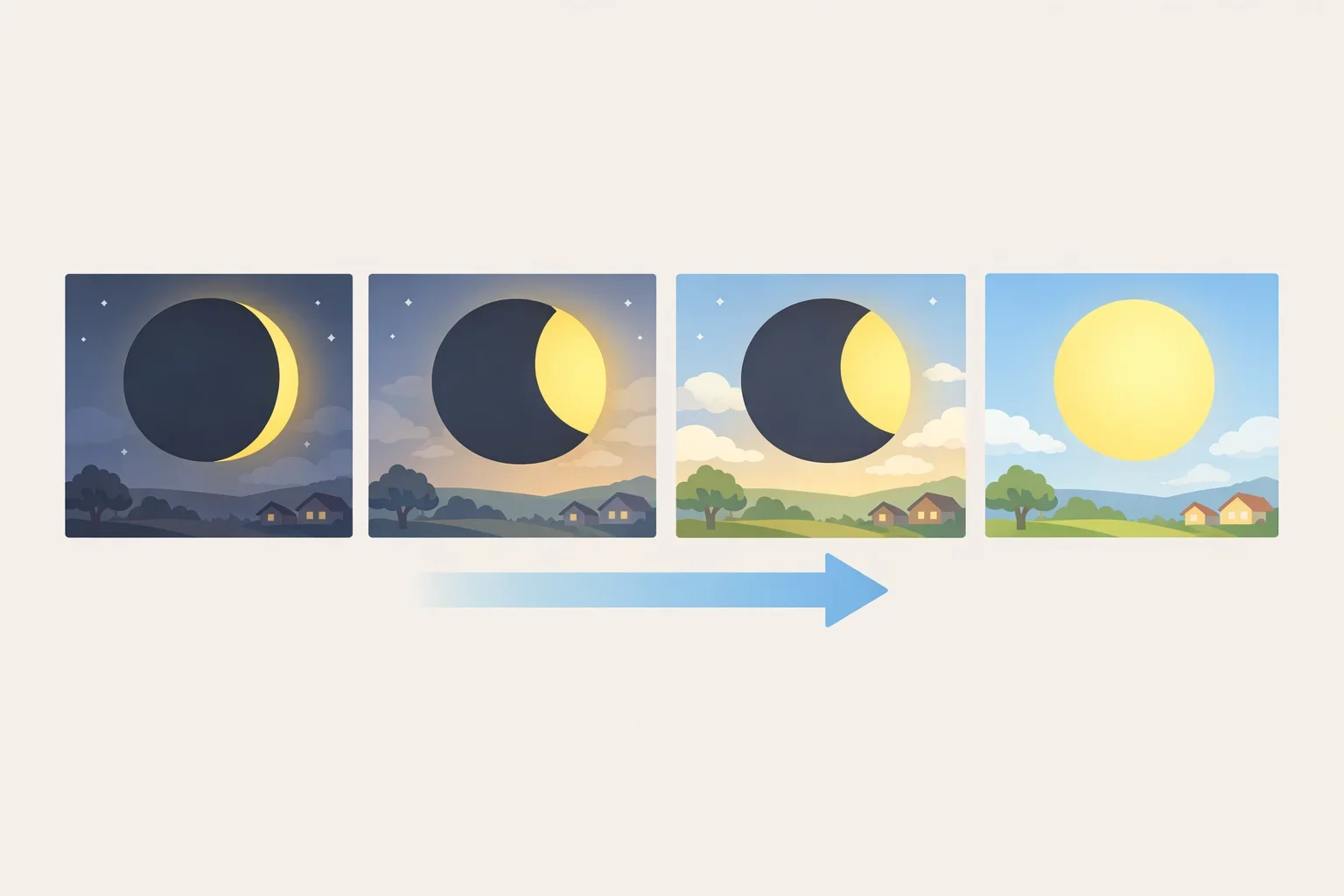
None of this involved a total eclipse. Totality tracked across a narrow path through northern Russia, Greenland, Iceland, and a sliver of northern Spain and Portugal, while most of the Northern Hemisphere, including the UK, saw only a partial eclipse, according to NASA. Other major European cities in the eclipse's shadow saw similarly deep coverage that evening, with Paris and Dublin both expected to see the Moon cover more than 90% of the Sun, per the same NASA data.
That distinction matters for anyone trying to picture how dark it actually got at the racetrack or the cricket ground. A 91% partial eclipse dims the sky noticeably and can cast a strange, flattened quality of light, but it's a long way from the near-total darkness of totality. Reporting doesn't describe on-site lighting conditions at Ffos Las, Kempton, or the Hundred venues directly, so treat the NASA figures as regional context rather than a description of what spectators at those specific fixtures actually saw.
The 1999 precedent
UK sport has adjusted around eclipses before, and not always for lighting reasons. During the August 1999 eclipse, a League Cup match between Torquay United and Portsmouth at Plainmoor was postponed, according to BBC Sport. That delay had nothing to do with visibility on the pitch. Devon and Cornwall Police said an influx of tourists traveling to the English coast to watch the eclipse left them unable to safely staff the stadium, per the same report. The fixture was eventually played six days later.
It's a useful contrast precisely because the cause was different. The 1999 postponement was a crowd-management call forced by an unusual travel surge, not a scheduling decision made around daylight. This year's adjustment at Ffos Las was the opposite: a straightforward lighting calculation with no crowd-control angle mentioned in reporting.
Eclipse viewing safety for anyone at the track
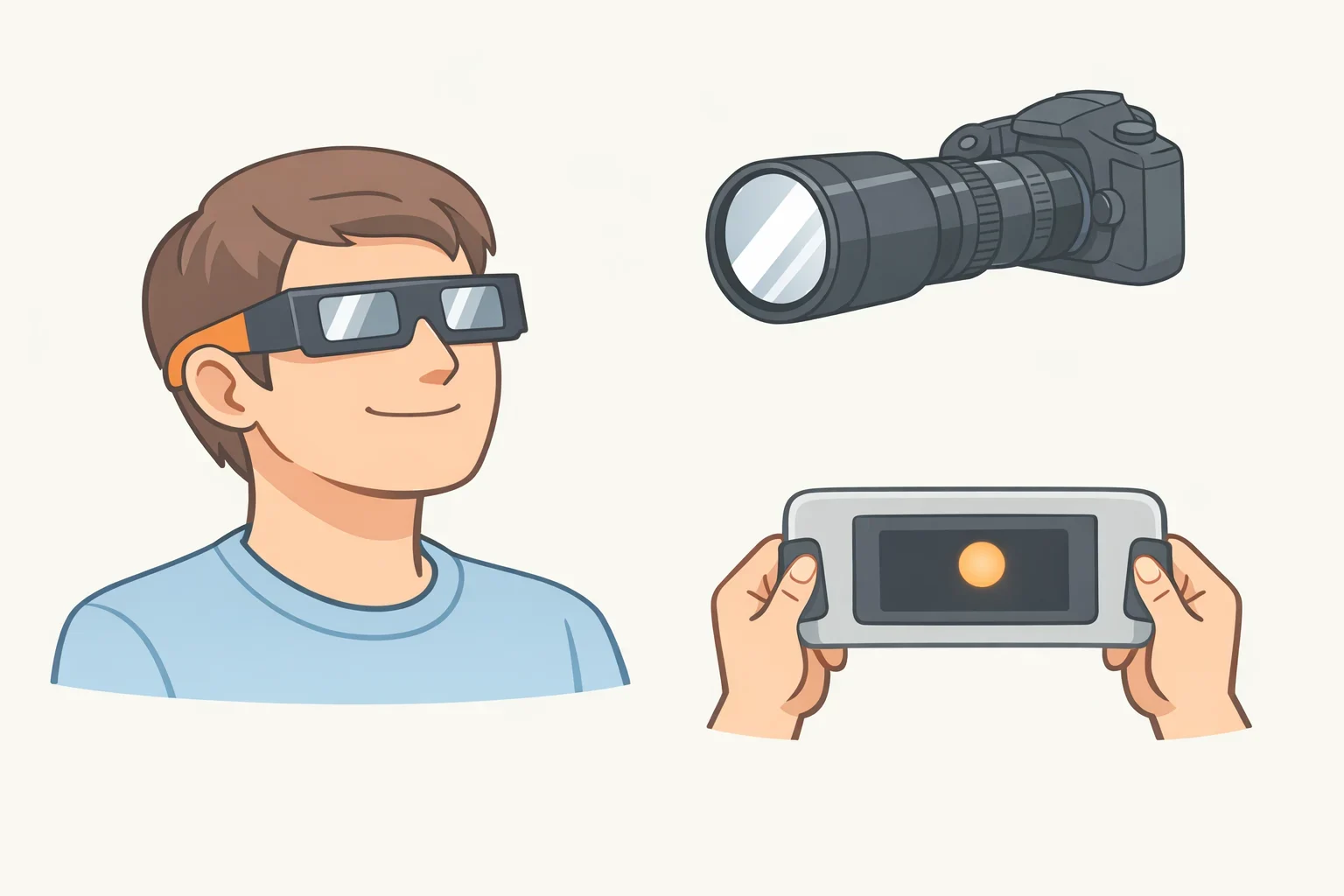
Anyone attending an outdoor fixture during a partial eclipse, whether at a racecourse, a cricket ground, or just outside watching the sky, needed proper eye protection the entire time the Sun was visible. During a partial eclipse, unlike totality, it is never safe to look directly at the Sun without certified protection, according to NASA. Regular sunglasses, no matter how dark, don't block enough light to prevent eye damage.
Safe viewing requires solar viewing glasses or a handheld solar viewer that meets the ISO 12312-2 international standard, per NASA. Fans hoping to photograph the eclipse from the stands needed to be just as careful: pointing a phone camera, binoculars, or a telescope at the Sun without a solar filter mounted on the front of the lens can cause serious eye injury within seconds, NASA warns. Eclipse glasses worn while looking through an unfiltered lens don't help either, since concentrated sunlight can burn straight through the filter.
What to check before the next one
Ffos Las's shift shows that a printed start time isn't guaranteed to hold, even for a fixture confirmed weeks in advance. Anyone planning to attend an outdoor sporting event during a future eclipse, or any other low-light astronomical event, should confirm the current schedule through official venue or league channels rather than relying on the originally advertised time.
It's also worth checking one simple detail ahead of time: whether the venue already runs on floodlights. That single factor decided which of these three fixtures needed to move and which didn't, and it's a fast way to gauge whether a schedule change is likely at any given ground. And if the Sun will be visible at any point during the event, pack certified eclipse glasses rather than assuming ordinary sunglasses will do the job.