
- MLB Playoff Home-Field Advantage, Explained: Who Hosts Each Round
- How MLB playoff seeding determines home field
- MLB Wild Card Series home field: who hosts each game
- MLB playoff home-field rules by round
- World Series home-field advantage: a different standard entirely
- What determines home field, round by round
MLB Playoff Home-Field Advantage, Explained: Who Hosts Each Round
MLB's 2026 postseason begins Sept. 29, and the schedule the league released last month locks in exactly how home-field advantage works at every round, according to MLB. Home-field advantage isn't decided the same way twice. Seeding controls hosting for the Wild Card Series, Division Series and League Championship Series, but the World Series flips to a completely different standard: full regular-season record, per MLB.
Twelve teams qualify across both leagues, six per league, made up of three division winners and three Wild Card clubs, according to MLB. Here's how hosting breaks down at each stage of the bracket, and what the historical record shows about whether that hosting edge actually helps a team win.
How MLB playoff seeding determines home field
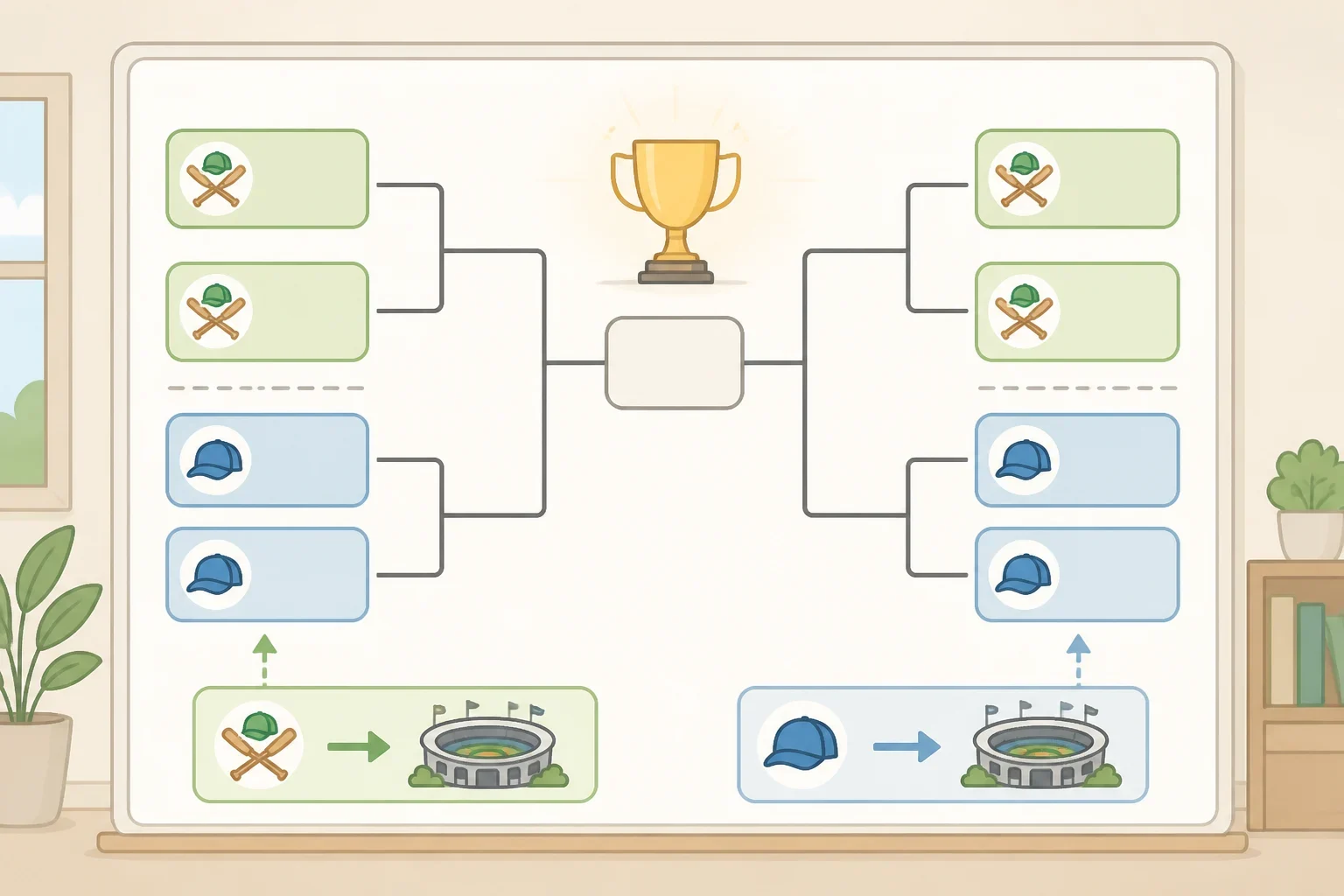
Seeding starts with division titles, not raw win totals. The league's best overall record earns the No. 1 seed, and the other two division winners fill Nos. 2 and 3 ranked by record. The three Wild Card teams fill Nos. 4 through 6, also ranked by record, according to MLB.
That order can create a lopsided matchup on paper. A division winner seeded No. 3 could carry a worse regular-season record than the No. 4 Wild Card team, yet still host every game of its Wild Card Series, since division winners get precedence in seeding regardless of record, per MLB.
Seeds Nos. 1 and 2 get a first-round bye and know their next opponent well before it's decided on the field. MLB does not reseed after the Wild Card Series, so the No. 1 seed is locked in against the winner of the 4-vs.-5 series, and the No. 2 seed against the winner of 3-vs.-6, according to MLB. That fixed bracket means fans can trace hosting scenarios for the Division Series before the Wild Card round even finishes.
MLB Wild Card Series home field: who hosts each game
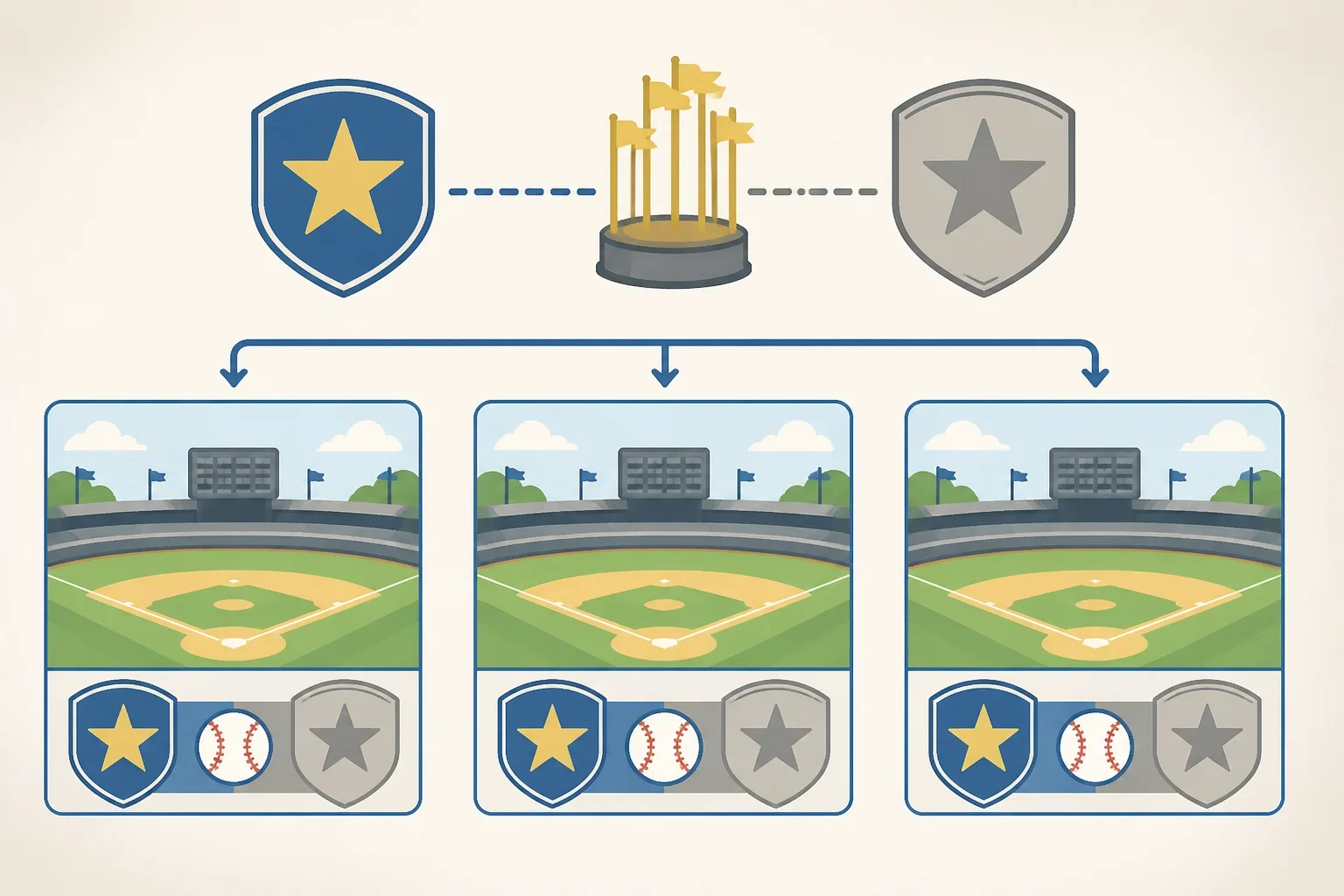
The Wild Card round is the only postseason series where one team can host every single game. It's best-of-three, and the higher seed, either the No. 3 or No. 4 seed in each league, hosts all three games if the series goes the distance, according to MLB.
Matchups are fixed by rule: No. 3 faces No. 6, and No. 4 faces No. 5, while the top two seeds sit out on a bye, per MLB. The round runs on a tight three-day window so the bye teams aren't stuck waiting. In 2026, that window is Sept. 29 through Oct. 1, according to MLB.
That format carries a real consequence for the bottom seeds. When the current 12-team bracket launched in 2022, CBS Sports pointed out that a lower seed could see its entire postseason end without ever hosting a playoff game. That same math still applies to any Wild Card Series played under this format today.
MLB playoff home-field rules by round
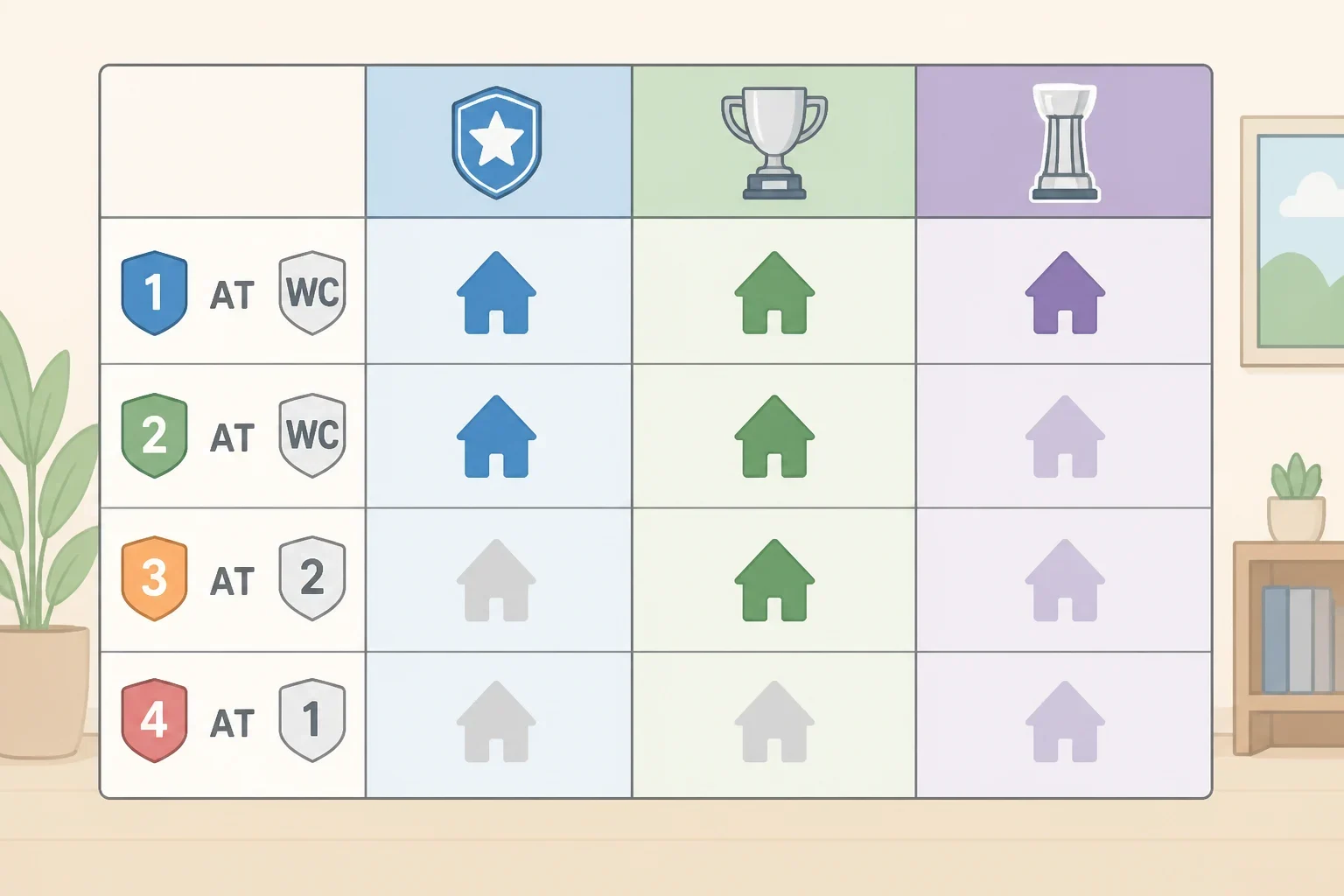
The Division Series stays best-of-five in a 2-2-1 format. The higher seed, meaning the two teams that had byes, hosts Games 1 and 2 and, if the series reaches a fifth game, Game 5 as well, according to MLB. In 2026, any necessary NLDS Game 5s land Oct. 9 and ALDS Game 5s land Oct. 10; those dates shift every year, but the 2-2-1 hosting format doesn't.
The League Championship Series expands to best-of-seven in a 2-3-2 format. The higher remaining seed hosts Games 1 and 2 and, if the series goes long, Games 6 and 7, per MLB. One thing worth keeping straight: "higher seed" at this stage still refers to each club's original postseason seed set before the bracket began, not which team has played better in October or advanced first.
Here's how hosting duties break down across the bracket:
Round Format Who hosts Games hosted Wild Card Series Best-of-3 Higher seed (No. 3 or 4) All games (1, 2, 3) Division Series Best-of-5, 2-2-1 Higher seed (No. 1 or 2) Games 1, 2, 5 League Championship Series Best-of-7, 2-3-2 Higher remaining seed Games 1, 2, 6, 7 World Series Best-of-7, 2-3-2 Better regular-season record Games 1, 2, 6, 7
Sources: MLB playoff format FAQ, 2026 MLB playoff schedule
World Series home-field advantage: a different standard entirely
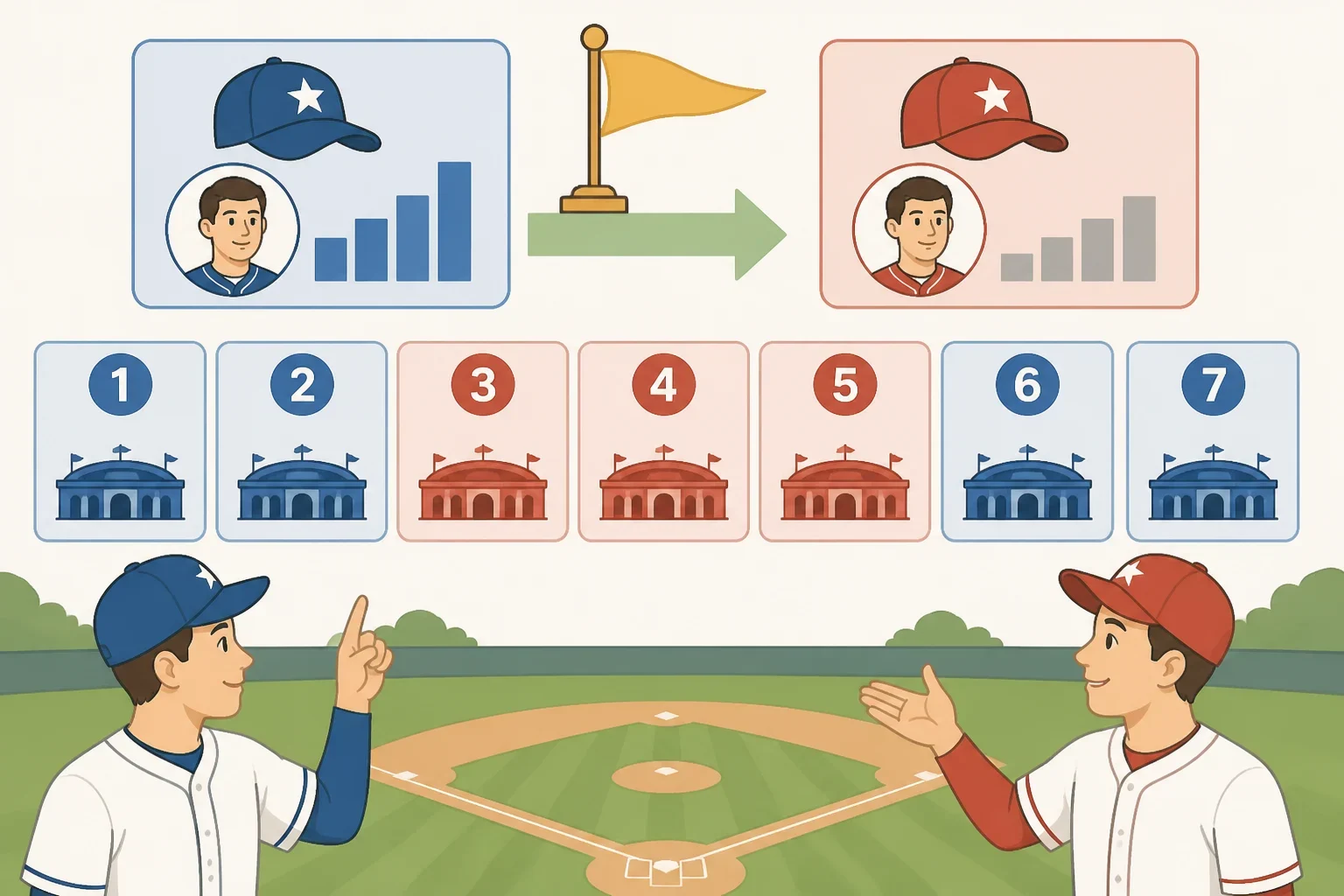
The World Series breaks from every earlier round. Home field goes to the pennant winner with the better full regular-season record, regardless of that team's seed or division standing within its own league, according to MLB. The hosting format still runs 2-3-2: the team with the better record hosts Games 1 and 2, then Games 6 and 7 if the series goes that far, per MLB.
If the two pennant winners finish with identical records, MLB doesn't leave it to chance. The tiebreaker goes to head-to-head record first, then intradivision record, then interdivision record, according to MLB.
This record-based rule has only applied since 2017, and even then it wasn't continuous. Before 2017, home field rotated through All-Star Game results from 2003 to 2016, and simple AL/NL alternation for the 98 editions before that, per MLB. The rule was also suspended once: the 2020 World Series was played entirely at a neutral site, Globe Life Field in Arlington, Texas, because of pandemic travel restrictions, and the win-percentage rule returned in 2021, according to MLB.
The 2025 World Series showed the current rule in action. The Blue Jays finished 94-68 and entered as the AL's No. 1 seed but MLB's No. 3 overall seed. The Dodgers finished 93-69 as the NL's No. 3 seed but MLB's No. 5 overall seed. Toronto still got home field because of its better regular-season record, not its seed, according to MLB.
Whether that hosting edge actually matters is murkier. Teams with World Series home field have won 20 of 29 titles since 1995, or 69%, excluding the neutral-site 2020 Series, per MLB. That figure also reflects that stronger regular-season teams, the ones more likely to win the World Series in the first place, are also the ones more likely to earn home field. In winner-take-all Game 7s specifically, home teams are a combined 19-21 all-time, according to MLB.
Recent results back up that split picture. The road team went 4-1 in the 2023 World Series, with Texas closing out the title on three straight road wins in Arizona. In 2019, the home team didn't win a single game across all seven contests of that Series, per MLB.
What determines home field, round by round
Seeding, not raw record, decides hosting for three of the four playoff rounds. A division winner can outrank a Wild Card team in seeding, and therefore host an entire Wild Card Series, even while carrying a worse regular-season record, according to MLB.
The World Series stands apart. It's the only round decided by full-season record instead of postseason seed, with a tiebreaker chain starting at head-to-head record settling any ties, according to MLB.
Because MLB doesn't reseed after the Wild Card Series, the bracket for the Division Series and League Championship Series is already set before the 2026 postseason opens Sept. 29. That means the hosting matchups for every round except the World Series can be traced well ahead of time, based on the schedule MLB released last month.