
- 2027 High School Baseball Rule Changes: First-Base Options
- When the 2027 high school baseball first-base rule takes effect
- NFHS baseball first-base options: double base vs. 18-inch base
- Why NFHS added a second first-base option
- How the double first base changes plays at first
- Other 2027 NFHS baseball changes: rules vs. points of emphasis
- What still isn't clear
- What to remember before the 2027 season
2027 High School Baseball Rule Changes: First-Base Options
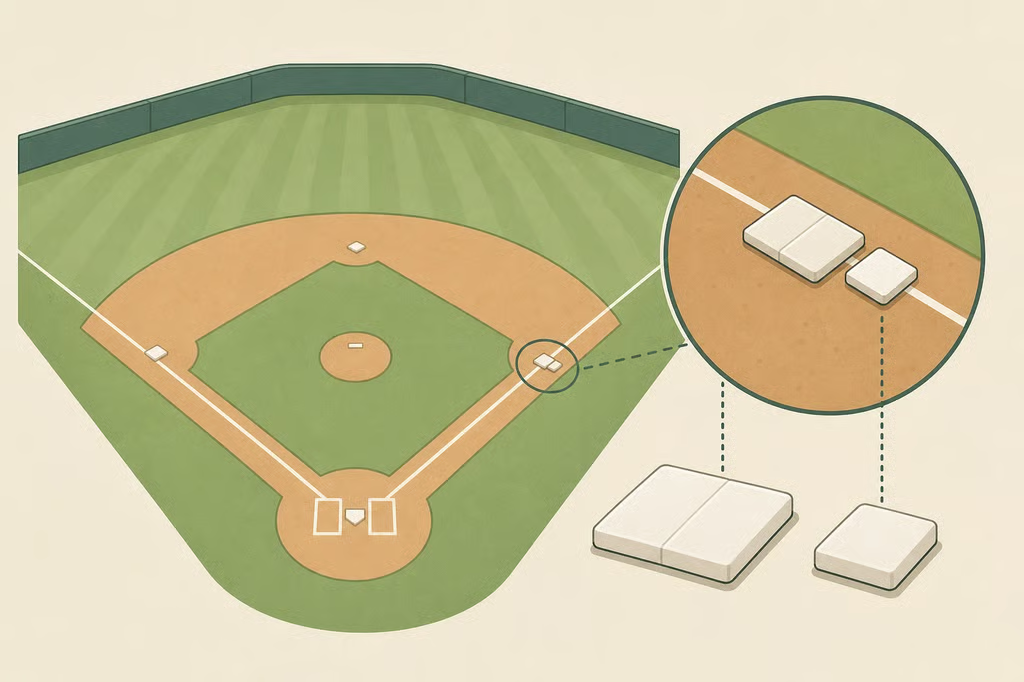
High school baseball teams have a choice to make before the 2027 spring season: install a double first base or switch to a new 18-inch single first base. Starting January 1, 2027, both configurations will satisfy NFHS Rule 1-2-9, according to the National Federation of State High School Associations. The rule applies to schools that play under NFHS rules, though how it's carried out locally is still up to each state athletic association.
It's one of several updates included in the NFHS's 2027 baseball rules materials, alongside changes to pitching emphasis, apparel and dugout communication covered later in this piece.
The NFHS counted 472,598 boys playing baseball at 16,110 high schools in its most recent participation survey, and separately reported 1,381 girls playing high school baseball nationwide, per OHSAA. Those figures give a sense of how widely the sport is played, though the rule's rollout will vary by state association. This explainer covers what each base option looks like, why the rule exists, how the double base changes calls at first, and how the change fits with the rest of the 2027 NFHS baseball rules.
When the 2027 high school baseball first-base rule takes effect

The double first base was the original plan. In June 2025, the NFHS Baseball Rules Committee approved it as a requirement for the 2027 season, one of 10 rule changes to come out of the committee's annual meeting in Indianapolis, held June 8-10, 2025, per OHSAA.
In July 2026, the NFHS added a second legal option: an 18-inch single base schools can install instead, according to NFHS. Rather than replacing the double base, the larger single base became an alternative to it, per OHSAA.
One compliant first-base configuration is required once the rule takes effect on January 1, 2027. Schools may use either the double base or the 18-inch alternative, subject to whatever additional guidance their state association issues. Older reporting describing the double base as the only compliant option predates the July 2026 update and should be treated as outdated.
NFHS baseball first-base options: double base vs. 18-inch base
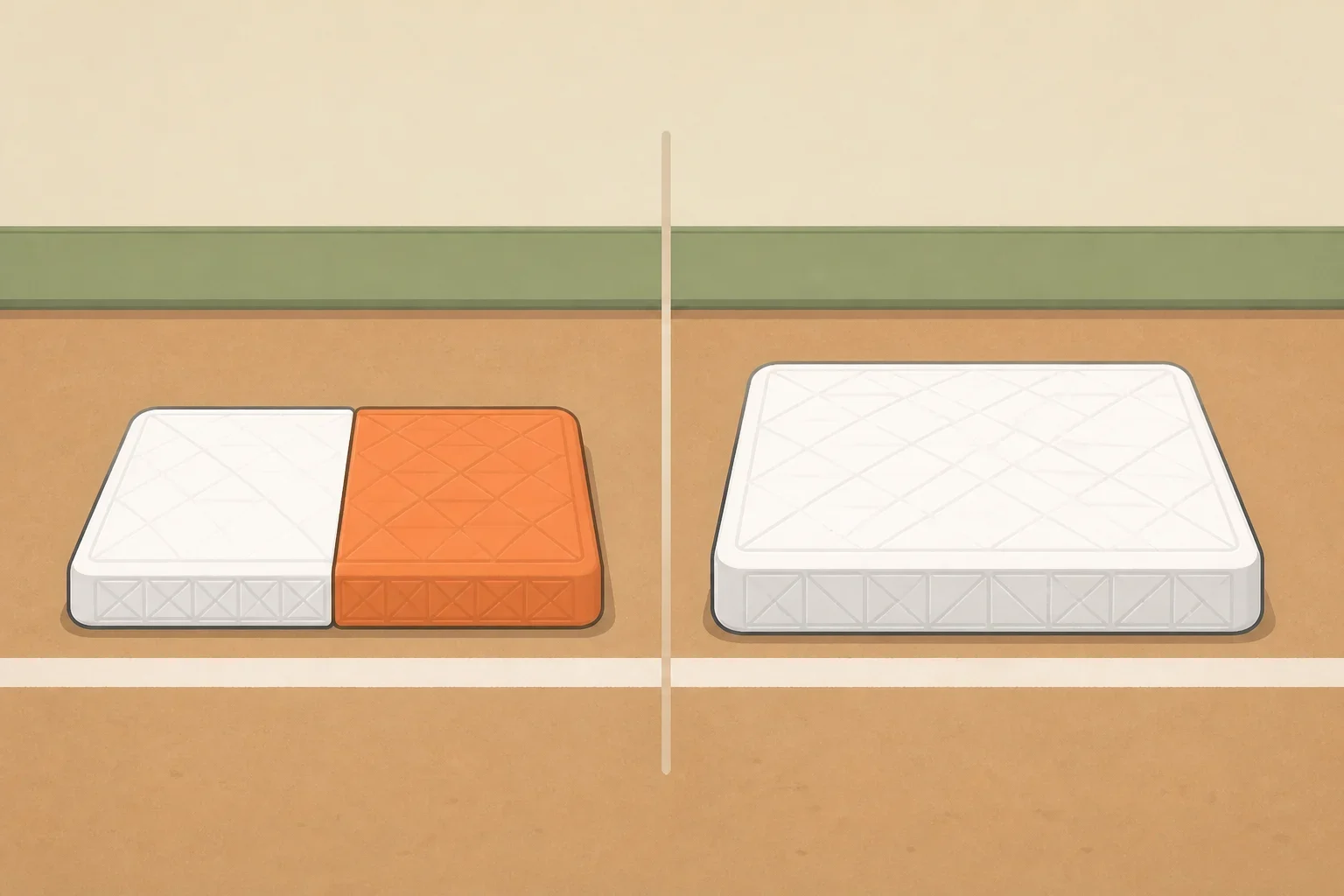
The double first base pairs a white portion in fair territory with a contrasting solid-colored portion in foul territory, split along the first-base foul line with no gap between the two halves, according to TASO.
The 18-inch single base skips that color-split design. It's one larger white bag, 18 inches square and 2 to 5 inches thick, made of canvas filled with soft material or molded rubber or synthetic material, and anchored to the ground, per TASO. That's bigger than the bags at second and third, which stay at the standard 15 inches square, per TASO. The cited materials don't give a comparable overall footprint for the double base, so a direct size comparison between the two 2027-compliant options isn't available.
Elliot Hopkins, NFHS director of sports and liaison to the Baseball Rules Committee, said giving schools both choices "gives administrators the flexibility to enhance player safety while recognizing the varying needs and resources of member schools," per OHSAA. That's the rules committee's stated rationale for offering a choice, not independent evidence comparing the two designs.
Why NFHS added a second first-base option
Both base types target the same problem: collisions between the batter-runner and the first baseman on close plays, according to NFHS. A related NFHS-linked release adds that both choices are meant to "support a reduced risk playing environment without changing the fundamental nature of the game," per OHSAA.
That same release states the larger single base has "proven to be effective in reducing player collisions and enhancing player safety" in prior use, per OHSAA. NFHS presents both designs as permitted options intended to reduce collision risk. The cited releases don't offer a head-to-head comparison of outcomes between the double base and the single base, so coaches weighing the two are working from the rules committee's stated intent rather than published data.
How the double first base changes plays at first
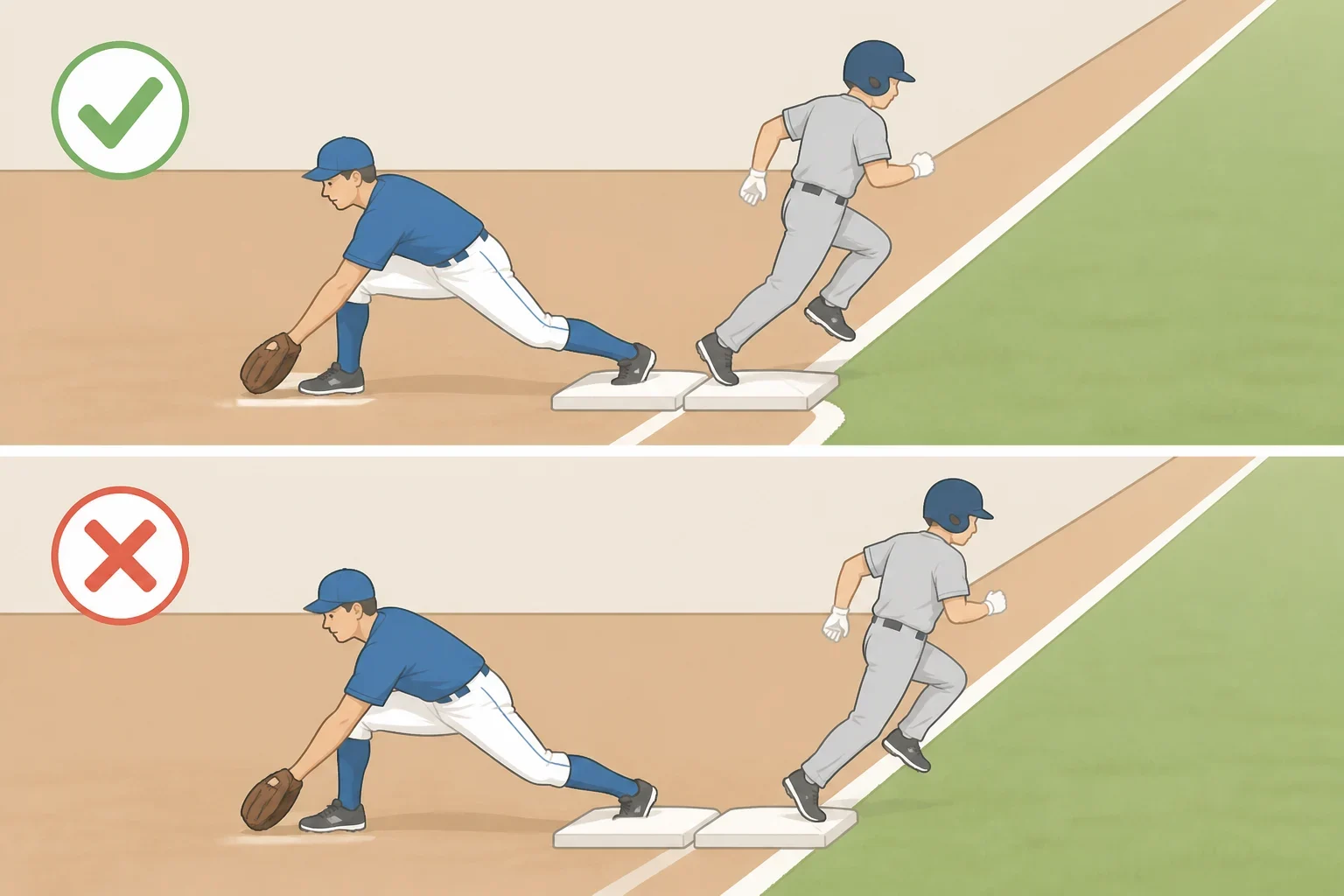
The double base comes with mechanics the single base doesn't have, and umpires, players and coaches will need to learn them before the calls start mattering in games.
On an initial close play at first, the batter-runner is expected to use the colored, foul-territory portion of the base, unless a fielder has been drawn into foul territory to field a dropped third strike, in which case the runner uses the white side instead, per OHSAA.
Once safely aboard, the runner has to shift back to the white, fair-territory side for leadoffs, pickoff returns or tagging up on a fly ball, per OHSAA. There's an exception on plays with no force at stake: on a walk, or an extra-base hit to the outfield where no throw to first is possible, the batter-runner may use either side, per OHSAA.
The color-coding carries penalty consequences, too. A batter-runner who touches only the white side on a force play and collides with a fielder can be called for interference, while a fielder who touches only the colored side and collides with the runner can be called for obstruction, per OHSAA. Fair-foul calls follow the same split: a batted ball is fair if it touches or bounds over any part of the white portion, and foul if it touches the colored portion, per OHSAA.
The cited materials spell out these color-based mechanics for the double base specifically. They don't describe equivalent mechanics for the 18-inch single-base option, which functions as one bag rather than a split, color-coded target.
Other 2027 NFHS baseball changes: rules vs. points of emphasis
The first-base decision carries the most on-field consequence, but it isn't the only update for 2027. The NFHS separates its changes into formal rule changes and points of emphasis, plus at least one option state associations can choose to adopt or skip.
Formal rule changes include:
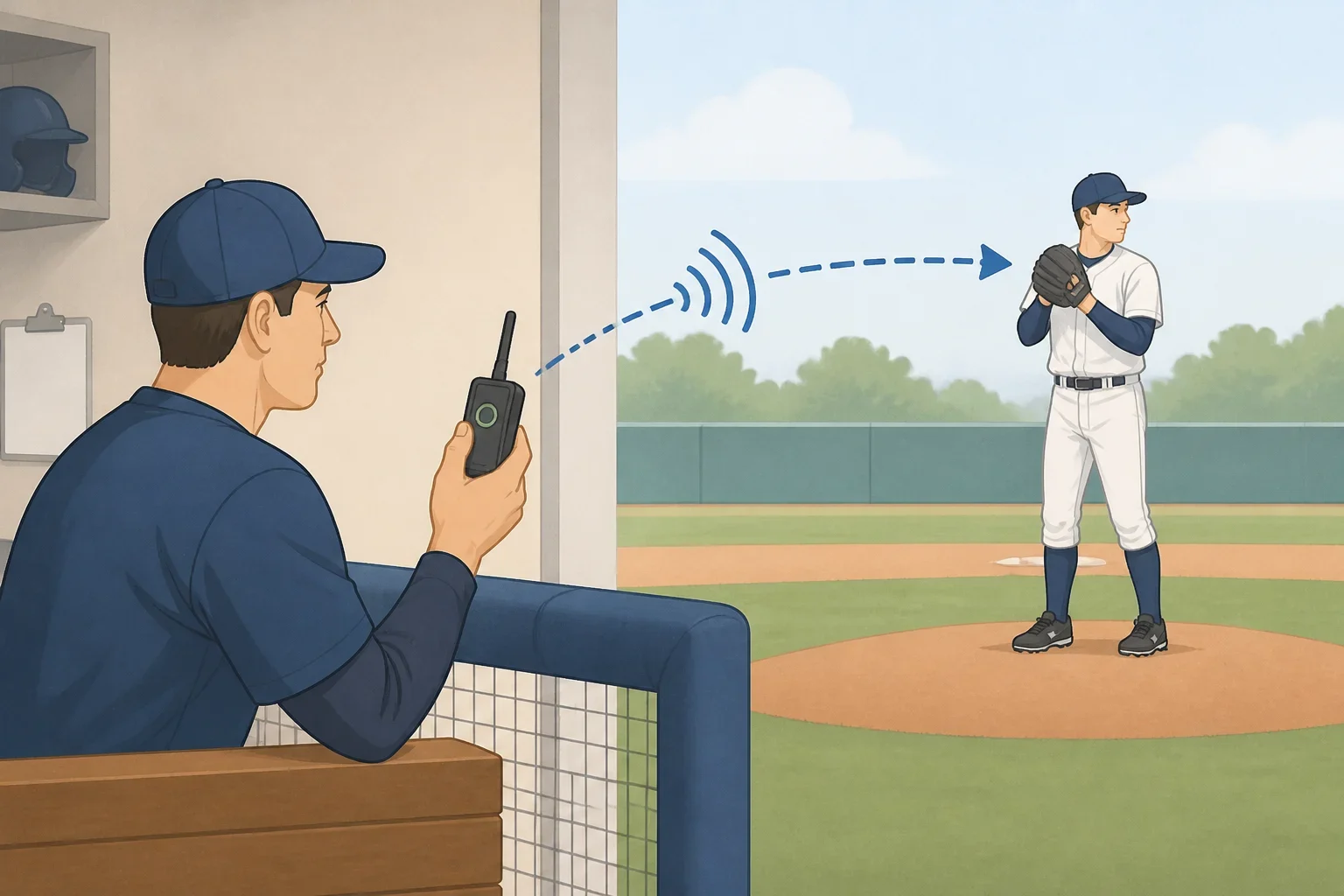
- Coach-to-player communication: One-way electronic communication from the dugout to the pitcher and/or catcher is now allowed for calling pitches, expanding on the old rule that limited it to the catcher only. The coach still has to stay in the dugout or bench area while using it, per OHSAA.
- Eye-shade rules: Eye black or anti-glare strips must be a single solid stroke with no words, numbers, logos or symbols, and can't extend past the width of the eye socket or below the cheekbone, per TASO.
- Coach's box scoring devices: Coaches can now use a handheld electronic scoring device or scorebook material while in the coach's box, per OHSAA.
Points of emphasis flag areas the NFHS wants coaches, players and umpires watching closely, rather than brand-new rules. For 2027, those cover video and audio usage, apparel compliance, pitching mechanics and pitcher protection, and sportsmanship versus gamesmanship, according to NFHS. Under that emphasis, players are barred from wearing microphones, cameras or other recording devices during a game, though schools or media can still record from approved locations off the field, per NFHS.
One change is optional rather than universal. State associations can adopt a suggested extra-inning tiebreaker that places the last scheduled batter on second base to start each half-inning. Adoption is up to each state; Texas officials, for one, have said they won't use it, per TASO.
What still isn't clear
The sources reviewed for this piece don't specify cost differences between the two base types, installation requirements, or whether existing anchor systems can be reused for either option. Coaches and athletic directors weighing a switch should run those specifics by their equipment supplier before ordering.
The cited releases describe both base types as intended to reduce collisions, but they don't include a side-by-side comparison of outcomes between the double base and the 18-inch base. Rule adoption can also vary at the state level, as Texas's tiebreaker decision shows, so readers should confirm with their own state athletic association how the first-base rule will be enforced locally and when equipment needs to be in place.
What to remember before the 2027 season
State associations should confirm which first-base option, or options, their leagues will require or permit for 2027, since NFHS sets the two choices but doesn't mandate one over the other. Schools should verify compliant equipment and anchoring requirements with their supplier before the season starts, especially if they're switching from a standard base to either 2027-compliant design.
Umpires and players should review the double base's interference, obstruction and fair-foul provisions before the first close play of the season arrives. Those mechanics don't apply if a school chooses the 18-inch single base instead, based on the materials the NFHS has published so far.