
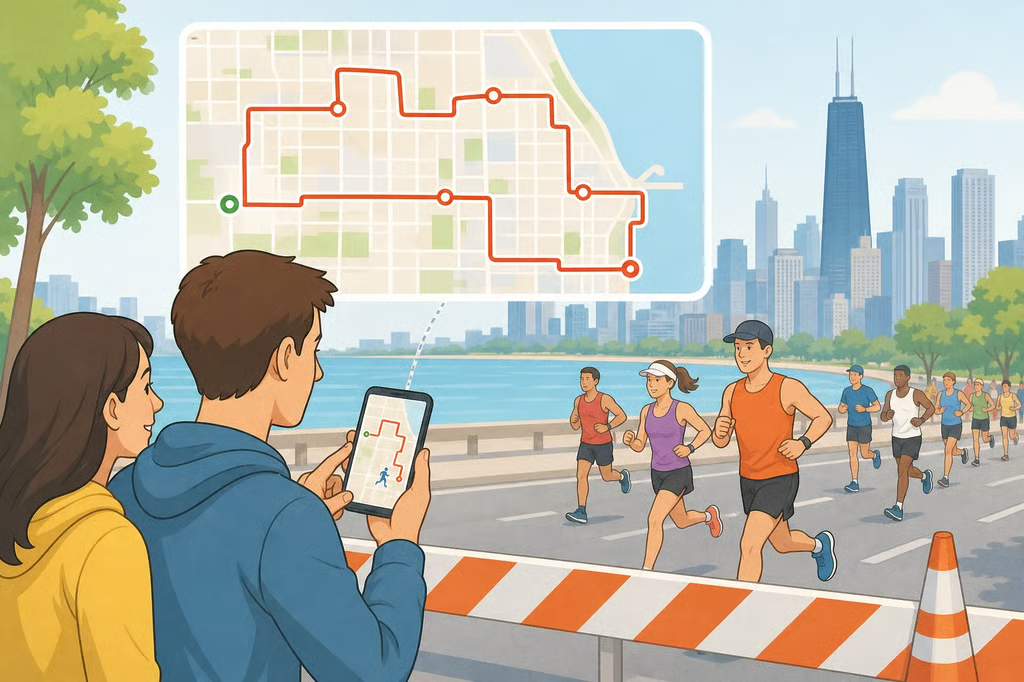
- Chicago Marathon 2026 runner tracking and route guide
- How to track Chicago Marathon runners in 2026
- Chicago Marathon 2026 route map: picking a viewing point
- Chicago Marathon street closures and CTA service
- Reuniting with your runner after the finish
- Chicago Marathon 2026 spectator guide: what to check before race day
Chicago Marathon 2026 runner tracking and route guide
The city of Chicago expects more than 55,000 runners to cover 26.2 miles through 29 neighborhoods this Sunday, October 11, a crowd large enough to trigger street closures and parking restrictions along the entire course, according to the City of Chicago. This Chicago Marathon 2026 runner tracking and route guide breaks down what spectators need before claiming a curb: how to follow a runner through the official app, where to actually stand, which CTA and Metra lines serve the route, and how families find each other once the race ends.
Three things complicate the day for spectators: wave starts spread across more than an hour, a tracking app that updates at set checkpoints rather than live, and a Grant Park start/finish area closed to the general public. That zone is reserved for bibbed runners, credentialed staff and ticketed guests, according to race organizers and CBS Chicago.
How to track Chicago Marathon runners in 2026

The Bank of America Chicago Marathon App, powered by Tata Consultancy Services, lets spectators follow an individual participant throughout race day, according to race organizers. It's free, and organizers point spectators toward it for in-progress updates.
Start times are staggered by more than an hour. The men's wheelchair race goes off at 7:20 a.m., the open professional field at 7:30 a.m., and mass-participation Waves 1 through 3 start between 7:35 and 8:35 a.m., per race organizers and CBS Chicago. A runner's wave is the starting point for every time estimate below.
The course information identifies timing checkpoints where a runner's device registers splits, at the start line, every 5K, the halfway point, Miles 20 through 25, Mile 25.2 and the finish, according to course information from the marathon. Spectators can use those updates with the runner's planned pace to estimate when the runner will reach a viewing point.
Organizers recommend finding a runner's planned per-mile pace and using it with those checkpoints to estimate arrival times along the course, per race organizers. It's an estimate, since pace can shift once the race is underway. Gathering a runner's bib number, wave time and goal pace ahead of time makes it easier to work through the checkpoint math below.
Chicago Marathon 2026 route map: picking a viewing point
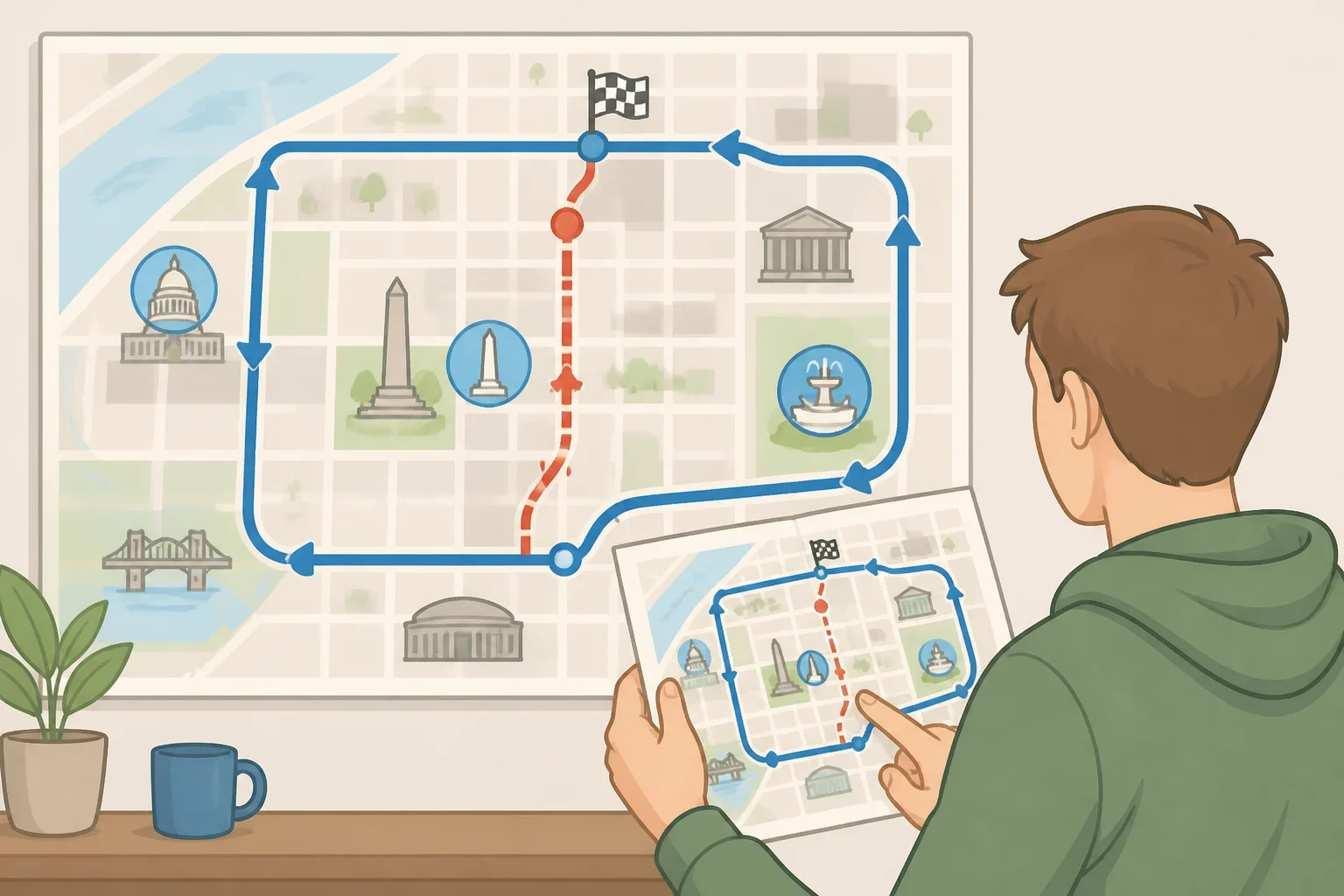
One change is specific to this year. Because of construction on State Street, runners will head down Dearborn Street from Grand Avenue to Jackson Boulevard instead of the usual Loop route, according to CBS Chicago. Anyone who staked out a spot on State Street in past years should check the current map before assuming it still works.
The official course map marks checkpoints, aid stations and mile markers, and the marathon's own course page notes it's subject to change, according to course information. The published course information identifies checkpoints, aid stations and markers; spectators still need to confirm their own transit and walking route in Ventra, since neither the city nor the marathon publishes station-to-curb directions.
The Dearborn stretch is one option to build a plan around. It's this year's rerouted downtown segment, and the CTA's Ventra app includes a trip-planning tool powered by Google Maps that can help locate the nearest stop, according to CTA.
Mile 15 is another. The marathon hosts a Charity Block Party there for runners competing on behalf of charity teams, according to race organizers.
Farther along, Aid Stations 16 through 18, at Miles 20.2 to 23, add Chiquita Bananas to the water and Gatorade Endurance Formula already available along the course, according to course information. That gives spectators an option outside the Dearborn Street segment.
Here's how the math works for one scenario: a Wave 1 runner starting at 7:35 a.m. on a 9:00-per-mile pace would reach the 10K mark around 8:31 a.m. and the halfway point near 9:33 a.m. Treat those as estimates rather than fixed arrival times, since a runner's individual clock starts when they cross the start line, which can run a few minutes behind the official wave time, according to course information.
Organizers encourage spectators to move along the course throughout the event, per race organizers. CTA separately urges riders to allow extra travel time on race day, according to CTA. For spectators trying to avoid a cross-city scramble, a single viewing point may be easier to manage than splitting attention between two spots without a confirmed transit route between them.
Chicago Marathon street closures and CTA service
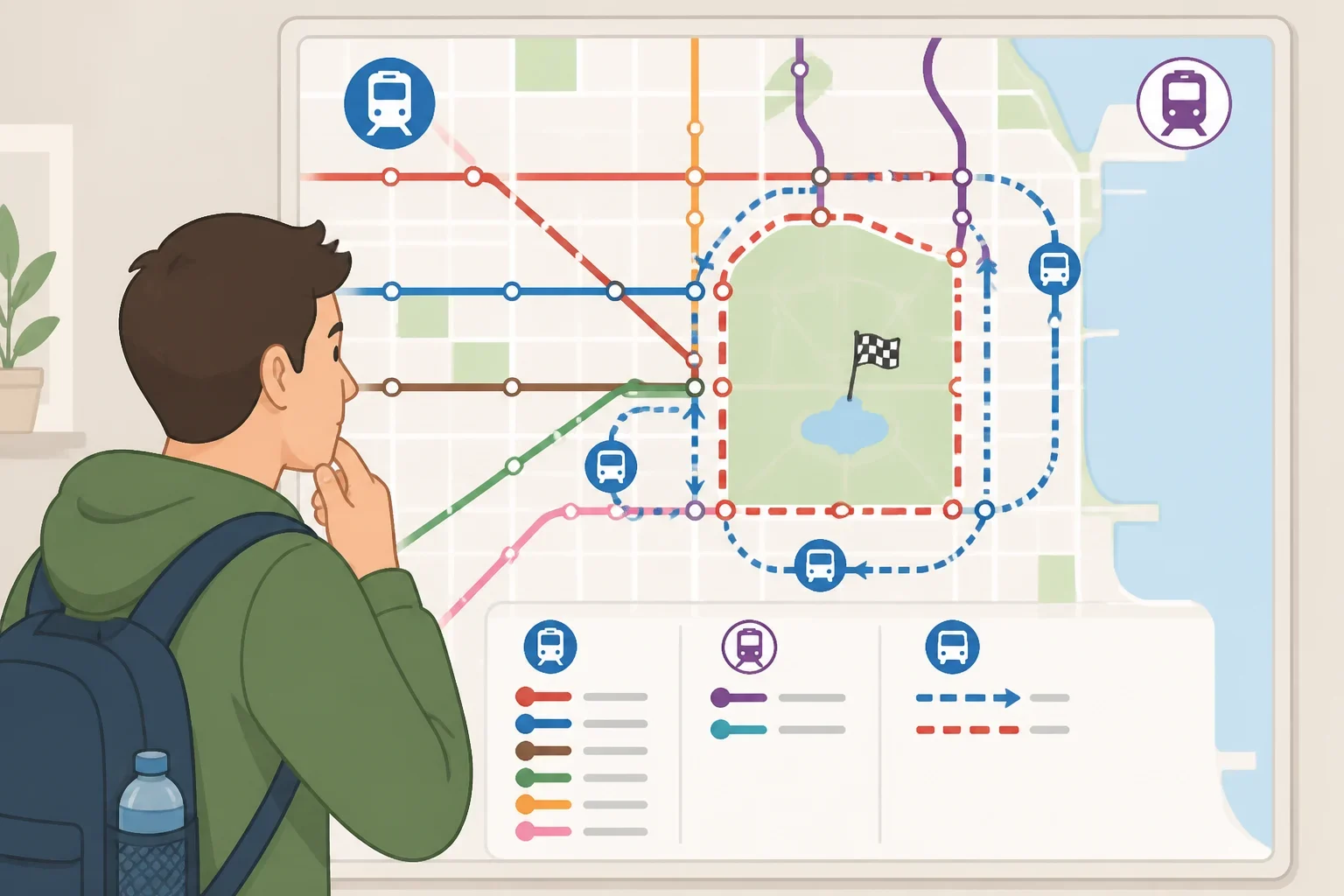
CTA and Metra will provide additional service for the Bank of America Chicago Marathon 2026, with the CTA's Red, Blue, Brown, Green, Orange and Pink lines all serving Grant Park and points along the route, according to CTA. Added capacity is planned on five of those lines as needed. Southbound Purple Line service from Linden will also start at 5:30 a.m., earlier than its usual 6:05 a.m. start, which helps riders reach a spot before the first wave passes.
More than 30 CTA bus routes will be affected, including every route in the Loop and most routes bounded by Irving Park Road, Damen Avenue and 35th Street, per CTA. Given that scale of disruption, riders may find rail simpler to plan around than bus service on race day. CTA points riders to transitchicago.com/marathon and metra.com for the specific route-by-route schedule changes, according to CTA.
CTA and Metra list these fare options in their service notice:
- CTA's unlimited 1-Day Pass ($5) or 3-Day Pass ($15)
- A $2.50 Regional Day Pass add-on through the Ventra app, which extends a Metra Day Pass to cover CTA and Pace too
- Metra's $7 Sunday Day Pass for unlimited rides on its own system
Coming from the suburbs: Metra is adding early inbound and midafternoon outbound trains on the Milwaukee District North, Union Pacific Northwest and Union Pacific West lines, plus expanded Sunday schedules on BNSF and Union Pacific North, according to CTA and Metra. CTA directs riders to the Ventra app's trip planner to work out a specific downtown transfer, since organizers don't publish exact station-to-course walking routes in advance.
Driving or parking instead? The race route closes to traffic around 6 a.m. Sunday and is expected to reopen by 4:30 p.m. or once it's deemed safe, according to the City of Chicago. Some parking restrictions begin Saturday morning, while additional restrictions apply along the marathon course early Sunday, with towing strictly enforced in posted no-parking zones, per the city's notice. Enforcement times vary by block, so check the posted signs before leaving a car anywhere near the route. Call 312-744-4444 to locate a towed vehicle.
Reuniting with your runner after the finish
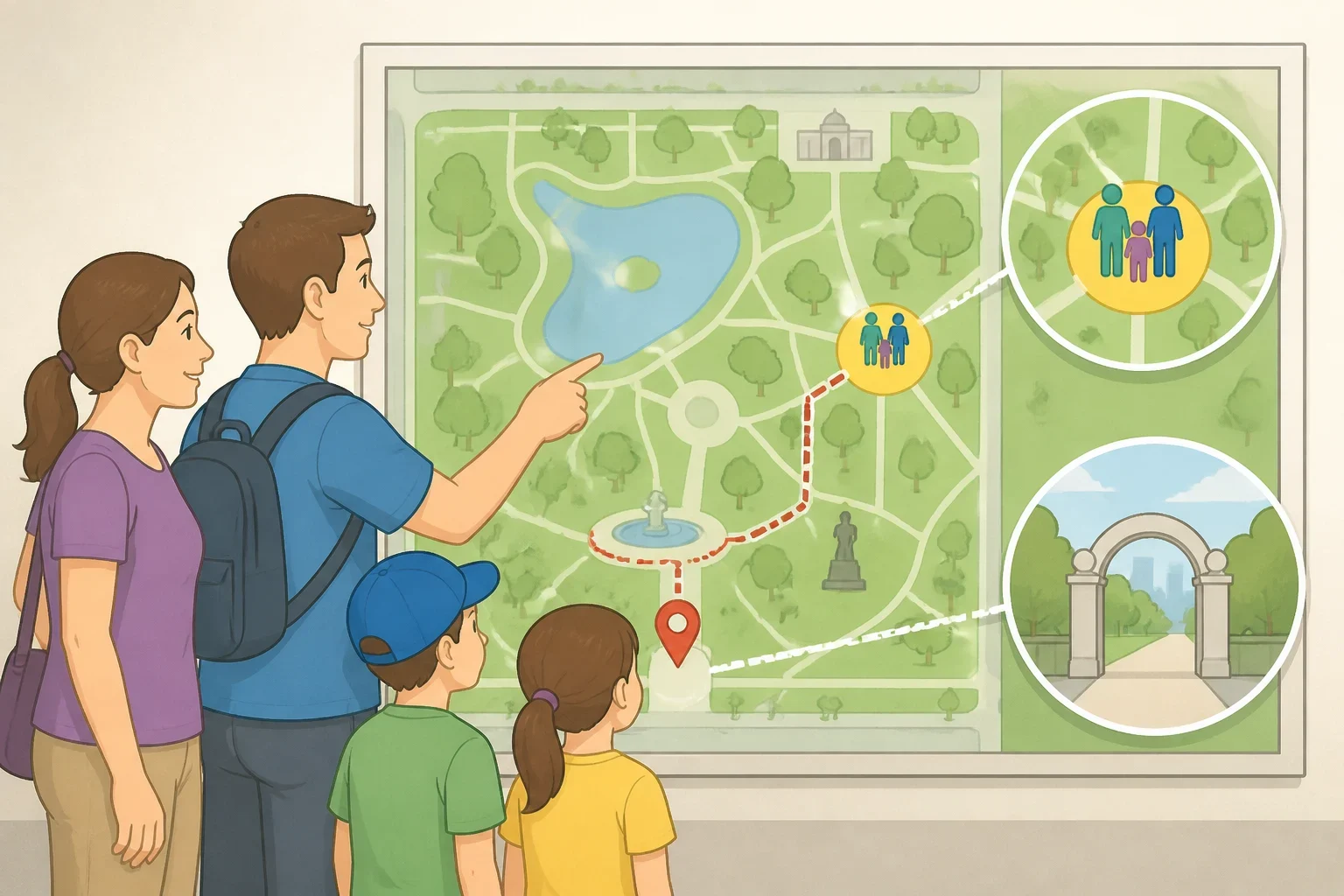
Spectators cannot enter the start and finish areas inside Grant Park on race day. Those zones are reserved for bibbed participants, credentialed staff and ticketed guests, according to race organizers.
Grant Park opens to spectators at 9:30 a.m., which is also when the Runner Reunite area and the 27th Mile Post-Race Party open, per race organizers and CBS Chicago. One way to time a return to Grant Park: watch the app for a runner's Mile 25.2 split, the last checkpoint before the finish, based on course information.
Last year, the Runner Reunite area was staged in Butler Field with alphabetical signs to help families find each other by last name, according to a 2025 City of Chicago notice. That was last year's layout; anyone planning around it should confirm the 2026 setup through the app or the official spectator-information page rather than assuming it repeats.
If a runner is running behind pace, the finish area itself stays off-limits to spectators regardless, according to race organizers. The post-race party runs until 4 p.m., per race organizers.
Chicago Marathon 2026 spectator guide: what to check before race day
A short list to confirm ahead of race day:
- Runner's bib number, wave assignment and goal pace
- One viewing point confirmed against the current course map, given this year's Dearborn Street reroute
- CTA line or Metra route to get there, checked through the Ventra trip planner
- Time and section where the group plans to meet in Grant Park after 9:30 a.m.
Confirming these details the morning of the race, rather than the night before, accounts for any last-minute updates to the course map, transit schedule or reunion area that organizers or transit agencies post as Sunday approaches.