
- Messi’s Argentina trophy run 2021-2024: what it proved
- The record book: what the numbers establish
- What the criticism was built on
- The 2021 Copa América: the drought finally ends
- The 2022 World Cup: the strongest individual evidence
- The 2024 Copa América: a team result with less individual evidence
- What the trophy run resolved
Messi’s Argentina trophy run 2021-2024: what it proved
For most of Lionel Messi’s Argentina career, the criticism was unusually specific. He had historic scoring numbers, individual awards, and a central role for club and country, yet no senior international title.
That changed between 2021 and 2024. Argentina won two Copa América titles and the 2022 FIFA World Cup, turning a long-running argument about Messi’s international career into a narrower question: did he personally answer the criticism, or did Argentina simply win with him in the team?
The evidence supports both parts of that distinction. Argentina’s trophies belong to the squad, not one player. But Messi’s tournament record, particularly at the 2022 World Cup, gives the individual side of the argument its strongest answer.
Messi became Argentina’s all-time leading scorer when he passed Gabriel Batistuta’s previous mark in 2016, according to the Argentine Football Association. He later surpassed Javier Mascherano’s appearance total to become the national team’s most-capped player, as ESPN reported. He then captained Argentina to the 2022 World Cup, the country’s first since 1986, according to FIFA.
The useful test is not whether Messi’s entire reputation is now beyond debate. That depends on how much weight a reader gives to club success, international trophies, individual production, and team context. The more precise test is this:
- Did Argentina finally win a senior title with Messi as its leader?
- Was he materially involved across the tournament?
- Did he perform when the final itself was decided?
- Did the 2024 title add evidence about his individual contribution, or mainly about Argentina’s ability to win as a team?
Those questions separate what the record proves from what it only suggests.
The record book: what the numbers establish
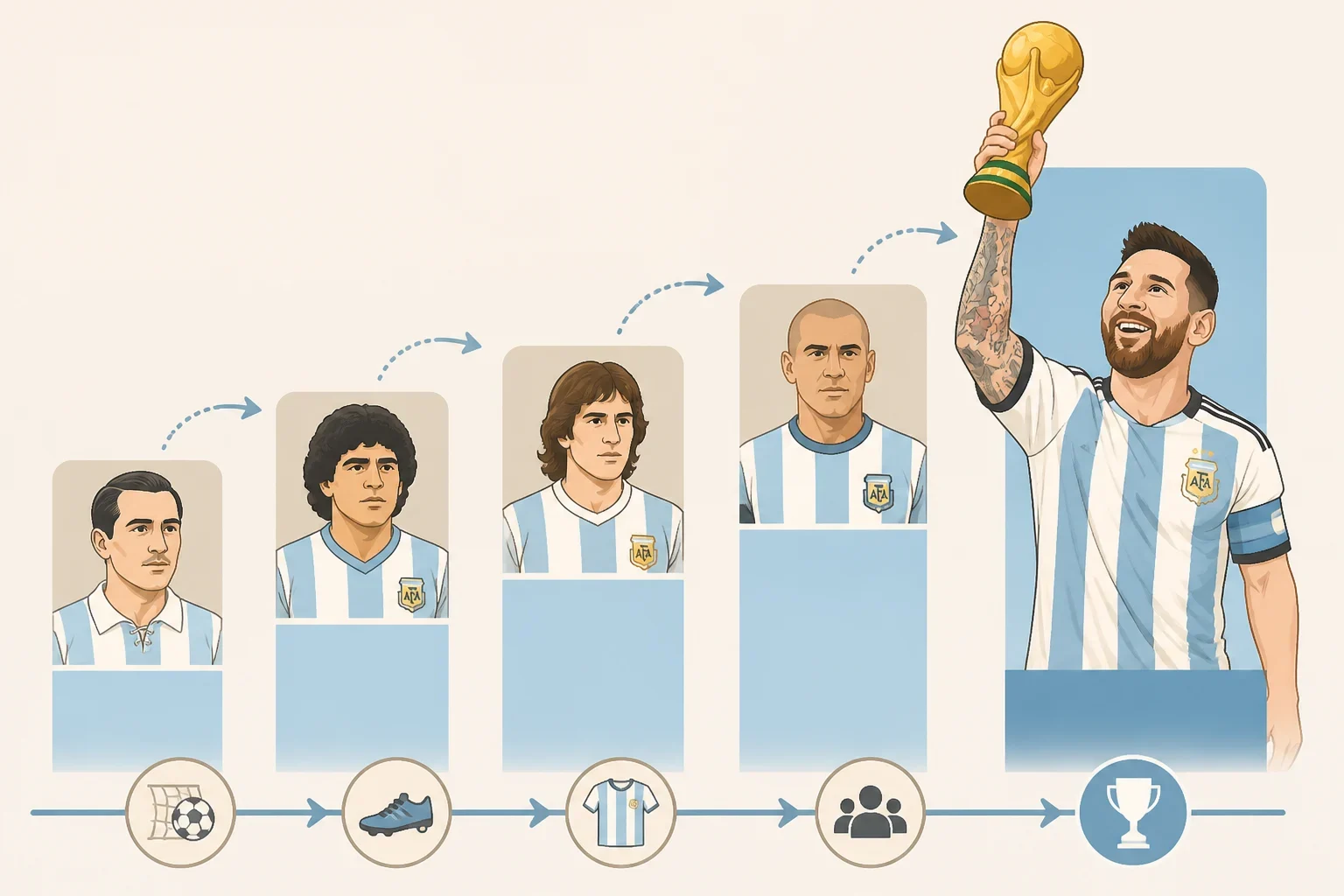
Messi’s Argentina career had already outgrown the idea that he failed to produce for the national team. His scoring record alone made that difficult to defend.
Batistuta’s previous Argentina mark stood at 56 international goals before Messi passed it, according to the AFA. That comparison matters because the old criticism was never based on a lack of goals or appearances. Messi had become the country’s leading scorer and, later, its most-capped player.
Those records also show the length of his responsibility with Argentina. He remained a central figure through multiple World Cup cycles and Copa América campaigns, rather than appearing only during one successful tournament run. That does not prove that every team result was his responsibility. It does establish that the national team’s successes and failures were repeatedly judged through his role.
The 2022 World Cup added tournament-specific evidence. Messi was named the competition’s best player by FIFA, scored seven goals, and finished level with France’s Kylian Mbappé at the top of the scoring list, according to FIFA.
Argentina’s final against France made the comparison with earlier tournaments especially sharp. Messi scored twice in the 3-3 draw before Argentina won on penalties, according to FIFA. He also converted his penalty in the shootout, giving the final a direct example of his involvement under pressure.
The record book therefore answers one part of the debate. Messi’s problem with Argentina was not that he lacked production. It was that the production had not ended with a senior championship.
What the criticism was built on
The criticism came from repeated losses in major finals. Argentina lost the 2007 Copa América final to Brazil, the 2014 World Cup final to Germany, and consecutive Copa América finals to Chile in 2015 and 2016, according to FIFA and CONMEBOL.
Those defeats created a simple public narrative: Messi could accumulate records and dominate stretches of matches, but Argentina could not finish a major tournament with him as its leader. The argument was common among supporters and media commentators, though it was not a formal statistical measure of his performance. It treated the final result as the decisive test.
That standard had an obvious weakness. Football finals are team events. A goalkeeper’s save, a defender’s clearance, a missed chance, or a penalty shootout can change the outcome without reducing one player’s overall contribution. Argentina’s defeats were team results, even when Messi was the team’s most important attacker.
The criticism still had a factual basis. Before 2021, Messi had not won a senior international title with Argentina despite reaching major finals. Individual scoring records could not settle that objection because the objection was about championships.
The pressure became especially visible after the 2016 Copa América final. Messi briefly retired from international duty after Argentina’s defeat, then reversed that decision weeks later. That episode is part of the documented history of the period, but it does not by itself prove what Messi felt or how every Argentine supporter viewed him. The safer conclusion is that the trophy drought had become a major issue surrounding the national team.
That distinction matters when evaluating the later trophies. The 2021-2024 run had to answer two different complaints. Argentina needed to win a senior title, and Messi needed to show that his individual influence remained visible when the tournament reached its decisive matches.
The 2021 Copa América: the drought finally ends
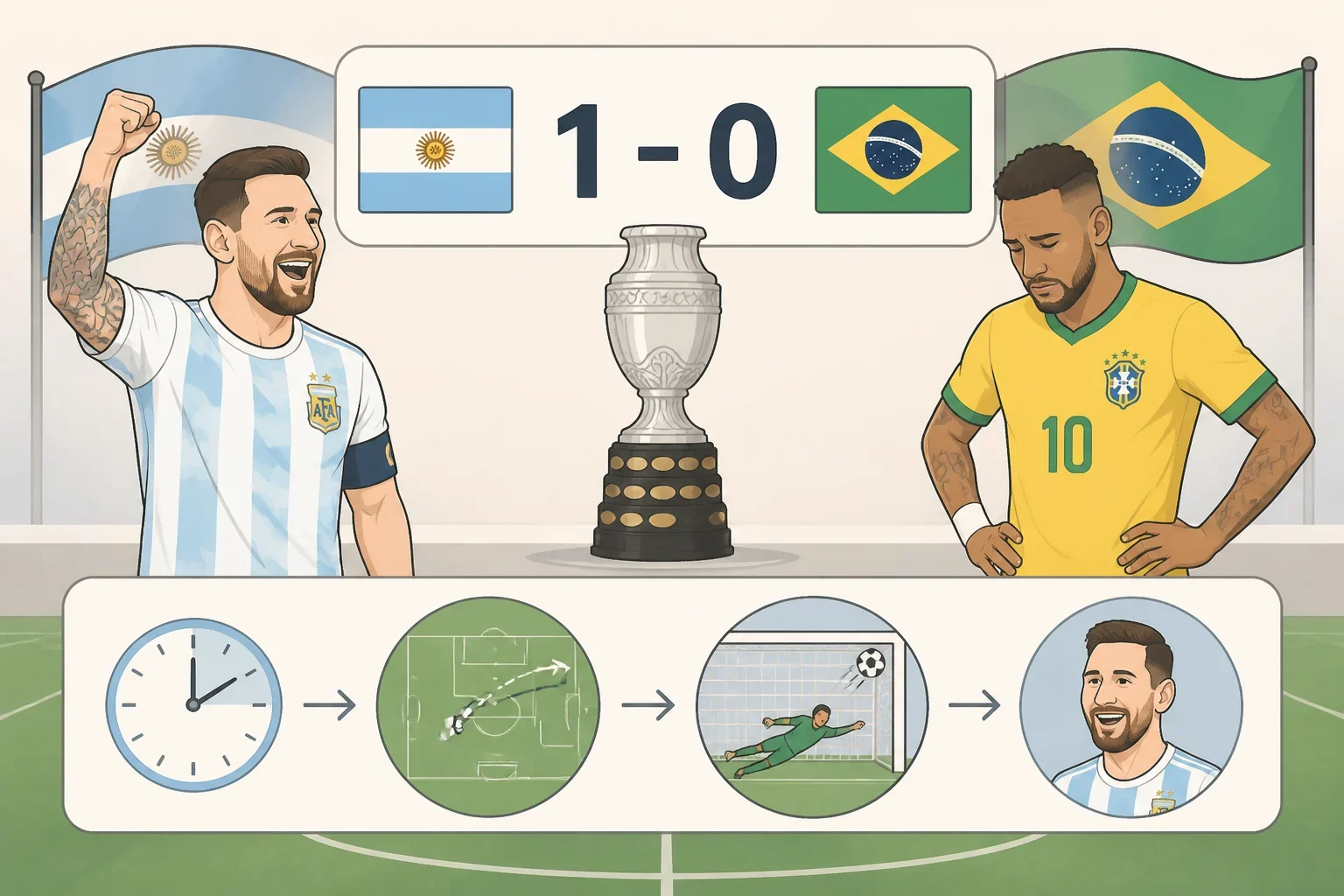
The 2021 Copa América established the team result that had been missing. Argentina defeated Brazil 1-0 in the final at the Maracanã, ending a 28-year senior-team title drought, according to CONMEBOL.
Messi did not score in the final. Ángel Di María scored Argentina’s goal, and the team protected the lead. That detail should remain part of the analysis because it prevents the title from being presented as a one-player victory.
Messi’s tournament contribution was still substantial. He was recognized as the competition’s best player and finished as a co-leading scorer with Colombia’s Luis Díaz, according to CONMEBOL. The exact value of the 2021 title for Messi’s individual case therefore sits at the tournament level, not in the final’s goal column.
This was the first answer to the old criticism. Messi led Argentina through a senior competition, won the tournament’s top individual award, and finished with the trophy. The final itself showed the limits of a player-centered explanation, while the full tournament showed why Messi remained central to Argentina’s success.
The 2021 Copa América resolved the result-based objection. It did not, on its own, settle every argument about Messi’s performance in finals.
The 2022 World Cup: the strongest individual evidence
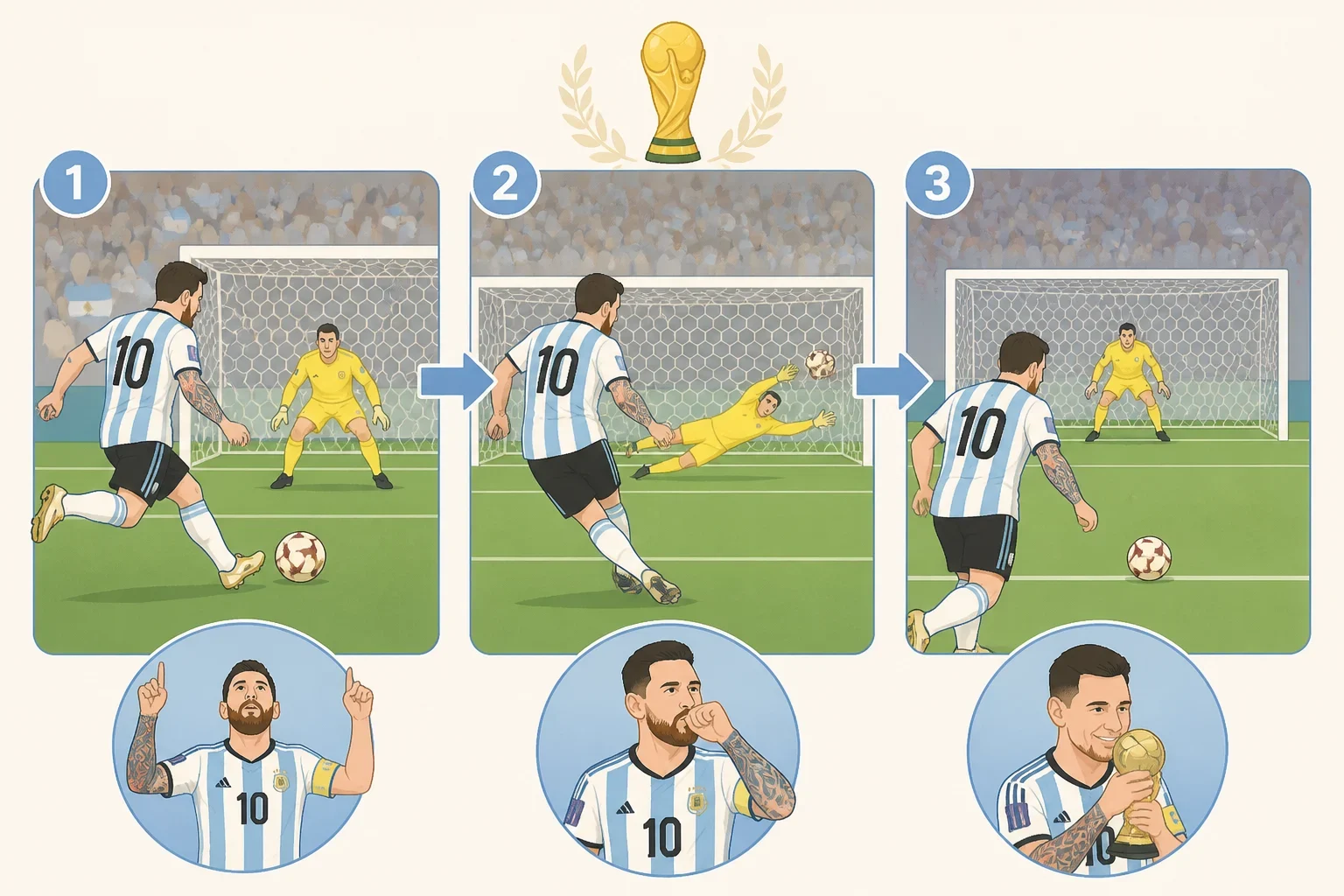
The 2022 World Cup addressed the performance question more directly.
Argentina defeated France after a 3-3 final that went through extra time and ended in a penalty shootout, according to FIFA. Messi scored twice, including once in extra time, and converted his penalty during the shootout, according to FIFA.
His influence was not limited to the final. He scored seven goals during the tournament, shared the scoring lead with Mbappé, and won the Golden Ball as the World Cup’s best player, according to FIFA. Those facts connect the team achievement to sustained individual production across the competition.
This is the strongest evidence against the old version of the criticism. Messi was Argentina’s captain, its most prominent attacking player, a scorer in the final, and the tournament’s best player. The title was still a collective achievement, but his role was not merely symbolic or incidental.
There is a reasonable counterargument. Argentina needed a complete squad to win the World Cup. The team required defensive work, midfield control, goalkeeping, penalty takers, and contributions from players other than Messi. France’s Mbappé scored a hat trick in the final, which also shows how little control one star has over a match of that scale, according to FIFA.
That counterargument changes the wording, not the conclusion. The evidence does not show that Messi won the World Cup alone. It shows that he provided elite individual production inside a championship team and remained decisive in the final itself.
That was the part of the debate the 2021 Copa América had left open.
The 2024 Copa América: a team result with less individual evidence
The 2024 Copa América supplied another important team result. Argentina defeated Colombia 1-0 in the final and secured a second continental title during the run, according to CONMEBOL.
The title strengthens Messi’s Argentina résumé because it adds another senior championship to the period that began with the 2021 Copa América. It also makes the broader team achievement harder to dismiss as a single successful tournament. Argentina won a continental title, a World Cup, and another continental title across three competitions.
The individual argument is less straightforward. The available record for the 2024 final does not provide the same kind of evidence as the 2022 World Cup final, where Messi scored twice, converted in the shootout, and received the tournament’s top-player award. The 2024 title should therefore carry more weight as evidence of Argentina’s sustained strength than as a defining example of Messi’s personal final performance.
That distinction keeps the analysis from making the same mistake as the criticism it replaces. A team can win because of several players and still have one outstanding central figure. Messi’s presence mattered across the trophy run, but each final must be judged on its own evidence.
The three title runs therefore answer different questions:
- 2021: Argentina ended its senior-title drought, while Messi supplied the strongest individual contribution across the tournament rather than in the final goal.
- 2022: Messi produced the clearest individual answer, scoring twice in the final and winning the tournament’s top-player award.
- 2024: Argentina added another major title, strengthening the team case more than the specific case about Messi’s actions in the final.
That framework is more useful than saying Messi “won everything” or that he carried Argentina by himself. The first claim ignores the limits of a player-centered explanation. The second ignores how much he contributed across the tournaments, especially in 2022.
What the trophy run resolved
The criticism that followed Messi through 2016 no longer applies in its original form. Argentina won senior international titles with him as captain, and the claim that he had never won a major trophy for the national team is no longer true.
The performance criticism is also substantially weaker. The 2022 World Cup provides the clearest answer because Messi combined tournament-wide production with decisive actions in the final. The 2021 Copa América supports that case through his overall tournament award and scoring record, even though he did not score in the championship match.
The 2024 Copa América belongs in the résumé, but it should not be treated as extra proof of a personal final performance that the available evidence does not establish. Argentina’s victory strengthened Messi’s team record. It added less to the specific argument about what he did on the field during that final.
The most accurate conclusion is measured but firm: the 2021-2024 run removed the central factual basis of Messi’s old trophy criticism. It did not make him solely responsible for Argentina’s success, and it did not erase the importance of his teammates. It showed something more defensible: Messi already had the individual records, then added the senior titles, and at the 2022 World Cup he paired that team success with the strongest final-stage performance of his Argentina career.
For Argentina’s next competitive chapter, the practical point is to follow confirmed scheduling announcements from CONMEBOL and the AFA rather than assume a fixed tournament calendar. The trophy debate has changed, but the national team’s future schedule remains a separate question from what Messi’s 2021-2024 record already established.