
NHL jersey tuck rule: how Rule 9.5 costs teams two minutes
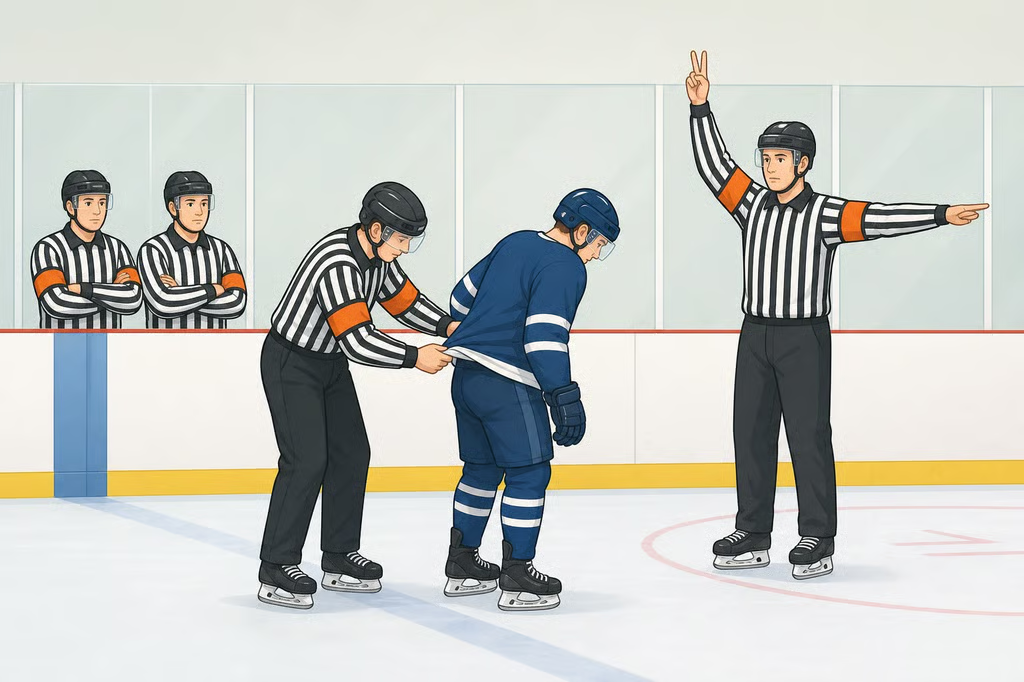
Philadelphia Flyers forward Trevor Zegras took a two-minute minor during a preseason game against the Boston Bruins on September 24 for tucking his jersey into his pants. Officials warned him in the first period, then flagged him again in the second for "improperly wearing the equipment," ESPN reported.
The NHL jersey tuck rule behind that call isn't new. Rule 9.5 has required protective equipment to stay covered since 2013, but referees stopped calling it for roughly 13 years until this season's league-wide enforcement push brought it back, according to NHL.com's Spanish-language site. Zegras' penalty was the first jersey-tuck call in nearly 13 years, per ESPN, citing the officiating tracker Scouting The Refs.
Here's what Rule 9.5 requires, how officials move from warning to penalty, and why the league is enforcing it again this season.
What NHL Rule 9.5 actually says
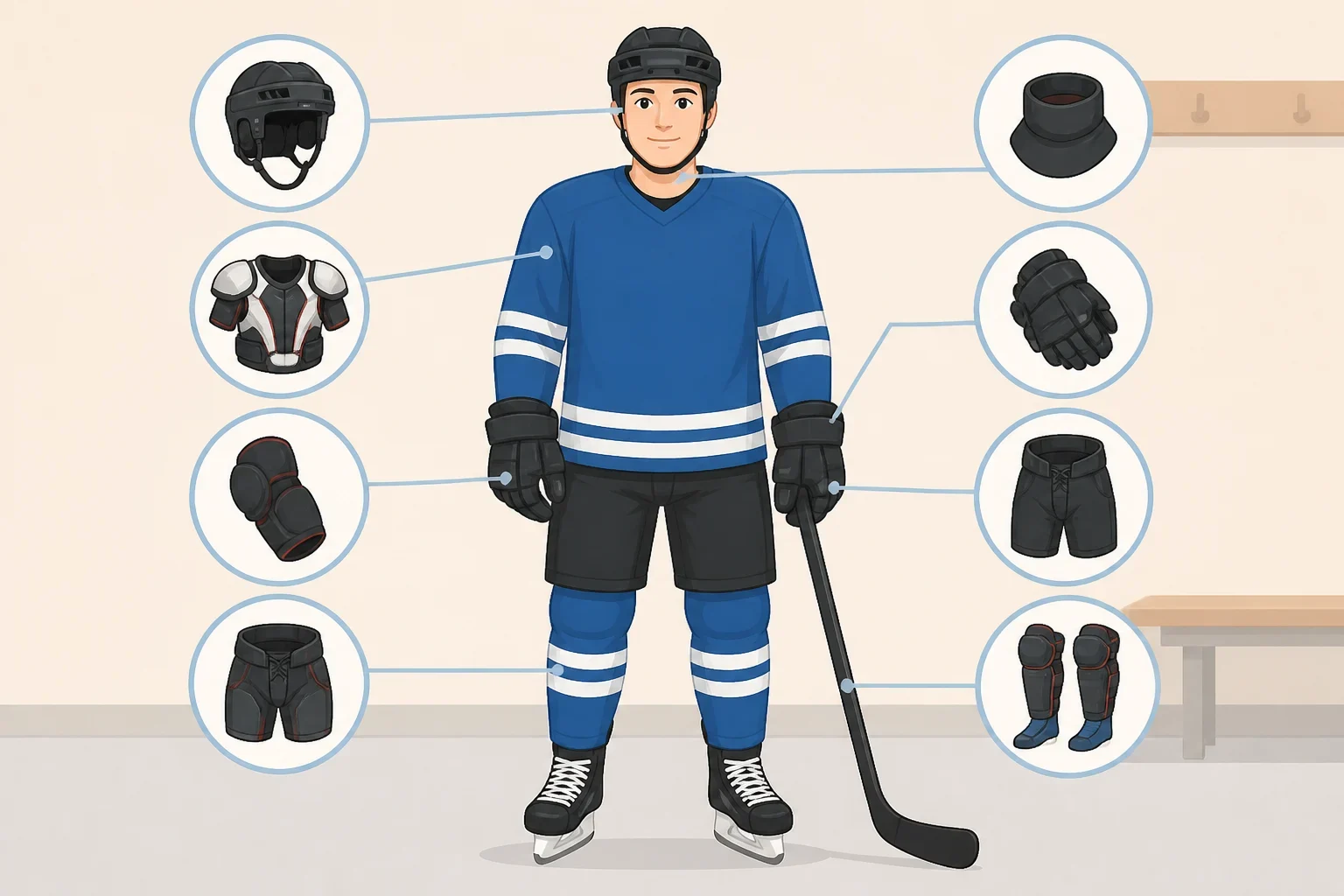
News coverage of the Zegras penalty quotes Rule 9.5 as requiring that "all protective equipment, except gloves, headgear, neck protection, and goalkeepers' leg pads must be worn under the uniform," per both ESPN and The Philadelphia Inquirer. That wording comes from those outlets' citations of the NHL rulebook, not a direct link to the league's own rule text, so it's worth treating as reported rulebook language rather than a primary-source quote.
The league's uniform guidance translates that into a practical standard on the ice: a jersey can't be tucked in a way that exposes the top of the pants padding or other protective gear, and a player's uniform number has to stay visible, per Scouting The Refs.
The league also accounts for how a jersey moves once play starts. Jerseys ride up naturally during a shift, and the guidance treats that differently from a player who begins a shift with the jersey already tucked. Officials direct players to untuck before play resumes rather than penalizing the incidental movement, Scouting The Refs reported. The violation point is specific: a player can't start a shift with the jersey tucked in.
Nothing in the reporting suggests the standard carves out exemptions by experience level, which sets it apart from the season's other new uniform rule. Players with zero NHL games must wear cut-resistant neck protection beginning in 2026-27, while veterans are only "encouraged" to do the same, Scouting The Refs reported. Zegras, an established NHL player rather than a rookie, still drew the penalty, consistent with a jersey standard that applies across experience levels.
Why enforcement returned this season

The NHL last cracked down on tucked jerseys in 2013-14, then officials gradually stopped calling it, per ESPN. That enforcement gap stretched to nearly 13 years before Zegras' penalty.
This season, the league sent all 32 teams a three-minute video outlining a uniform enforcement push covering four areas: neck protection, warmup helmets, visors, and jerseys, Scouting The Refs reported. Flyers coach Rick Tocchet said teams had been told weeks earlier that proper equipment use would be an officiating emphasis this season, per ESPN.
The league frames the push as a safety and presentation issue, stating that the added neck protection mandate along with enforcement on warmup helmets, visors, and jerseys are "all designed with player safety and league image in mind," according to Scouting The Refs. That's the league's own stated rationale, not independent evidence that a tucked jersey itself causes injuries.
How the NHL Rule 9.5 jersey rule is enforced
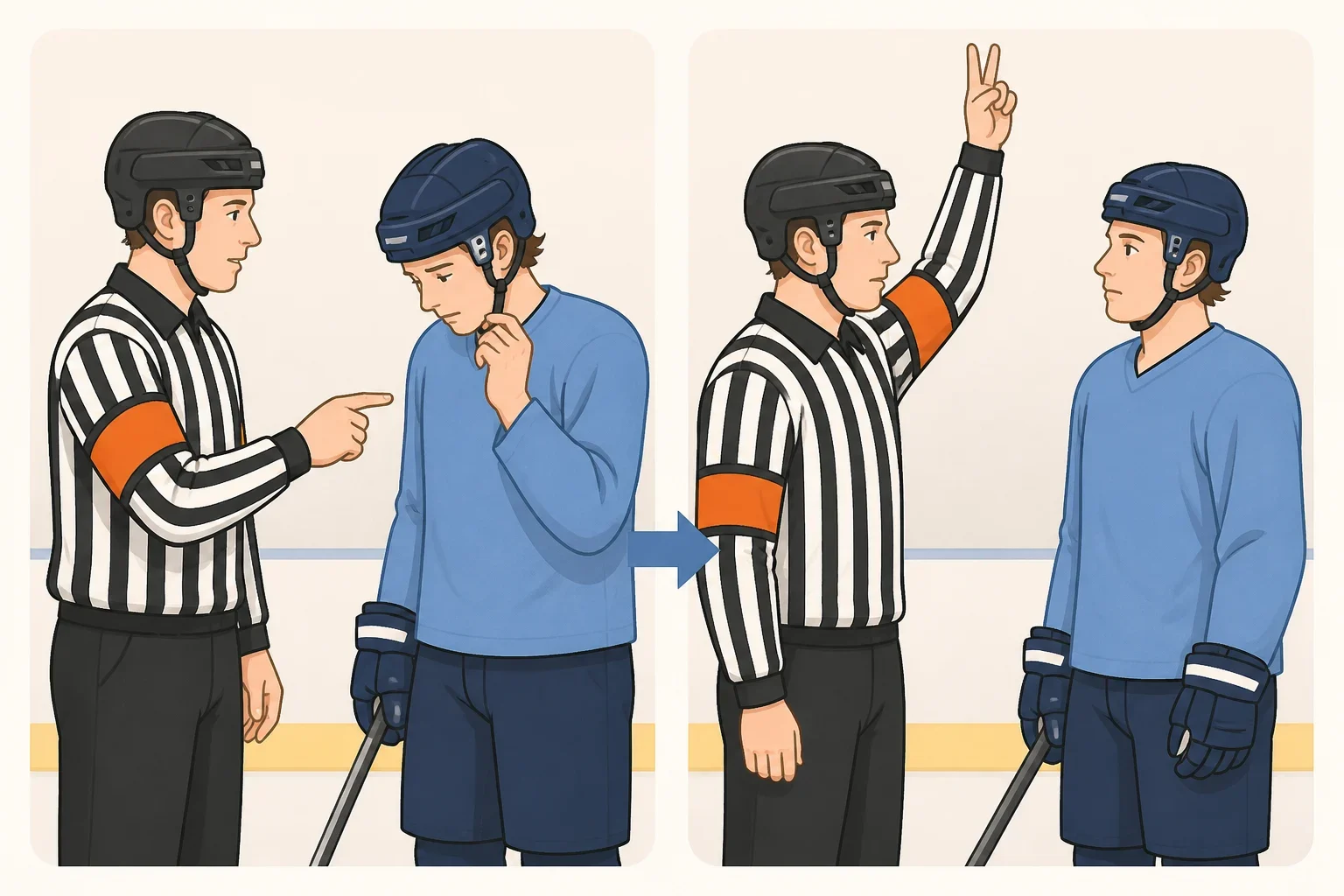
Rule 9.5 lays out its own process, separate from how officials handle a player who refuses to comply. An official who notices a violation, such as an uncovered pad or a tucked jersey, instructs the player to fix it. A second violation by that same player results in a minor penalty, per ESPN.
Zegras' game followed that sequence exactly. He was warned in the first period, returned to the ice with his jersey still tucked, and was assessed the two-minute minor in the second period, The Philadelphia Inquirer reported. ESPN and the Inquirer both quote the official penalty description as "improperly wearing the equipment," though the Inquirer's own reporting elsewhere labels the same call a delay-of-game minor. That gap between labels shows up in the coverage itself and is worth checking against the official game sheet before treating either term as final.
A different provision, covered under Rule 12.1 on illegal equipment generally, applies when a player refuses an official's direct instruction to correct flagged gear, rather than simply starting a later shift still out of compliance. That refusal draws a minor penalty for delay of game. Returning to the ice without making the fix brings a misconduct penalty, and a third instance brings a game misconduct, per The Philadelphia Inquirer and NHL.com/es. That escalation path is distinct from the warning-then-minor sequence that covered Zegras' violation; it applies to outright refusal, not a routine second instance of a tucked jersey.
Jerseys aren't the only equipment the league is flagging this preseason. Washington Capitals prospect Lynden Lakovic took an illegal-equipment minor for his visor earlier in the preseason, Scouting The Refs reported, a sign the enforcement push covers more than jerseys alone.
How players and coaches are responding
Zegras said the tuck is simply how he plays and suggested he forgot to fix it after a bench shift. "I started the game with it tucked, which is obviously how I usually play," he said, adding he "must have just went back down the bench and came out and forgot," per ESPN.
Flyers players responded with a lighthearted protest of their own, tucking their jerseys in during warmups before their next preseason game, per NHL.com's Spanish-language site.
Some veterans had already voiced frustration with the rule before Zegras' penalty. Alex Ovechkin has called it "kind of stupid," arguing that equipment shifts naturally during play and that the rule limits how players express themselves on the ice, per ESPN. That view reflects Ovechkin's own position rather than a broader player consensus in the available reporting.
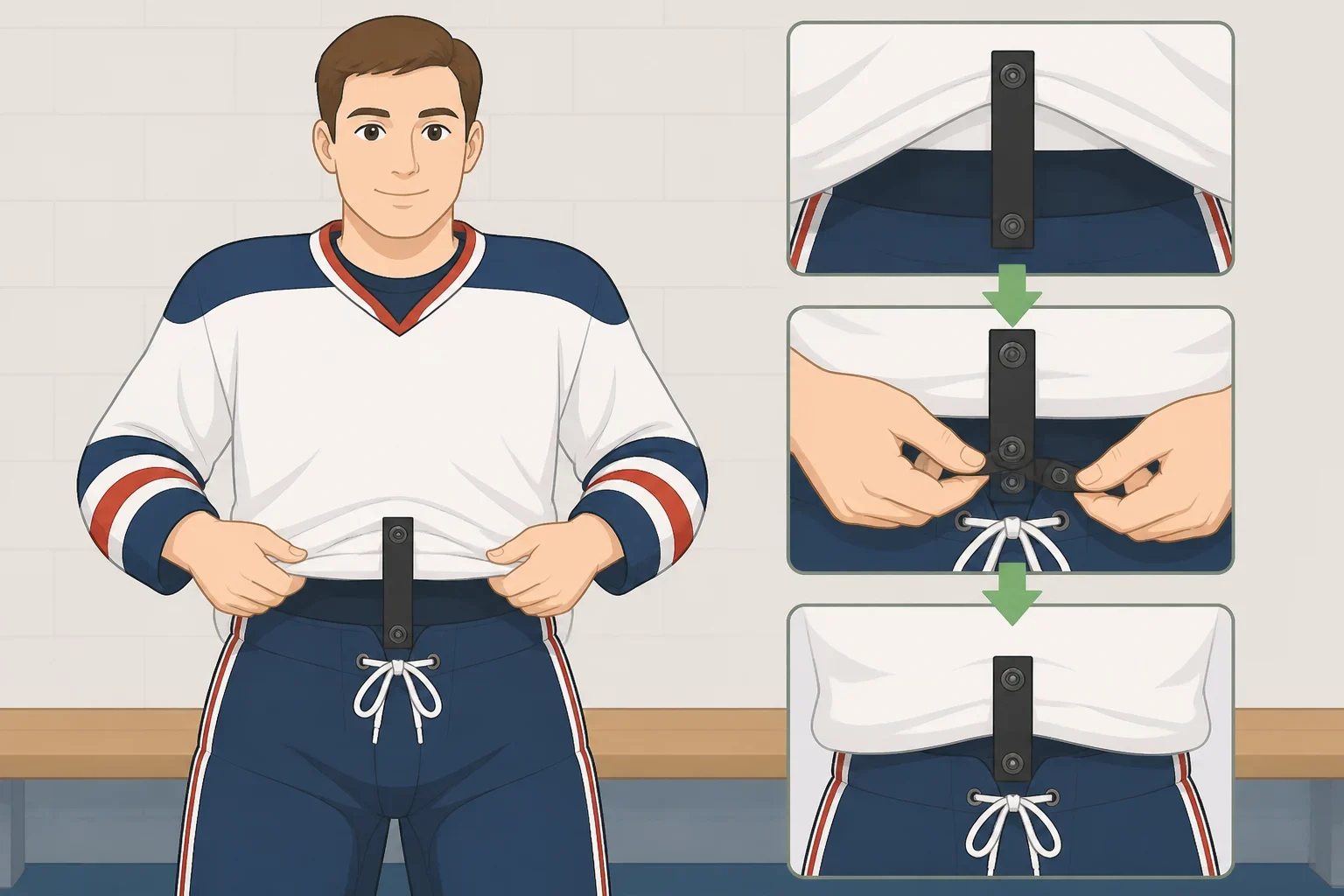
Tocchet's fix for Zegras was a tie-down, also called a fight strap: a loop of fabric that secures the jersey to the pants and was originally designed to keep jerseys from being pulled off during fights, The Philadelphia Inquirer reported. Tocchet said he made another Flyer, Matvei Michkov, put one on as well, telling reporters the team would keep using them going forward.
What to remember next
The jersey-tuck penalty runs on the warning-then-minor sequence covered above, not the harsher refusal escalation that only applies if a player ignores a direct instruction to fix flagged equipment mid-game.
Rule 9.5 itself isn't new; it has applied since 2013. What changed is that officials are calling it consistently again after years of inconsistent enforcement, per NHL.com/es.
All 32 teams received the league's uniform guidance video, per Scouting The Refs. The enforcement push is set to continue through the rest of the regular season and into the playoffs, not just the preseason window where Zegras and Lakovic were flagged, according to NHL.com/es. Anyone following a team this season should expect officials to keep calling it, and a tie-down is the simple fix coaches are already reaching for.