
NHL Offside Challenge Rules Explained: Blue-Line Reviews
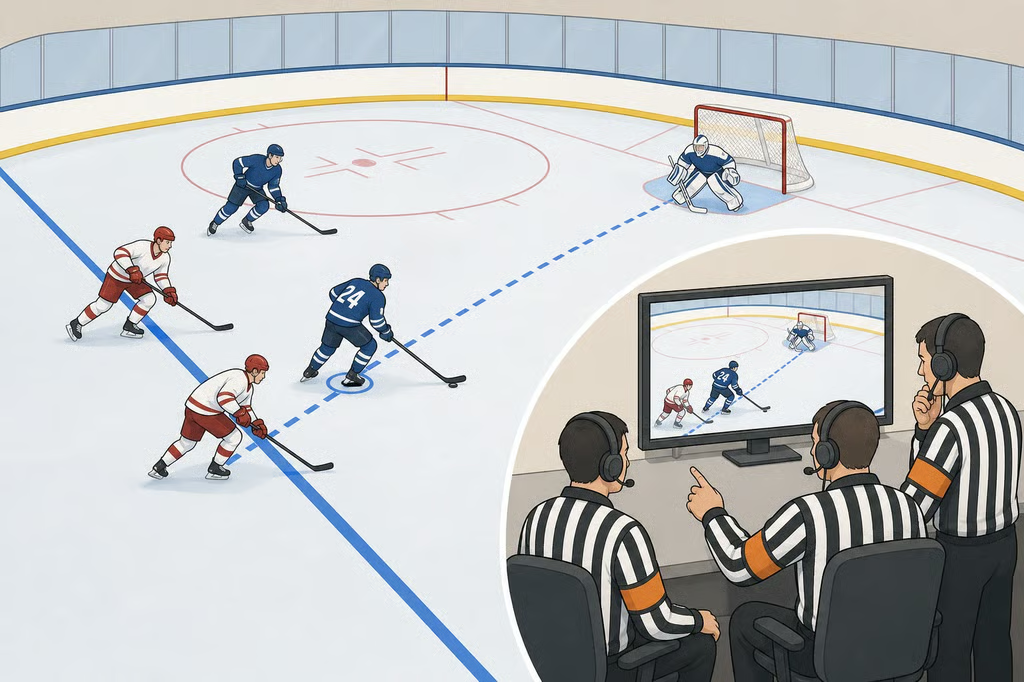
A goal can look completely clean at the net and still come off the board because of something that happened seconds earlier at the blue line. Vegas Golden Knights forward Mark Stone found that out in June, when his goal was wiped out because teammate Brett Howden crossed into the offensive zone before the puck did, according to NHL.com. Understanding NHL offside challenge rules starts with knowing exactly what officials are measuring: where an attacking player's skates are relative to the blue line at the moment the puck enters the zone, not a general sense of who got there first.
Offside itself carries no penalty. It's a stoppage, not a punishment, meant to stop attacking players from cherry-picking near the opponent's zone, according to Deseret News. What follows breaks down the actual blue-line test, how a coach's challenge for offside works, how NHL offside reviews happen automatically in high-use moments, and what officials check when a reversal looks more complicated than a simple footrace to the line.
How the blue-line offside rule works
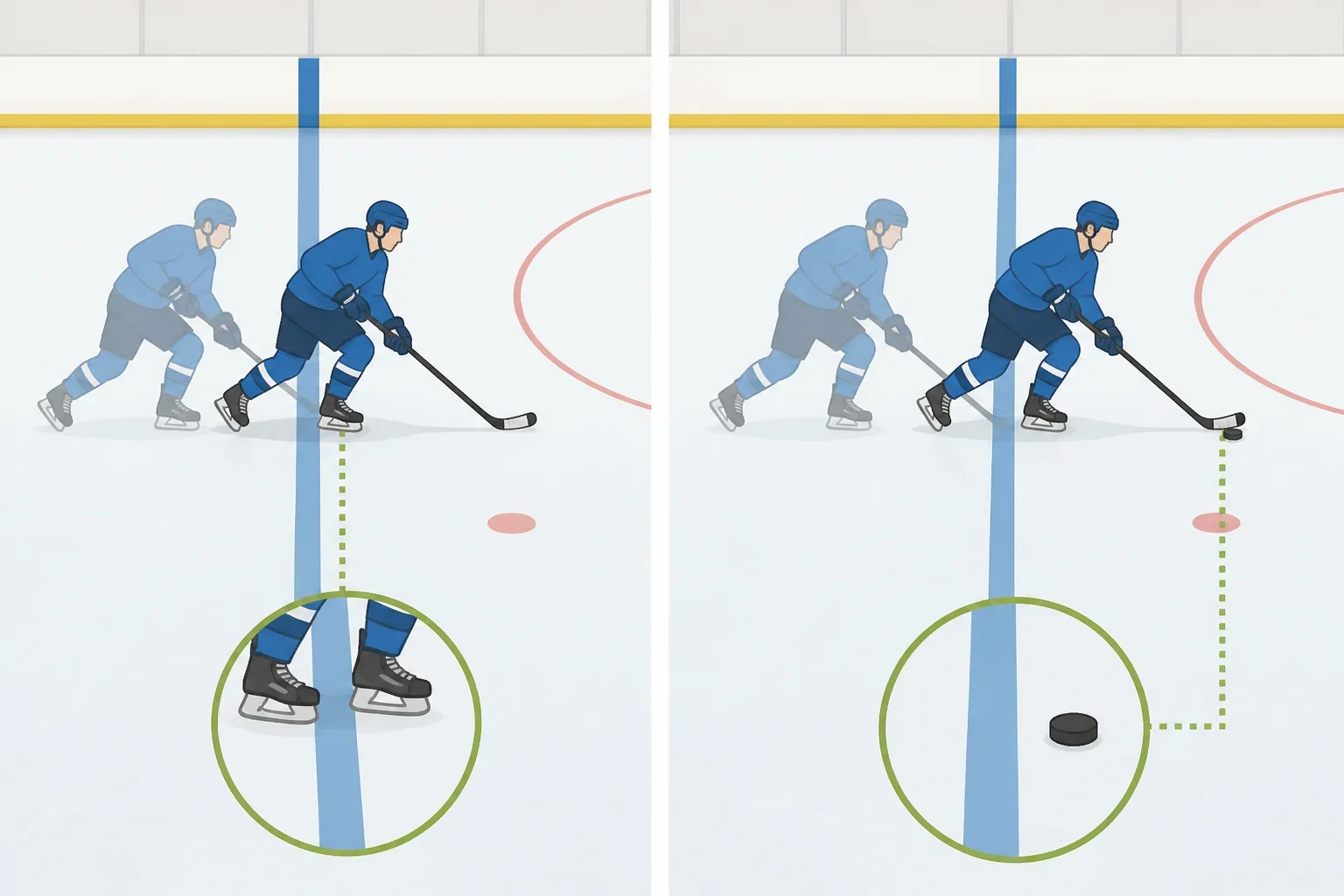
The standard is specific, not a general impression. An attacking player is offside once both skates are completely over the puck's side of the blue line before the puck itself crosses it, since the rule is built around the puck fully crossing the line before any attacking player does, according to Deseret News. A skate still touching the line keeps a player onside.
One quick note on wording: in hockey it's "offside," singular, not "offsides," a distinction that separates casual viewers from regular fans, per Deseret News.
Delayed offside adds a wrinkle, especially around line changes. If a play is in a delayed-offside situation and an attacking player heads to the bench instead of playing the puck, that player only counts as having cleared the zone once both skates are off the ice and a linesperson judges him off the playing surface, under Rule 83.1 of the NHL rulebook as quoted by Scouting The Refs. It's a narrow scenario, but it's the kind of detail that turns a routine substitution into a reviewable moment.
How the NHL coach's challenge for offside works
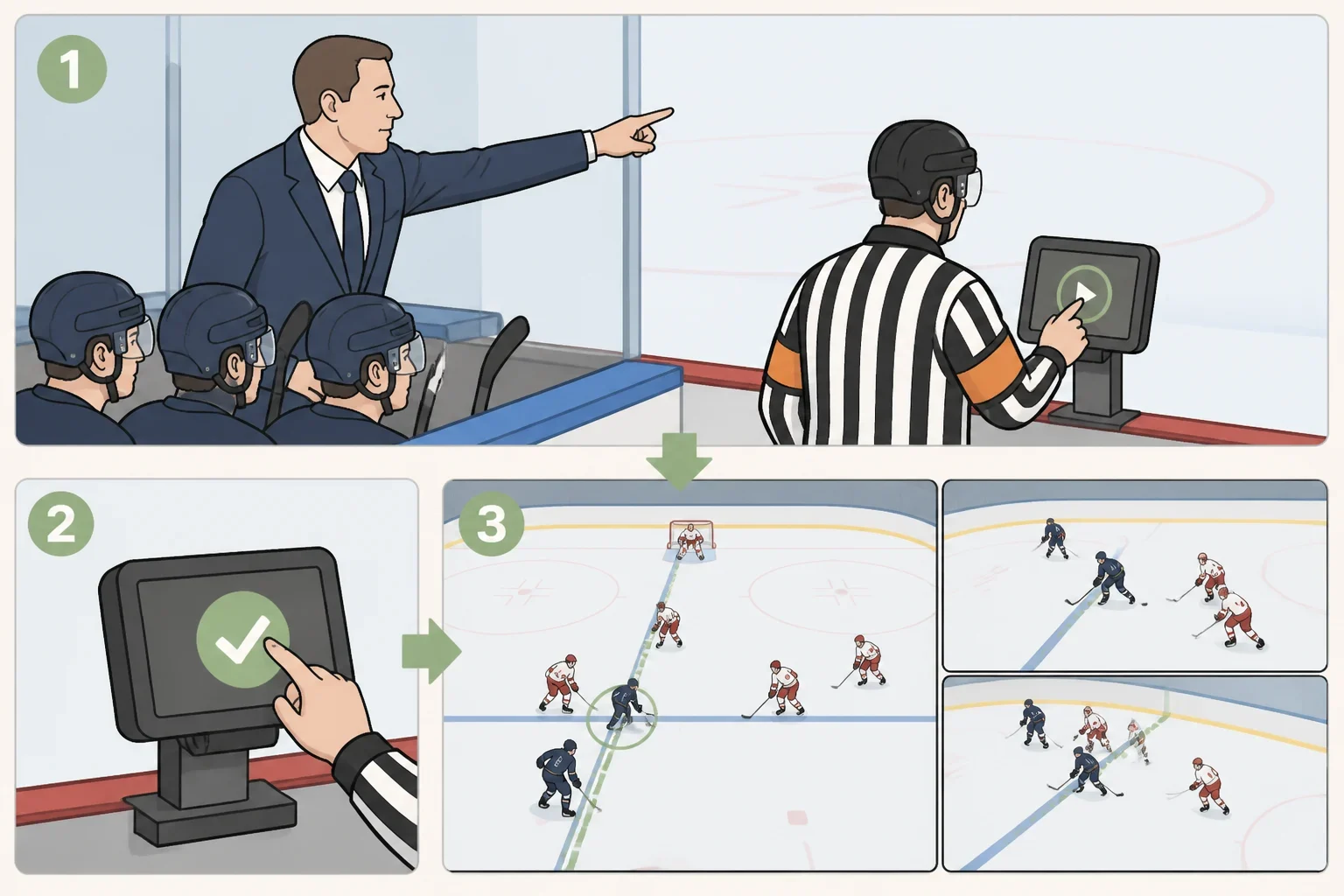
For most of a game, officials catch offside in real time. Linespeople are supposed to stop play the instant a player enters the zone too early, but they're human, and they sometimes miss it, according to Deseret News.
Before the review process was introduced for the 2015-16 season, a missed call simply stood, no matter how obvious the error looked afterward. Pressure for change built after Matt Duchene scored on a play where he was offside by at least a foot in 2013, according to Deseret News.
That's the gap a coach's challenge fills now. Throughout most of a game, a potential offside only gets reviewed if a team issues a formal challenge, per Deseret News. It isn't a free look: a failed challenge costs the team a two-minute penalty, which could mean conceding another goal on top of the one already on the board, according to Deseret News.
At the NHL's March 2025 general managers' meetings, league hockey operations staff told team executives that evaluating a challenge starts with pinning down exactly where the puck entered the zone and whether that spot is clearly visible on the available replay angles, ESPN reported. Officials also review these plays on tablets at the penalty box while staying in contact with the league's hockey operations staff before a ruling is announced, per the same report.
A coach's challenge doesn't always follow the simplest path. In May 2026, Jack Quinn appeared to score on a shot that crossed the line inside the goaltender's glove, and the play survived one review before a coach's challenge led officials to reverse the call anyway, according to NHL.com. That sequence shows a goal can clear one layer of scrutiny and still get taken down by another.
The Stone play from the opening happened in the second period, which puts it outside the automatic review window described below. The available NHL clip confirms Howden's early zone entry wiped out the goal, but it doesn't identify who initiated the review, a coach's challenge or otherwise.
When the NHL reviews offside automatically, no challenge required
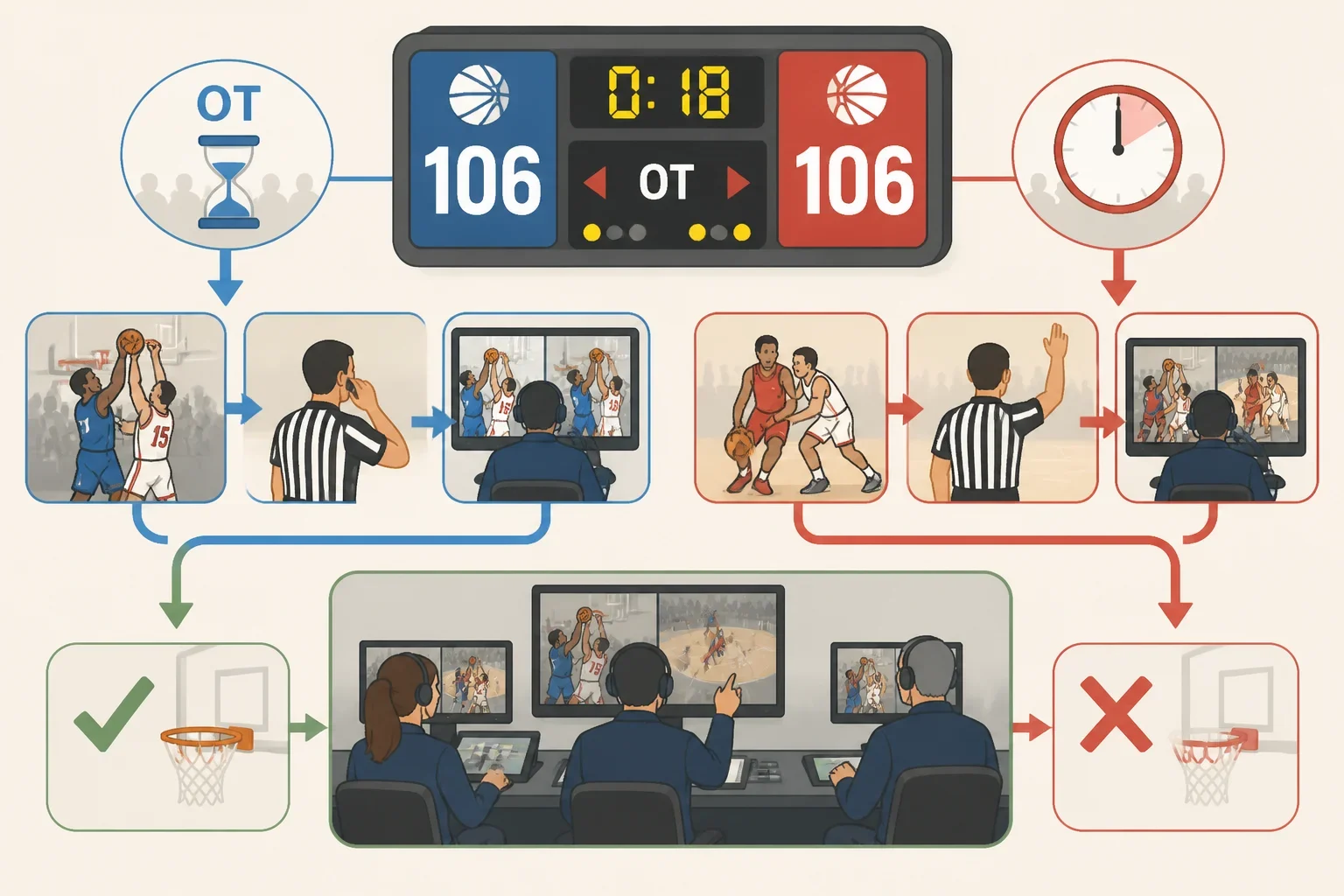
A two-minute penalty means nothing in sudden-death overtime. If a coach's challenge fails there, the goal under review simply ends the game, so the usual deterrent disappears, according to Deseret News. That's why the league built a separate safety net for the moments when the stakes are highest.
Every goal scored in overtime or the final minute of regulation, in both the regular season and the playoffs, gets automatically reviewed by the league's Situation Room for potential infractions, offside included, according to Deseret News. No coach has to ask for it.
That automatic net can catch more than one problem in a single extra session. In a Frozen Frenzy overtime on October 29, 2025, between the Pittsburgh Penguins and Philadelphia Flyers, Evgeni Malkin's goal was waved off for a premature substitution and Tyson Foerster's goal was separately nullified for offside, both inside the same overtime period, according to NHL.com.
Sources don't fully agree on where final authority lands once a play reaches review. Deseret News reports that on-ice officials make the final call based on the angles and information the Situation Room provides, according to Deseret News. A Scouting The Refs account of the Colorado Avalanche play described below instead credits the Situation Room itself with making the ruling. Either way, the call draws on both the referee at ice level and the league's replay room.
What officials check during an offside review
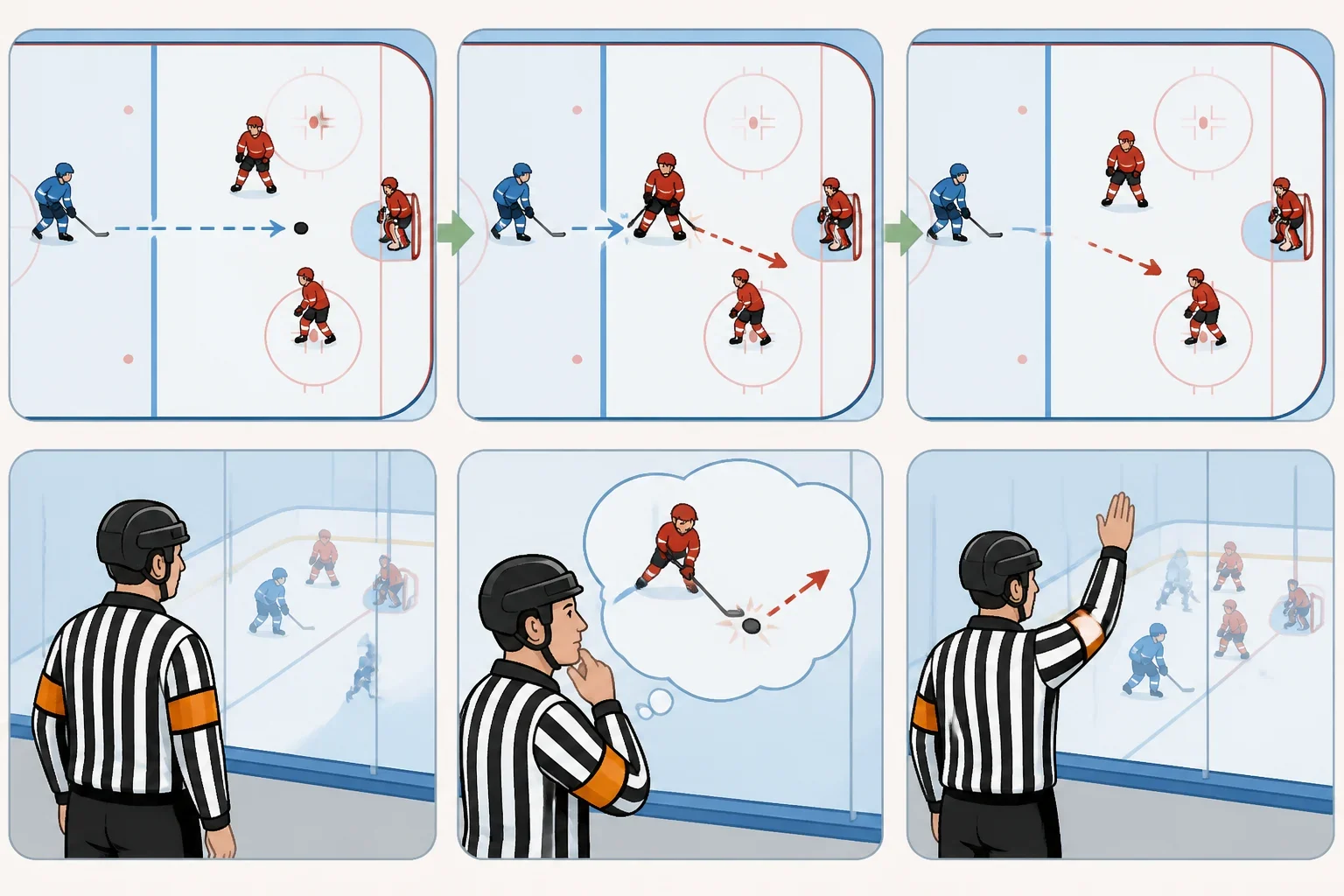
When a play goes up for review, the first question the Situation Room puts to the on-ice referee is whether replay shows anything he didn't see in real time, ESPN reported from the league's March 2025 general managers' meetings.
NHL executive Colin Campbell told reporters at those meetings that the original call on the ice is "[most] important in every one of these situations," even with extra camera angles available, according to ESPN. That reads as the league's general approach to replay rather than a fixed, numbered standard for how much video evidence it takes to overturn a call.
One exception trips up a lot of fans: deflections. If a defending player clears the puck and it rebounds off a teammate in the neutral zone before heading back into the defensive zone, attacking players are free to chase it in cleanly. But if an attacking player causes that same deflection, through a stick check or body contact, a linesperson has to signal a delayed offside instead, under Rule 83.2, according to Scouting The Refs.
That exact scenario cost the Colorado Avalanche a goal in October 2025. Video review determined that Valeri Nichushkin's contact sent the puck back into the Utah Mammoth's zone while Nathan MacKinnon was in an offside position, and the goal was wiped out with the clock reset to the moment of the infraction, according to Scouting The Refs. Avalanche coach Jared Bednar called the ruling "complete nonsense" afterward, even though it matched the written rule, per Scouting The Refs. Utah, which had its own goal disallowed earlier in that same game, went on to win 4-3 in overtime anyway, according to Scouting The Refs.
What to check next
The next time a goal gets waved off for offside, a few checks explain most of what just happened:
- Identify the zone entry that preceded the goal. That's the specific sequence a coach's challenge or an automatic review actually examines, according to Deseret News.
- Note whether the stoppage came from a coach's challenge or the league's automatic review process.
- Check the outcome. A successful challenge wipes the goal off the board; a failed one leaves the goal standing and adds a two-minute penalty against the team that challenged it, per Deseret News.
- Keep deflections and line changes in mind. A puck knocked back into the defensive zone off a defender, or a player who hasn't fully cleared the bench, can turn an apparently clean entry into an offside under Rule 83.1 or 83.2, according to Scouting The Refs.
The Colorado ruling is a good reminder that a confusing reversal can still follow specific rulebook language rather than a referee simply guessing wrong. That's worth keeping in mind the next time a review delay drags on and the reason isn't obvious from the stands.