
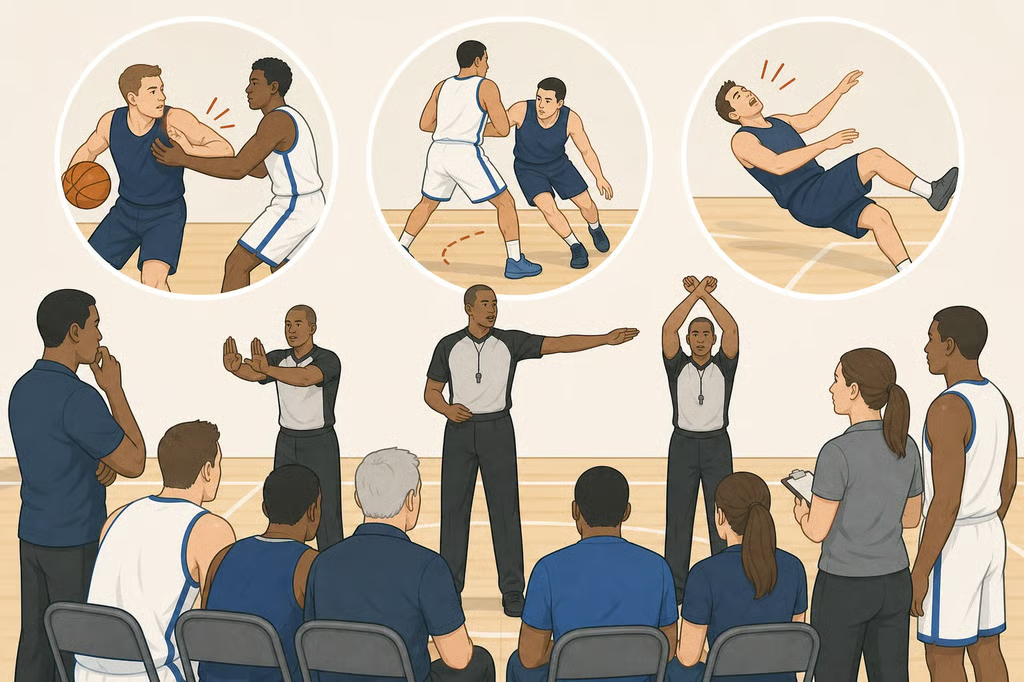
- NBA points of emphasis 2026-27: push-offs, screens, flops
- NBA points of emphasis 2026-27 explained
- The NBA offensive push-off rule, clarified
- NBA illegal screen enforcement targets contact after the screen is set
- NBA flopping rules 2026-27: a stricter definition
- NBA landing space rules: what the reporting shows
- What the preseason test looks like for Dallas
NBA points of emphasis 2026-27: push-offs, screens, flops
NBA officials visited Dallas Mavericks practice this week to walk players and coaches through the NBA's 2026-27 points of emphasis, covering off-arm push-offs, screen contact, flopping and landing space, according to Roundtable. The visit came a day after the league released its points-of-emphasis video, Roundtable reported.
That video, labeled "Part 1" and narrated by Monty McCutchen, the NBA's head of referee development and training, covers two specific plays: off-arm push-offs by ballhandlers and freedom-of-movement issues tied to screens. McCutchen addressed flopping separately in briefings with reporters the same week, laying out a specific definition officials are now instructed to apply, NBC Sports reported.
What follows is the threshold officials are working from on each of those calls this season, plus where landing space, a topic included in the briefing material without the same level of detail, currently stands.
NBA points of emphasis 2026-27 explained
None of this rewrites the rulebook. The NBA's video rulebook already treats it as an offensive foul when a player extends or uses an arm to push, hook or displace a defender, and the push-off rule itself is described as existing rather than new, per Roundtable.
What's changing is how closely officials are told to look. McCutchen told reporters referees "haven't been as consistent or as focused" on off-arm push-offs in recent seasons, framing 2026-27 as a correction in application rather than new language, per NBC Sports. New points of emphasis arrive every season, NBC Sports reported; this year it happens to be push-offs, screens, flopping and landing space.
Four areas, at a glance
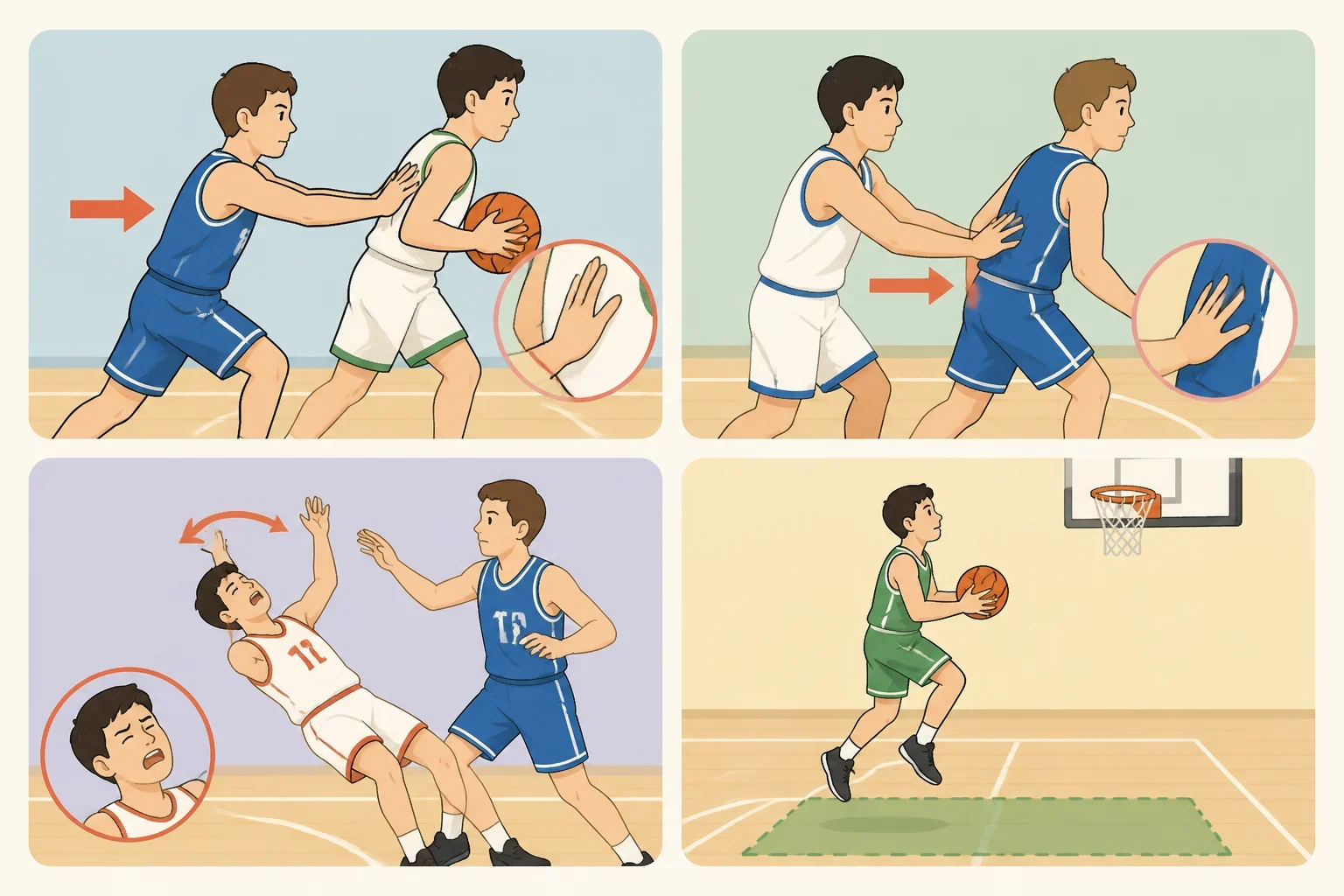
Play Who's affected What's being enforced Off-arm push-off Ballhandler Force or full extension used to create separation, versus legal "feel and firm" contact Screen shove Screener A push or shove that comes after a legal screen is already set Flop Any player exaggerating contact "Secondary theatrical exaggerated movements" (STEM) versus legal embellishment Landing space Closing-out defender Included in this year's briefing material; no new threshold has been described publicly
The NBA offensive push-off rule, clarified
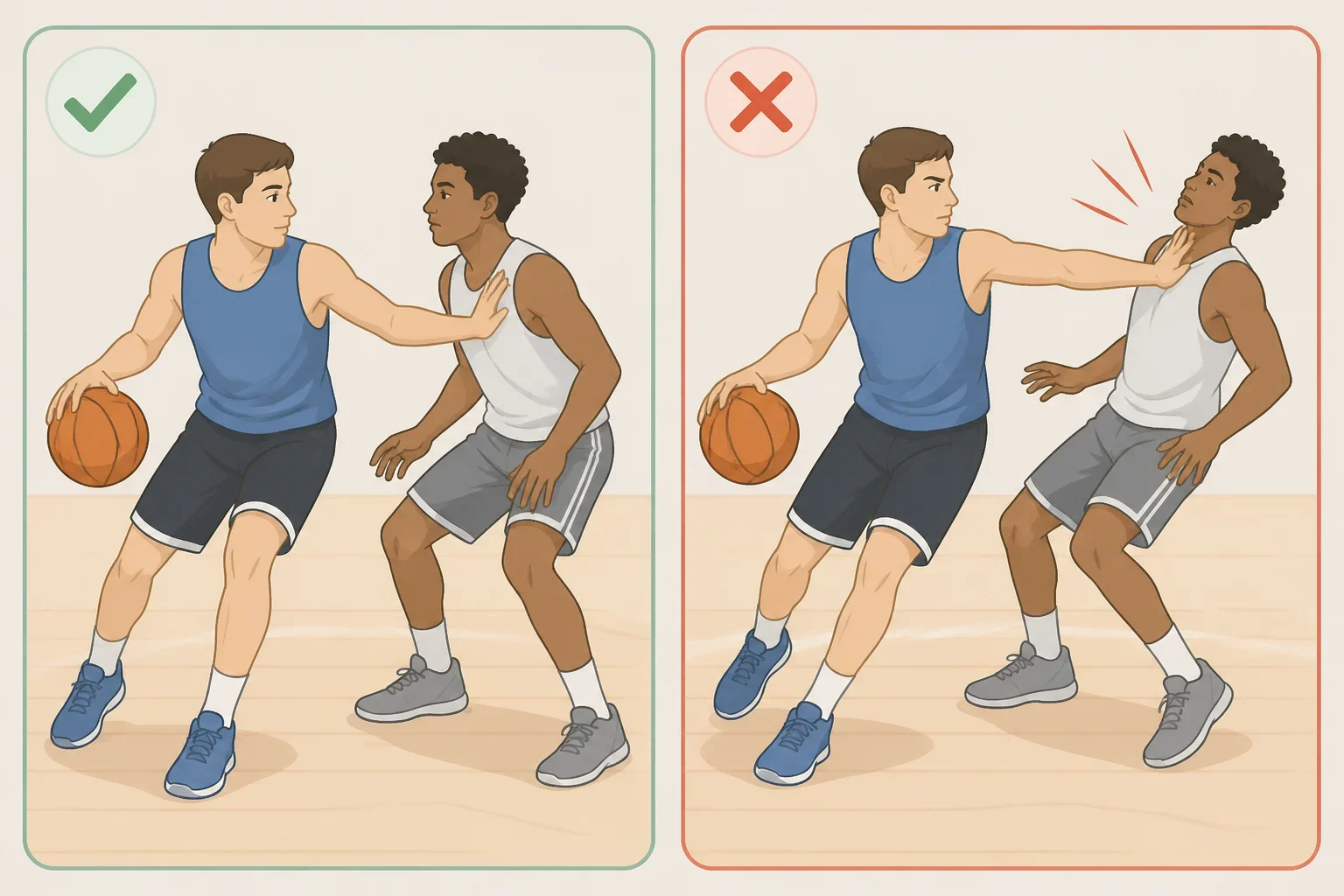
A ballhandler can legally use an off arm to feel for a defender and hold space. Using force, especially a push-off, to create separation is meant to draw an offensive foul, NBC Sports reported.
McCutchen's own example shows how narrow that margin can be. A player might legally "feel and firm" with the off arm ten times in a game and cross into illegal force only two or three times, and those few instances are what officials are being told to isolate, per NBC Sports.
Shai Gilgeous-Alexander, Jaylen Brown and James Harden have been singled out by fans and online commentators for the move. McCutchen said officials aren't allowed to avoid the call "because of the name on the back of their jersey," a league statement about even-handed enforcement rather than a finding that those players break the rule more than anyone else, according to NBC Sports.
Mavericks coach Dusty May, who took the job this year after coaching Michigan to the national championship earlier in 2026, said he supported the emphasis partly because of who's on his roster. "Do I like that they're trying to enforce it? Yeah. Probably because I don't think we have anyone that relies on it, so yes," May said, adding, "If we had anyone that was really creative and advantageous to push off, I don't know if I'd feel the same way," per Roundtable.
NBA illegal screen enforcement targets contact after the screen is set
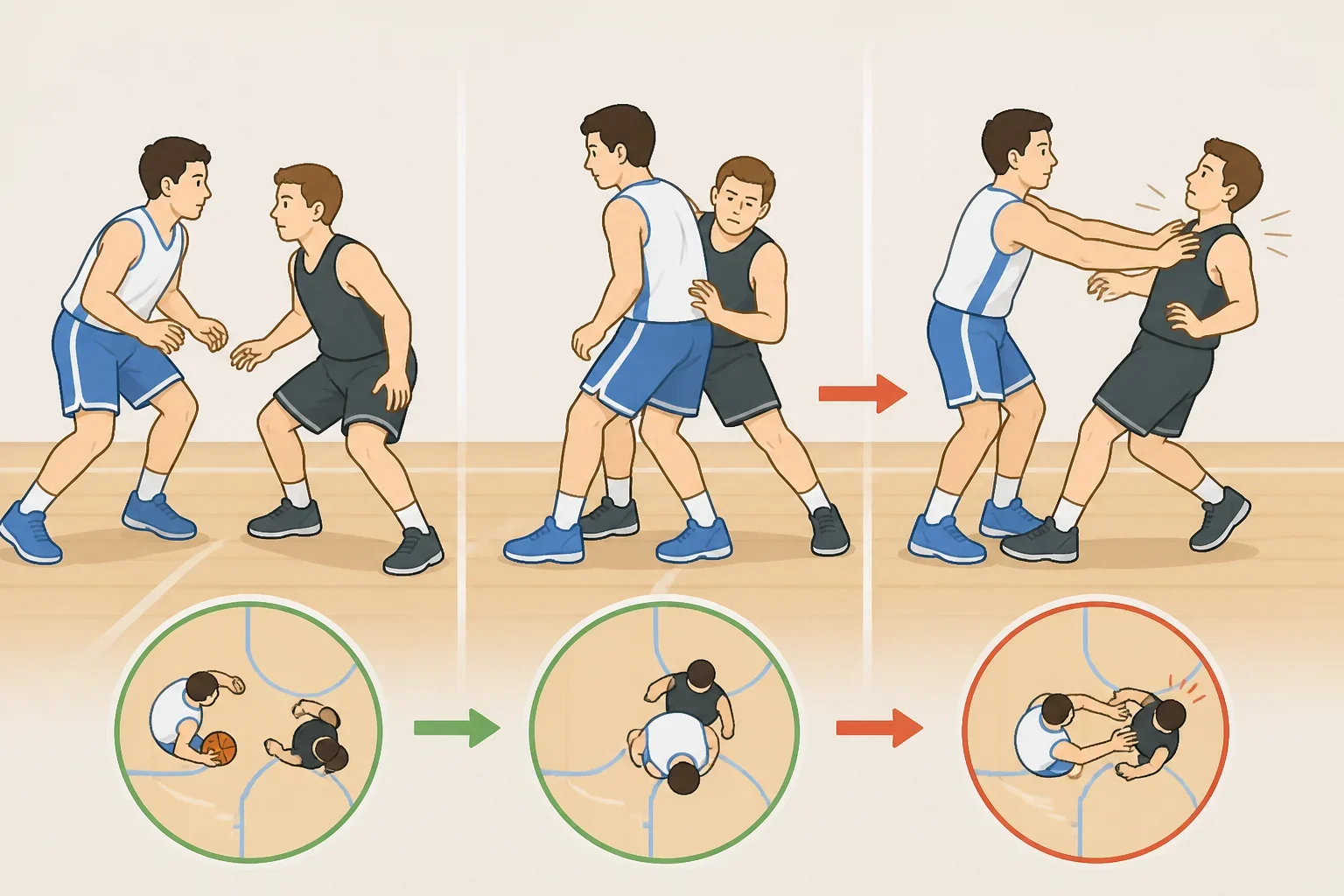
The screen call is separate from the push-off call, and it falls on a different player. The emphasis targets a screener who legally gets into position and then pushes or shoves the defender trying to get over the screen, NBC Sports reported.
McCutchen pointed to a rise last season in players setting legal screens and then pushing or shoving the defender fighting over them, part of why the issue is named explicitly in this year's video rather than folded into general contact guidance, according to NBC Sports. A related freedom-of-movement issue in the same briefing covers off-ball defenders denying opponents room to move through the perimeter and into the paint, Roundtable reported.
NBA flopping rules 2026-27: a stricter definition
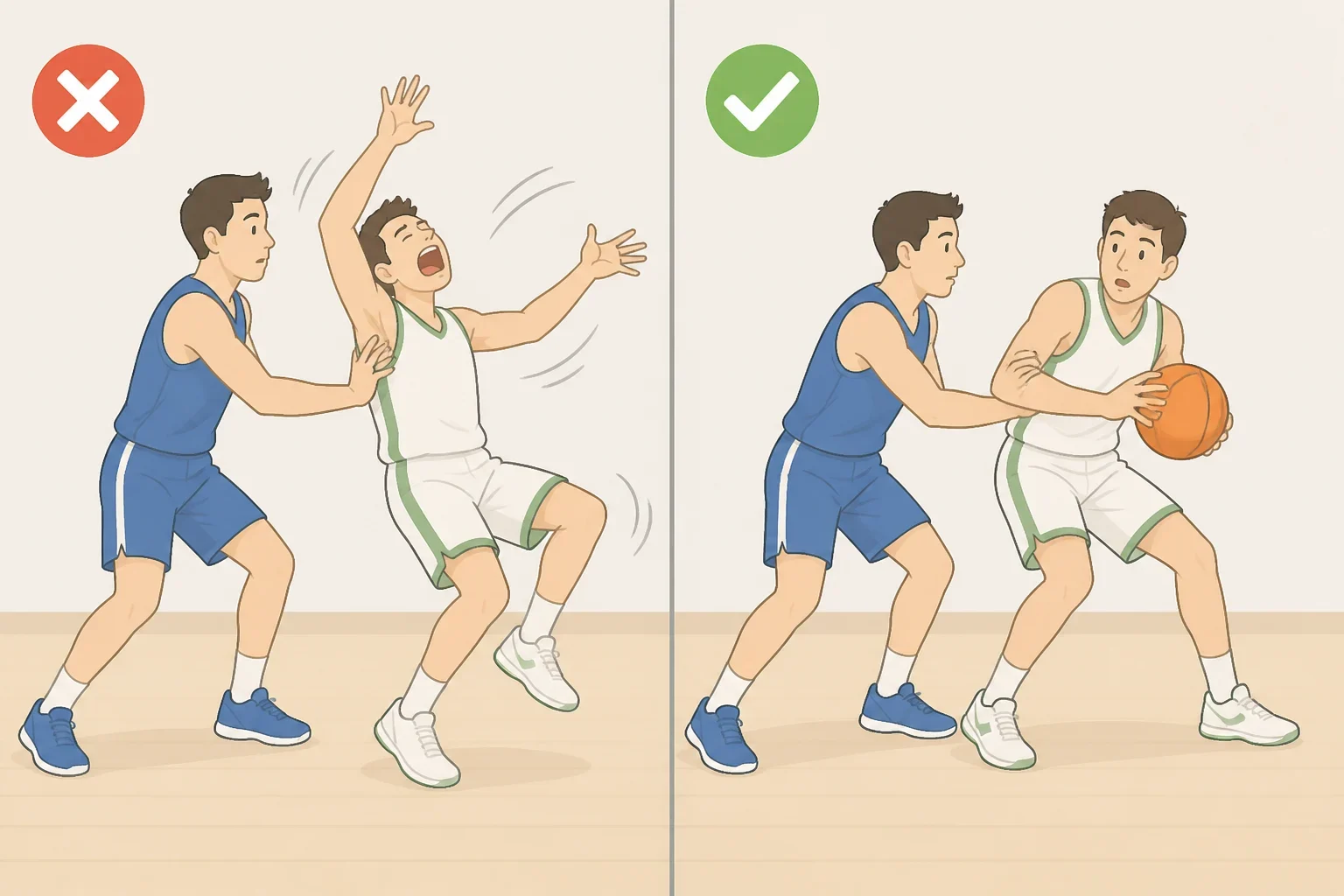
The league is using the acronym STEM, for "secondary theatrical exaggerated movements," to define a flop. McCutchen described it as the standard officials are now asked to apply: "We have a really strong definition of what a flop is, it's secondary theatrical exaggerated movements," according to NBC Sports.
Penalties run two tracks. Officials can assess a non-ejection technical foul for a clear-cut flop in real time, and the league can separately review plays after games and issue fines, per Roundtable.
Embellishment that falls short of a flop stays legal. A head snap after real contact on a drive isn't automatically a flop, and a player sitting down after a contested three isn't automatically a foul or a flop either; the line is theatrical exaggeration, not any reaction to contact at all, NBC Sports reported.
Timberwolves coach Chris Finch welcomed the emphasis in blunt terms. "Hopefully the league cleans up this crap, because nobody wants to watch it," Finch said, adding that the league told coaches fan frustration drove the change: "That's what they said was the feedback from the fans. They're tired of watching the flopping. And we know that it's been rewarded at too high a level, so just stop rewarding the flopping," according to NBC Sports. That account of league messaging comes from Finch's recollection, not a published league statement.
NBA landing space rules: what the reporting shows
Closeouts on jump shots, and the landing space a shooter is owed, are part of this season's briefing material too, Roundtable reported. The topic also appeared in the NBA's 2024-25 points of emphasis alongside verticality and straight-line pathway plays, per the same Roundtable report.
The available reporting doesn't describe a new threshold, example or changed penalty mechanism for landing space this season. Until the league publishes fuller points-of-emphasis materials, this one reads as a continuing education topic rather than a confirmed new standard.
What the preseason test looks like for Dallas
Mavericks rookie Cooper Flagg summed up the uncertainty from a player's seat. "It's interesting. They talked about a lot of small things and what they're going to be looking for. So I'm very interested to see how that plays out and what ends up really being called and what they stick to," Flagg said, according to Roundtable. He added that he thinks the changes "can really help our game and what it looks like on both sides of the ball."
May said the staff is watching for more than officiating when Dallas opens its exhibition schedule against the Houston Rockets at The Venetian Arena in Macao on Oct. 9, with a second meeting Oct. 11. "A number of things. I mean, first and foremost, to see where we are against a team like Houston. It's different to play against. It's elite defensively. It has some unique parts," May said, per Roundtable. "Just more lessons that we can refer back to, and also, more than anything else, just continue to learn more about our team."
Through four practices leading into that trip, May said the pace had been more frantic than he expected, which he called normal for this point in camp, Roundtable reported. Dallas plays its first home preseason game Oct. 14 against the New Orleans Pelicans, giving fans a second look before the emphasis gets tested in games that count.
The clearest detail for 2026-27 sits in three places: the push-off threshold for ballhandlers, the shove-after-the-screen call for screeners, and the STEM definition for flops. Landing space is in the briefing material without a described new standard attached to it. Regular-season games should offer a better read on whether these calls land the same way for stars and role players alike, and whether the league's fuller points-of-emphasis materials sharpen the landing-space guidance along the way.