
NCAA Jersey Sponsor Patch Rules Explained for 2026 Season
Starting Aug. 1, 2026, Division I schools gain new commercial-logo inventory to sell and display on game uniforms, and the new NCAA jersey sponsor patch rules change what fans, players, coaches and parents will see on the field this season. The Division I Cabinet approved the policy, which gives schools permission, not a requirement, to add sponsor logos during most competition, according to NCAA.
The allowance is not identical from game to game. It expands for conference championships, and the new logo allowance does not extend to NCAA Championship events, where separate championship uniform rules still govern, according to the same NCAA announcement.
Before this vote, the only commercial mark permitted on a uniform or piece of equipment during a regular-season game belonged to the equipment or apparel manufacturer, according to NCAA. Division I Cabinet chair Josh Whitman tied the expansion to athlete compensation, calling it part of "the ongoing commitment of Division I members to drive additional revenues and fully fund those benefits," according to NCAA.
The Cabinet's January vote turned an earlier proposal into an effective policy. The Division I Administrative Committee had introduced the same basic framework last fall, then sent it to sport playing rules committees for feedback before the Cabinet finalized it in January, according to NCAA. That timeline matters for anyone comparing early reporting on the proposal to the rule that actually takes effect this season.
This applies to Division I only. The policy does not establish rules for Division II, Division III or NAIA competition.
How the NCAA jersey patch rules break down by competition
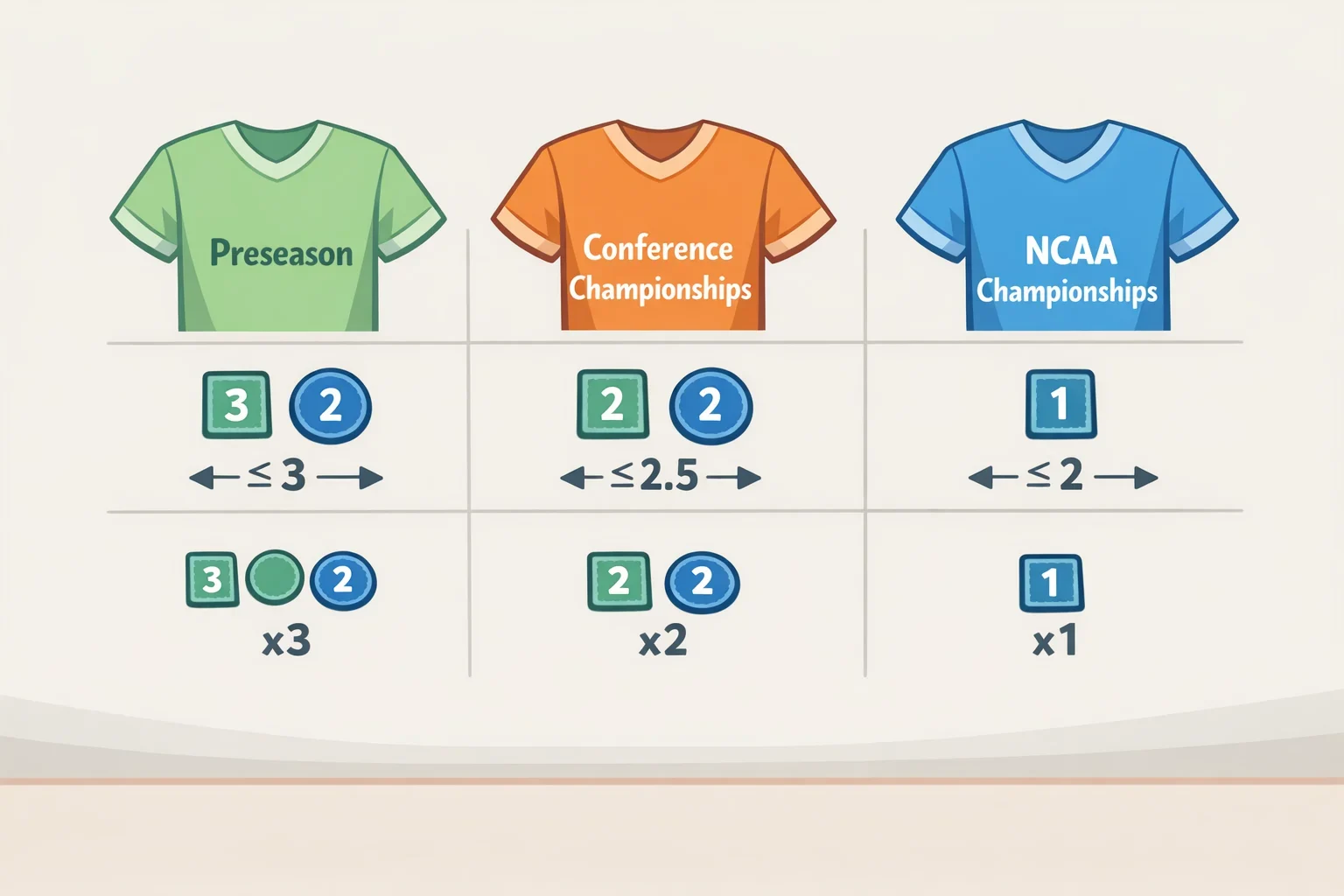
Effective Aug. 1, 2026, Division I teams may add up to two additional commercial logos on uniforms and apparel, plus one additional commercial logo on equipment, during the preseason and regular season. Each added logo is capped at 4 square inches. Teams may add one further uniform and apparel logo for conference championships, according to NCAA.
Competition Additional uniform/apparel logos Additional equipment logos Size limit Preseason/regular season 2 1 4 sq. in. each Conference championships 3 total (2 regular-season plus 1 conference) 1 4 sq. in. each NCAA Championships New allowance does not apply New allowance does not apply N/A
Source: NCAA
As described in the NCAA's announcement, uniform and apparel logos and equipment logos are two separate counts rather than one combined total a team can move between categories.
NCAA Championships still run on their own rules
The new allowance's absence at NCAA Championships does not mean no commercial marks appear there. It means this particular expansion, built for preseason, regular-season and conference-championship play, has not been extended to championship competition, according to NCAA.
The Cabinet supported NCAA staff efforts to explore possible championship patch policies in collaboration with corporate marketing and media rights partners, according to NCAA. That is a directive to study the idea, not a commitment to a specific outcome or timeline.
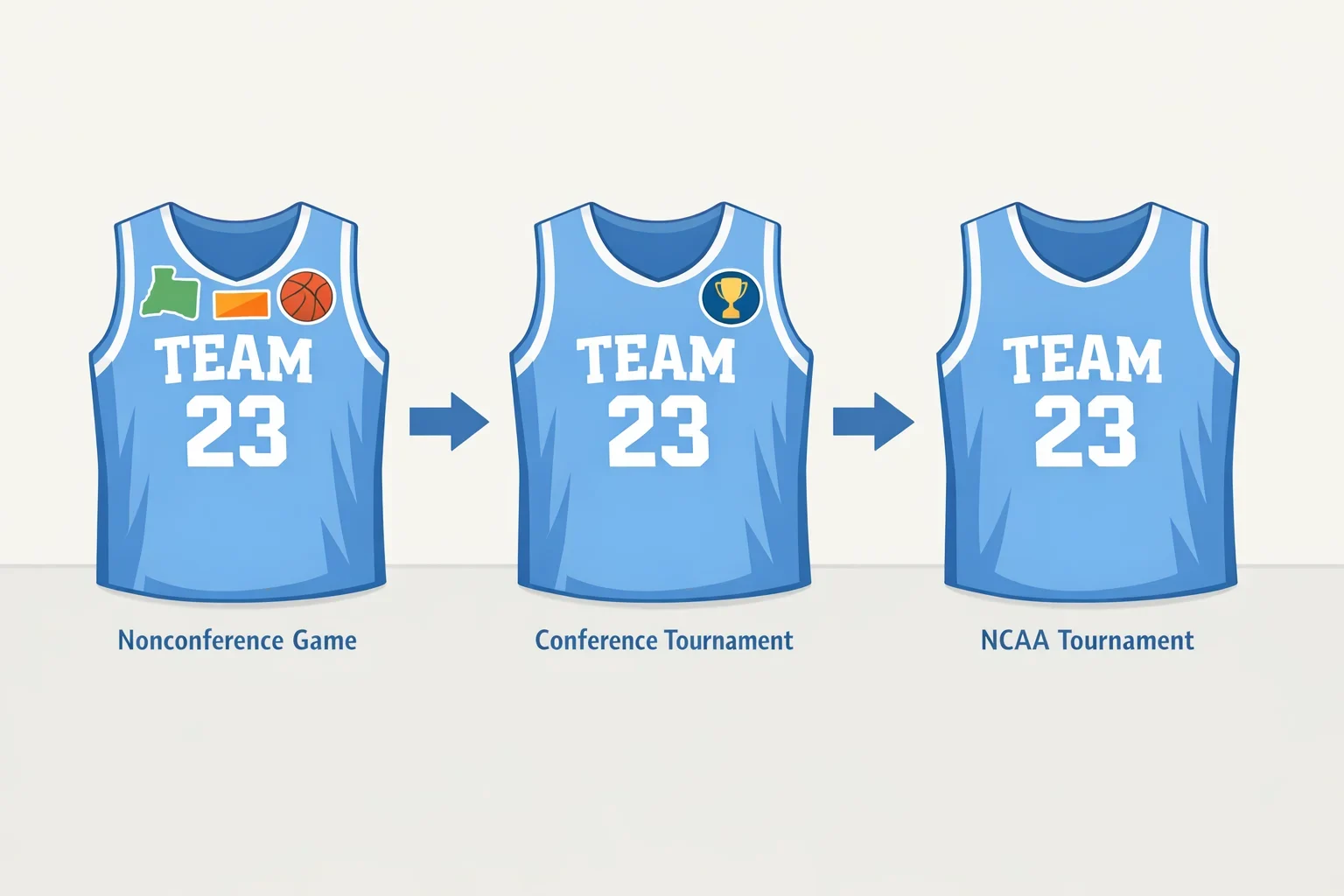
A Division I basketball team illustrates the shift in practice. In a nonconference game, it can carry the full preseason/regular-season allowance from the table above. In a conference tournament, it could use the additional conference-championship logo, for three total. In NCAA Tournament play, the new allowance would not carry over, though existing championship uniform rules would still apply.
NCAA uniform sponsor patch placement: what's fixed and what isn't
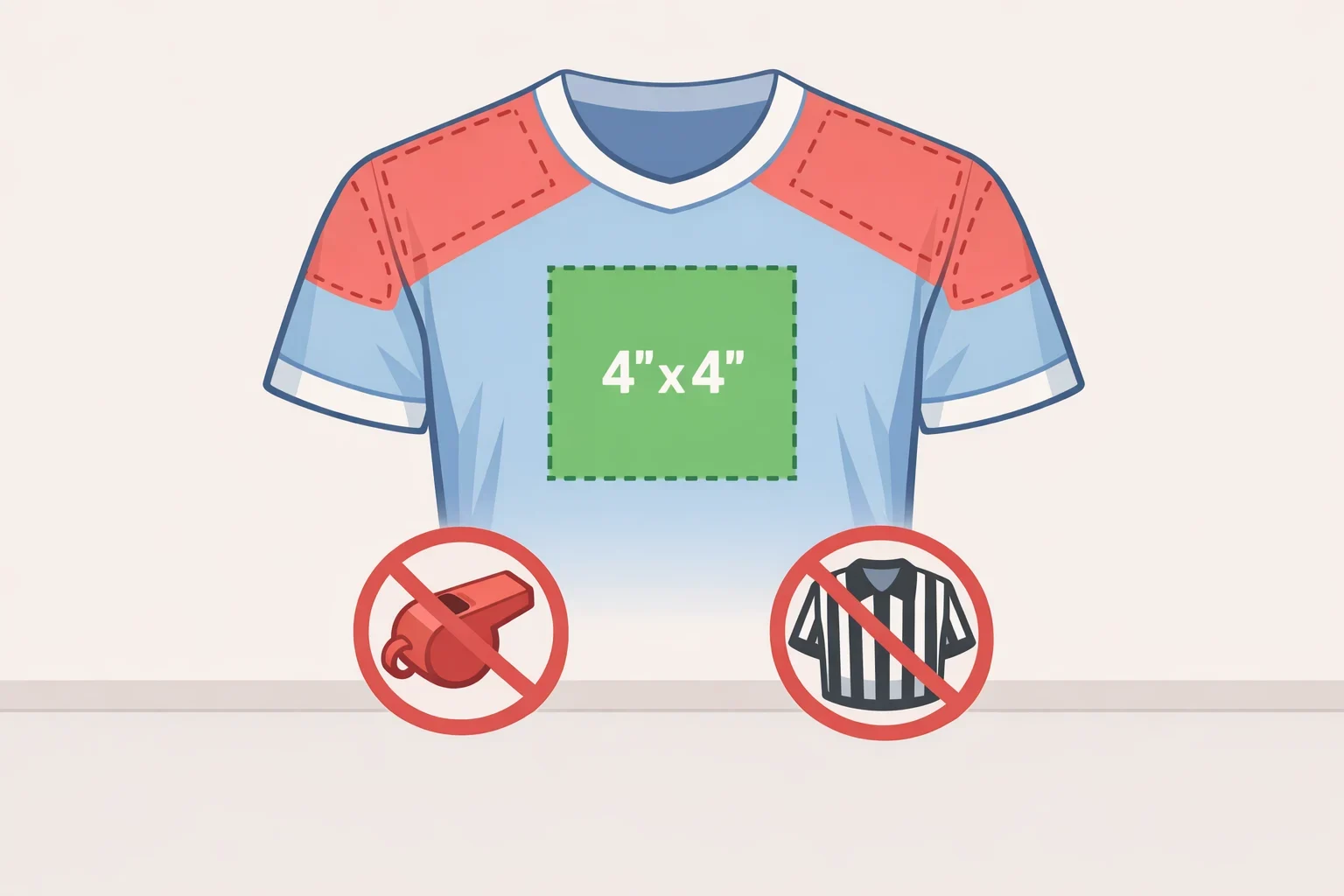
Two pieces of the placement rule are set nationally. The 4-square-inch-per-logo maximum applies across Division I, and logos are expected to stay outside uniform sections designated as necessary for officiating, according to NCAA.
The exact spot on the jersey is not fixed nationally. That call belongs to each sport's playing rules subcommittees and oversight committees, and to sport committees for NCAA-run championship sports, according to NCAA. An earlier committee directive asked playing rules committees to develop sport-specific recommendations on placement, confirming the location was always meant to vary by sport rather than follow one template, according to NCAA.
Finalized, sport-by-sport placement standards were not independently confirmed for this article. A patch's location in football may not match the location used in basketball or baseball, so anyone checking a specific patch's placement should consult that sport's current NCAA playing rules rather than assume one sport's standard carries over to another.
Not every school will use a patch
NCAA leadership framed the change as flexibility for schools and conferences to set standards that reflect their own values, not a requirement to sell the new inventory, according to NCAA. Notre Dame's SoFi partnership and Ohio State's Chase deal are two recent examples of programs moving into jersey patch sponsorship, while Texas has publicly said it does not intend to pursue one, according to a sponsorship-law analysis from Loeb & Loeb published last week. Three programs is not evidence of a league-wide pattern, but it shows schools are already answering the question differently.
Attorneys at the firm describe jersey patches as among the most valuable assets in sports sponsorship right now, as schools chase new revenue and brands look for visible ways to connect with fans, according to Loeb & Loeb.
That value comes with a complication some schools discover only after they start selling it. A common misconception is that a school controls every sponsorship right tied to its own uniform, but conferences, apparel partners, media rights holders and national sponsorship programs may hold rights or approval authority affecting what a school can sell and how it can be displayed, according to Loeb & Loeb. The firm notes that reality often surfaces once schools and sponsors get into exclusivity negotiations.
Whether a patch worn on game day also appears on replica jerseys sold to fans is a separate point that sponsors and schools negotiate on its own terms, according to Loeb & Loeb. A fan buying a replica jersey should not assume it will match exactly what the team wears on the field.
Checking a specific team's patch
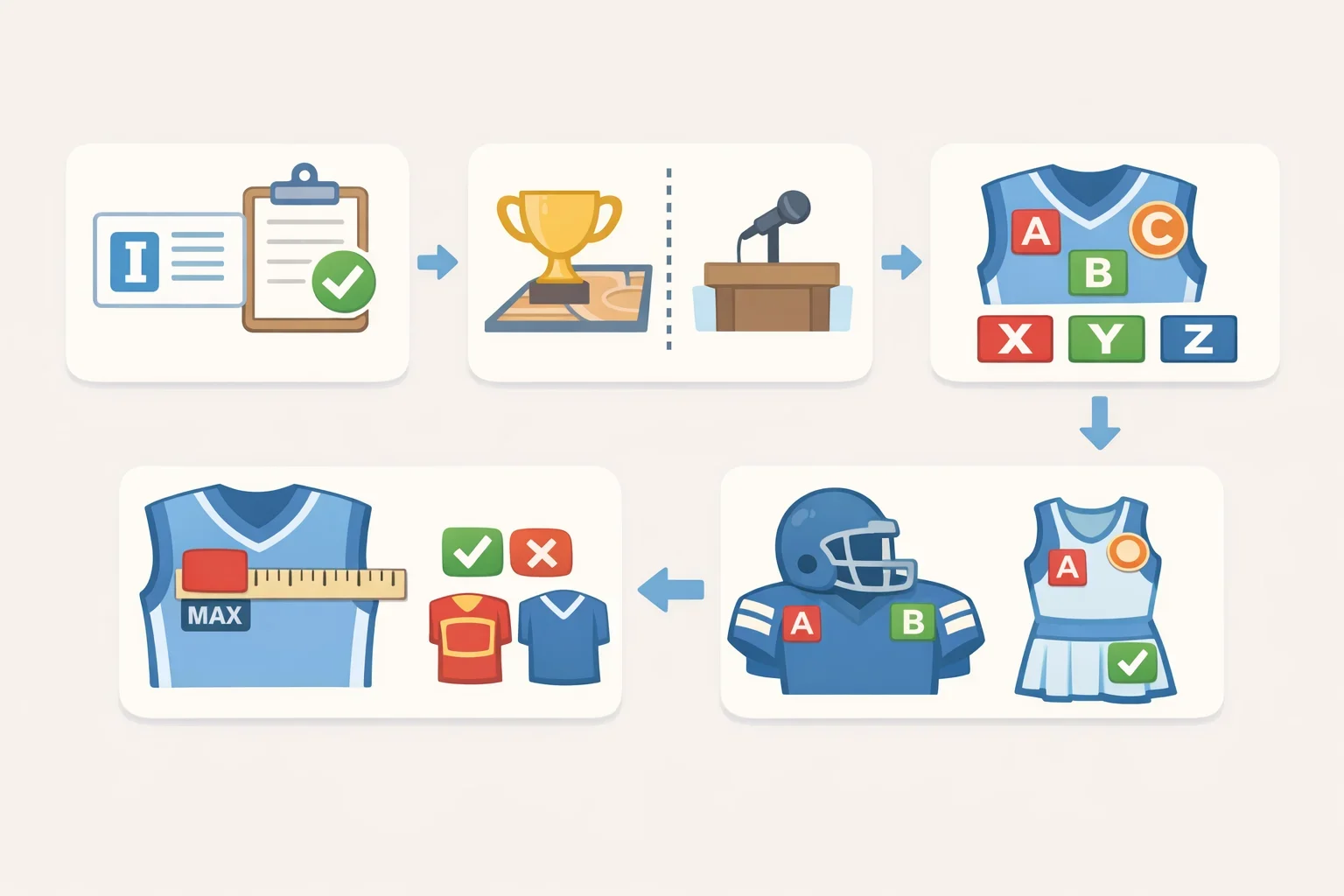
The NCAA's framework creates different allowances by competition type, so a single checklist covers most situations:
- Confirm the team is Division I. The policy does not establish rules for Division II, Division III or NAIA competition.
- Identify the competition type. Preseason and regular-season games, conference championships and NCAA Championships each carry a different allowance.
- Count uniform and apparel logos separately from equipment logos, since the NCAA's announcement structures them as two distinct allowances.
- Verify each added logo is 4 square inches or smaller.
- Check that sport's current NCAA playing rules for its placement standard, since location is set sport by sport.
- Ask whether the school or conference has adopted tighter limits than the NCAA floor, since this policy sets a ceiling, not a mandate.
Division I status, competition type, sport-specific placement and any additional school or conference restriction together determine what actually shows up on a given jersey this season. Those four checks, applied in order, will explain most patches fans see between now and the postseason.